Why do we need to stop equating no family history with no breast cancer risk?
Because that assumption can keep us from getting care we need. We hear it from smart, informed women all the time: breast cancer does not run in our family, so surely we are not the ones who need to worry. Amber Guild, CEO of the Susan G. Komen Foundation, joins Dr. Thais Aliabadi and Mary Alice Haney to discuss this and much more.
Amber Guild’s experience shows us how misleading that reassurance can be. Her doctors recommended a first mammogram at 40. She postponed it until 43, largely because cancer was not part of her family’s health story. Heart attacks and strokes were familiar concerns. Breast cancer was not on her radar.
That first mammogram led to additional imaging, an ultrasound, and eventually a biopsy. She was diagnosed with very early breast cancer, described as stage zero.
One statistic changed her understanding: about 85% of people diagnosed with breast cancer have no family history. We cannot treat the absence of affected relatives as a clean bill of health. Family history matters, absolutely. It just is not the whole picture.
We need a more useful question than whether breast cancer runs in our family: what is our individual risk, and what should we do about it?
What stands out about the moment Amber learned something might be wrong?
Sometimes it is a tiny human detail that stays with us. For Amber, it was the doctor dropping her pen as she sat down during the imaging appointment. The doctor seemed nervous, and suddenly the possibility of an abnormal finding became real.
Before that moment, Amber had assumed the lengthy appointment was simply how a first mammogram worked. She had no previous experience to compare it with and no expectation that she would leave facing a cancer diagnosis.
After the biopsy results, she moved into problem-solving mode. More tests. Surgery. Healing. Radiation. Medication. We can understand that instinct, especially when we are used to leading organizations, making decisions, and keeping a household moving.
But functioning is not the same as fully absorbing what is happening. A diagnosis can become a checklist before we have even found the words for our fear or confusion.
Her experience reminds us that being capable does not make us immune to shock. We may need time, education, and help even when we look completely composed.
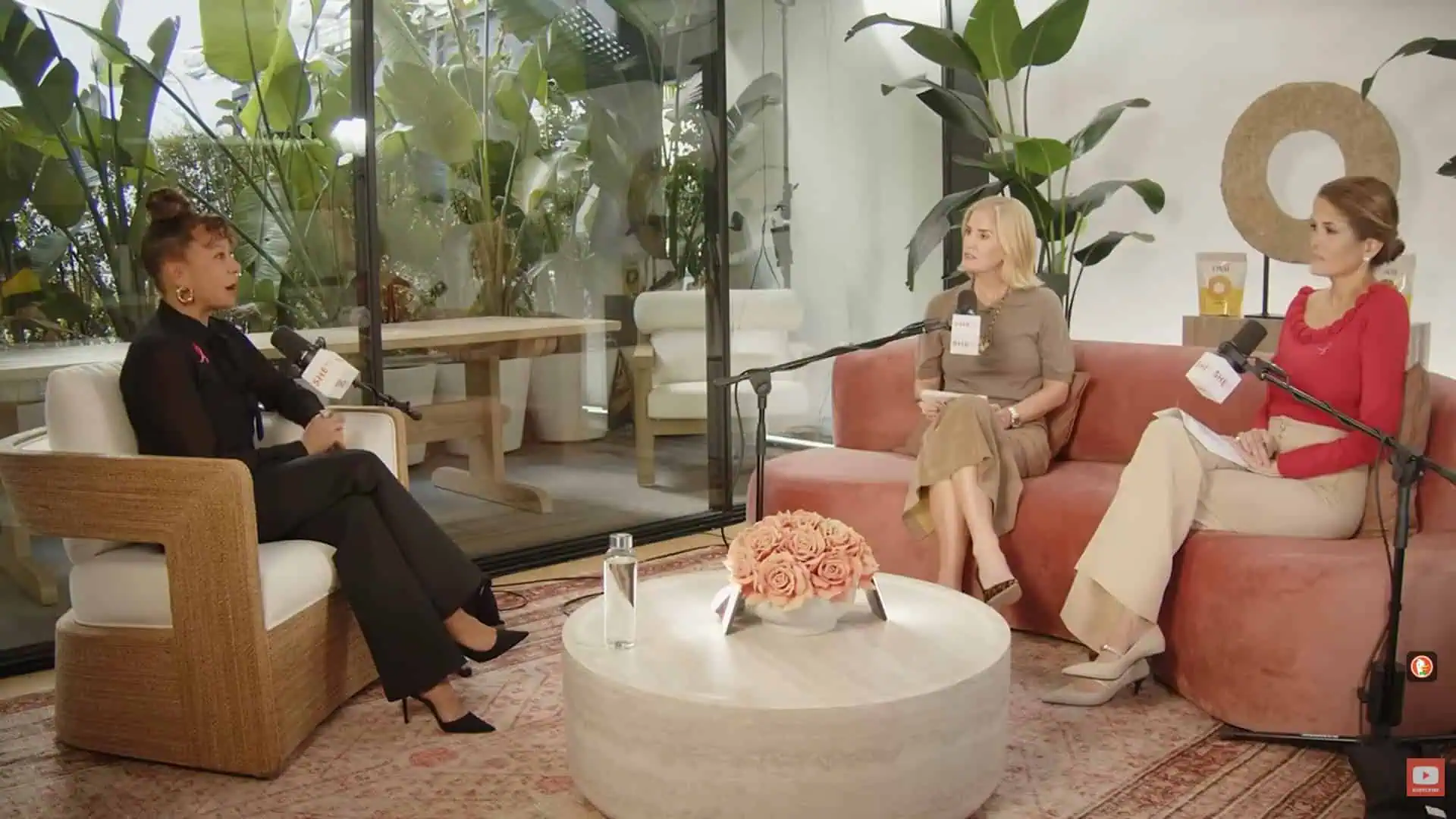
What did Amber’s treatment involve, and what can we learn from it?
Amber described DCIS in her left breast and LCIS in her right. Her surgical treatment involved both breasts, followed by another operation on the left because the initial surgery had not cleared the margins. Radiation came next, followed by tamoxifen.
Her original medication plan was five years. She stopped after three years because of side effects, including fibroids and other effects on her body. Crucially, that decision involved her medical oncologist, who explained that newer research supported the shorter duration for her particular situation.
We should not turn one person’s treatment course into a recommendation for everyone. The important lesson is that treatment decisions need to reflect the diagnosis, the evidence, side effects, and an ongoing conversation with the oncology team.
There is also a research lesson here that we do not discuss enough. Research does not only tell us when to add a treatment. Sometimes it helps us understand when we may safely stop one.
We want effective care, but we also want care that takes the whole person seriously. Side effects deserve attention, not silence or an assumption that we simply have to push through.
How did access to care shape Amber’s experience?
Amber is very clear that she had advantages many people do not. She had insurance, access to specialists in New York City, and an employer that helped her obtain resources. That support included corporate housing near her treatment facility during daily radiation.
Her treatment also happened during COVID, when much of the experience was physically isolating. Her husband and children were in New Jersey, and she navigated appointments and treatment largely on her own.
Even with that difficulty, she recognized the difference that financial and logistical support made. We cannot separate a treatment plan from the practical ability to carry it out.
A daily appointment means something very different when we have nearby housing than when we must arrange transportation, miss work, or find someone to care for our children. Insurance matters, but so do all the steps between receiving a recommendation and actually getting care.
That recognition became central to Amber’s mission: the support that helped her should not be an exceptional privilege. We need systems that make good care possible for everyone.
Why does early detection matter if we feel healthy and have no symptoms?
Because early breast cancer may not announce itself. We may have no noticeable lump, skin dimpling, or nipple discharge. Feeling well does not tell us everything that imaging can reveal.
Dr. Thaïs Aliabadi emphasizes the difference stage makes. When breast cancer remains localized to the breast, the five-year survival figure discussed is approximately 99%. When cancer has spread to distant organs, that figure is substantially lower, around one-third.
We need to keep those categories clear. Spread to nearby lymph nodes is not the same as spread to distant organs. Metastatic breast cancer means the disease has traveled to places such as the liver, lungs, or brain.
Those numbers describe groups, not an individual person’s future. Still, they explain why we put so much emphasis on finding cancer earlier.
We have also made real progress. Dr. A points to an approximately 44% reduction in breast cancer mortality since 1989. That is meaningful, and it reflects why continued research and care matter. But progress is not permission to postpone screening or assume the work is finished.
Should we all begin mammograms at the same age?
We need to distinguish a general screening recommendation from a personalized plan. Age 40 is an important starting point in the discussion, but it should not become a reason for someone at higher risk to wait.
Dr. A stresses that a lifetime breast cancer risk of 20% or more can change the conversation, including whether imaging should begin around age 30 and whether additional screening is appropriate. A close relative’s age at diagnosis can also influence when screening begins.
The practical takeaway is not that we should assign ourselves a schedule based on a single number or family story. We should bring that information to a clinician and establish an individual plan.
Baseline images matter, too. Amber’s doctor explained that earlier images give radiologists something to compare with later studies. That was a benefit Amber had not considered when she postponed her first appointment.
Dr. A also describes obtaining baseline imaging at 35 in her own practice. We should recognize that as her clinical approach, rather than a universal recommendation. What we can all take from it is the need to discuss risk before assuming that a birthday alone determines our care.
What do we mean by knowing our lifetime breast cancer risk?
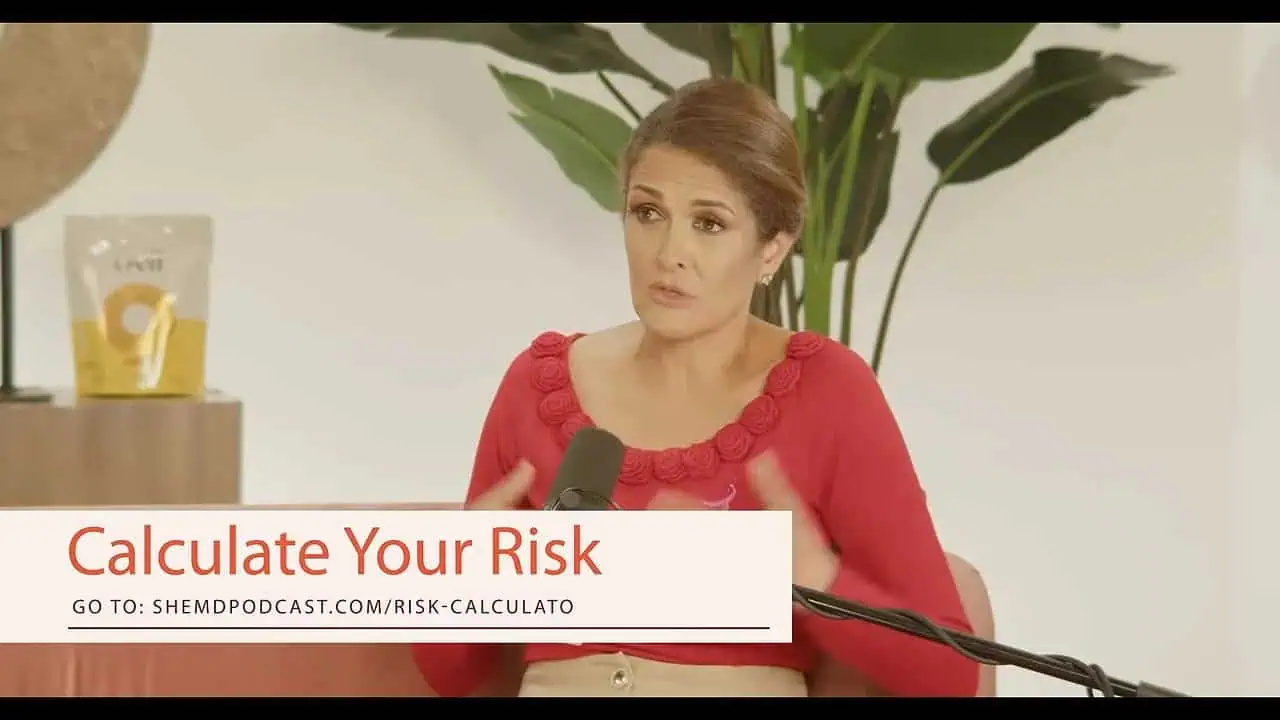
We mean moving beyond a vague sense that we are probably fine. A breast cancer risk assessment brings together relevant information to estimate the likelihood of developing the disease over time.
Dr. A highlights the Tyrer-Cuzick model. Depending on the assessment, the conversation can include family history, reproductive history, breast density, body size, and other relevant factors. Genetics may add another layer.
We should understand both the number and what it changes. If we learn that our estimated lifetime risk is elevated, what screening is recommended? When should it start? Should we discuss MRI or genetic testing?
Our guide to how breast cancer risk assessments work explains why these tools are most useful when interpreted with a medical professional.
We are not trying to collect a frightening percentage and sit with it alone. We are trying to turn information into a plan. That is the difference between awareness and actionable knowledge, and it is where stronger self-advocacy begins.
Why is breast density such an important part of this conversation?
Because breast density is another reason family history cannot tell us everything. Dr. A explains that density is identified on a mammogram. It is not something we can reliably determine from how our breasts look or feel.
The categories discussed range from mostly fatty tissue to scattered fibroglandular tissue, heterogeneously dense tissue, and extremely dense tissue. Dense breasts are common. Dr. A notes that approximately 40% to 50% of women over 40 have dense breast tissue.
Density is associated with breast cancer risk. Dr. A describes extremely dense breasts as carrying a substantially higher risk than mostly fatty breasts, citing a comparison of roughly four to six times.
We should ask what our own mammogram report says and how that finding fits into our overall assessment. Density is not a diagnosis of cancer, but it is information worth understanding.
Our explanation of breast density notifications after mammograms offers more context for that discussion. We want to leave an appointment knowing not only that we have dense breasts, but whether that finding changes our screening plan.
How should we think about mammograms, ultrasound, and breast MRI?
We should think about them as tools with different roles, not as a competition to find one test that does everything. Our risk and breast tissue help guide which combination a clinician recommends.
Dr. A highlights 3D mammography as an option to discuss, particularly for dense breasts. She also encourages asking whether ultrasound is appropriate and whether a high-risk screening plan should include breast MRI.
That does not mean every person needs every test. It means we should understand why a particular test is being recommended, or why it is not.
Useful questions include:
- What does our breast density mean for the imaging plan?
- Would 3D mammography be appropriate?
- Is supplemental ultrasound recommended in our situation?
- Does our lifetime risk warrant a discussion about MRI?
- What follow-up is needed after an abnormal result?
We also need to talk about access. A recommendation that remains on paper because of cost or insurance restrictions does not deliver the benefit we need. Follow-up care belongs in the screening conversation from the beginning.
Why do Black women face higher breast cancer mortality?
We cannot explain this disparity with one factor, and we cannot accept it as inevitable. Amber cites Black women as approximately 44% more likely to die from breast cancer than white women, with even larger disparities in some communities.
Access is a major part of the problem. We have to consider screening availability, insurance, timely follow-up, treatment delays, and the quality of care people receive. Being insured does not automatically mean every barrier disappears.
Dr. A also points to the higher likelihood of triple-negative breast cancer among Black women, describing it as an aggressive form and noting that Black women are roughly twice as likely to develop it.
We need both better access and better science. Amber emphasizes ongoing research into tumor biology and ancestry, while acknowledging that we do not yet fully understand every contributor to the disparity.
The issue became unexpectedly personal for Amber. Years after treatment, she learned that research conducted by her physician at Weill Cornell, focused on African American women and breast cancer, had received Komen funding. Research support had already touched her care before she knew it.
Do we know why breast cancer diagnoses are increasing among younger women?
We do not have one complete answer. That uncertainty is a reason to fund research, not a reason to fill the gaps with certainty we have not earned.
Dr. A describes a study period from 2012 through 2021 in which incidence rose more quickly among women under 50 than among older women. The annual increases discussed were approximately 1.4% and 0.7%, respectively.
The conversation considers several possible contributors: obesity and metabolic dysfunction, changes in reproductive patterns, alcohol consumption, improved detection, and environmental exposures. We need to distinguish established concerns, such as the link between alcohol and breast cancer, from questions still being investigated.
We also need to resist blame. A diagnosis is not proof that someone made the wrong choices. Our goal is to understand risk and improve prevention and detection, not turn illness into a judgment about how someone lived.
For younger women, the consequences can reach into fertility, relationships, family plans, and early menopause related to treatment. We should not assume youth protects us, and we should not assume younger patients have the same needs as everyone else.
What can genetic testing tell us, and what does a negative result leave unanswered?
A negative genetic test does not mean no breast cancer risk. That is one of the most important distinctions we can make.
Dr. A discusses inherited variants in genes such as BRCA1, BRCA2, PALB2, and CHEK2. Major inherited mutations account for only a minority of breast cancer diagnoses, roughly 5% to 10% in the discussion. Most people diagnosed will not have one of these findings.
She also explains polygenic risk scores. Instead of looking only for a major mutation, these scores consider many smaller genetic variations whose combined effects may influence risk.
Dr. A’s own experience illustrates the distinction. She had no family history and no major mutation identified on conventional testing, yet later testing suggested a substantially elevated polygenic risk.
We should discuss what a test actually measures, what its result means, and whether it would change care. Polygenic testing is not equally accessible, and cost remains an issue. We should not mistake an emerging tool for a simple answer that everyone must obtain. The broader lesson is that a negative result needs context.
What makes precision medicine exciting, and where do we need to stay realistic?
We are moving toward a more individualized understanding of risk and treatment. Amber describes scientific advances that can help clinicians match treatment more precisely to a person and the markers associated with their disease.
Dr. A extends that vision to prevention. Rather than making every decision solely by age, she wants care to account for individual risk factors and increasingly useful genetic information. She discusses whole genome sequencing and the potential for translating complex findings into meaningful clinical decisions.
That is a vision for medicine’s direction, not a promise that today’s testing can predict or prevent every cancer. Dr. A acknowledges that the technology and interpretation are not perfect.
We can be excited without pretending the work is complete. Better information only helps if we understand what to do with it.
And innovation alone is not enough. If the most sophisticated screening or treatment is available only to people who can afford it, we have advanced the science without delivering its full benefit. Precision and access have to move forward together.
How does Susan G. Komen support progress beyond breast cancer awareness?
We often associate Komen with public awareness, but Amber describes a mission that includes research, education, advocacy, and direct patient support.
On research, she says Komen has invested more than $1 billion. Scientific advisors help evaluate where grants can make a difference, including work led by emerging scientists asking the next important questions.
On policy, the organization advocates for research funding and access to care. Amber stresses the importance of coverage beyond an initial scan. If someone needs additional imaging, we cannot treat that follow-up as an optional extra.
On patient support, the work can be very practical. A person may need help understanding next steps, locating resources, or overcoming transportation barriers to daily treatment.
We also hear urgency about uncertainty in federal research funding. Sustaining scientific progress requires support for researchers, institutions, and the pipeline of future treatments.
Amber’s message is hopeful but not complacent: we have made extraordinary advances, and that is precisely why we cannot ease off now. We need to keep funding discovery while helping people reach the care already available.
Where can we turn if we do not know how to access breast health care?
A practical starting point is komen.org. Amber directs people to Komen’s breast care helpline and patient navigation services, emphasizing that a real person is available to help.
We do not have to understand the entire healthcare system before asking for support. The point of navigation is to help us work through uncertainty, identify resources, and understand possible next steps.
Amber says Komen provided approximately 30,000 free services during the previous year, distinguishing those services from the larger number of calls received.
We should be specific about the barrier we face. Is it insurance? Transportation? Finding care? Understanding a recommendation? Knowing what to ask next? Naming the problem helps make the conversation useful.
We also need to remember that these resources are not limited to one kind of patient. Amber describes serving women and men and supporting the broader breast cancer community, including transgender and nonbinary people. No one should assume that support is not meant for them.
What does effective breast health self-advocacy look like?
We can start by preparing for an appointment rather than hoping every important issue comes up on its own. Dr. A keeps returning to three areas: our lifetime risk, our breast density, and whether genetic testing is appropriate.
A useful appointment checklist is:
- Review our history. Bring relevant personal and family information.
- Ask for a risk assessment. Understand the result and what it changes.
- Clarify breast density. Ask how it affects screening decisions.
- Discuss the imaging plan. Confirm which tests are recommended and when.
- Ask about genetics. Understand whether testing or further counseling would help.
- Confirm follow-up. Know what happens after the appointment or scan.
If our concerns are dismissed without an adequate explanation, we can seek another opinion. Our guidance on advocating for ourselves at medical appointments offers a framework for those conversations.
But we should not confuse empowerment with making patients responsible for every failure in care. We need informed patients and responsive healthcare systems. Both matter.
How can we support someone whose diagnosis has left them overwhelmed?
We can begin by recognizing that the person we know may respond differently than we expect. Someone who is decisive at work may struggle to ask questions in an oncology appointment. That is not weakness. Shock can change how we process information.
Amber expected her leadership experience to translate naturally into advocating for herself. Instead, she often focused on completing the next task. Looking back, she wishes she had learned more and accepted more help with advocacy.
We can offer to accompany a loved one, help prepare questions, or help them understand information, while respecting their preferences. The person beside the patient may be able to absorb details that are difficult to take in during the initial emotional fog.
We should also be careful about assuming that an early diagnosis means an easy experience. Amber recognizes her good fortune, but she still faced surgery, radiation, medication side effects, isolation, and uncertainty about how much to tell her children.
Support does not require a perfect speech. Often, it means helping someone avoid carrying every practical and emotional responsibility alone.
Why must men and people with metastatic breast cancer remain part of this discussion?
Because breast cancer is not one experience, and our language should not erase people. Amber notes that men account for about 1% of breast cancer diagnoses. A small percentage still represents real people and families.
We often fail to consider breast cancer in men, which creates its own awareness and detection challenges. Dr. A emphasizes that inherited risk can matter for sons as well as daughters. A family history or known mutation deserves a medical conversation regardless of gender.
For men with a BRCA mutation, screening should be discussed with a clinician rather than assuming breast health is irrelevant.
We also need to keep metastatic breast cancer central. It means cancer has spread beyond the breast to distant organs. Targeted treatments and immunotherapy have improved care, but Amber emphasizes that there is still no cure.
We can celebrate improved survival without implying every form of breast cancer has been solved. People living with metastatic disease need continued research, treatment, support, and a place in every conversation about progress.
What does protecting the next generation require from us now?
It requires us to hold hope and urgency together. Komen’s “Don’t Fail the Girls” campaign challenges the comfortable idea that breast cancer is already handled. We are doing better. We are not done.
Amber talks about her daughter, son, nieces, and cousins, and the responsibility we share to give the next generation something better. That means understanding rising diagnoses among younger people, improving early detection, and making treatment accessible.
We can contribute in different ways: donating, volunteering locally, or advocating for policies that support research and access. Amber describes a network of approximately 125,000 volunteer advocates working with lawmakers.
We can also act within our own families. We can stop repeating that no family history means no risk. We can encourage overdue appointments, discuss inherited risk with sons as well as daughters, and help someone navigate care.
We do not need to live in fear. We need to replace false reassurance with information, a personalized plan, and support. That is how awareness becomes something that can change lives.
This discussion is educational and is not a substitute for individualized medical advice. We should review screening, genetic testing, and treatment decisions with our healthcare professionals.
Concerned About Your Health? Talk to Dr. Aliabadi
Dr. Aliabadi is an expert OB/GYN who is knowledgeable in all aspects of women’s health and well-being. Dr. Aliabadi and her caring, supportive staff are available to support you through PCOS, endometriosis, menopause, childbirth, infertility, or routine gynecological care. <br><br> We invite you to establish care with Dr. Aliabadi. <br>Call us at (844) 863-6700 or