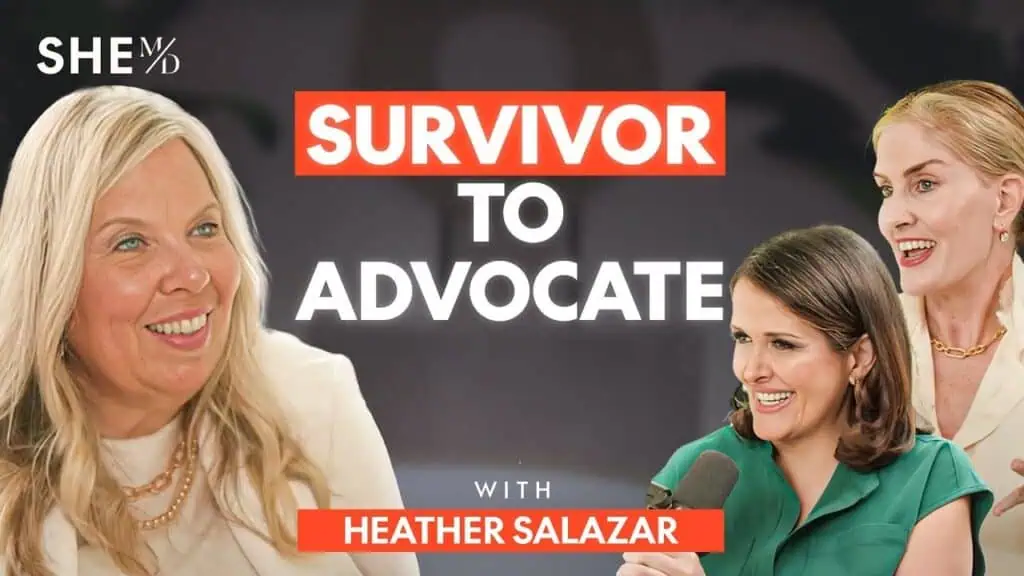
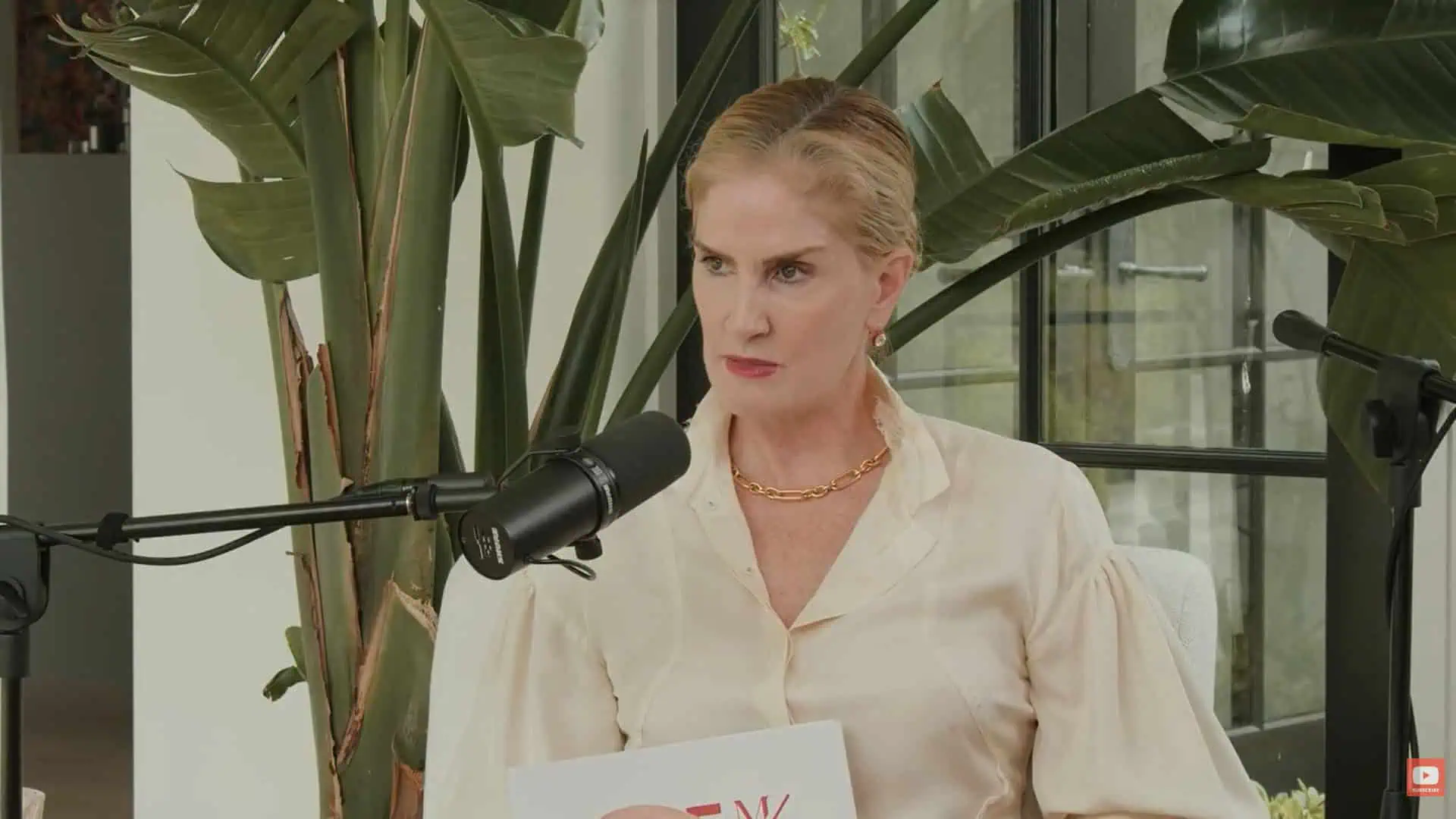
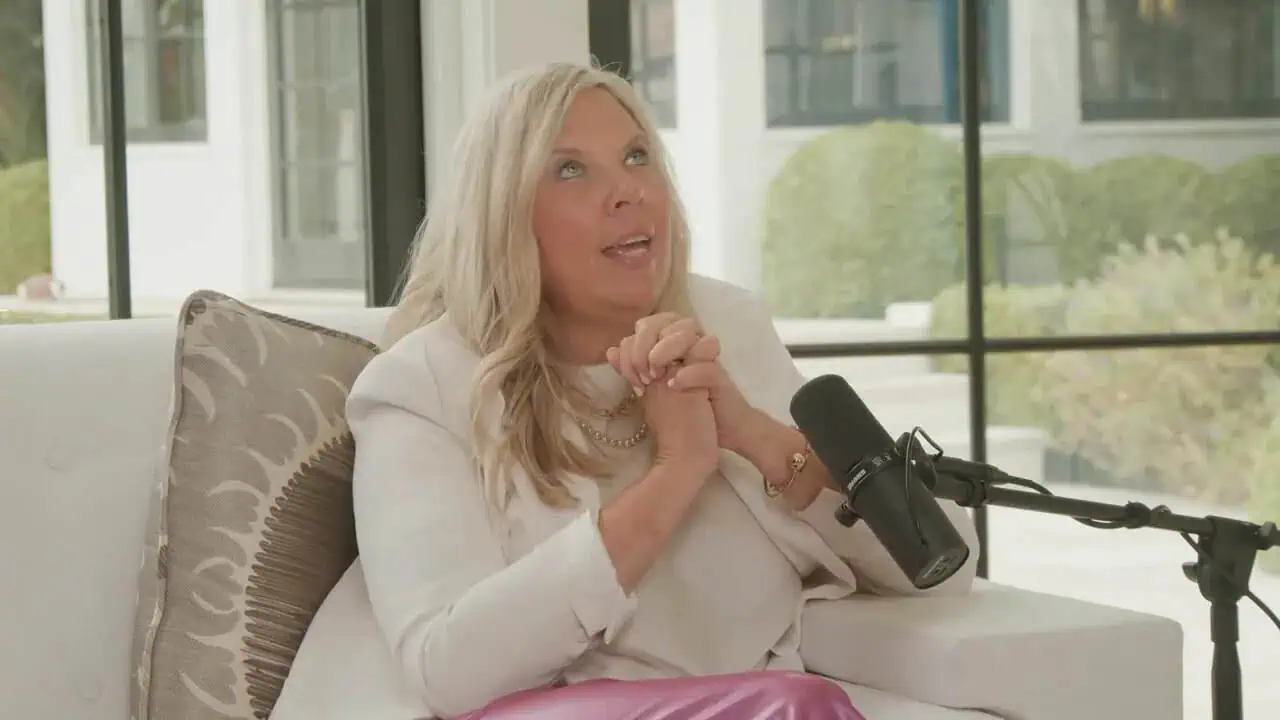
Sometimes the most meaningful work begins with a moment we cannot shake. For Heather Salazar, that moment was meeting a 23-year-old mother named Alexis, who was living with stage four breast cancer, navigating the foster care system, and desperately trying to secure a future for her eight-month-old daughter. Heather sits with Dr. Thais Aliabadi and Mary Alice Haney to discuss this journey.
That encounter changed everything. It led Heather and her husband to welcome Alexis’s daughter, Lexi, into their family. It also introduced Heather to the devastating realities of health inequity during cancer treatment, years before Heather herself found a lump and received a breast cancer diagnosis at 31.
Today, Heather is a breast cancer survivor, a mother, and the founder of Pink Ribbon Good, an organization providing practical, compassionate support to people facing breast and gynecological cancers. The work is rooted in a simple belief: when someone is fighting cancer, they should be able to focus on treatment, not on how they will get to the hospital, feed their family, or clean their home.
Table of Contents
- A Story That Began With One Young Mother
- From Loss to a Breast Cancer Diagnosis
- Genetic Testing, Risk Scores, and Asking Better Questions
- Why Pink Ribbon Good Exists
- The Power of Peer Support
- Young Women, Self-Awareness, and Early Evaluation
- Being Our Own Advocate Through Treatment
- Finding Purpose Without Pretending Cancer Is a Gift
A Story That Began With One Young Mother
How did breast cancer first enter your life?
It entered our lives through Alexis in 2002. She was only 23 years old and had stage four breast cancer. She had grown up in foster care, had an eight-month-old baby, and was trying to figure out where her little girl would be safe as her health declined.
We had three small children at the time, but we could not stop thinking about her. We had spoken on the phone for a couple of weeks, and she would cry as she explained how hard life had become. We did not know what she looked like. We did not know the full extent of what she was dealing with. We only knew that she needed help.
She lived in government housing, had little in her apartment, and did not have reliable transportation. She had ridden home on a bus after her mastectomy. That detail still stays with us, because no one receiving cancer treatment should have to make impossible decisions between food, transportation, and basic survival.
What happened when you met Alexis in person?
We arranged to meet in the back of a grocery store parking lot. Our husband drove the red minivan, and when the bus arrived, Alexis stepped off wearing a bright pink wig, a black top, and a black skirt. She was tiny, sick, and walking with the strength of someone who had had to fight every day of her life.
She walked right past us and went to our husband. Then she said something that changed our family forever: she was dying, and she needed her baby to have a better life than she had.
We went into the grocery store together, bought food, took her home, and contacted an attorney the next day. Within five weeks, we had legal custody of her daughter, Lexi. Alexis had only five days left to tell the state that she wanted Lexi to live with us. Without that decision, Lexi would have remained in foster care.
There is a magnitude to being trusted with another mother’s child that is impossible to describe neatly. It is an enormous privilege. Lexi was never the lucky one. We were.
What did caring for Alexis teach us about cancer care?
For the next year, we took Alexis to treatment. We brought all four children along, dropped her off, and promised that we would come back. She would ask us not to leave. She was sick, exhausted, and frightened. Sometimes getting to treatment was not straightforward because transportation alone was a barrier.
That was our first real exposure to health equity and the social determinants that shape medical outcomes. A treatment plan is only meaningful if someone can get there. A prescription is only useful if someone can pick it up. Healthy food matters, but it is hard to prioritize when a family is already trying to cover rent, gas, childcare, and a ride to chemotherapy.
Alexis died shortly after turning 24. Being in the hospital as she died was one of the hardest experiences of our life. She did not want to die. She wanted more time. She wanted to see her daughter grow up. She was fighting until the very end.
From Loss to a Breast Cancer Diagnosis
How did Alexis influence your own breast cancer diagnosis?
In the days before she died, Alexis held on tightly and gave us a message that became life-changing: young women can get breast cancer, and young women need to know their bodies.
At the time, we did not really understand that. We did not know anyone under 60 with breast cancer. We did not have a family history. We did not think breast cancer could possibly be part of our own story.
About a year after Alexis died, we went away for our anniversary. We were exhausted. We wanted sleep, quiet, and a few hours away from the intensity of caring for a young child who had experienced early trauma and separation. During that trip, we did our first self-breast exam. We found a lump.
We were 31 and diagnosed with the same aggressive form of breast cancer Alexis had: estrogen receptor negative, progesterone receptor negative, and HER2-positive. The word Herceptin was the one we remembered hearing during Alexis’s treatment, and suddenly it was part of our own treatment plan.
What did early detection mean in your case?
It meant everything. Our cancer was stage one and measured 1.4 centimeters. We had no family history, no known genetic mutation at that time, and no reason to expect a diagnosis. If we had not examined our breast because of Alexis’s warning, we may not have known anything was wrong until much later.
We had chemotherapy, including AC and Taxol, followed by Herceptin. The treatment was intense, and cancer treatment can take a tremendous physical and emotional toll. But targeted therapies changed the landscape for HER2-positive breast cancer, and we are deeply grateful for the advances that gave us a path forward.
This is why a new breast lump should never be brushed aside because someone is young. If we find a lump, we need to get it checked. We should not assume it is a cyst or wait for it to disappear without speaking to a clinician. The best next step depends on our age, symptoms, personal history, and medical guidance, but prompt evaluation matters.
For more context on personal risk factors, symptoms, screening, and individualized evaluation, explore this breast cancer risk and screening resource.
Genetic Testing, Risk Scores, and Asking Better Questions
Why is genetic testing such an important part of breast cancer advocacy?
Genetic testing has changed tremendously since our diagnosis. Nineteen years ago, conversations focused largely on BRCA1 and BRCA2. Today, more comprehensive testing can examine many cancer-related genes and can help families better understand inherited risk.
Our daughters have been screened because of our early diagnosis, and we understand how important it is to be proactive. Their care has required advocacy, especially because screening for younger people may need to begin earlier when there is a strong family history or a close relative diagnosed at a young age.
One important point is that not all genetic tests offer the same depth of interpretation. Testing needs to be discussed with a qualified clinician or genetic counselor who can explain what a positive, negative, or uncertain result means for us and for our family members.
Some testing approaches also assess genetic markers that may contribute to a person’s overall lifetime breast cancer risk, even when there is no clearly harmful inherited mutation. That risk score can help shape a screening plan. A negative result does not automatically mean someone has no risk, and a positive result does not mean cancer is inevitable. It means we have more information to guide decisions.

What should we do if breast cancer runs in our family?
We should start by gathering our family history and discussing it with a physician. Early diagnoses, multiple relatives with cancer, breast cancer in men, ovarian cancer, pancreatic cancer, colon cancer, and several other patterns can all be relevant to a genetic risk conversation.
We should ask whether genetic counseling and diagnostic genetic testing make sense, rather than relying on a consumer screening result alone. We should also ask for a lifetime breast cancer risk assessment. Depending on our risk profile, clinicians may recommend earlier imaging or additional screening.
For a deeper explanation of hereditary cancer syndromes, what results can mean, and how testing may affect families, visit this guide to genetic testing for cancer.
Why Pink Ribbon Good Exists
What is Pink Ribbon Good?
Pink Ribbon Good, or PRG, is a practical support organization for people with breast and gynecological cancers. We serve people facing breast cancer, ovarian cancer, uterine cancer, and other gynecological cancers by helping carry the everyday burdens that can become overwhelming during treatment.
We wanted to build the organization around the things we would do for someone we love. That standard has guided every decision. We do not believe people facing cancer should receive less because they have fewer resources. We wanted families to receive nourishing meals, safe cleaning essentials, transportation, and connection with people who understand the diagnosis firsthand.
When someone is newly diagnosed, the medical system can feel complicated and fast-moving. There are appointments, tests, surgery decisions, chemotherapy schedules, medications, childcare worries, work concerns, and financial pressure. Pink Ribbon Good is designed to make the practical side of treatment feel more manageable.
What support does Pink Ribbon Good provide?
PRG focuses on four essential areas of support:
- Healthy meals: Three healthy, organic meals per week for the entire family.
- Rides to treatment: Transportation support for appointments and treatment.
- Toxin-free cleaning essentials: Supplies that help households manage day-to-day needs without adding another task to an already full list.
- Peer support: Connections with people who have lived through similar diagnoses and circumstances.
Each person begins with a detailed intake call, allowing the team to understand the treatment plan and tailor support. If surgery is first, meals may be scheduled for the period when they are most needed. If transportation is a barrier, rides can be arranged. The goal is to make the service feel coordinated and personal, not like another complicated form to fill out.
How long can someone receive help?
Support varies according to diagnosis and stage. People with early-stage cancer may receive services for about three months. Those with late-stage disease may receive support for approximately nine to 12 months, depending on need.
For transportation, early-stage patients may receive 30 rides. For people with late-stage cancer, PRG has worked hard not to turn anyone away when ongoing assistance is necessary. That commitment comes directly from Alexis’s story. Her daughter’s mother rode home after surgery on a bus. We never forgot it, and we never will.
Before the pandemic, PRG coordinated in-home cleaning support through national cleaning partners. During the pandemic, the organization pivoted to providing toxin-free cleaning products from Branch Basics. Each household receives enough supplies for about three months, with reusable glass bottles that can later be refilled.
The Power of Peer Support
Why does peer-to-peer support matter so much during cancer treatment?
When we are diagnosed, we want to see someone who has lived. We want to meet someone who understands the diagnosis, the fear, the decisions, the physical changes, and the hopes we are almost afraid to say out loud.
At 31, we thought about five-year statistics. We wanted to know whether we would live to see our children grow up. We wanted to see kindergarten, high school sports, graduations, and ordinary family moments. The first time our son stepped onto a high school basketball court, we cried because we had once wondered whether we would be there.
PRG matches people based on shared experience whenever possible. A person with DCIS can connect with someone who has had DCIS. Someone in their 30s who hopes to have children can speak with someone who understands that specific fear and decision-making process. This kind of support does not replace medical care, but it can make a person feel far less alone.
The program is national and virtual, which has made community possible across distance. People from different states and even different countries can take part. It is a reminder that although cancer can feel isolating, no one has to carry every part of it alone.
Young Women, Self-Awareness, and Early Evaluation
Are more young women being diagnosed with breast cancer?
Breast cancer at a very young age is less common than diagnosis in middle age or later adulthood, but young women can and do develop breast cancer. The message is not to panic. It is to take symptoms seriously and make sure concerns are evaluated.
We cannot always identify one reason why cancer occurs. Genetics can play a role. Family history can play a role. Lifestyle and environmental factors may be part of a larger picture. But no one should blame themselves for a diagnosis. Cancer is complicated, and the most useful thing we can do is seek appropriate medical care, ask questions, and make informed choices.
Self-awareness matters. Knowing how our breasts normally look and feel can help us recognize a change. But self-exams do not replace recommended imaging or clinical evaluation. If we notice a lump, nipple change, skin change, persistent pain, or something that feels different for us, we should contact a healthcare professional.
Breast density can also affect screening conversations because dense tissue may make mammograms harder to interpret and can be associated with a modestly higher risk. Learn more about how to interpret a density notification in this article on breast density after mammograms.
Being Our Own Advocate Through Treatment
What advice do we give someone who has just been diagnosed with breast cancer?
First, take a breath. A breast cancer diagnosis can turn our world upside down, especially when we have children, caregiving responsibilities, or a job that depends on us. Fear is normal. Grief is normal. The uncertainty can feel unbearable.
But breast cancer treatment has advanced enormously. Prognosis and treatment options depend on the specific cancer type, stage, tumor characteristics, and our overall health. There are many treatments available, and many people go on to live full lives after breast cancer.
We should ask questions, take notes, bring a trusted person to appointments when possible, and seek another opinion if we need one. We should ask about the full range of options, including surgical and reconstruction choices. We have a right to understand our care and to be part of the decisions being made about our body.
How can caregivers give truly helpful support?
We have learned that “Call me if you need anything” comes from a good place, but it can place another burden on someone who is already depleted. During treatment, it may be hard to think of what to ask for, coordinate help, or respond to messages.
Specific action can be more powerful than a general offer. We can bring nourishing food, leave groceries at the door, pick up a prescription, take the children for a weekend, drive someone to an appointment, or help with laundry and cleaning.
The small practical things are often the things people remember most. When we are sick, recovering from surgery, or sitting through chemotherapy, having food handled can feel like an enormous gift. It says: we see what you are carrying, and we are here to lighten it.
Finding Purpose Without Pretending Cancer Is a Gift
How do we make sense of a cancer experience that is so difficult?
We never have to pretend cancer was easy, fair, or welcome. It is traumatic. It is frightening. It can be lonely. There are people whose outcomes are not what we hoped for, and we hold that truth with deep respect.
At the same time, we can look for purpose in what we do next. We can ask what this experience has taught us, who it has connected us to, and how we can use our voice. That does not erase the pain. It helps us move through it with meaning.
Our lives changed because of breast cancer. We did not plan that path. But we cannot imagine life without Lexi, without Pink Ribbon Good, or without the extraordinary community built through this work. Alexis changed our life, and we hope the organization honors her by changing other lives, too.
What is the hope for Pink Ribbon Good’s future?
Our hope is to become a national organization that can serve people through hospitals across the country. It is heartbreaking when someone reaches out from a state where PRG is not yet available. We want to close that gap.
Growth requires funding, logistics, partnerships, technology, and people who believe practical support is part of cancer care. It also requires the determination to keep going when someone says a solution is impossible. We were told transportation support would never work. But we remembered Alexis, and we knew we had to figure it out.
Good really does lead to more good. A chance conversation can lead to engineers helping build new systems. A meal can lead to friendship. A ride can lead to treatment. A peer connection can give someone the courage to make it through one more difficult day.
Concerned About Your Health? Talk to Dr. Aliabadi
Dr. Aliabadi is an expert OB/GYN who is knowledgeable in all aspects of women’s health and well-being. Dr. Aliabadi and her caring, supportive staff are available to support you through PCOS, endometriosis, menopause, childbirth, infertility, or routine gynecological care. We invite you to establish care with Dr. Aliabadi. Call us at (844) 863-6700 or
Frequently Asked Questions
What is Pink Ribbon Good?
Pink Ribbon Good is an organization that supports people facing breast and gynecological cancers with healthy meals, transportation to treatment, toxin-free cleaning essentials, and peer support.
Why are rides to cancer treatment so important?
Transportation can be a major barrier to consistent cancer care. Reliable rides can help people attend treatment and appointments without having to choose between getting care and meeting basic household needs.
Should a young person get a breast lump checked?
Yes. A new or concerning breast lump should be evaluated by a healthcare professional. Young people can develop breast cancer, and only a clinician can determine what follow-up is appropriate.
Does a negative genetic test mean there is no breast cancer risk?
No. A negative genetic test does not eliminate breast cancer risk. Personal history, family history, breast density, and other factors can still affect risk and screening recommendations.
How can we support a friend going through cancer?
Offer specific help. Bring food, arrange childcare, pick up medications, provide a ride, handle errands, or help with household tasks. Practical support can make an enormous difference during treatment.