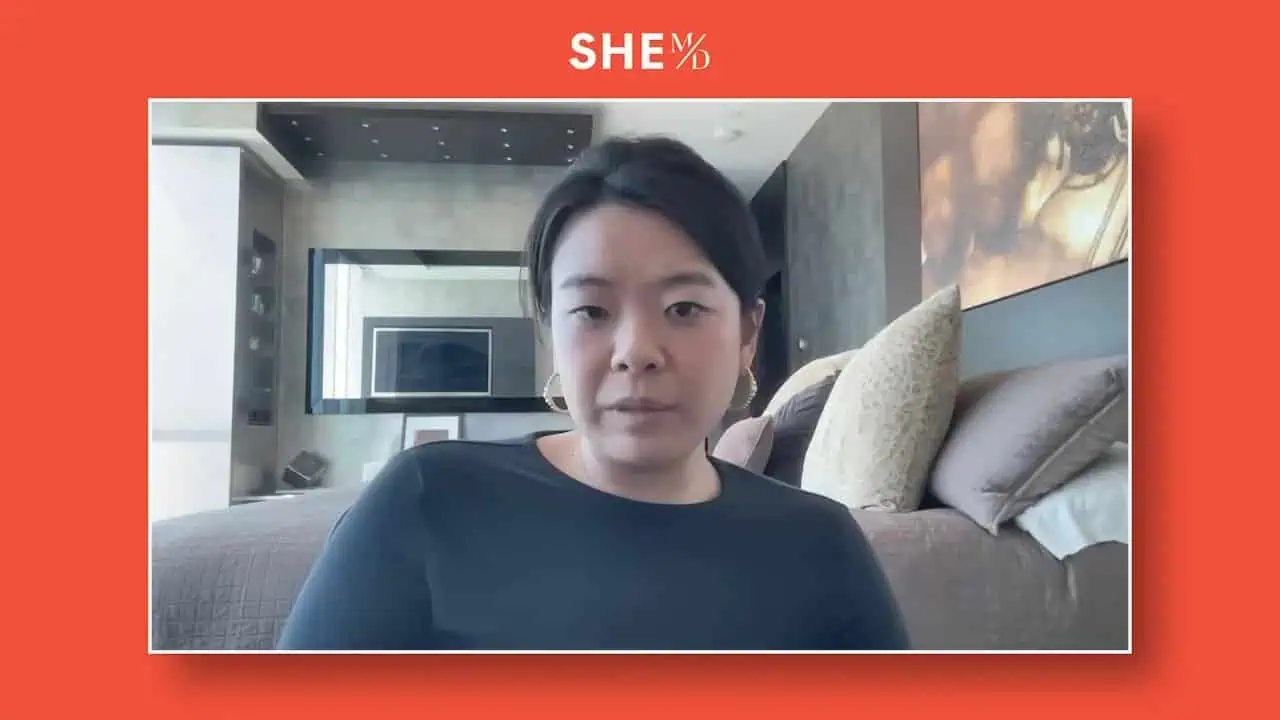
Dr. Thais Aliabadi and Mary Alice Haney talk to Vivian Tu, who went from trading on a Wall Street equities desk to becoming one of the most influential voices in personal finance for women. We sat down to talk about negotiation, money mindset, career transitions, motherhood and money, teaching children about finances, and the practical STRIP method she uses to help people build wealth. The conversation is candid, tactical, and full of the sort of blunt encouragement more women need: know your worth, make a plan, and ask for it.
Table of Contents
- Why Vivian’s story matters
- What to expect in this conversation
- Resources and practical actions
- Where to find more from Vivian Tu
- Frequently asked questions
- Final notes
Why Vivian’s story matters
Vivian’s journey is familiar to many of us who were raised to believe grit and grades were the path to upward mobility. She did everything “right”—valedictorian, top university, a job on Wall Street—only to discover that success in an organization doesn’t always equal respect or safety. Her pivot from a trader to a public financial educator shows how one turning point—being undervalued and mistreated—can become the catalyst for building a platform that gives millions access to clear, no-nonsense financial guidance.

What to expect in this conversation
We asked the questions that matter for women navigating careers and money: How do you negotiate effectively? How do women retain earning power when they become mothers? What practical steps help someone start investing with only $50? How do we avoid lifestyle creep? Vivian answers with frameworks, examples, and the STRIP method—Savings, Total debt, Retirement, Invest, Plan—that we can all put into action.
Tell us about your journey from Wall Street trader to Your Rich BFF. What happened, and what did you learn?
We grew up in immigrant households that believed work and education were the surefire routes to stability. Vivian followed that script and landed on a trading desk at J.P. Morgan. For a while, it looked like a dream. But when leadership changed, she was sidelined by a manager who disrespected her—sexist, racist microaggressions that made the role intolerable.
That experience taught her something critical: being competent is not the same as being safe or respected. She went to a mentor she trusted, didn’t make an emotionally impulsive move, and used that bond to find her next step. Then she began helping friends with basic finance questions—401k rebalancing, health plan selection—and posted her first video. It blew up almost immediately: millions of views, hundreds of thousands of followers in a week.
Her lesson for us is twofold. First, mentors and sponsors can pivot your career; cultivate them. Second, what looks like the end of your career can actually be the beginning of influence and impact.
Everything you learned on Wall Street—what was the single biggest financial lesson?
Vivian says, bluntly, that everything in life is negotiable. We often grow up as women with a cultural script that tells us to be quiet and not make waves. On Wall Street, people routinely asked for what they were worth and got it.
So how do we apply that? Start with simple negotiations: ask for a meeting after a big project, present your wins, and request a raise or promotion. Negotiate early and often. It is far easier to ask for incremental increases year over year than to think you can make up for stagnation by cutting avocado toast. Negotiation is the lever that increases our earning capacity; saving and budgeting can only go so far because you can only save as much as you earn.
How should women who let their partners handle finances start taking control?
Vivian is direct: too many women treat money as something their partner manages, and that puts them at risk. The majority of women will manage their finances at some point—illness, divorce, widowhood—so playing a secondary role is dangerous.
Start small and practical. We recommend sitting down once a month with your partner to review bank balances, bills, and recurring payments. Ask to see the retirement and brokerage accounts. You don’t need to become an expert overnight, but you must be present and ask questions. A monthly money check-in reduces conflict and builds shared literacy.
What do you say to women who feel blocked from asking for raises because of cultural or generational norms?
We must unlearn the idea that negotiation diminishes our femininity. Being kind and being direct are not mutually exclusive. If your upbringing told you not to make waves, practice scripts that feel authentic: “I want to discuss my compensation—here are the outcomes I’ve delivered and here’s what I’m requesting.” Role-play with a friend or mentor until it feels comfortable.
Vivian, you mentioned the motherhood penalty and the fatherhood benefit. What does that look like, and how can companies do better?
The statistics are stark: when four people perform the same job, fathers with families often get the highest pay, while working mothers are paid the least. The implicit assumption is that mothers will shoulder unpaid domestic labor, making them less career-committed.
Companies can do better by building flexible infrastructures: real remote work, flexible hours, career paths that accommodate parental leave without penalty, and programs that actively sponsor returning mothers. As founders, Vivian intentionally runs a company with female investors and flexible policies for parents—modeling the workplace we’d like to see more broadly.

How do we find mentors and sponsors when senior leadership looks homogeneous?
Mentorship often requires intentional effort. If your organization lacks visible female leadership, look for mentors outside your company. A mentor advocates for your growth, and a sponsor actively opens doors. We should seek both.
- Identify people you admire inside and outside your organization.
- Ask for a short informational meeting and come prepared with specific questions.
- Provide value back—share articles, introductions, or thoughtful follow-ups so the relationship is reciprocal.
How should women preparing to have children think about their careers and finances?
Planning matters. Vivian suggests we assume caregiving obligations will affect career trajectories and design a plan that preserves optionality.
Key actions:
- Build an emergency fund of three to six months if single, six to 12 months if head of household.
- Keep a personal bank account and a portion of income under your control.
- Negotiate flexible work arrangements in advance—be specific about expectations, deliverables, and review points.
- Map out a re-entry strategy if you plan to take extended leave: maintain LinkedIn connections, keep skills fresh through courses, and investigate formal “return to work” programs.
What should we know about choosing a partner when it comes to money and ambition?
Vivian names this bluntly: choosing the right partner is one of the most consequential financial decisions you’ll make. Some people choose partners who diminish their goals. We want partners who see our success as a shared win.
Ask these questions early and often:
- How do we handle money now? Are finances shared, separate, or a hybrid?
- What are our long-term goals for housing, retirement, and children?
- How do we handle disagreements about money?
A healthy dynamic is when both partners feel secure enough to be honest about income changes. A strong partner will celebrate your wins and help you get to your goals faster.
How do we teach financial literacy to children without spoiling them or making money mysterious?
Vivian recommends starting early and being transparent about the difference between household finances and the child’s allowance. Teach planning and delayed gratification through practical activities: budgeting for a toy, comparing prices, or observing how an investment grows over time.
Make money a normal conversation. Show them button clicks when you buy index funds. Invite them to the car dealership if they’re old enough to understand leasing versus buying. By regular exposure, they develop confidence and are less likely to be financially paralyzed as adults.
Generational wealth is not just money; it’s knowledge. Passing down the mechanics of starting a business, investing, or managing taxes confers an enormous advantage.
What practical advice do you offer women returning to the workforce after taking time off?
We recommend two tracks.
First, investigate formal “return to work” programs at larger firms. These programs are designed to translate past experience into current roles and often provide retraining or transitional job placements.
Second, network proactively. Reconnect on LinkedIn with former colleagues and mentors, and be explicit about your skills and timeline. You may need to accept a role that rebuilds momentum, but that’s a strategic step—not a failure.
How can someone start investing with just $50 or $100?
Technology has democratized investing. Fractional shares let us buy portions of expensive single stocks, and robo-advisors build diversified portfolios for tiny minimums.
Action steps:
- Open a low-cost brokerage or robo-advisor account.
- Decide your time horizon and risk tolerance (these platforms often guide you with a quiz).
- Automate contributions, even small amounts. Compounding is the quiet superpower.
Explain the STRIP method—what does each letter stand for, and how do we implement it?
STRIP is Vivian’s practical, memorable framework for financial progress. We like this because it’s sequential and covers the bases.
- S — Savings. Build an emergency fund: 3–6 months if you’re single, 6–12 months if you’re head of household. Use a high-yield, FDIC-insured savings account so your cash works a little while remaining liquid.
- T — Total debt. List every debt and use the avalanche method—focus payments on the highest interest debt first while maintaining minimums on others. This minimizes interest paid and gets you out of the worst debt fastest.
- R — Retirement. Maximize workplace retirement accounts (401k, 403b), especially to the employer match. Consider IRAs and Roth IRAs for tax diversification.
- I — Invest. Diversify via ETFs, index funds, or diversified mutual funds. Avoid putting all your eggs in one stock. If you want to own a piece of a company, make it part of a diversified strategy.
- P — Plan. Define what a happy life looks like and reverse engineer the money needed to get there. Planning makes saving intentional instead of aspirational.
STRIP is designed to be adaptable. We can move through these steps in parallel once basic safety nets are in place, but the order helps prioritize when resources are limited.
How do we avoid lifestyle creep?
Lifestyle creep quietly erodes gains. When income climbs, incremental upgrades—new apartment, fancier dinners, more beauty services—inflate spending so savings stagnate. Vivian’s own story illustrates this: her first year in New York was her lowest pay, but she saved. As income rose, her spending rose in parallel, and she wasn’t saving anymore.
Strategies to avoid lifestyle inflation:
- Automate: direct a portion of every paycheck into savings and investments before you can spend it.
- Set rules for upgrades: for example, only upgrade once a year and only if a designated percentage of new income is saved or invested.
- Define core values: if travel matters more than fashion, allocate money accordingly so your upgrades align with what truly matters.
What does “build real wealth” mean beyond having a high-paying job?
Vivian’s definition focuses on ownership. A high salary is labor income, finite and tied to our time. Wealth comes from owning assets that produce income or appreciate: businesses, real estate, and investments. These allow us to work less and make more, because passive or semi-passive income decouples money from time.
For most people, the most accessible ownership vehicle is the public markets via diversified investments. Over time, regular contributions compound and build wealth that withstands lifestyle changes.
What’s one mindset shift you wish you’d learned earlier about building wealth?
Vivian’s mentor told her one of the most powerful truths: you can only save as much as you earn, but you can always earn more. That flips the focus from purely cutting expenses to expanding income through promotions, new roles, entrepreneurship, or side hustles.
Rather than guilt about spending, ask for the raise. Invest in skills that make you more valuable. Salary growth is the highest-leverage path to more savings.
Vivian writes about rich people as apex predators who help each other. What does that mean, and how do we apply it?
In many affluent circles, success breeds collaboration: you refer your tax advisor, you sponsor a friend into a club, you share a service provider. Those exchanges create a web of favors that compounds business advantages. The mindset is abundance: there is room for many of us to win.
We borrow that approach. Build a network where you lift other women up. Exchange introductions, celebrate wins publicly, and sponsor the people who deserve that opportunity. The mutual uplift multiplies everyone’s chances of success.
Resources and practical actions
Here are the concrete steps we walked away with from this conversation.
- Start an emergency fund and automate deposits right after you get paid.
- Make a debt payoff plan using the avalanche method and track progress weekly.
- Open a retirement account and capture the employer match immediately.
- Begin investing with spare change using fractional shares or a robo-advisor.
- Practice salary conversations with scripts and timing—ask for a raise annually.
- Maintain a personal bank account and a monthly money check-in with your partner.
- Teach kids by example: show them how you buy index funds and let them monitor a small portfolio.
- Find or become a sponsor: identify one leader who can help open doors and cultivate that relationship.
Where to find more from Vivian Tu
Vivian publishes short-form finance education and hosts a podcast that dives deeper into money topics and interviews. She’s also the author of a book designed to shift money mindsets and give tactical steps for growth. If you want practical tools and blunt encouragement, follow her channels and subscribe to her podcast.
Frequently asked questions
How much should I save from each paycheck?
We suggest the 50-30-20 rule to start: 50 percent of after-tax income for needs, 30 percent for wants, and 20 percent for future you (savings, debt payoff, investments). If you can, increase the 20 percent over time as income rises.
What is the avalanche method for paying down debt?
The avalanche method prioritizes debts with the highest interest rate. Pay minimums on all debts, then throw extra payments at the highest-rate balance. This reduces total interest paid and clears the most expensive burdens first.
I want to negotiate my salary, but I’m nervous—where do I start?
Prepare by documenting achievements and outcomes. Request a meeting with your manager, present measurable wins, state your desired range, and be ready to cite market data. Practice a short script and be persistent—you can ask for incremental increases if a large raise is unrealistic immediately.
Can I invest with only $50?
Yes. Use platforms that offer fractional shares or a robo-advisor. These services allow you to pick a risk profile and build a diversified portfolio with a very low minimum. The key is to start and automate contributions.
How do I protect my finances in a relationship?
Keep at least one account solely under your control, participate in joint money discussions monthly, and be involved in decisions about long-term assets. Transparency and personal control preserve your options and protect you from potential disruptions.
How do I avoid lifestyle creep when my income increases?
Automate savings increases whenever you get a raise (for example, directing 50 percent of the raise to savings), set rules for discretionary upgrades, and track net worth monthly. Make values-based spending decisions, so upgrades align with what really makes you happy.
What should women returning to work after years at home do first?
Look for employer “return to work” programs, join reentry cohorts, update your resume and LinkedIn, reconnect with past colleagues, and consider contract or part-time roles to rebuild momentum. Be ready to articulate current skills and how you’ve kept them fresh.
How do I find a sponsor, not just a mentor?
Identify leaders who have influence over promotions or hiring. Ask for short meetings focused on your career goals. Deliver consistent results that give sponsors confidence to advocate for you. Offer to help them with projects—reciprocity strengthens the bond.
Final notes
We can summarize the heart of Vivian’s counsel in one sentence: treat your money like your future options. Build safety, reduce expensive debt, invest regularly, and be proactive about earning more. Surround yourself with allies who lift you up, and never be afraid to claim your worth.
When we adopt these principles, negotiation becomes less like asking for permission and more like directing the life we want. That shift—from scarcity to ownership—changes everything.
Concerned About Your Health? Talk to Dr. Aliabadi
Dr. Aliabadi is an expert OB/GYN who is knowledgeable in all aspects of women’s health and well-being. Dr. Aliabadi and her caring, supportive staff are available to support you through PCOS, endometriosis, menopause, childbirth, infertility, or routine gynecological care. We invite you to establish care with Dr. Aliabadi. Call us at (844) 863-6700 or
This article was created from the video Negotiating Your Worth as a Woman: Lessons from Your Rich BFF, Vivian Tu | SHE MD for Dr. Thais Aliabadi’s website.