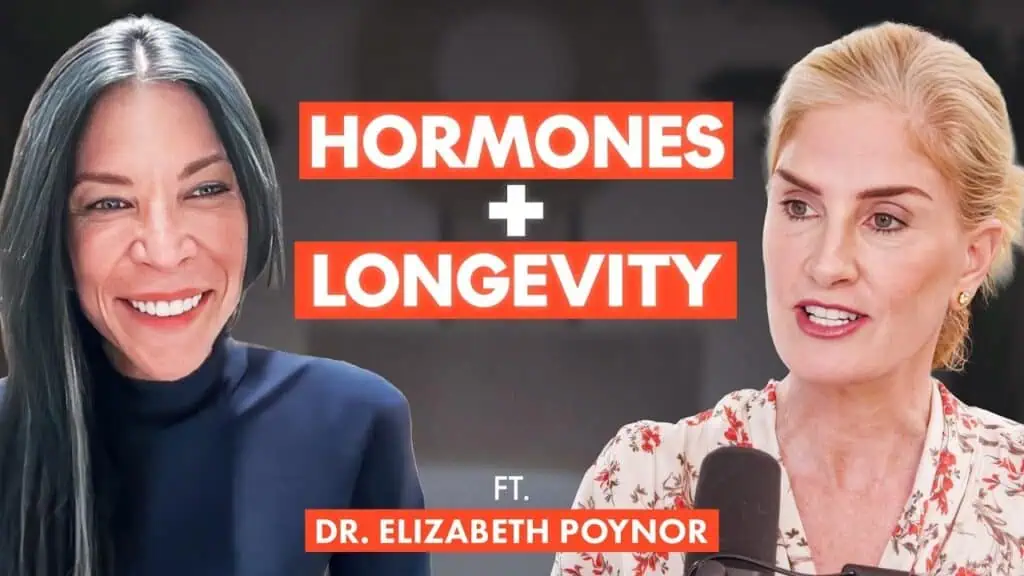
By the time many of us reach our late 30s and 40s, we can feel that something has shifted. We may be sleeping differently, carrying weight differently, forgetting words, feeling more anxious, or wondering why the routines that worked for years suddenly do not work anymore. It is easy to write those changes off as stress, aging, or simply being busy. But for many women, there is a hormonal story underneath them.
Dr. Elizabeth Poynor is a board-certified gynecologic oncologist, pelvic surgeon, and Chair of Women’s Health and Gynecology at Atria Health and Research Institute who approaches longevity through a distinctly female lens. She joins Dr. Thais Aliabadi and Mary Alice Haney to share a core message that is refreshing and deeply empowering: midlife is not a decline we have to passively accept. It can be the moment we decide to age strong.
Table of Contents
- From Cancer Care to Prevention and Women’s Longevity
- The Foundations of Healthy Aging
- GLP-1 Medications, Body Composition, and Muscle
- The Midlife Hormonal Turning Point
- When to Consider Hormone Therapy
- Progesterone and Testosterone Are Not Side Notes
- Movement Is the Highest-Impact Longevity Habit
- What We Still Need to Learn
- Midlife Can Be an Empowering Reset
From Cancer Care to Prevention and Women’s Longevity
How did your work as a gynecologic oncologist lead you into longevity medicine?
We came to prevention through cancer care. For years, we worked at a leading cancer center, operating on women with ovarian cancer and caring for them across their lives, not only in the operating room. That longitudinal care changes how we think. We see the whole person: blood pressure, diabetes risk, mood, body composition, sleep, hormone changes, and what happens when the ovaries are removed.
Over time, a recurring question became impossible to ignore. Women would ask whether chronic stress may have contributed to their illness. Early in a medical career, it can be tempting to say there is no evidence and move on. But when we hear the same concern repeatedly, we have to listen.
Research into stress and immune function helped broaden the conversation. Cancer is affected by immune surveillance, meaning our immune system plays a role in identifying and controlling abnormal cells. We are not saying stress alone causes cancer. We are saying that stress, immune health, lifestyle, metabolism, inflammation, and hormonal health all deserve serious attention in preventive medicine.
There is a great surgeon on every street corner in a city like New York. What is much harder to find is someone focused on prevention. We need more of that, especially for women whose bodies move through major hormonal transitions that influence every system.

Are cancer rates really increasing in younger women?
We are seeing concerning patterns, particularly more breast cancer and colon cancer in younger people. National cancer data take time to mature, so we must be careful before making definitive statements about broad population trends. Cancer is also a disease of aging, so as we get older, more people in our communities will receive diagnoses.
Still, it is reasonable to ask what has changed. We live with different stressors, food environments, additives, exposures, sleep disruption, and lifestyle patterns than prior generations. We do not have every answer yet, but waiting for perfect certainty should not keep us from strengthening the basics.
What role should genetic testing play in prevention?
Genetic testing has become more accessible, and the threshold for considering it is lower than it used to be. Historically, clinicians often reserved testing for families with cancer in multiple generations. Today, appropriately counseled women can often benefit from having clearer information about inherited risk.
Dr. Poynor knows this personally. Despite being a gynecologic oncologist, she learned in her 60s that she carried a BRCA1 mutation after her mother developed pancreatic cancer. That information led her to make preventive surgical choices. It is a powerful reminder that expertise does not make anyone immune to blind spots in family history or risk assessment.
The point of testing is not to create panic. It is to provide usable information. Testing should be medically vetted, done through a qualified clinician, and paired with thoughtful counseling about what a result can and cannot tell us.
The Foundations of Healthy Aging
If we want to reduce risk and age well, where should we focus first?
The answer is not glamorous, but it is powerful. We come back again and again to the foundational pillars:
- Whole-food nutrition: A Mediterranean-style eating pattern, or a close variation, remains a consistently strong framework.
- Strength training and aerobic exercise: Both support muscle, metabolism, immune health, cardiovascular health, and brain health.
- Sleep: Sleep is not optional recovery time. It is a major part of health maintenance.
- Stress management and mindset: We need practices that genuinely bring us joy and regulate stress.
- Attention to food quality: Favor whole foods and shop the perimeter of the grocery store when possible.
We do not all need the same stress practice. Meditation is wonderful for some people, but it is not the only route. If sitting quietly makes us want to jump out of our skin, we can lift weights, walk outside, spend time with animals, volunteer, dance, or connect with people we love. The best practice is one we can actually return to consistently.
For many women, movement becomes the entry point. Once we move, we feel better. When we feel better, it can become easier to choose nourishing food, protect our sleep, and build a healthier mindset.
How much protein do midlife women need?
Muscle mass begins declining earlier than most of us realize. For women in midlife who are actively building or protecting muscle, Dr. Poynor often recommends roughly one gram of protein per pound of body weight. Those focused primarily on maintenance may need somewhat less.
The practical point is not to force all protein into one dinner. Distribute it across the day and pair it with resistance training. That combination supports muscle preservation at a life stage when body composition and metabolic health can become more challenging.
Meat can fit into a healthy diet in moderation. Choose lean options when possible, pay attention to cholesterol and individual health markers, and avoid treating any single observational study as final proof of cause and effect. Our genetics and nutrient processing vary. Personalization matters.
Nutrition can also support cognitive health. We can build on the Mediterranean-style pattern with foods such as fish, nuts, seeds, olive oil, leafy greens, berries, legumes, and whole grains. Our guide to brain-supportive foods offers practical ideas for bringing more of these choices into everyday meals.
GLP-1 Medications, Body Composition, and Muscle
How should we think about GLP-1 medications in midlife?
GLP-1 medications have been transformative for many women dealing with the frustrating metabolic shifts of midlife. As estrogen fluctuates and declines, insulin resistance can increase, and fat may accumulate around the abdomen as visceral fat. This is not simply about a number on a scale. It is a change in body composition.
For some women, strength training, protein intake, and moderate calorie restriction are not enough to meaningfully shift stubborn visceral fat. GLP-1 medications can be helpful in the right clinical context. But the goal should never be to lose weight at the expense of muscle.
When using a GLP-1, we need to pay close attention to:
- Protein intake
- Consistent strength training
- Body composition, not only body weight
- Maintaining muscle while reducing visceral fat
- Avoiding excessive aerobic exercise that may compromise muscle preservation
Emerging data suggest GLP-1 medications may have benefits beyond weight, including effects on glucose, insulin, inflammation, and cardiovascular outcomes. But we need more research before treating them as universal longevity medications. The same applies to so-called microdosing. Lower or less frequent doses are being used in varied ways, but the evidence base for long-term health outcomes is still developing.
For women facing menopause-related abdominal fat changes, our discussion of belly fat, menopause, and healthy body composition provides more context on visceral fat and the value of strength training.
The Midlife Hormonal Turning Point
Why can changes begin after 35, long before menopause?
We tend to talk about menopause as if it arrives suddenly. In reality, physiology may begin changing in the late reproductive years, often between approximately ages 35 and 42. Fertility declines as the ovaries age, but the effects are not limited to reproduction. Brain health, sleep, cardiovascular health, bone health, muscle, metabolism, and mood may all begin to shift.
Often, our body whispers before it screams. We may notice that we are thicker around the waist, sleeping poorly, feeling less joy, becoming more irritable, or simply not feeling like ourselves. These experiences are real, even when they are hard to quantify.
Three hormones are central to this conversation:
- Progesterone: Often the first hormone to decline. Lower levels may contribute to disrupted sleep, anxiety, irritability, and a sense of nervousness.
- Estrogen: Can fluctuate dramatically before falling overall. Changes may relate to vaginal dryness, libido changes, brain fog, metabolic shifts, and changes in cardiovascular markers.
- Testosterone: Also declines with age and may influence libido, muscle mass, confidence, mood, and decisiveness.
What does “midlife brain fog” actually feel like?
Brain fog is one of the most common and underappreciated complaints. It may feel like suddenly having ADHD, losing executive function, forgetting why we entered a room, struggling to retrieve a familiar word, misplacing keys, or forgetting names. Word recall can be particularly frustrating.
These symptoms deserve a thoughtful evaluation. They are not automatically caused by hormones, and they should not be dismissed as imaginary. Hormonal changes are one possible contributor among many, alongside sleep, stress, mood disorders, nutritional factors, medication effects, and medical conditions.
Estrogen also matters to brain bioenergetics and blood flow. As estrogen declines, the brain may process glucose differently. Changes in cardiovascular and metabolic health occur at the same time, which is one reason women’s longevity cannot simply borrow a model built around men.

Why is this a critical window for metabolic health?
Estrogen decline can be associated with increased visceral fat and worsening insulin resistance. The cycle can reinforce itself: estrogen falls, visceral fat accumulates, insulin resistance increases, and then higher insulin levels can contribute to further fat storage.
At the same time, LDL cholesterol and total cholesterol may rise, while HDL may become less protective later in life. These shifts are why midlife is not just about hot flashes. It is a broader cardiometabolic turning point.
We cannot expect hormone therapy alone to reverse every body-composition change. Nutrition and exercise still matter enormously. But it is worth asking whether earlier attention to hormonal and metabolic health can help us prevent some of the most difficult shifts rather than only react after they become entrenched.
When to Consider Hormone Therapy
When should a woman start discussing hormone therapy?
There is no single birthday or universal lab result that tells every woman it is time. The better question is whether we are experiencing symptoms, whether our physiology appears to be changing, what our personal risks are, and what we want to optimize.
For a woman in her early 40s with brain fog, mood shifts, vaginal dryness, sleep disruption, and a strong family or genetic risk related to dementia, that discussion may be very different than it is for someone with no symptoms or with a history that makes hormone therapy inappropriate.
Dr. Poynor supports shared decision-making that includes symptoms, relevant testing, family history, cardiovascular risk, cancer history, and individual goals. Her practice pays attention to day-three FSH testing and is interested in developing better biomarkers for ovarian aging. The field needs stronger evidence and clearer algorithms, but that does not mean we should ignore women who feel unwell now.
Current guidelines do not yet define brain fog alone as an indication for hormone therapy. That is precisely why more research is necessary. Clinical experience suggests some women improve with carefully selected hormone support, but science needs to show which patients benefit, at what dose, through which route, and with what long-term outcomes.
Why does the route of estrogen matter?
In this clinical approach, transdermal estrogen is generally preferred over oral estrogen. Transdermal options include patches, gels, and creams. Oral estrogen passes through the liver differently and is associated with increased clotting risk, increased stroke risk, and increased C-reactive protein, an inflammatory marker.
Transdermal estrogen does not appear to carry those same effects in the same way. It may be delivered through a patch, gel, or a systemic estrogen ring. Patches tend to provide a steadier delivery than gels, although practical preferences matter. For example, frequent sauna use may make a patch less convenient.
For people using transdermal therapy, absorption can vary. Dr. Poynor checks levels and, for patches changed every three to four days, often evaluates the lowest point, just before the patch is changed. The purpose is to understand how much estrogen support is actually reaching the body.

Can hormone therapy continue later in life?
That decision should be individualized and revisited with a knowledgeable healthcare professional. Important contraindications include estrogen-dependent malignancy, recent stroke, unexplained vaginal bleeding, and very high clotting risk. There is no reason to simply endure symptoms that meaningfully diminish quality of life when appropriate care may help.
For women without contraindications, the conversation should not be reduced to fear. It should include route of administration, dose, age, symptom burden, personal risks, and desired outcomes. Older age may warrant reassessment or dose adjustment, but it is not a reason to stop having the conversation.
Progesterone and Testosterone Are Not Side Notes
What should we understand about progesterone?
Progesterone acts on GABA receptors in the brain, which are involved in calming and sleep. It can be valuable for women dealing with sleep disruption, anxiety, or irritability, including some women who have had hysterectomies and do not need it for uterine protection.
If a woman still has a uterus and uses systemic estrogen, progesterone is typically needed to protect the uterine lining. It is important to distinguish natural oral progesterone from synthetic progestins. The Women’s Health Initiative studied a synthetic progestin, and that history has shaped much of the concern around progesterone and breast cancer.
Natural progesterone is not identical to synthetic progestins, and studies discussed by Dr. Poynor have not shown the same elevated breast cancer risk over at least five years of use. Still, progesterone remains under-researched, including the question of whether cyclic dosing may be more physiologically appropriate for some women than continuous daily dosing.
What about testosterone for women?
Testosterone is another area where clinical experience has moved ahead of formal research. Some women report benefits in libido, muscle mass, confidence, sleep, mood, and the ability to make a decision and act on it. That feeling of clarity and forward movement can matter a great deal.
The challenge is that we still lack robust guidance on the best dose, target levels, delivery method, and long-term outcomes for women. Dr. Poynor typically begins with a low-dose transdermal cream and moves slowly, because some women can feel aggressive or “ragey” even at low doses. Injectable options require careful monitoring, including attention to potential increases in red blood cells.
This is not a do-it-yourself category. Appropriate dosing and monitoring are essential.
Movement Is the Highest-Impact Longevity Habit
If we choose one habit to start today, what should it be?
Move. Daily movement is the nonnegotiable. Strength training is especially important, but the best form of movement is one we can sustain. Lift weights. Take a dance class. Walk. Do push-ups in the living room. Get outside. Build muscle memory and a relationship with movement that can last for decades.
Movement improves how we feel in our bodies, and that can create a powerful cascade. We may eat better, sleep better, manage stress more effectively, and make more proactive decisions about our health.
Dr. Poynor frames a midlife reset around several pillars: nutrition, gut health, movement, and mindset. We can enter through any pillar. But movement may be the one that makes everything else easier to build.
What do women in their 20s, 30s, and 40s need to do now?
Build micro habits before we need them. The three hours of sleep we survive on in our 20s may not serve us later. The food pattern that once felt fine may no longer support metabolic health. The best time to create a stronger baseline is before a major transition forces our attention.
Women with PCOS deserve particular attention because of higher risks of insulin resistance and cardiometabolic disease. Addressing hormonal and metabolic health earlier can create habits that protect us later. For more individualized support around weight, metabolic health, and treatment options, explore our resource on healthy weight loss and medical care.
What We Still Need to Learn
What is your perspective on peptides and emerging longevity treatments?
We need the data. That is not a boring answer. It is the responsible answer. Peptides may be exciting, but we need safe, standardized production, clear sourcing, human studies, and a better understanding of short-term versus long-term use.
The same principle applies across longevity medicine. This is a young field filled with meaningful possibilities, but enthusiasm should not outrun evidence. We need studies that include women and take hormonal transitions seriously rather than treating them as inconvenient variables.
How should women think about longevity differently than men?
Women experience major hormonal transitions that men do not experience in the same way. Testosterone in men tends to decline on a slower slope. Women can move through larger and more abrupt shifts in estrogen, progesterone, and testosterone, particularly through perimenopause and menopause.
Estrogen affects mitochondria, the systems that help power our cells. When estrogen levels are low, mitochondrial function changes. That is one straightforward example of why women’s health, brain health, metabolism, cardiovascular health, and longevity must be examined through a hormonal lens.
We cannot build women’s longevity by treating women as smaller versions of men. We need research that captures the complexity of female physiology, acknowledges the transition of menopause, and gives women better preventive strategies.
Midlife Can Be an Empowering Reset
What is the most important message to carry forward?
Every woman can pursue her best health. Our starting points are different. Our genetics, medical histories, resources, symptoms, and priorities are different. But no matter where we begin, we can be proactive.
Midlife is both a physiologic turning point and an attitudinal one. We can allow changes to happen passively, or we can decide to maintain our body with the same intention we bring to anything valuable. We can protect sleep, build muscle, nourish ourselves, learn about our hormonal health, ask better questions, and find clinicians who take our concerns seriously.
Aging is not something we need to fear. We can rock it. We can age with strength, knowledge, and autonomy.
Concerned About Your Health? Talk to Dr. Aliabadi
Dr. Aliabadi is an expert OB/GYN who is knowledgeable in all aspects of women’s health and well-being. Dr. Aliabadi and her caring, supportive staff are available to support you through PCOS, endometriosis, menopause, childbirth, infertility, or routine gynecological care. We invite you to establish care with Dr. Aliabadi. Call us at (844) 863-6700 or
Frequently Asked Questions About Midlife Hormones and Longevity
Can perimenopause symptoms begin in our 30s?
Yes. Hormonal and physiologic changes may begin in the late reproductive years, often around ages 35 to 42. Sleep changes, mood shifts, brain fog, changes in body composition, and altered libido can appear well before menopause.
Is brain fog a real menopause symptom?
Brain fog is a common midlife complaint and can include difficulty with word recall, memory, focus, and executive function. Hormonal change may contribute, but a thorough evaluation should also consider sleep, stress, medications, mood, and other medical factors.
What is the best exercise for women in midlife?
Consistent movement is most important. Strength training is particularly valuable for preserving muscle mass and supporting metabolic health, while aerobic activity supports cardiovascular fitness. A sustainable routine can include lifting, walking, dancing, cycling, or other enjoyable movement.
Are transdermal estrogen patches safer than oral estrogen?
Dr. Poynor generally prefers transdermal estrogen, including patches and gels, because oral estrogen is associated with greater clotting risk, stroke risk, and inflammatory effects. The best option depends on personal medical history and should be chosen with a qualified healthcare professional.
Should women use testosterone in midlife?
Testosterone may help some women with libido, mood, muscle mass, sleep, and confidence, but research on female dosing and long-term outcomes remains limited. If used, it should be prescribed and monitored carefully by an experienced clinician.