Can we start with the phrase “geriatric pregnancy”?
Whitney Cummings joins Dr. Thais Aliabadi and Mary Alice Haney to discuss pregnancy at older ages.
Whitney: We absolutely can, because someone used it to describe my pregnancy and I thought, excuse me? We could call it a well-thought-out pregnancy. A finally-not-in-debt pregnancy. A woman-with-a-plan pregnancy. There are so many options that do not make us sound as though we should be shopping for a retirement home alongside a crib.
Dr. A: We generally use “advanced maternal age” when discussing pregnancy at 35 or older. The terminology matters, but so does the care behind it. Age can affect fertility and pregnancy risks. It does not tell us, by itself, whether someone will have a healthy pregnancy.
Whitney: That distinction is everything. We can take biology seriously without talking to women as if their lives expired on a birthday. I got pregnant at 40 and felt ready in a way I would not have felt years earlier. Readiness is not a lab result, but it is part of our story.
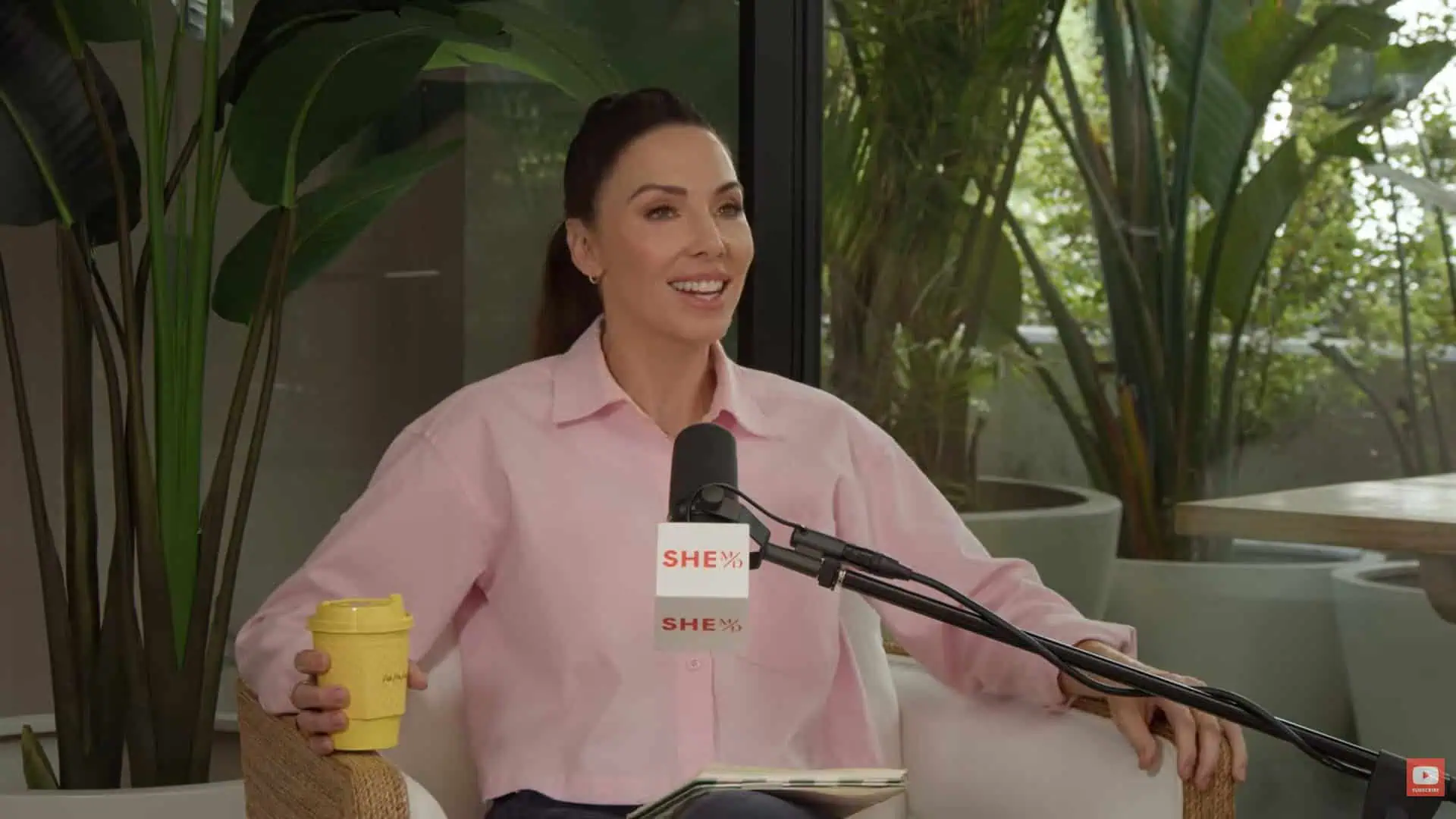
Table of Contents
- Egg Freezing and the Freedom to Make a Plan
- Getting Pregnant Naturally at 40
- Preparing for Pregnancy Without Pretending There Is a Magic Protocol
- Body Image and the Stories We Pass Down
- Birth After 40: Planning and Making Room for Joy
- Postpartum Depression, Perfectionism and Asking for Help
- What Motherhood Changed
- Family Does Not Have to Follow One Script
Egg Freezing and the Freedom to Make a Plan
Why did you freeze your eggs at 33?
Whitney: We hear a lot about finding the right person and building the right career. We hear much less about the possibility that we can do those things and still run into fertility problems. I was working on a movie with a successful writer who was dealing with exactly that. She had built this incredible life and was struggling to have a baby. She urged the younger women around her to consider freezing their eggs, and something clicked for me.
At the time, egg freezing was not the casual brunch topic it has become. I had started earning money, and I was used to spending it helping other people. Sometimes that meant paying off debt or trying to fix problems that were not actually mine to fix. For once, I decided to put resources toward an option for my own future.
I have joked that we should skip the expensive bag and save for our eggs instead. That is my personal money advice, not a promise that egg freezing is affordable or that it will work for everyone. The point is to ask what we really value before another purchase makes the decision for us.
Did freezing your eggs feel empowering right away?
Whitney: Emotionally, yes. Logistically, it was a lot. There were appointments, traffic, needles and a tour schedule to work around. I took the medication supplies on the road and enlisted friends to help with injections. We can be grateful for an option and still say that getting through it takes time, money and effort.
What changed for me was the pressure I brought into dating. Before, I felt as though every relationship had to answer an urgent question about when I would have a child. I had tours booked far in advance, and that calendar made the whole thing feel even louder. Once I had frozen eggs, I felt able to breathe and assess the person in front of me rather than mentally scheduling a pregnancy on the second date.
That was my experience, not a guarantee of extra fertile years. Frozen eggs are an option, not an insurance policy. We still need a conversation with a fertility specialist about our age, circumstances, likely outcomes and costs. For more background on how egg quantity and quality change, we can read about fertility in our 40s.
Why was it important to keep those eggs separate from a relationship?
Whitney: A few years later, I was dating someone and started thinking we should make embryos together using the eggs I had frozen. I was doing that thing where we give a long sales pitch for a partner nobody asked us to defend. That should have told me something.
Dr. A: We had a very direct conversation about protecting the eggs she had frozen. Making embryos with a partner is a different decision from freezing eggs independently. A relationship can change, and decisions about embryos can become complicated if it does. In Whitney’s situation, keeping her frozen eggs gave her an option that was hers.
Whitney: I needed someone to interrupt my romantic momentum. We can be hopeful about love and still stop to ask whether we are making a permanent decision because we are scared of running out of time.
It is also worth being precise about my story: I froze eggs, but I did not use them to conceive Henry, and I did not go through IVF to have him. If we want to understand what an IVF cycle involves, that is a separate conversation from what happened in my pregnancy.
Getting Pregnant Naturally at 40
How did the relationship with Henry’s father begin?
Whitney: After losing both of my parents, grief made me reconsider a lot about my life. We can become very clear, for a while, about what actually matters. I met someone I found fascinating and playful. He did not fit every practical item that might have appeared on an old checklist, and I was not trying to audition him for the role of boyfriend.
I noticed something different: I could imagine him as a father. Those are not necessarily the same qualifications. We can enjoy dating someone and still know we would not want to raise a child with them.
I stopped taking birth control, and we had a straightforward conversation about the possibility of pregnancy. About three months later, I was pregnant. I had frozen eggs available, but this pregnancy happened without using them.
Did coming off birth control change how you felt?
Whitney: I had taken it for a long time, including in connection with migraines. When I stopped, I noticed changes in my sleep, body and sex drive. That was significant for me, but we should not turn one person’s experience into a rule about what will happen to everybody.
Dr. A: Hormonal contraception can affect libido for some patients. We should bring changes or concerns to our clinician rather than assume that a claim about attraction or hormones applies universally. Whitney raised a popular idea about going off birth control to test whether we are attracted to a partner, and we should not mistake that for established medical advice.
What do we need to understand about fertility after 35 and 40?
Dr. A: We are born with a finite supply of eggs, and the number falls over time. We discussed broad estimates, from roughly 1 to 2 million at birth to about 300,000 to 500,000 by adolescence, with further decline through our 30s and toward menopause. Those figures illustrate the trend; they do not measure any individual woman’s chances.
Quantity is only part of it. As eggs age, the chance of chromosomal abnormalities rises, which can affect the likelihood of miscarriage. We discussed an approximately 40% miscarriage risk at age 40. That is a population-level estimate, not a prediction for any one pregnancy. Many women conceive and have healthy babies in their 40s. We also need to consider individual factors, including conditions such as endometriosis.
Whitney: When we say “older eggs,” I prefer to call mine wise. We can make the joke and still hear the medical information. I do not want women frightened into choosing the wrong partner, and I do not want us denied useful facts because someone thinks we cannot handle them. Give us the information and let us make a plan.
Did having frozen eggs cause your natural pregnancy?
Whitney: I have said that the backup plan helped me feel less anxious. It changed how I approached dating and trying to conceive. But we should not hear that as “relax and you will get pregnant.” That is an awful message to hand someone who is struggling with infertility.
We can care for our mental health and seek fertility care at the same time. Feeling less pressure mattered to me personally; it does not prove why I conceived. Our friends’ stories about getting pregnant after taking a break, adopting or making another plan can be meaningful without becoming a formula everyone else is expected to follow.
Preparing for Pregnancy Without Pretending There Is a Magic Protocol
What were you doing for your health before you became pregnant?
Whitney: I had become much more deliberate about taking care of myself. Both of my parents had serious health problems, and I did not want to keep acting as though caring for my own body could always wait. Before pregnancy, I was exercising, stretching and avoiding alcohol. I also tried sauna and various supplements and infusions.
We need to separate what I did from what we know made a difference. I felt healthier, but I cannot credit a specific pill, drip or routine with causing my pregnancy. We should discuss supplements, treatments and heat exposure with our own clinician, particularly when planning a pregnancy or when pregnant.
The deeper change was that I stopped treating self-neglect as a personality trait. We can joke about being a mess forever, but at some point I wanted to be the person who kept appointments, made choices thoughtfully and took my health seriously. I did not approach 40 as the beginning of the end. I felt as though my life was starting.
What was pregnancy itself like for you?
Whitney: I was grateful to be pregnant, and I tried to meet the discomfort with that gratitude. If I felt nauseated, I sometimes reminded myself that I had wanted this experience. That helped me. It does not mean we should expect anyone else to enjoy nausea, silence a complaint or ignore a symptom.
We all know people who had very difficult pregnancies. I never want my relatively smooth experience used to make someone feel guilty about theirs. For me, slowing down felt good. I also began asking whether a discomfort was prompting me to rest or pay attention rather than treating my body as an obstacle to outwork.
What surprised me was how much emotional work came with it. We talk about preparing a nursery, but I felt as though I was preparing an entire nervous system to become someone’s mother.
Body Image and the Stories We Pass Down
How did pregnancy affect your relationship with your body?
Whitney: We had spent so much of our lives being taught to assess our bodies through other people’s eyes. I had spoken openly about body image and disordered eating, so pregnancy brought up an important question: what happens when my body is no longer primarily something I am trying to make look a certain way?
For me, it was a chance to reconsider what my body was for. That did not erase a lifetime of conditioning. It gave me a different relationship to practice. We can acknowledge that physical change feels unfamiliar, even frightening, without treating our pregnant bodies as a problem to solve.
You described pregnancy as a personal software update. What did you mean?
Whitney: I did not want to hand my son every resentment I had been carrying. We learn patterns in our families, our relationships and our work, and then we repeat them without saying a word. Children notice how we react long before they can understand our explanations.
I started taking responsibility for my part in old conflicts. In some cases I apologized for how I had behaved in past relationships. I wanted to let go of the reflex to enter every room ready for a fight. Working in comedy had taught me to protect myself. Motherhood made me ask whether that protective armor needed to be my default setting at home.
Forgiveness is not a demand to remain in an unsafe situation. We need boundaries and safety. What I wanted was not to carry old anger into every new interaction. I kept asking myself: instead of doing what the old version of me would do, what would Henry’s mom do?
Dr. A: We also spoke about childhood experiences and how differently people process them. We can find ways to live in the present without pretending trauma was harmless or that everyone should recover on the same schedule. Support, including therapy when it helps, can be part of changing a pattern.
Birth After 40: Planning and Making Room for Joy
What did you want the delivery room to feel like?
Whitney: I did not have the traditional picture of a husband beside the bed. I brought my aunt and my best friend from college. We had women around me, Christmas lights, lip balm and a playlist that could make us laugh. It felt warm and completely ours.
We do not have to turn that into a rule about who belongs in a delivery room. Bring the people who help you feel supported. I was having a baby outside the family arrangement I once thought I was supposed to have, and it was still joyful. There was no missing piece in that room.
What extra care can matter during pregnancy at 40?
Dr. A: We should distinguish increased risk from an inevitable complication. With advanced maternal age, I pay close attention throughout pregnancy. We discussed genetic screening beginning in the first trimester, blood tests and ultrasounds at different stages, and assessment of risks such as preeclampsia and preterm birth.
Potential concerns include high blood pressure, gestational diabetes, preeclampsia, restricted fetal growth, preterm birth and the possibility of cesarean delivery. That list can sound intimidating. It is a reason to have a thoughtful care plan, not a reason to assume something will go wrong.
In my practice, I use growth ultrasounds to monitor how a baby is developing. We discussed how a change in abdominal growth can prompt closer attention even when a patient feels fine. We also discussed low-dose aspirin for some patients, and I described using 81 milligrams from 12 to 36 weeks in the care plan under discussion. Aspirin and other interventions should be decided with the treating clinician, not started because a schedule worked for someone else.
For Whitney, we also addressed a thyroid issue with medication. We made decisions as information came in rather than treating every new finding as a catastrophe. She was closely monitored and did well.
Why did you plan delivery at 39 weeks?
Dr. A: For Whitney’s pregnancy at 40, we planned delivery at 39 weeks. Timing decisions depend on the person and pregnancy, so we discuss the risks and benefits with the care team.
Whitney: We had a due date in our heads, and then learned the actual birth plan would be earlier. I had already attached meaning to that date. Pregnancy is excellent at reminding us that a calendar is a proposal, not a contract.
We will hear a thousand opinions about induction. I think it helps to choose a small circle of trusted people, ask questions of our doctor and avoid treating every frightening birth story as a forecast for our own. We can appreciate that another parent means well without making their experience our medical plan.
What happened during Henry’s delivery?
Dr. A: As Whitney pushed, Henry’s heart rate dipped. After birth, we could see that his umbilical cord was short, which helped explain what we had seen on the monitor during contractions. We changed Whitney’s position, gave oxygen and monitored the tracing closely. I also asked for a vacuum device to be available in case an assisted delivery became necessary. We did not end up using it.
Preparing equipment does not mean we are certain we will need it. We want the team ready if circumstances change quickly.
Whitney: When I heard “vacuum,” I had an entirely different appliance in mind. This is why medicine needs a few new words. But in that moment, what mattered was trust. I knew something required our attention, and nobody around me panicked.
Dr. A gave me a direct instruction to push. I did not need an essay or another internet search. We were working together, and I understood what I needed to do. We should be able to ask questions and advocate for ourselves in pregnancy. We should also be able to feel supported enough to follow the team we chose when a moment calls for action.
Postpartum Depression, Perfectionism and Asking for Help
What was hardest after Henry was born?
Whitney: I had spent years getting good at performing, producing and pushing through exhaustion. Those skills were useful in business. They did not make it easy to recover from birth while caring for a newborn.
I was tired and physically healing. I needed help with ordinary things, and asking for it felt strangely unbearable. At the same time, I loved my baby fiercely. That combination confused me. We can have the best thing in our life happen and still find ourselves crying, angry or lonely. Love does not cancel recovery.
Grief resurfaced too. My parents were gone, and Henry would not know them as grandparents. The quiet time with a newborn left me with feelings I had previously stayed busy enough to avoid. I could not simply produce my way out of them.
I had to learn to say no. A friend’s wish to come over and hold the baby was not automatically what I needed. Sometimes I wanted company but had no energy to host it. Sometimes I needed someone to care for me, not another person asking me to coordinate an experience for them. We are often trained to make everyone comfortable. Postpartum life did not leave me the capacity to do that.
How do we distinguish baby blues from postpartum depression?
Dr. A: Many women experience short-lived mood changes after birth, often called the baby blues. Postpartum depression is more than a difficult afternoon or the expectation that we should be happy all the time. It can affect daily life and leave us feeling persistently low or disconnected. It may emerge later rather than immediately after delivery.
We discussed factors that can increase vulnerability, including a history of anxiety, depression, trauma, bipolar disorder or premenstrual dysphoric disorder, as well as birth trauma, a baby needing intensive care and lack of support. Postpartum depression can also occur without those circumstances. We should not wait to reach some imaginary threshold of suffering before speaking to a clinician.
Recovery deserves more attention than a six-week appointment suggests. Bodies, sleep, relationships and identity can keep changing across the first year. We can learn more about symptoms and treatment through our postpartum depression resource. If we have thoughts of harming ourselves or our baby, we need immediate help.
Why was speaking openly about it difficult?
Whitney: I worried that honesty would be used against women. We already hear enough nonsense about whether mothers can work or lead. Would sharing that I had postpartum depression give someone another excuse to underestimate us?
Eventually I realized that hiding it would not stop anyone determined to hold a stereotype. It would, however, leave other mothers feeling more alone. We did something enormous by giving birth, and it makes sense that we may need support afterward. Needing help does not make us less capable.
I started reaching out to friends and sharing what was actually happening. A simple call could help. One friend told me to let motherhood change me. I had been trying so hard to return to an earlier version of myself that I had not considered allowing a new version to exist. I still name postpartum depression as postpartum depression. Calling this period a “software update” is my way of describing the identity shift, not a substitute for care.
What Motherhood Changed
How has becoming a mother changed your everyday life?
Whitney: Before Henry, I spent a lot of energy mothering adults, rescuing people and trying to solve everybody’s problems. Now I have a child, and I am less available for that. Oddly, I have had to learn to mother myself more.
I want Henry to see someone who takes care of her health, rests and moves through ordinary tasks without making every moment frantic. I have routines. I slow down. I pay attention to how I speak to other people. We can tell a child to say thank you a hundred times, but they are also learning from whether we say it ourselves.
Mothering is modeling. That does not mean we must be perfect. It means the choices we make in front of our children matter. Caring for ourselves is not a detour from caring for them.
Motherhood also brought back play. In work, I had spent years trying to be taken seriously. With Henry, I get to be curious and present. Having him later in life meant I was not racing to build my career in quite the same way, and I am grateful for the time that gives us together. That is one benefit of my timing, not an argument that everyone should wait.
What have past relationships taught you about choosing a partner?
Whitney: We can treat dating as practice rather than a series of verdicts on our worth. We practice boundaries, patience and noticing what makes us uncomfortable. Some relationships show us what we want. Others show us what we keep trying to make work, even when the other person has shown us they cannot offer it.
If we want children, it helps to ask a different question from “Would this person be a fun boyfriend?” Could we respect them as a parent? Could we trust them when life is unglamorous? Sometimes the small things tell us more than the big romantic speech. Do they return the grocery cart? How do they behave when nobody is rewarding them?
I also ask who I become around someone. Am I honest, or am I performing? Am I comfortable giving an opinion, or am I constantly trying to be agreeable and entertaining? Do I respect their judgment enough to ask for advice? Attraction matters, but respect and being able to act like ourselves matter too.
Family Does Not Have to Follow One Script
Did you feel something was missing because you were not married when Henry was born?
Whitney: No. We can have an extraordinary partner beside us, and that can be wonderful. We can also have the wrong partner beside us, and that can make a hard moment harder. My delivery room was full of support, even though it did not look like a conventional family portrait.
Henry’s father and I co-parent. Our arrangement is our own; it is not a template we can hand to everyone. The point is that we should not make a life-altering relationship decision simply because we think a child must arrive after a wedding and before a certain birthday.
Dr. A: There are many paths to becoming a parent. We should think realistically about the practical support we will need, particularly if planning to parent on our own. We should also get appropriate legal advice when decisions about donor conception, embryos or custody arise. Those details are too important for a general conversation to settle.
What helps when a relationship ends but parenting continues?
Whitney: When it is safe to do so, we can be respectful to the other parent. A person can be the wrong partner for us and still have something valuable to offer their child. We do not need to turn every painful breakup into a public diagnosis of someone’s character.
How we communicate matters. Our children learn from it, and our messages can have consequences beyond the moment we send them. That does not mean accepting threats, abuse or an unsafe situation. Safety comes first. It means choosing cooperation where cooperation is possible.
We can build a family that does not resemble the plan we made at 25 and still give a child love, steadiness and room to know the people who care for them.
What lesson do you most want to carry forward?
Whitney: We are allowed to change. We can admit we were wrong, revise a belief, apologize or choose a different way to parent today than we chose yesterday. We do not owe lifelong loyalty to an old version of ourselves.
I am trying not to fill Henry’s world with unnecessary fear. I want to give him room to explore and learn while I stay close enough to keep him safe. I also try to let him answer questions for himself instead of rushing to speak over him. We can be curious about who our children are, not just focused on telling them who to be.
Having a baby at 40 did not make my pregnancy less meaningful, and freezing my eggs at 33 did not guarantee how my life would unfold. Those were different chapters of the same effort to make thoughtful choices with the information I had. We can plan, ask for help, change our minds and still leave room for a life that surprises us.
Health note: These experiences and medical discussions are educational, not a substitute for individual medical advice. We should consult our own healthcare professional about fertility, pregnancy, birth and postpartum mental health.
Concerned About Your Health? Talk to Dr. Aliabadi
Dr. Aliabadi is an expert OB/GYN who is knowledgeable in all aspects of women’s health and well-being. Dr. Aliabadi and her caring, supportive staff are available to support you through PCOS, endometriosis, menopause, childbirth, infertility, or routine gynecological care. We invite you to establish care with Dr. Aliabadi. Call us at (844) 863-6700 or