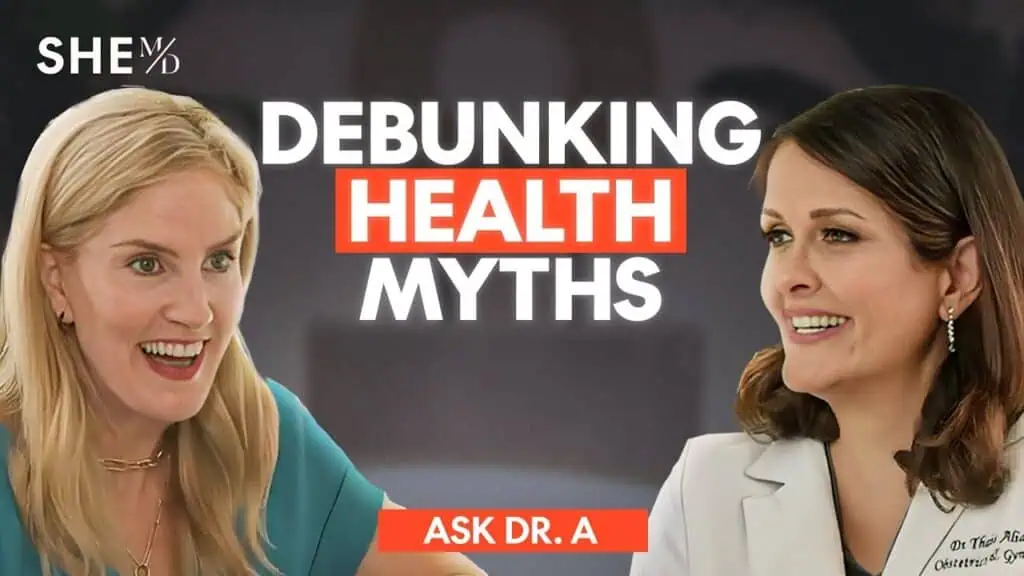
Some motherhood stories arrive exactly as planned. Others ask us to hold joy, fear, grief, gratitude, uncertainty, and love all at the same time. Khloé Kardashian joined Dr. Thais Aliabadi and Mary Alice Hany for an honest conversation about surrogacy, becoming a mother to True and Tatum, navigating a difficult season, protecting privacy, rebuilding trust in herself, and giving herself the time to heal.
This is a conversation about allowing our experiences to be complicated without deciding that we are doing motherhood wrong. It is about releasing comparison, honoring the people who support us, and remembering that connection does not have one correct timeline.
Table of Contents
- Building Trust With the Right Doctor
- True, Tatum, and the Many Ways Families Begin
- The Reality of a Difficult Surrogacy Journey
- Bonding Is Not a Test We Pass at Birth
- Co-Parenting With Gratitude and Boundaries
- Dating Can Wait While We Heal
- Food, Fitness, and Relearning Emotional Eating
- The Family Values That Keep Us Grounded
- Honesty Helps Us Feel Less Alone
Building Trust With the Right Doctor
How did your relationship with Dr. A begin?
Khloé: We met through Kylie, and from there Dr. Aliabadi became Dr. A to all of us. She cares for everyone in our family umbrella, and she is the kind of physician who is incredibly responsive, empathetic, and present. It feels almost impossible because she has so much going on, yet she treats every patient with such care.
We obviously see her as our OB-GYN, but she is also the person we call with every random question. It could be something about skin, hair, a concern after a procedure, anything. She will help us find the right person or the right next step. That kind of relationship with a doctor is so meaningful because it makes us feel cared for as a whole person, not only as one appointment on a schedule.

What makes that level of care so important in pregnancy and motherhood?
Dr. A: Pregnancy, delivery, postpartum recovery, fertility, and surrogacy bring so many emotional questions along with medical ones. We want patients to feel that they can tell us the truth. Sometimes the most important thing a physician can do is create a space where someone does not feel ashamed of what they are feeling.
That is especially important when our experience does not match the story we thought motherhood would be. There is no value in being told that we should be grateful and therefore must never feel scared, overwhelmed, detached, or sad. We can be grateful and still need support.
True, Tatum, and the Many Ways Families Begin
How did you choose your children’s names?
Khloé: True is a family name on my mom’s side. Her great-grandfather was named True, and it was also her biological father’s middle name. I have always liked things to feel orderly, and because her last name is Thompson, I wanted a T name. I had considered so many options, but nothing felt right until my grandmother Mary Jo suggested True. Once I met her, I knew. She was True.
Tatum took longer. I like names that feel unique without being too off the wall. But I did not legally name him for months. At home, we would call him Baby or Papa while we tried different names on. It was not that we did not love him. The experience of arriving at his name just unfolded differently.
Why did naming Tatum feel different?
Khloé: Because I was not carrying him, I did not have the same physical connection that I had while pregnant with True. During my pregnancy with True, I felt her moving. At night, I would pray and have those little conversations with her. I felt connected to her spirit before she was born.
With surrogacy, we can absolutely form a relationship with the pregnancy, but it can feel different. To protect our surrogate’s privacy, I was not at many appointments in person. I would join by FaceTime, but that is not the same as being in the room and experiencing an ultrasound in our own body. We should be able to say that honestly.
Is it normal to feel a different kind of connection during a surrogate pregnancy?
Dr. A: Yes. There are many beautiful ways to build a family, and surrogacy is an incredible option. At the same time, pregnancy creates a particular physical experience. There are body changes, kicks, appointments, anticipation, and months of imagining the baby. When someone does not carry the pregnancy, they may have a different emotional rhythm. Different does not mean less loving.
We should never turn a normal emotional experience into a source of guilt. The goal is not to prescribe a perfect feeling. The goal is to make room for reality and to help parents get the support they need.
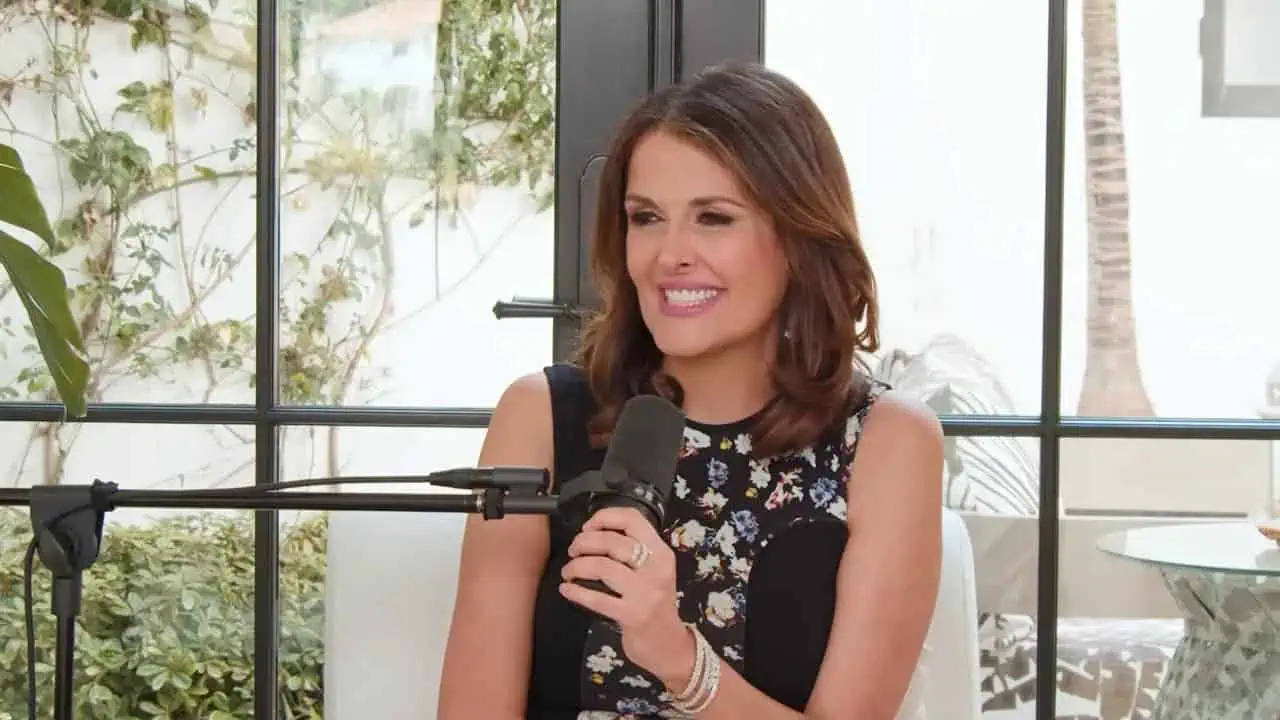
The Reality of a Difficult Surrogacy Journey
What made this part of your surrogacy journey so emotionally difficult?
Khloé: The embryo transfer happened shortly before Thanksgiving. Then, in early December, I found out my ex was having a baby with someone else. I had not even told my family about the transfer because I wanted to wait until it worked and surprise them. Dr. A was the only person who knew.
That timing was incredibly hard. For much of the surrogate pregnancy, I put my head in the sand. I felt detached and in denial. I did not want to face what was happening, and I did not fully allow myself to attach to the pregnancy. That had nothing to do with our surrogate. She was sensational, discreet, private, and exactly the person we needed. The disconnection was about what I was processing emotionally.
There is so much judgment around surrogacy, and I was terrified that people would find out before I was ready. When the news became public shortly before Tatum was born, it felt like the judgments and opinions were coming from every direction. I became very reclusive. I did not decorate the nursery because I did not want people entering my home and knowing. I was filming a television show while trying to keep a huge part of my life private.
What happened when you learned the baby needed to be delivered early?
Khloé: Dr. A called after a checkup and told me we needed to deliver within 24 hours because there was no fluid in the sac. The baby was expected a week or two later, and in my mind I had planned one final special weekend with True. We were going to have a hotel weekend because she loves hotels.
When I heard that delivery had to happen immediately, I started crying hysterically. It was not truly about the weekend. It was because everything had suddenly become real. I was scared, overwhelmed, and emotionally hanging on by barely anything.
Dr. A was so compassionate. She told me that she would deliver the baby and care for him until I was ready to come. She had been through this kind of situation before as an adoptive mother, and her offer came from a place of deep understanding. But I had to tell myself: this is life. We have to do this.
My sister Kim stepped in at exactly the right moment. She came to get me, and she was my prince on a white horse. Family support can look like someone simply showing up, taking over logistics, and carrying us through a moment when we cannot carry ourselves.
What did it feel like to meet Tatum for the first time?
Khloé: When Dr. A put him on my chest for skin-to-skin contact, it was sensory overload. I was not feeling one clean emotion that I could name. I was in shock. I could not believe it was real.
I looked back at footage from that moment and saw a version of myself that looked like a deer in headlights. My eyes looked blank. Again, that does not mean I did not love him. It means I had spent so much of the pregnancy in a state of emotional survival that I needed time to catch up to what was happening.
It took me around nine or ten months to feel fully connected to him. That is the part people are often afraid to admit. But creating a human takes nine or ten months, and for me, it felt like my emotional connection needed that time too.
Bonding Is Not a Test We Pass at Birth
Can a delayed bond happen even when we carry and give birth to a baby?
Dr. A: Absolutely. Bonding has no universal timeline. Even after carrying and delivering a baby, some parents need time to know this new person. We may bring home a beautiful child and suddenly think, “I am responsible for you forever, but I am still getting to know you.” That can be especially common with a first child, during major exhaustion, or amid postpartum emotional changes.
There is enormous pressure on women to feel an instant, fairytale-level attachment. When it does not happen immediately, people can feel as though something is wrong with them. Nothing is wrong with them for having an honest human response to a profound life transition.
We should give ourselves time, patience, support, and honesty. If difficult emotions persist or feel overwhelming, a healthcare professional or mental health provider can help us navigate them. More education about postpartum complications and emotional health can be lifesaving, which is why we encourage families to learn about postpartum warning signs and complications before they need urgent answers.
What would you say to a parent who feels guilty because their experience looks different from someone else’s?
Khloé: Do not compare yourself to someone else’s surrogacy journey. My sister Kim had two children through surrogacy and had a very different experience. Hers was great, and seeing her go through it gave me comfort in choosing it. But then I felt even more guilty because I was struggling while she had not.
Comparison really is the thief of joy. We can see someone else’s experience and think we should be feeling exactly the same. But we do not know every detail of what another person carries internally, and our own circumstances matter. We have our own history, fears, losses, relationship changes, stress, and hopes.
Surrogacy is an immense gift. The women who carry babies for other families are doing something extraordinarily generous. We can be grateful for that gift and still give ourselves grace. We do not have to share our story with every friend. We do not have to perform happiness if we are struggling. We can talk to a therapist, a physician, a trusted loved one, or whoever feels safe. Every feeling is allowed.
Co-Parenting With Gratitude and Boundaries
How do you speak about co-parenting after a difficult relationship experience?
Khloé: I want to be clear that Tristan is an incredible father to our children. He made mistakes, and we were not meant to be together, but he was meant to be their father. We get along well now, and I am grateful for that.
We can move forward in a relationship as co-parents while being honest about what did not work romantically. I saw my own parents get along well, and that shaped how I think about this. I feel fortunate to have a co-parent who wants to be actively involved in the children’s lives every day, even though his work takes him out of state.
Our children are the point. The heartache and messiness do not erase the blessing of the children we have. We can acknowledge pain while also being deeply grateful for the life that came from it.
How has privacy affected motherhood for you?
Khloé: Privacy has been a constant concern. During True’s birth, there was a situation where Dr. A posted an innocent photo at the hospital after delivery. It did not identify the hospital, but someone recognized details in the background and connected the location. Soon there were hundreds of people outside.
It was upsetting for everyone. As a physician, Dr. A felt protective of her patient. For us, it was another reminder that private family moments can become public without permission. We can be out doing something completely ordinary, like buying ice cream with the children, and later learn that someone photographed us from a car. That can feel much more invasive than someone simply approaching us openly.
Motherhood needs room for normal moments. We all deserve spaces where we can simply be with our children without feeling observed, analyzed, or judged.
Dating Can Wait While We Heal
Are you dating right now?
Khloé: I am open to it, but I am not actively dating. I do not use dating apps, not because there is anything wrong with them, but because they are not for me. I have needed time to heal and do my internal work.
I am not lonely. I am happy. Recently, I have felt a shift in my personality that tells me I may be more open to love when the right person comes along. But I have not been going on dates or filling my schedule with blind dates. I might wait until my forties. I am not against it. I am just not forcing it.
I have loved having laser focus on my children. They are only this young for such a short window. I do not want to distract myself with a relationship, social plans, or anything else just to avoid my feelings. I want to understand why I repeat certain patterns, how I can become stronger, and how I can be better to myself.
What does doing the internal work actually mean?
Khloé: It means letting ourselves feel what we feel rather than immediately trying to cover it up. It means asking why we make the same choices again and again, then giving ourselves the time to change. It means getting stronger around the constant noise and opinions that can pull us down.
That work is not glamorous. It can be quiet. It can be choosing not to date because we know we need time. It can be focusing on our children. It can be therapy, reflection, better boundaries, or refusing to measure our worth through someone else’s opinion. Being alone is not the same as being lonely.
For anyone working through self-criticism while rebuilding, we can start with the practical reminders in this guide to practicing self-compassion. Healing is not about becoming perfect. It is about becoming more honest, more aware, and more kind to ourselves.
Food, Fitness, and Relearning Emotional Eating
What has your wellness journey taught you?
Khloé: I have worked hard because I was overweight for much of my life. I have always been athletic and played sports, but getting into a healthier place with my body took years. For me, the larger challenge was food and retraining my mind.
I tried every diet when I was younger, and I learned that extreme changes do not work for me. Instead of waking up one day and trying to eliminate everything, I made small lifestyle changes. Maybe I would stop drinking soda for a week. Then I would make one more change. Little by little, those choices became sustainable.
Now I work out five days a week. I do cardio intervals and weightlifting, and I genuinely love it. If I am preparing for a shoot, I might add Pilates. But I do not feel that I am living in constant restriction anymore. When we train our brains over time, we can make choices that support us without feeling deprived.
How did emotional eating show up for you?
Khloé: I was a major emotional eater. Food could feel comforting while I was eating it, then I would feel worse afterward. I would be sad, eat for comfort, feel sad about eating, then want more comfort. It became a repeating cycle.
The shift came from patience. I did not tell myself that tomorrow had to be day one of a punishing plan with no sugar and impossible rules. That is too extreme, and it is not sustainable. We have to build trust with ourselves gradually.
When I was pregnant with True, I was worried about beginning again after delivery because it had taken me so long to build those tools the first time. But I had the tools in my toolbox. I knew how to approach it, and I was proud that I found my way back more quickly. Progress is not about never struggling. It is about learning what helps us return to ourselves.
The Family Values That Keep Us Grounded
What did your parents do that made your family so close?
Khloé: My mom has always been our safe space. We could tell her anything without being shamed. If we made a mistake, she would talk us through it and help us get home safely. There would still be consequences, but there was never a sense that we were unworthy of love because we had done something wrong.
That gave us trust and respect. No one believes in us quite like our mom does. If we wanted to try something, she found a way to support it. That belief gave us more belief in ourselves.
Both my mom and dad made family the foundation. We were taught that we do not compete with each other or become jealous of each other. We can be inspired by one another and celebrate one another. There is enough success, money, work, and opportunity to go around. We are united, not divided.
What can families take from that example?
Khloé: We can make home the place where people feel safe telling the truth. We can be protective of one another without controlling one another. We can cheer for someone else’s success without deciding it takes something away from us.
Family does not have to look one specific way. It can include relatives, co-parents, close friends, doctors, therapists, and the people who show up when life becomes overwhelming. What matters is building a circle where love is the core. When that is the center, so much becomes possible.
Honesty Helps Us Feel Less Alone
Why was it important to share the less polished parts of your experience?
Khloé: I was scared to be honest about my surrogacy journey because I thought people would say it was not normal to need time to love and connect. But I eventually shared it, and the response was supportive. So many people said thank you because they had felt something similar and had never heard anyone say it out loud.
That was healing for me. We do not need to disclose everything, but if our story helps even one person feel less alone, there is value in telling the truth. We can take the shame out of the feelings that so many people silently carry.
At SHE MD, that is why these conversations matter. Women are often dismissed, embarrassed, or told that they should simply endure symptoms and emotions. We want a safe place for the real questions, whether that involves painful periods, fertility, acne, postpartum concerns, or the complicated emotional reality of motherhood. More candid conversations can be found through the SHE MD podcast collection.
What is the most important message for anyone navigating surrogacy, postpartum emotions, or a difficult life transition?
Dr. A: Give yourself grace. Do not compare your journey to anyone else’s. Ask for help when you need it. A delayed bond does not define your love or your ability to parent. A hard season does not mean that you have failed.
Khloé: We can be honest about the hard parts and still recognize how blessed we are. We can take our time. We can heal. We can build a life that feels peaceful, safe, and true to us.
Concerned About Your Health? Talk to Dr. Aliabadi
Dr. Aliabadi is an expert OB/GYN who is knowledgeable in all aspects of women’s health and well-being. Dr. Aliabadi and her caring, supportive staff are available to support you through PCOS, endometriosis, menopause, childbirth, infertility, or routine gynecological care. We invite you to establish care with Dr. Aliabadi. Call us at (844) 863-6700 or
Frequently Asked Questions About Surrogacy, Bonding, and Healing
Is it normal not to feel an immediate bond with a newborn?
Yes. Connection has no single timeline. Some parents feel an immediate bond, while others need days, weeks, or longer to adjust to a new baby and their new role. If feelings of detachment, sadness, anxiety, or overwhelm persist, speaking with a healthcare or mental health professional can be helpful.
Can surrogacy make bonding feel different?
It can feel different because the intended parent may not experience the physical aspects of pregnancy, including fetal movement and in-person prenatal care. A different bonding timeline does not mean a lesser bond or a lack of love.
What can help during a difficult surrogacy journey?
Support can include honest conversations with a trusted physician, therapist, family member, or friend. Protecting privacy, allowing space for complex emotions, and avoiding comparison with others can also make the experience feel more manageable.
How can we approach emotional eating without extreme dieting?
Small, sustainable changes can be more realistic than strict rules. Learning to recognize emotional triggers, practicing patience, and treating food as nourishment rather than punishment can help us build habits that last.
Is it okay to pause dating to focus on healing?
Yes. Taking time to process a difficult relationship, focus on children, reflect on patterns, and rebuild self-trust can be a powerful and healthy choice. Being single does not mean being lonely, and readiness cannot be rushed.