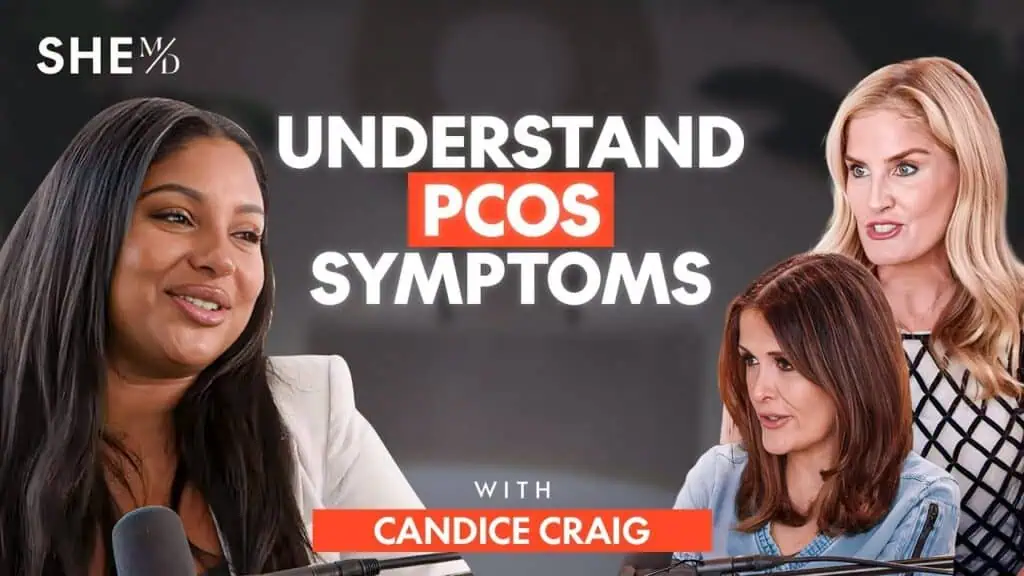
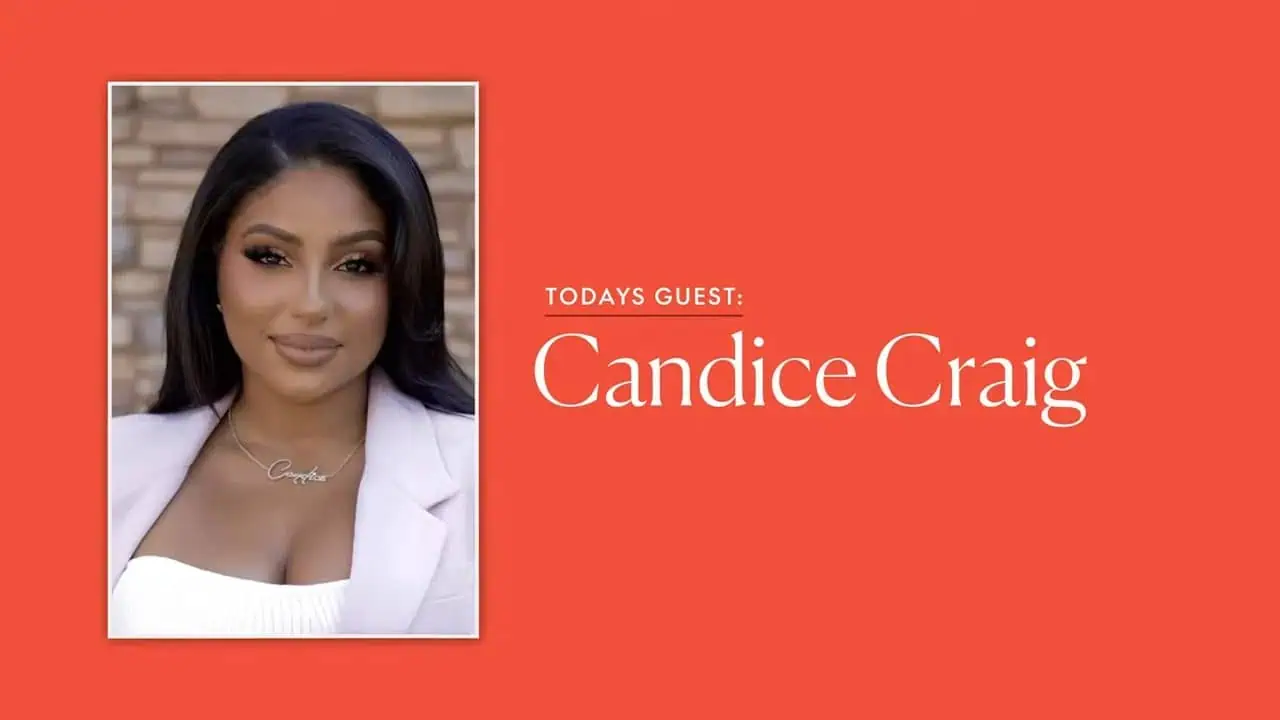
Today on She MD, Candace Craig joins Dr. Thais Aliabadi and Mary Alice Haney to talk about her PCOS journey.
How can someone have symptoms of PCOS for years and still be told everything is fine?
Candace: We can do everything people tell us to do and still feel that something is wrong. Our periods can become unpredictable. Our skin can break out. We can notice hair growing in places it never used to, or find that our weight is changing despite working out and eating carefully. Then we bring all of it to an appointment and hear that our tests look fine.
That is a lonely place to be. Before we connected the dots, we might have thought each symptom was a separate problem. A diagnosis of polycystic ovary syndrome, or PCOS, gave us a way to understand why so much was happening at once. It did not make the experience easy, but it meant we could stop asking whether we had imagined it.
Table of Contents
- When the Symptoms Did Not Add Up
- What a PCOS Diagnosis Actually Involves
- Why Insulin Resistance Can Connect the Symptoms
- PCOS, Ovulation, and Planning for Pregnancy
- Medication and Monitoring Around Pregnancy
- From a Private Diagnosis to Public Advocacy
- How to Advocate for PCOS Care
When the Symptoms Did Not Add Up
What was life like before PCOS became part of your story?
Candace: We had built a life around movement and creativity. We came from Miami, worked with major Latin artists, and moved to Los Angeles because the entertainment industry offered more room to grow. Dance took us on tour with Nicki Minaj and around the world with Pharrell Williams. We also worked with Ciara, Chris Brown, and Pitbull. Pitbull holds a special place in our heart because he was among the first artists to invite us to do multiple shows.
Being around people at that level taught us to keep expanding. Dance was a tool, not the limit of what we could do. We moved into entrepreneurship, created dance apparel, and eventually wrote Living with PCOS: Road to Reversal. The book may not be about dance steps, but the same creative drive helped us tell a story we wished we had heard earlier.
That background also explains why our symptoms felt so unsettling. As dancers, we spend a lot of time in our bodies and in front of mirrors. We knew what our usual routines felt like. When our body stopped responding the way we expected, we noticed.
Which changes made you seek an answer?
Candace: Our menstrual cycles were off. We had acne in our thirties, mood changes, and hair growth that we had never connected to a medical condition. Weight gain became especially hard to ignore. We tried eight-week programs and sometimes exercised twice a day. Friends doing similar workouts and eating the same things lost weight while ours went up.
We visited different doctors, including doctors in Florida, and described what we were experiencing. We were repeatedly told we were healthy and should exercise or eat clean. That advice was frustrating because we were already trying. What we needed was someone to consider whether the symptoms belonged together.
When Dr. Aliabadi asked about our periods, skin, hair, and weight in the same conversation, everything changed. We learned that we had PCOS. We felt relieved to be heard, but we also felt frightened. Fertility mattered to us, and we had just been given a diagnosis associated with difficulty becoming pregnant. Both feelings were real.
Why are stories like Candace’s familiar in a PCOS practice?
Dr. Aliabadi: We see patients who have been dismissed even when several classic signs appear together. Candace had irregular periods, symptoms associated with elevated androgens, weight changes, mood changes, and ovaries with a PCOS appearance on ultrasound. Yet the connection had not been made.
We also see patients whose signs are less obvious. One person may come in because of acne. Another may be worried about facial hair or missed periods. PCOS does not present identically in everyone, and we should not assume that a person cannot have PCOS because they are thin. Weight gain can be part of the picture, but it is not required.
Getting a name for what is happening can be powerful. It tells us that the acne, cycle changes, and hair concerns may not be unrelated failures to fix with a stricter routine. They may call for one thoughtful evaluation. Our PCOS overview offers more detail on symptoms and the clinical assessment.

What a PCOS Diagnosis Actually Involves
Which signs should prompt a conversation with a clinician?
Dr. Aliabadi: We look for a pattern, especially across three areas:
- Irregular menstrual cycles. Periods that arrive unpredictably, are widely spaced, or disappear for months deserve attention.
- Signs of elevated androgens. These can include facial or body hair growth, acne, body acne, and scalp hair loss. Elevated testosterone on a blood test can also contribute to this part of the assessment.
- Ovaries with a polycystic appearance on ultrasound. We are describing a characteristic pattern of many small follicles, not necessarily large ovarian cysts.
We explain the assessment in terms of having two of these three features. The important point is that we consider the whole clinical picture, rather than one isolated result. Mood changes and weight gain may matter greatly to a patient, but they are not among those three diagnostic features.
Recognizing a possible pattern at home is a reason to seek care, not a substitute for it. An ultrasound requires a clinician, and other explanations for symptoms may need to be considered. We want people to arrive at an appointment prepared to describe what they have noticed and to ask whether PCOS could explain it.
Does a normal hormone blood test rule out PCOS?
Dr. Aliabadi: No. We hear this concern all the time: a patient has been told that PCOS is impossible because a hormone test came back normal. We do not require a high testosterone result in the blood to consider PCOS. Visible signs of androgen activity, such as acne or facial hair growth, can be important even when that laboratory value is not elevated.
Blood tests can still help us understand where a patient is starting and plan care. But we should never let one normal result end the conversation when periods, symptoms, and other findings suggest we need to look further. If an answer does not account for what is happening, it is reasonable to ask more questions or seek someone experienced in evaluating PCOS.
What does “polycystic” mean if there are no large cysts?
Dr. Aliabadi: The name can send us in the wrong direction. When we describe PCOS-looking ovaries, we are talking about a particular ultrasound appearance involving many follicles. We sometimes call it a “string of pearls” appearance. We are not saying that every patient has big cysts that must be removed.
It is also possible to have PCOS without that ultrasound feature if the other diagnostic features are present. That is why we return to the pattern instead of making a judgment from the condition’s name alone.
Why Insulin Resistance Can Connect the Symptoms
How can insulin resistance affect periods, skin, and weight at the same time?
Dr. Aliabadi: We have to explain what is happening beneath the surface. Insulin helps our cells use glucose from the food we eat for energy. With insulin resistance, our cells do not respond to insulin as effectively. The body may produce more insulin as it tries to manage blood sugar.
For many people with PCOS, higher insulin levels are connected to increased androgen production. When androgens rise, ovulation and periods can become irregular. Acne, unwanted hair growth, or scalp hair loss may also appear. Insulin resistance can make weight management more difficult for some patients. Suddenly, concerns that seemed unrelated begin to fit into the same picture.
This does not mean every person with PCOS has insulin resistance or a weight concern. We need to find out what is happening for the individual in front of us. But when insulin resistance is part of the problem, addressing it may help more than one symptom. That is why we ask about cycles and skin as well as weight rather than treating the number on a scale as the entire condition.

What changed once Candace had a treatment plan?
Candace: We finally had an explanation and a plan we could follow. Dr. Aliabadi addressed insulin resistance and weight concerns with medication, including Ozempic, and later added metformin to improve insulin sensitivity. We also made lifestyle changes. We focused on eating in a way that supported our health, staying active, and being intentional about what we put in our body.
We began noticing a difference after about a month. By around four months, we felt substantially better. Our periods became more regular, and the changes in our skin and weight mattered. But the biggest relief was knowing that someone had listened and that there was a reason for what we had been experiencing.
We cannot promise that another person will respond in the same time or to the same medications. Our experience shows what can happen when treatment is matched to the patient instead of offering the same generic advice again.
Is Ozempic a treatment for PCOS itself?
Dr. Aliabadi: We need to make this distinction clearly: Ozempic is not the treatment for PCOS. In a patient with insulin resistance and weight gain, a medication in this category may help address weight-related concerns. It does not replace evaluation of irregular periods, acne, unwanted hair growth, fertility goals, or any other symptoms that need attention.
Our treatment choices depend on what a patient is experiencing and what they want for their health. We may discuss options such as metformin, hormonal birth control, or spironolactone, as appropriate to their symptoms and plans. We do not simply hand everyone the same prescription. We identify the concerns, discuss the options, and follow what changes over time.
In Candace’s case, treating the underlying insulin resistance was an important part of the plan. It was not a universal formula for every person with PCOS. If we want meaningful progress, we have to consider the whole person.

PCOS, Ovulation, and Planning for Pregnancy
Why can PCOS make it harder to become pregnant?
Dr. Aliabadi: If periods are very irregular, ovulation may be irregular too. When we do not know when, or whether, ovulation is happening, becoming pregnant can be more difficult. Someone who gets only a couple of periods in a year has fewer predictable opportunities than someone who ovulates regularly.
But PCOS is not the same as a promise of infertility. Candace’s experience makes that clear. We had time to identify and manage her symptoms before she and her partner started trying to conceive. When they were ready, pregnancy happened quickly for them. We celebrate that without suggesting that the same timeline is guaranteed for anyone else.
What was your path from diagnosis to pregnancy?
Candace: We were not trying to get pregnant when we first sought treatment. We wanted to feel like ourselves again. We kept working on our health, got married, and took roughly two years before we decided the time was right. Once we started trying, we became pregnant within about two weeks.
We were 33, and it was our first pregnancy. The news meant even more because, at diagnosis, we had worried about whether pregnancy would be possible. We did not know how our story would unfold. Taking care of our health before trying gave us a way forward, but we also had to live with uncertainty along the way.
Our husband learned about PCOS with us. Telling him about the diagnosis soon after we got engaged was hard, particularly because we had just begun imagining our future family. His support helped us keep going through treatment and into pregnancy. Managing a condition is not only about appointments and prescriptions. The people beside us can make a real difference.
If someone with PCOS has many follicles, does that mean there is no need to think about fertility yet?
Dr. Aliabadi: We should not turn an encouraging-looking egg count into a guarantee about the future. We have seen patients reassured that because their ovaries contain many follicles, they have all the time in the world. That is too simple. Egg number and egg quality are different considerations, and a patient’s age, diagnosis, goals, and circumstances all matter.
We want a fertility conversation to happen early enough to offer choices. In our practice, we discuss checking egg count and may raise egg freezing with some patients who have PCOS as they approach 30, particularly if they want children later and do not currently have a partner. That is an individualized discussion, not a rule that everyone with PCOS must freeze eggs at a particular age.
We also need to talk honestly about cost. Egg freezing and IVF can be expensive, and coverage varies. We have heard from families facing an IVF cycle costing tens of thousands of dollars. If we ask patients to plan ahead, access to fertility care has to be part of that conversation. Our PCOS action plan based on Candace’s journey brings together practical questions to discuss with a care team.
Medication and Monitoring Around Pregnancy
What happens to a PCOS treatment plan when someone wants to conceive?
Dr. Aliabadi: We review medications before a patient starts trying. In our approach, patients come off Ozempic before attempting pregnancy because pregnancy safety information is limited. We may continue metformin while a patient is trying to conceive because it can support the management of insulin resistance and ovulation. The timing and decisions should be made with the patient’s own clinician, not worked out alone after a positive pregnancy test.
Metformin can be used during pregnancy, but in our practice we often stop it once pregnancy is confirmed so we can monitor for gestational diabetes without concern that the medication could affect what we detect. For patients with PCOS and insulin resistance, we pay particular attention to that risk. We may test for gestational diabetes early in pregnancy and again at the usual later stage, around 24 to 28 weeks.
If gestational diabetes develops, we discuss dietary changes and, when needed, medication. Pregnancy care should reflect the patient’s circumstances rather than assume that a previous PCOS plan continues unchanged. We want that conversation before conception when possible and throughout pregnancy as needs evolve.
Does improving health before pregnancy matter beyond the ability to conceive?
Dr. Aliabadi: Yes. Our goal is not only a positive pregnancy test. We also care about the health of the person carrying the pregnancy. In Candace’s case, addressing weight and insulin resistance before conception was part of preparing for pregnancy. We discussed concerns such as gestational diabetes, preeclampsia, and other potential complications.
That does not mean we can predict a complication from a patient’s weight, or that someone who has not reached a particular goal cannot have a healthy pregnancy. It means we take an opportunity to assess and manage known concerns before pregnancy begins, then keep providing appropriate care afterward.
From a Private Diagnosis to Public Advocacy
What happened when you began sharing your PCOS experience?
Candace: We expected people to recognize us from dance. We did not expect our messages to fill with people describing the same periods, skin changes, hair growth, weight struggles, and unanswered questions we had lived through. Once we spoke openly, we heard from people who had never connected those symptoms either.
Our dance career gave us a platform with millions of followers. Sharing our diagnosis gave that platform another purpose. We wrote Living with PCOS: Road to Reversal, brought specialists into the conversation, and spoke with the PCOS Association to members of Congress about awareness and the need for support. Those conversations could be uncomfortable. We still believed they were necessary.
Awareness is not just about teaching people an acronym. We want someone with symptoms to know what to bring up at an appointment. We want fewer people to leave feeling dismissed, and we want more serious discussions about access to medications, fertility services, and knowledgeable care.
Can PCOS really be “reversed”?
Dr. Aliabadi: We use that word carefully. We are not promising a cure or saying that a diagnosis disappears. We are talking about getting symptoms under better control. A person may have more regular cycles or experience improvements in acne, hair concerns, or metabolic health after finding an effective plan. That progress matters enormously, even when ongoing attention is needed.
Candace: For us, “road to reversal” is a way to describe the journey from feeling overwhelmed by symptoms to feeling capable of managing them. We did not wake up one morning and erase PCOS. We learned what was happening, found treatment that worked for us, and regained a sense that our health was something we could take part in shaping.
Why does being believed change more than the physical symptoms?
Candace: We had always been comfortable performing. Then we found ourselves in our thirties losing confidence because our body felt unfamiliar and we could not explain why. At our first appointment, we cried. When things improved months later, we cried again. The change was not just what happened on the outside. It was the relief of being heard.
Dr. Aliabadi: We can notice improvement in someone’s acne or cycles, but we also notice when they begin carrying themselves differently. Candace became more confident about speaking up, sharing her experience, and helping others. We should not dismiss those changes as superficial. Feeling understood can affect how we approach work, relationships, and our future.

How to Advocate for PCOS Care
What three steps would you suggest if someone suspects PCOS?
Dr. Aliabadi: We would begin here:
- Find a clinician who can evaluate and treat PCOS. Bring a clear account of period patterns, skin or hair changes, weight concerns, and anything else that has changed. We want someone who listens and can explain the assessment, not just hand back a result without addressing the symptoms.
- Discuss fertility goals early. If having children may be part of the future, ask what the diagnosis means for those plans. Depending on age and circumstances, that conversation may include an assessment of egg count or whether to consider fertility preservation.
- Talk about realistic lifestyle support. For some patients, changes to eating habits and physical activity may help with insulin-related symptoms. We should discuss what is achievable and useful without pretending that lifestyle changes replace a needed diagnosis or individualized treatment.
It may take effort to find the right person. An experienced primary care clinician may be more familiar with PCOS than a particular gynecologist, or a specialist consultation may help when previous visits have gone nowhere. If we are dismissed, we are allowed to seek another opinion. We can also find community and practical encouragement through PCOS support groups while we work toward the care we need.
How can we arrive at an appointment ready to have a useful conversation?
Dr. Aliabadi: We can be specific. Instead of saying only that we feel “off,” we can describe how often periods arrive, when acne or hair changes began, and whether weight or mood changes occurred at the same time. We can ask whether those signs warrant a PCOS evaluation and what findings support or rule against that possibility.
We can also ask what a proposed treatment is meant to address. Is it for irregular cycles, insulin resistance, acne, or a fertility goal? How will we know whether it is helping? What should change if we want to become pregnant? The answers should make sense to the patient, because treatment works best when we understand the plan we are following.
Recognizing symptoms in ourselves is an act of advocacy, not a final diagnosis. Our aim is to turn an uneasy feeling into a productive medical conversation. We deserve more than being told to try harder when something has changed in our body. We deserve to have the pieces considered together and a plan that fits our lives.
Medical note: This discussion is educational and does not replace advice from a clinician who knows an individual’s medical history. PCOS symptoms, fertility concerns, and medication decisions should be evaluated with a qualified medical professional.
Concerned About Your Health? Talk to Dr. Aliabadi
Dr. Aliabadi is an expert OB/GYN who is knowledgeable in all aspects of women’s health and well-being. Dr. Aliabadi and her caring, supportive staff are available to support you through PCOS, endometriosis, menopause, childbirth, infertility, or routine gynecological care. We invite you to establish care with Dr. Aliabadi. Call us at (844) 863-6700 or