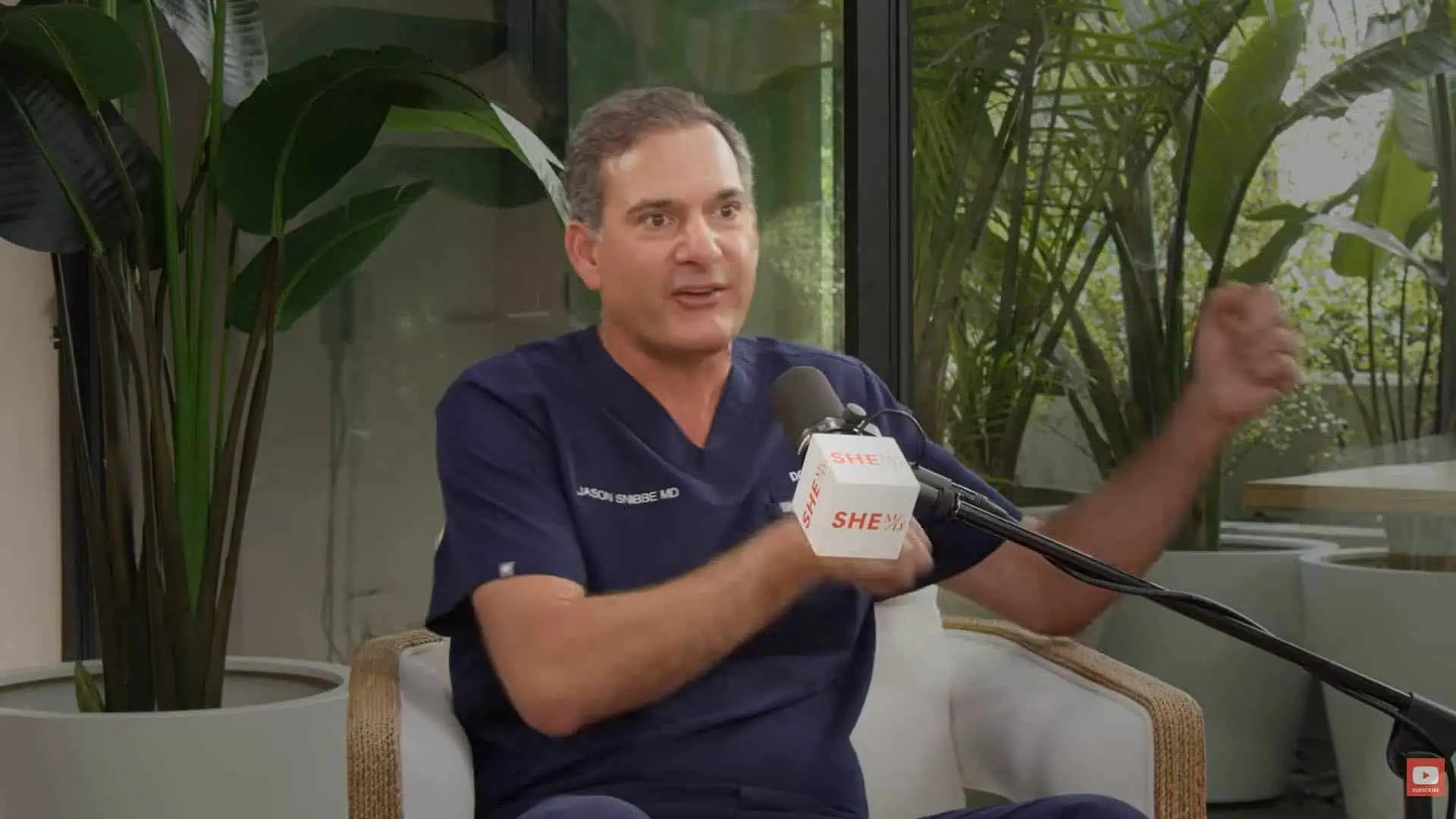
Joint pain gets waved away far too often, especially in women. We hear that it is just age, just wear and tear, just something to live with. But the real picture is much more interesting and much more hopeful. Hormones matter. Muscle matters. Inflammation matters. The way we train in our 20s, 30s, 40s, and beyond matters. Dr. Jason Snibbe joins Dr. Thais Aliabadi and Mary Alice haney to talk about these important issues.
When we understand how joints actually work, why pain spikes during perimenopause and menopause, and what modern orthopedics can do before and after surgery, we make much better decisions. That is exactly what this conversation is about.
Table of Contents
- Why women need to think about joint health earlier
- What a joint actually is and why it starts hurting
- Why estrogen is so protective for joints, bones, and muscle
- When pain should not be dismissed
- What prevention really looks like
- Supplements and strategies for muscle preservation
- Peptides, exosomes, and regenerative medicine
- GLP-1 medications, weight loss, and the muscle tradeoff
- When is it actually time for surgery?
- How robotic joint replacement is changing recovery
- What determines who needs a replacement earlier in life
- Recovery after surgery and the overlooked factor that matters most
- FAQ
- What we should take away from all of this
Why women need to think about joint health earlier
Why are we suddenly hearing so much more about women, menopause, and joint pain?
Because a lot of women hit midlife and feel like their bodies changed almost overnight. Hips start aching. Knees feel stiff. Shoulders lose motion. Strength slips even when exercise habits have not changed much. For years, that pattern was underrecognized.
What stands out is that this is not only about age. It is also about the loss of hormonal protection, especially estrogen. Estrogen has a major calming effect on inflammation. When levels shift and then fall, many women feel the difference in their joints very quickly.
That is one reason so many women in perimenopause say some version of, “I do not feel like I am in my own body.” The issue is not imaginary. The body is going through a real musculoskeletal transition.
For women trying to connect these symptoms to the bigger menopause picture, it can help to read broader guidance on menopausal health changes since joint pain rarely shows up alone.
What should we be doing in our 20s and 30s if we want healthier joints later?
We should be building our reserve. That means muscle mass, bone density, movement quality, and sound exercise habits. The body we want in our 50s and 60s does not appear by accident. It gets built much earlier.
For women especially, the younger years are a key window for strengthening bone and building lean muscle. Resistance training matters. Core strength matters. Balance matters. None of that is cosmetic. It is structural protection.
If we neglect strength for decades and then try to fix everything once pain starts, it becomes much harder. Prevention is not glamorous, but it is powerful.
What a joint actually is and why it starts hurting
Can we simplify what a joint actually is?
Yes. A joint is where two bones meet and move against each other. Think of the hip as the easiest example. It is a ball and socket. The surfaces are covered by smooth cartilage that allows motion with very little friction.
That cartilage acts almost like a slick coating. When it is healthy, movement is smooth. When it thins or wears away, the underlying bone becomes exposed. Bone has pain fibers. So when bone starts rubbing on bone, that is when pain becomes intense and constant.
A joint is not just bone and cartilage, though. It also includes supportive structures around it:
- Ligaments that stabilize
- Tendons that connect muscle to bone
- Muscles that absorb force and control movement
- Special cartilage structures like the meniscus in the knee or the labrum in the hip
When any part of that system breaks down, the joint can become painful, unstable, weak, or stiff.
What changes inside joints as we age?
Some cartilage thinning is a normal part of aging. But what really changes outcomes is how much reserve we have and how much inflammation is in the system. Strong muscles protect joints. Poor muscle support exposes joints to more stress. Hormonal loss can amplify inflammation. Old injuries and structural alignment issues add another layer.
So it is never one thing. It is usually a combination:
- Natural cartilage wear
- Reduced muscle support
- Biomechanics and alignment
- Hormonal changes
- Inflammation
- Activity history and impact load over time
Why estrogen is so protective for joints, bones, and muscle
What does estrogen do for the musculoskeletal system?
Estrogen appears to have a strong protective role in several ways. It helps regulate inflammation, supports bone health, and seems to make it easier to maintain muscle mass. When estrogen drops, women often feel stiffer, weaker, and more achy. Recovery can slow down. Joints that were tolerable can become painfully symptomatic.
This is why some women can go from functioning fine to suddenly feeling as if their hips or knees have deteriorated in a matter of months. In many cases, the underlying wear was already there, but the loss of estrogen removed some of the body’s ability to buffer inflammation and compensate.
Muscle is part of this story too. Many women in midlife say they are exercising consistently but still feel weaker. That matters because muscle acts like a shock absorber for joints. When muscle mass declines, the joint has less protection.
That intersection of hormonal change, inflammation, and pain is one reason menopausal joint symptoms can be so disruptive. For a deeper overview of how this commonly shows up, this guide on joint pain and menopause is a helpful companion.
Is that why frozen shoulder is so common around perimenopause?
Very often, yes. Frozen shoulder is strongly associated with this stage of life. It is thought to involve a major inflammatory response that affects the delicate lining and capsule of the shoulder. Tissues that should stay thin and flexible become thick, tight, and restrictive.
The result is exactly what the name suggests. The shoulder becomes painfully stiff and loses motion.
The encouraging part is that frozen shoulder is usually treated without surgery. Common approaches include:
- Targeted injections
- Physical therapy
- Stretching and mobility work
But the big takeaway is that pain should not automatically be self-diagnosed as frozen shoulder or menopause. Persistent pain deserves a real workup.
When pain should not be dismissed
How do we know when joint pain is more serious?
We pay attention to patterns. If pain is constant, progressive, or keeps returning, it needs evaluation. If it wakes us at night, causes limping, limits motion, or interferes with simple tasks like getting out of a car or tying shoes, that is meaningful.
Important warning signs include:
- Night pain
- Loss of range of motion
- Stiffness that does not improve
- Limping or altered walking
- Weakness and rapid deconditioning
- Pain that keeps getting blamed on hormones but never actually resolves
That last point matters. A symptom can occur during perimenopause and still have a completely different cause. If pain persists, imaging may be necessary. An X ray may be enough to show advanced joint wear. If the picture is unclear, MRI can reveal cartilage damage, tendon problems, labral tears, masses, or other issues that cannot be felt from the outside.
What prevention really looks like
If we want to protect our joints, where should we focus first?
We start with muscle, especially the muscles most people ignore. The front of the body gets attention because it is what we see in the mirror. But the backside matters enormously.
That includes the posterior chain:
- Glutes
- Hamstrings
- Upper back
- Core muscles, including the sides of the trunk
These muscles support posture, stabilize the pelvis and spine, and reduce the load placed on hips and knees. Strong glutes and a strong core change everything.
What are the best forms of exercise for long term joint health?
Two stand out repeatedly.
- Pilates for core strength, control, posture, and stability
- Walking for balance, lower body activation, daily movement, and general mobility
Resistance training also matters, but it needs to be done thoughtfully. We need enough load to stimulate muscle and bone, without creating unnecessary injury.
One interesting point is that bones respond not only to movement but also to load. Even holding weight can matter. Farmer’s carries, for example, place useful stress through the skeleton while also challenging grip, posture, and trunk stability.
Do we need to lift very heavy weights?
Not necessarily. There is a lot of messaging right now that women need heavy weights, period. The more balanced answer is that resistance is important, but injury risk matters too. If we pile on more weight than our body can control, we can irritate the back, hips, knees, or shoulders.
The better goal is progressive, sustainable strength training. We want enough resistance to signal the body to keep muscle and bone. We do not need to turn every workout into a max effort event.
What about weighted vests?
They can be useful, but moderation is key. A lighter vest may help create some beneficial loading for bone. The problem comes when people assume more is better and pile on too much weight. Excess loading can compress the spine and increase stress on already vulnerable hips and knees.
A modest amount makes more sense than trying to prove something.
Should we stop running after 40?
This is one of the more provocative opinions in the discussion, but the reasoning is straightforward. Repeated impact over many years is hard on joints, especially if there are alignment issues, muscle deficits, or preexisting degeneration. Some people are genetically lucky and tolerate running for life. Many do not.
For those who love the feeling of speed and cardio intensity, short bursts may be a compromise. But if the goal is preserving joints for the long haul, lower impact options often make more sense.
Supplements and strategies for muscle preservation
What supplements came up as useful for joints and muscle?
Several were discussed as part of a broader strategy, not as magic fixes.
- Creatine for muscle support and possibly mental clarity
- Omega 3 fish oil for joint health and inflammation support
- Curcumin or turmeric as a natural anti inflammatory option
- Essential amino acids to support muscle maintenance
One especially interesting point involved amino acids. Research connected to space travel looked at how to reduce muscle loss in zero gravity. The takeaway was that certain amino acid formulations may help preserve muscle when the body is under stress. That idea has been applied in surgical recovery, where patients can lose muscle mass during downtime.
This does not replace training. It supports it.
What about EMS workouts?
Electrical muscle stimulation may help activate muscles and perhaps maintain some muscle mass, but it does not fully replicate the way the body works in real life. We do not just contract one isolated muscle at a time. We move in chains.
Every step we take involves feedback from the ground, adjustments around the ankle, knee, hip, trunk, and spine, and constant small stabilizing reactions from the nervous system. That full body integration is part of what keeps us functional and safe as we age.
So EMS may have a place, but it is not a substitute for actually moving.
Peptides, exosomes, and regenerative medicine
Why are peptides getting so much attention in orthopedics?
Because many people report better healing and recovery with them, particularly around surgery and tendon injuries. The peptide discussed most was BPC-157, a compound linked to tissue repair processes and commonly talked about for healing support.
There are two important realities here:
- Interest is growing quickly
- These products are not FDA approved for routine medical treatment in the way many patients assume
The clinical impression shared was that some patients appear to recover faster, build less scar tissue, and regain motion more smoothly when peptides are used around operations or injuries. But the field remains underregulated, and long term safety questions remain.
Should people worry about cancer risk or unintended cell growth?
That concern came up directly, and it is a fair question. If something supports growth and repair, people naturally wonder whether it could also stimulate harmful tissue. The answer was cautious. There may be risk. That is one reason many clinicians who use peptides think of them as time limited tools rather than lifetime daily therapies.
This is an area where careful medical oversight matters. It is not a casual wellness experiment.
What are exosomes and how are they different from stem cells?
Stem cells are living cells. Exosomes are tiny signaling components associated with those cells, often described as part of how the healing message gets delivered. In orthopedics, exosomes are being used as a kind of regenerative support for certain joint and tendon issues.
The appeal is that they may offer some of the anti inflammatory and healing signaling without using live cells in the same way stem cell procedures do. The caution is that this whole area still sits on a spectrum from promising to poorly regulated, depending on where and how it is being offered.
That is why the conversation kept returning to the same theme. Exciting does not always mean standardized.
GLP-1 medications, weight loss, and the muscle tradeoff
Why do so many people feel better in their joints when they lose weight on GLP-1 medications?
For obvious mechanical reasons, less body weight means less load on hips, knees, and lower back. But there is also a metabolic and inflammatory effect. These medications can reduce visceral fat, improve insulin sensitivity, and lower overall inflammatory burden. That matters because inflammation makes joints hurt more and healing harder.
So when people lose weight, their joints often do feel better. Sometimes dramatically better.
What is the downside from an orthopedic perspective?
The major concern is muscle loss. If someone loses too much lean mass along with fat, the body becomes less resilient. Joints lose muscular protection. Recovery from injury or surgery may be worse. Function may decline even if the scale looks better.
That is why any weight loss plan at this level should also include a muscle preservation plan:
- Adequate protein or amino acid support
- Resistance training
- Core and glute work
- Consideration of hormone status where appropriate
The ideal outcome is less inflammation and less excess weight without sacrificing the muscle that keeps the whole system working.
When is it actually time for surgery?
How do we decide when a joint has reached the point of needing surgery?
We do not decide based on imaging alone. That was one of the most useful principles in the whole discussion. We do not treat an MRI. We treat a person.
Someone can have terrible looking scans and function surprisingly well. Another person can have moderate findings and be miserable. So the key question is not just what the picture shows. It is how the problem affects life.
Surgery becomes more reasonable when pain and stiffness are consistently taking away quality of life. Typical signs include:
- Difficulty getting in and out of a car
- Trouble putting on shoes
- Night pain
- Limping
- Loss of normal walking pattern
- Secondary back pain from compensating
If we delay too long, two things often happen. We lose muscle mass and conditioning, and we may also damage adjacent areas such as the lower back because the body keeps compensating.
Is younger sometimes better when it comes to surgery?
Often, yes. There is a natural fear of surgery that makes people want to postpone it indefinitely. But if someone is truly suffering and the operation is reliable, minimally invasive, and likely to restore function for decades, waiting is not always the wise move.
Modern hip and knee replacements have improved enormously. Implant longevity is much better than many people think. For the right patient, getting surgery earlier rather than after years of decline can lead to a stronger recovery and better life overall.
Are there surgeries we should avoid rushing into?
Absolutely. Meniscus surgery was a great example. In many midlife adults, removing meniscal tissue may solve one short term problem while accelerating a bigger long term one. Once that cushion is reduced, the knee can march toward arthritis and eventual replacement more quickly.
That is why conservative care often comes first, especially for certain meniscus tears or mild joint disease.
How robotic joint replacement is changing recovery
What does robotic orthopedic surgery actually mean?
It does not mean a machine independently performs surgery. It means the surgeon uses advanced robotic guidance based on detailed imaging and planning. A CT scan creates a three dimensional map of the joint. That allows extremely precise implant sizing and positioning.
The benefit is not hype. It is control.
With robotic assistance, the surgeon can make finer adjustments and avoid unnecessary bone removal or soft tissue damage. The technology also limits certain errors by preventing the instrument from drifting beyond the planned boundaries.
Why does that matter so much for recovery?
Because the less trauma we create during surgery, the faster people can move afterward. Preserving muscle is a huge part of this. If muscle is not cut, it can fire better immediately. That makes early walking and rehabilitation easier.
The whole recovery model has shifted toward:
- Early movement
- Immediate weight bearing when appropriate
- Rapid range of motion work
- Aggressive protection of muscle mass
That is very different from the old image of lying in bed and waiting to heal.
Bone health is part of this bigger picture too, especially as estrogen declines. If bone density is a concern, it is worth reviewing information on menopause, osteopenia, and osteoporosis because stronger bones support better long term orthopedic outcomes.
What determines who needs a replacement earlier in life
Why does one person need a hip replacement at 55 while another never does?
Some of it is anatomy. Some people are born with structural features that place more stress on a joint. Hip dysplasia, for example, can lead to earlier wear. Knock knee alignment can overload certain parts of the knee.
Some of it is exposure. The total number of hours spent impacting joints matters. Professional athletes are the obvious example, but the same idea applies more broadly. More sports, more repetition, and more year round loading can all contribute.
And some of it is support. The muscles surrounding a joint are the built in shock absorbers. If those weaken, pain often follows.
Recovery after surgery and the overlooked factor that matters most
What is the most overlooked part of recovery today?
Movement.
Not heroics. Not suffering for the sake of suffering. Just getting up and moving. Early movement helps maintain muscle mass, restore range of motion, reduce stiffness, and get the body trusting the joint again. People naturally want to protect the area by staying still, but too much stillness works against recovery.
That principle applies outside surgery too. Motion is medicine for a lot of musculoskeletal problems.
FAQs
Does menopause really cause joint pain?
Menopause can strongly contribute to joint pain because falling estrogen appears to reduce anti inflammatory protection, affect muscle maintenance, and increase stiffness. It is not the only cause of joint pain, but it is a major factor for many women.
What are the best exercises for protecting joints as we age?
Walking, Pilates, and thoughtful resistance training were emphasized most. The key is building and maintaining muscle, especially the core, glutes, hamstrings, and upper back.
Should women stop running after 40?
Not everyone has to, but many people place a lot of cumulative stress on their joints through running. Lower impact exercise may be a smarter long term choice for preserving hips and knees, especially if pain or structural issues are already present.
How do we know if joint pain means we need surgery?
The decision depends on function and quality of life, not imaging alone. Stiffness, night pain, limping, trouble with daily tasks, and ongoing disability are major signs that surgery may be appropriate.
Do joint replacements wear out quickly?
That is one of the biggest myths. Modern joint replacements often last much longer than people think, and for many patients they may last the rest of life.
Can GLP-1 medications help joint pain?
Yes, often by reducing body weight, visceral fat, and inflammation. But they can also lead to muscle loss, so they work best when paired with muscle preserving strategies like protein support and resistance training.
Are peptides and exosomes proven treatments?
They are promising and widely discussed, but they are not simple mainstream answers. Regulation, safety, sourcing, and long term evidence are still concerns, so these approaches require careful medical oversight.
What we should take away from all of this
The biggest message is that women are not imagining this. Hormonal shifts can reshape how our joints feel, how our muscles hold on, and how inflammation behaves. We should not be dismissed, and we should not dismiss ourselves either.
We protect joints by building muscle early, maintaining it aggressively, staying metabolically healthy, and paying attention when pain changes. We use surgery thoughtfully, not fearfully. And when surgery is needed, precision and early movement can make a major difference.
If there is one theme running through all of it, it is this: we do better when we stop treating joint pain like an unavoidable sentence and start treating it like something we can understand, prevent, and address with intention.
Concerned About Your Health? Talk to Dr. Aliabadi
Dr. Aliabadi is an expert OB/GYN who is knowledgeable in all aspects of women’s health and well-being. Dr. Aliabadi and her caring, supportive staff are available to support you through PCOS, endometriosis, menopause, childbirth, infertility, or routine gynecological care. We invite you to establish care with Dr. Aliabadi. Call us at (844) 863-6700 or
This article was created from the video Why Estrogen Matters for Your Bones, Muscles, and Joints ft. Dr. Jason Snibbe | SHE MD for Dr. Thais Aliabadi’s website.