PMOS, Dismissed Women, and Becoming Your Own Health Advocate
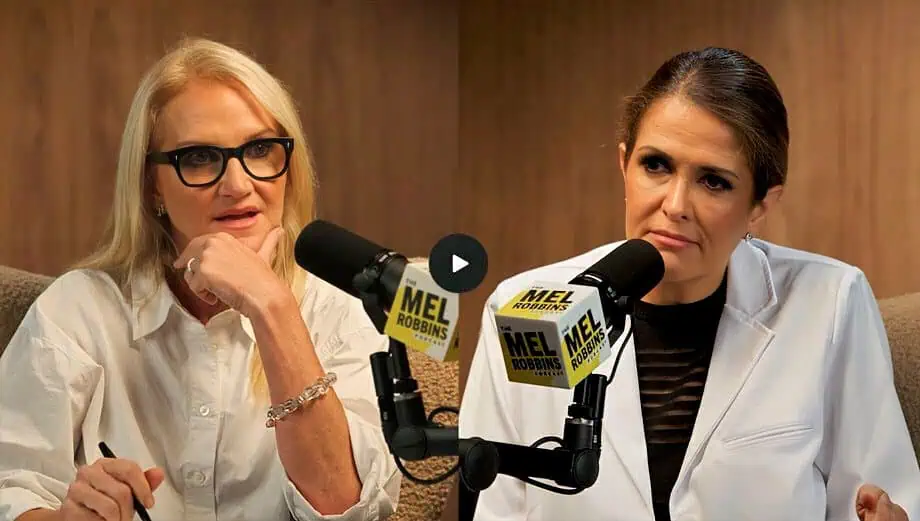
Dr. Thaïs Aliabadi recently sat down with Mel Robbins for a conversation that ran nearly three hours and now airs as two episodes of The Mel Robbins Podcast. For more than 25 years, Dr. Aliabadi has taught women about their bodies one appointment at a time in her Beverly Hills office. This was a chance to have that same conversation with millions of women at once.
Much of the discussion centered on one of her favorite subjects and one of the most overlooked conditions in women’s health: polyendocrine metabolic ovarian syndrome (PMOS), the condition formerly known as polycystic ovary syndrome (PCOS). Here are the biggest takeaways from the episodes, and what they could mean for you.
Why did Dr. Aliabadi want to join Mel Robbins?

For Dr. Aliabadi, the goal was simple: reach the women who aren’t getting answers. She told Mel’s listeners that most women get dismissed in today’s healthcare system. Their pain is minimized, and their symptoms get blamed on stress, anxiety, or poor sleep instead of being traced back to an underlying cause.
Her message to every listener was that the most important skill she could teach wasn’t medical at all. “If you don’t advocate for yourself, you will get dismissed in this healthcare system,” she said.
That doesn’t mean you need a medical degree. It means you deserve to ask questions, push for testing, and keep looking until your symptoms make sense.
What is “the Office of Dismissed Women”?
Before recording the episodes, Mel’s team polled their audience. A striking 77% said they had left a doctor’s office knowing something was wrong but feeling unheard or brushed off.
Dr. Aliabadi’s take? The real number is probably higher. Many women don’t realize they’ve been dismissed because they don’t know what a thorough exam should include. A Pap smear, a quick breast exam, a conversation about birth control, and you’re out the door. That isn’t a complete well-woman visit.
She has a nickname for her practice: the Office of Dismissed Women. Her patients often arrive after years of unanswered questions. No one checked their egg count. No one diagnosed their endometriosis. No one recognized their PMOS.
Her hope is that every woman, everywhere, gets the same level of care her patients receive. That’s why our annual well-woman exams look at your whole health picture, including your hormones, metabolism, cycle, and mood.
What is PMOS, and why did PCOS get a new name?
PMOS is the new name for PCOS. In May 2026, an international panel of experts published a consensus in The Lancet that officially renamed PCOS to polyendocrine metabolic ovarian syndrome.
As Dr. Aliabadi explained to Mel, the old name was misleading. Women with this condition don’t actually have cysts on their ovaries. The new name better reflects what’s really going on: a condition that affects multiple hormones (“polyendocrine”), your metabolism, and your ovaries.
How common is PMOS?

According to Dr. Aliabadi, PMOS affects about 15% of women. Yet it often takes years to get a diagnosis, and she estimates that as many as 75% of women with the condition are never diagnosed at all.
Common signs of PMOS
Women with PMOS may experience:
• Irregular or missed periods
• Acne, especially past the teen years
• Facial and body hair growth
• Thinning hair on the scalp
• Anxiety and mood changes
• More severe premenstrual syndrome (PMS) or premenstrual dysphoric disorder (PMDD)
If several of these sound familiar, learn more about how we diagnose and treat PCOS and PMOS.
How is PMOS diagnosed?
Dr. Aliabadi told Mel that PMOS is actually easy to diagnose once someone is looking for it. You need to meet two of three criteria.
1. Ovulatory dysfunction. Your periods are irregular, often arriving every 35-40 days instead of about every 28. Many women with PMOS have fewer than eight periods a year.
2. A PMOS ovary on ultrasound or an elevated AMH level. Not every woman has easy access to an ultrasound. For women 18 and older, an elevated anti-Müllerian hormone (AMH) blood test can serve as a proxy. This is the same test we use to estimate egg count.
3. Signs of high testosterone. Think acne, unwanted facial or body hair, and hair thinning. Dr. Aliabadi hears it all the time: women who keep getting laser hair removal only to see the hair return, or who are still fighting breakouts at 30.
“Your hormones were normal” isn’t the end of the story
One point Dr. Aliabadi stressed: you don’t need high testosterone on a blood test to be diagnosed. Symptoms count. Many women are told their labs look fine and are sent home without answers, even though they clearly meet the criteria.
Why does Dr. Aliabadi call metabolism “the first domino”?
Insulin resistance is a key driver of PMOS. Here’s how Dr. Aliabadi explained it on the show.
When you eat carbohydrates, your body breaks them down into glucose. Your pancreas then releases insulin, which acts like a key that opens your cells so glucose can enter and be used for energy. In women with PMOS, the cells stop responding to that key. Sugar stays in the blood, and the pancreas pumps out even more insulin to compensate.

Here’s the twist. Even when the rest of the body resists insulin, the ovaries stay sensitive to it. All that extra insulin prompts the ovaries to make more testosterone, which fuels acne, hair growth, and irregular cycles. The Office on Women’s Health also notes that many women with the condition have insulin resistance and a higher risk of type 2 diabetes.
The link between PMOS and mental health
This was the part Dr. Aliabadi wanted every listener to hear. Your brain’s limbic system is your emotional headquarters, and your prefrontal cortex works like the brakes. In PMOS, she said, the limbic system is “on fire,” like a car speeding down the street with brakes that don’t work.
That helps explain why so many women with PMOS struggle with anxiety and depression.
One condition, many specialists
Because PMOS touches so many systems, women often bounce between specialists. They see a dermatologist for acne, a psychiatrist for anxiety, and a fertility clinic when they can’t get pregnant. Each symptom gets treated on its own while the root cause goes unaddressed. In Dr. Aliabadi’s words, metabolic dysfunction was the first domino to fall.
What does Dr. Aliabadi want every woman to know?
Her advice was clear and direct. If you feel dismissed, get a second opinion. If you still feel dismissed, get a third. You’re never stuck.
She also wants women to stop accepting the idea that certain symptoms are just part of being a woman. Acne, irregular periods, hair loss, mood swings, and PMDD are common, but they aren’t normal, and they deserve answers.
As she put it, “No one on this planet cares about your body or your health as much as you do.”
A bigger microphone for women’s health
Dr. Aliabadi closed by thanking Mel for sharing her platform. Without it, she said, she’s “only a gynecologist in my little office.” For her, the conversation was about taking the care she gives every patient and putting it in the hands of every woman who’s listening.
If any part of this sounds like you, your sister, your daughter, or your friend, we hope you’ll listen to both episodes and share them. You can also hear more from Dr. Aliabadi on The Women’s Health Podcast and follow along with her on Instagram.
The Mel Robbins Podcast Episode 456
Think you might have PMOS? Talk to Dr. Aliabadi
Dr. Aliabadi is an expert OB/GYN with expertise in all aspects of women’s health and well-being. Dr. Aliabadi and her caring, supportive staff are available to support you through PCOS, endometriosis, menopause, childbirth, infertility, or routine gynecological care. We invite you to establish care with Dr. Aliabadi. Call us at (844) 863-6700 or request your appointment online.