Food has always been more than food for us. It is memory, comfort, connection, celebration, and the way we gather people around a table. But life does not always follow the beautiful, orderly plan we imagine for ourselves. Sometimes the journey to motherhood is hard. Sometimes health questions do not come with easy answers. And sometimes the most meaningful conversations are the ones where we stop pretending everything was simple.
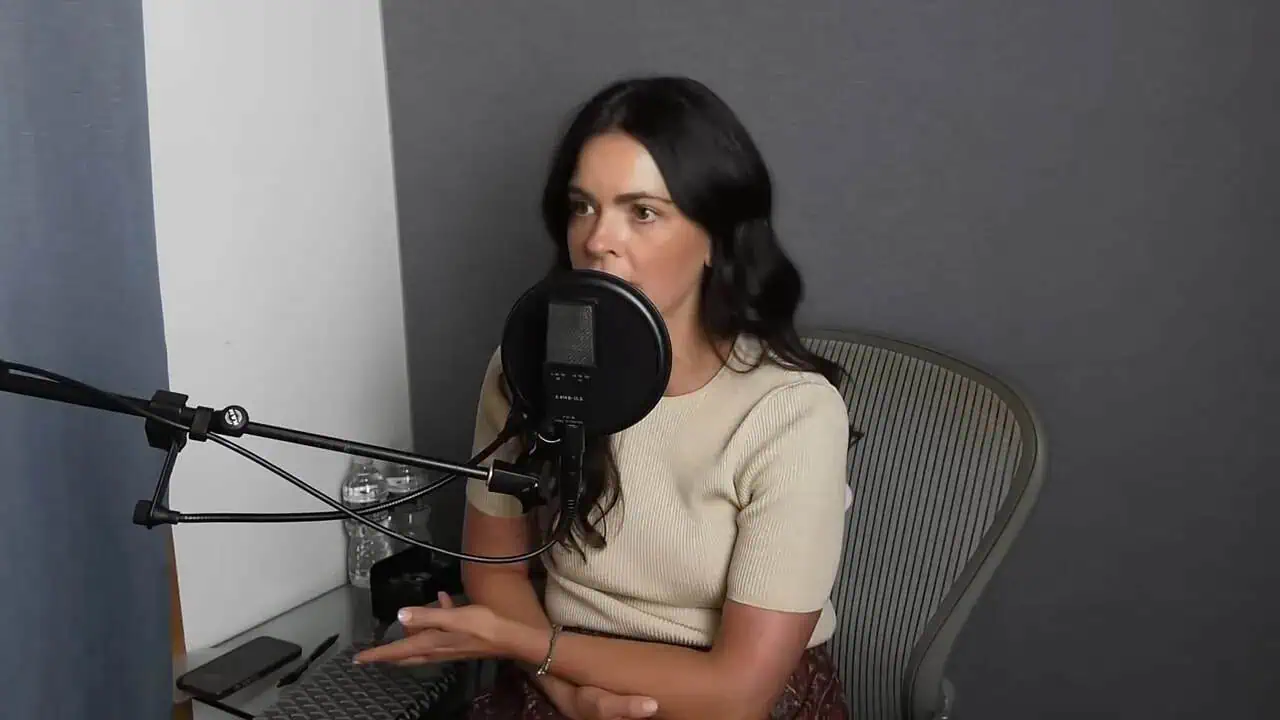
In this conversation, Dr. Thais Aliabadi and Mary Alice Haney talk honestly about Katie Lee Biegel’s path from a small town in West Virginia to a career built around food, her four rounds of IVF, the heartbreak of infertility and loss, the anxiety of early motherhood, and the passion behind her organic wine company, Kind of Wild Wines.
Table of Contents
- Food, Family, and Finding a Career Through Passion
- Starting IVF Earlier Than Expected
- Loss, Anxiety, and Finally Becoming Pregnant
- Birth Recovery and the Reality of Early Motherhood
- Creating Kind of Wild Wines
- Quick Questions About Food, Sleep, and the Things That Matter
- Relationships, Change, and Learning to Meet in the Middle
- FAQ
Food, Family, and Finding a Career Through Passion
How did food become such an important part of your life?
Katie Lee Biegel: We grew up in a family where food was the center of everything. In our little West Virginia town, the best part of the day was figuring out what Grandma was making for dinner. Then, while we were eating dinner, we would be discussing what we wanted the next night.
Our grandfather had a wonderful garden, and we cooked from it constantly. We ate fresh food and homemade food. Nothing really came out of a can. As a child, we remember coming home from a sleepover and being shocked that someone had served canned biscuits. That was not the world we knew.
There was also a standard in our family that food should be made from scratch. Even a cake mix could receive some serious side-eye. It was funny, but it taught us something valuable: food deserves attention. It is not just fuel. It is a way of caring for people.
Did you always know food would become your career?
Katie Lee Biegel: Not at all. For a long time, we thought a food career meant becoming a restaurant chef, and that was not necessarily what we wanted. We studied journalism in college and worked in restaurants, just as food was becoming a bigger part of pop culture.
There was a moment of thinking, “What if we could write about food the way Carrie Bradshaw wrote about relationships?” That felt exciting. It gave us a way to combine storytelling, culture, curiosity, and our love of eating. We followed that instinct, and the career unfolded from there.
That is something we deeply believe: passion can take us places we could not have planned. A career does not always begin with a perfect roadmap. Sometimes it begins with noticing what makes us feel most alive and having the courage to keep following it.
What does food reveal about people?
Katie Lee Biegel: Food tells us so much. It reveals nostalgia, family traditions, comfort foods, childhood memories, and who someone is when they are at home. That is part of what makes food conversations so special. We can learn about someone through the meal they order, the recipe they remember, or the person they wish could cook for them one more time.
That is the spirit behind All on the Table, a podcast about food and the stories people carry with it. We can talk about a recipe, but we can also talk about family, love, loss, identity, and the memories that stay with us long after a meal is finished.
Starting IVF Earlier Than Expected
What led you to begin fertility treatment?
Katie Lee Biegel: We thought getting pregnant would be easy. We had been trying, and we were exploring every possible route, including acupuncture and herbal blends that were honestly pretty awful to drink. Eventually, our doctor encouraged us not to wait.
Our cycle was quite short, around 22 days, and there was concern that there was not enough time after ovulation for an embryo to implant before a period began. We were advised to move forward with IVF, and we are grateful that we did not continue waiting.
We began IVF at about 37 or 38. There is no single perfect timeline for everyone, but one lesson from this experience is that we should feel empowered to ask questions, seek clarity, and have an honest conversation with our medical team about what makes sense for our own bodies and circumstances.
General health still matters, of course, but it is not a guarantee of fertility. Healthy meals, movement, sleep, and stress care can support overall well-being. For more on the broader relationship between health and conception, read how health can impact fertility.
What was it like to go through four rounds of IVF?
Katie Lee Biegel: It was very humbling. We had frozen eggs at age 32, and we expected that decision would make the process easier. The eggs had looked good when they were frozen, but after they were thawed and embryos were created, none were viable. We did not even get embryos from that round.
That is one of the things about IVF that can be so emotionally difficult. The numbers may look promising at the start. We might hear that there are many follicles and feel hopeful. Then, step by step, those numbers drop: follicles, eggs retrieved, mature eggs, fertilized eggs, embryos, viable embryos. Each update can feel like another blow.
During the first IVF round, we got zero embryos. It was a complete gut punch. We had always been someone who thought, “We will work hard, do our best, and make this happen.” It was shocking to encounter something that did not respond to effort in the way we expected.
What did you need to hear during that time?
Katie Lee Biegel: The most important thing our doctor told us was to stop taking it out on ourselves. We were healthy. We exercised. We ate well. Yet we were still asking, “What did we do wrong?”
That is such a common response to infertility. We want a reason, because a reason would give us a feeling of control. People may also offer unhelpful comments like, “You are just too stressed,” as though wanting a baby too much is the cause of infertility. That is not a kind or useful thing to say.
Infertility can be unexplained. We do not have enough answers for every person experiencing it, and that uncertainty is painful. But we need to be clear about this: infertility is not a personal failure. It is not punishment for eating the wrong food. It is not proof that someone did not relax enough, meditate enough, or follow the right fertility diet.
We can support our health without turning every meal into a test of whether we deserve pregnancy. A sweet potato every day is not going to make IVF work. The pressure to control every variable can become its own kind of suffering. This is exactly why self-compassion matters. If self-blame has become part of your fertility experience, we encourage reading why we should stop being so hard on ourselves.
Loss, Anxiety, and Finally Becoming Pregnant
How did a chemical pregnancy shape the next round of IVF?
Katie Lee Biegel: During the third round, we got pregnant but experienced a chemical pregnancy. This means a pregnancy test is positive, but the pregnancy ends very early, before a heartbeat is detected. We had been so hopeful. We even surprised Ryan with the news using a pizza box. We thought, “This is happening.”
After the loss, we were surprised to find a certain determination. By that point, IVF had taught us that the process could demand persistence. We went into the fourth round with the mindset that we would keep going. If it took twelve rounds, then we would keep trying.
That fourth round worked. The pregnancy hormone levels were high, and everything looked encouraging. Still, the earlier loss had left us with crippling anxiety. It is possible to be grateful and terrified at the same time. Pregnancy after infertility or loss can come with a level of fear that is hard to explain unless we have lived it.
How did pregnancy during the beginning of COVID-19 affect you?
Katie Lee Biegel: We became very sick with the flu in January 2020. After getting through that illness while pregnant, something shifted emotionally. We thought, if the pregnancy had made it through that, maybe it was going to be okay. The anxiety suddenly became quieter.
Then COVID-19 began. Like many people, we were wiping down everything, buying more toilet paper than we ever needed, and trying to avoid every possible risk. But once the lockdowns began, our family was able to form a small cocoon in the Hamptons.
It was the best of times and the worst of times. The world was frightening and uncertain, but we were able to be home with Ryan, our dog, and this pregnancy we had worked so hard for. We were fortunate that work could be done remotely. That flexibility made an enormous difference.
Birth Recovery and the Reality of Early Motherhood
What was your delivery and postpartum recovery like?
Katie Lee Biegel: The delivery was easy, but the recovery was hard. There was an episiotomy, something we had hoped to avoid, but Iris had her umbilical cord around her neck and needed to be delivered quickly.
Afterward, we knew something was not right. We could not get out of bed or walk comfortably, but we were living an hour and a half away from the hospital and were afraid of COVID exposure. We kept trying to make it work, especially because breastfeeding and getting to the doctor felt overwhelming.
After five weeks, it became clear that the healing was not progressing normally. A local doctor examined us and confirmed that the area had not healed properly. It required cauterization. It was painful and traumatic, but it fixed the problem.
The lesson is simple, even if it can be hard to act on when we are exhausted and caring for a newborn: if something does not feel right, reach out. Postpartum recovery is not supposed to be an endurance contest. Pain, difficulty moving, concerns about healing, intrusive anxiety, or emotional distress all deserve medical attention.
Did you experience postpartum anxiety or depression?
Katie Lee Biegel: We felt joyful after Iris was born. We loved pregnancy, and we loved having our little baby. Because of the pandemic, there was no pressure to return to a workplace, no need to leave her, and no normal outside schedule interfering with those early days. We had space to heal and enjoy the baby.
Still, anxiety is very real for new mothers. There was a moment when a malfunctioning heating system caused a room to become dangerously hot while Iris slept. A temperature monitor alerted us, and thankfully she was okay. But those moments can send a mother’s nervous system into overdrive.
We should not dismiss postpartum anxiety just because someone appears happy, capable, or grateful. Anxiety can coexist with deep love and a beautiful postpartum experience. It can also persist as children grow. Parenting requires us to protect our children, while slowly learning to let them make mistakes, take risks, and become independent.
For anyone wondering whether what they are experiencing may need professional support, this resource on postpartum depression and related warning signs can help distinguish temporary adjustment struggles from symptoms that need care.
What has surprised you most about motherhood?
Katie Lee Biegel: The depth of love is hard to describe. Our hearts open in a way we did not know was possible. But the greatest surprise may be realizing how much we can handle.
Mothers juggle a tremendous amount. We give time to our children, partners, jobs, homes, friendships, and ourselves. All mothers are working mothers, whether their labor is paid, unpaid, at home, outside the home, or some combination of all of it.
We often discover a kind of strength only after we are required to use it. We figure things out. We adapt. We do more than we thought we could. That does not mean we should have to do it alone. It simply means we are more capable than we may realize.
Creating Kind of Wild Wines
Why did you decide to launch an organic wine brand?
Katie Lee Biegel: We love wine. We are not especially sober curious. But after having Iris, even one glass of wine could leave us feeling terrible the next day: foggy, tired, and with a headache. When sleep is already limited, that extra layer of feeling unwell is rough.
That led us to learn more about organic wine and the additives and preservatives that may be present in conventional wines. Alcohol is unusual because it does not generally come with an ingredient list or nutrition facts panel. There can be a great deal in a bottle that we never think to ask about.
We had spent more than 20 years thinking about organic produce and organic food. We would buy organic grapes without question, then turn around and not think about what was in the wine made from grapes. There was a disconnect, and we wanted to understand it.
What makes Kind of Wild Wines different?
Katie Lee Biegel: Kind of Wild Wines is organic, vegan, zero sugar, and made without harmful additives or preservatives. We also put the ingredients and nutrition facts on the bottle because transparency should not be controversial.
The wine is vegan because wine is not always vegan by default. Some wines are filtered through animal-derived products, including dairy, egg whites, or fish bladders. That matters for people who follow a vegan lifestyle, and it can matter for people with allergies or sensitivities.
We also care about reducing the environmental footprint. The bottles are lighter weight, there is no foil around the top, and the labels are made from sugar cane and hemp. Every choice may seem small on its own, but the goal is to build a product that aligns with how we want to live.
Are sulfites the reason some people feel bad after drinking wine?
Katie Lee Biegel: People often say they can drink wine in Europe without getting a hangover, or that European wine has no sulfites. But sulfites occur naturally in wine, and they are also found in foods like dried apricots and ketchup.
Organic wine has lower sulfites, but sulfites are probably not the explanation for most people’s next-day symptoms. The issue may be the alcohol percentage, the other additives in a wine, dehydration, or simply the amount we drink.
It is worth looking at alcohol by volume. Some red wines are in the high 14 percent range, and that can make a real difference in how we feel the following day. Kind of Wild’s sparkling wine is about 11.9 percent alcohol, a moderate level that can work well for people who want something lighter.
Our wine is globally sourced. The Sauvignon Blanc comes from South Africa, and the rosé comes from the south of France. There are red, white, rosé, and sparkling options, and the brand is available through Kind of Wild Wines, at select retailers, Total Wine, Sprouts, and growing numbers of smaller stores.
Quick Questions About Food, Sleep, and the Things That Matter
What is your favorite restaurant?
Katie Lee Biegel: Lo Scoglio in Italy is number one. It is where we got married, and it is extraordinary. The food is incredibly fresh and simple in the best possible way. It is one of those places that makes us remember how beautiful food can be when ingredients speak for themselves.
What is your favorite health habit?
Katie Lee Biegel: Going to bed early. We are usually the first person to leave a party because we know that staying up late does not work for us. Sleep matters. It affects mood, energy, resilience, and how we feel in our bodies the next day.
Reading before bed is another small habit we love. A bedroom without a television and a phone constantly competing for attention can make a real difference in creating better sleep routines.
What cooking tool would you take to a desert island?
Katie Lee Biegel: A sharp knife is essential. Then we would take a good cast-iron skillet, ideally a Lodge skillet. With a reliable pan, we can make almost anything.
Who would you invite to your dream dinner party?
Katie Lee Biegel: We would go back to our grandmother’s kitchen: Grandma and Grandpa, Great Uncle Larry, Great Aunt Pat, cousins, Mom, and her brothers. Many of those people are gone now. We would give anything to sit in that kitchen again, laughing and eating together.
That answer is a reminder to pay attention to our parents and older relatives while we have them. We often hear that childhood with our own children passes quickly. That is true. But time with our parents also changes before we fully understand it. The people who feel permanent to us may not always be here in the same way.
Relationships, Change, and Learning to Meet in the Middle
What moment changed the direction of your life?
Katie Lee Biegel: Meeting our former husband, Billy Joel, changed the course of our life. We were 21 and visiting New York City to look at the French Culinary Institute. We went to the Peninsula Hotel rooftop with a college roommate, and we literally bumped into him while coming out of the bathroom.
We did not know much about him at the time beyond “Piano Man” and “Uptown Girl.” Our roommate invited him to join us for a drink, and he showed up about 20 minutes later. Dinner that night led to a life that was wildly different from the small-town reality we had known.
We still love him and consider him family. Relationships can change form without erasing the love, history, and lessons that were real.
What did you carry from your first marriage into your marriage with Ryan?
Katie Lee Biegel: We learned so much about listening, recognizing our own faults, and being willing to compromise. A strong relationship cannot be about needing to win. The actual win is having a good relationship.
We have to hear what another person needs, meet them in the middle, and sometimes do things we may not naturally want to do because they matter to our partner. Of course, that care must be reciprocated. Partnership works when both people are willing to show up for each other.
FAQs
How many rounds of IVF did Katie Lee Biegel have?
Katie Lee Biegel underwent four rounds of IVF before becoming pregnant with her daughter, Iris.
What did Katie Lee Biegel say about infertility and self-blame?
She emphasized that infertility is not someone’s fault. Being healthy, exercising, eating well, or trying to manage stress does not guarantee pregnancy, and people should not punish themselves for an outcome they cannot fully control.
What is Kind of Wild Wines?
Kind of Wild Wines is Katie Lee Biegel’s wine company. Its wines are organic, zero sugar, vegan, made without harmful additives or preservatives, and labeled with nutrition facts and ingredients.
Is all wine vegan?
No. Some wines may be filtered using animal-derived products such as dairy, egg whites, or fish bladders. Kind of Wild Wines is vegan.
What was Katie Lee Biegel’s biggest surprise about motherhood?
She was surprised by the immense depth of love and by realizing that she could handle far more juggling, balancing, and problem-solving than she had ever expected.
Concerned About Your Health? Talk to Dr. Aliabadi
Dr. Aliabadi is an expert OB/GYN who is knowledgeable in all aspects of women’s health and well-being. Dr. Aliabadi and her caring, supportive staff are available to support you through PCOS, endometriosis, menopause, childbirth, infertility, or routine gynecological care. We invite you to establish care with Dr. Aliabadi. Call us at (844) 863-6700 or
This article was created from the video Katie Lee Biegel on Fertility, Food, and Friendship | SHE MD for Dr. Thais Aliabadi’s website.