Table of Contents
- When Food Takes Up Too Much Space in Our Lives
- What Intuitive Eating Actually Means
- Why Diets So Often Backfire
- How Our Food Stories Begin
- Raising Children Without Food Shame
- Body Size, Weight Stigma, and Medication
- Five Ways to Practice Intuitive Eating
- When We Need More Support
When Food Takes Up Too Much Space in Our Lives
How do we know when our relationship with food needs attention?
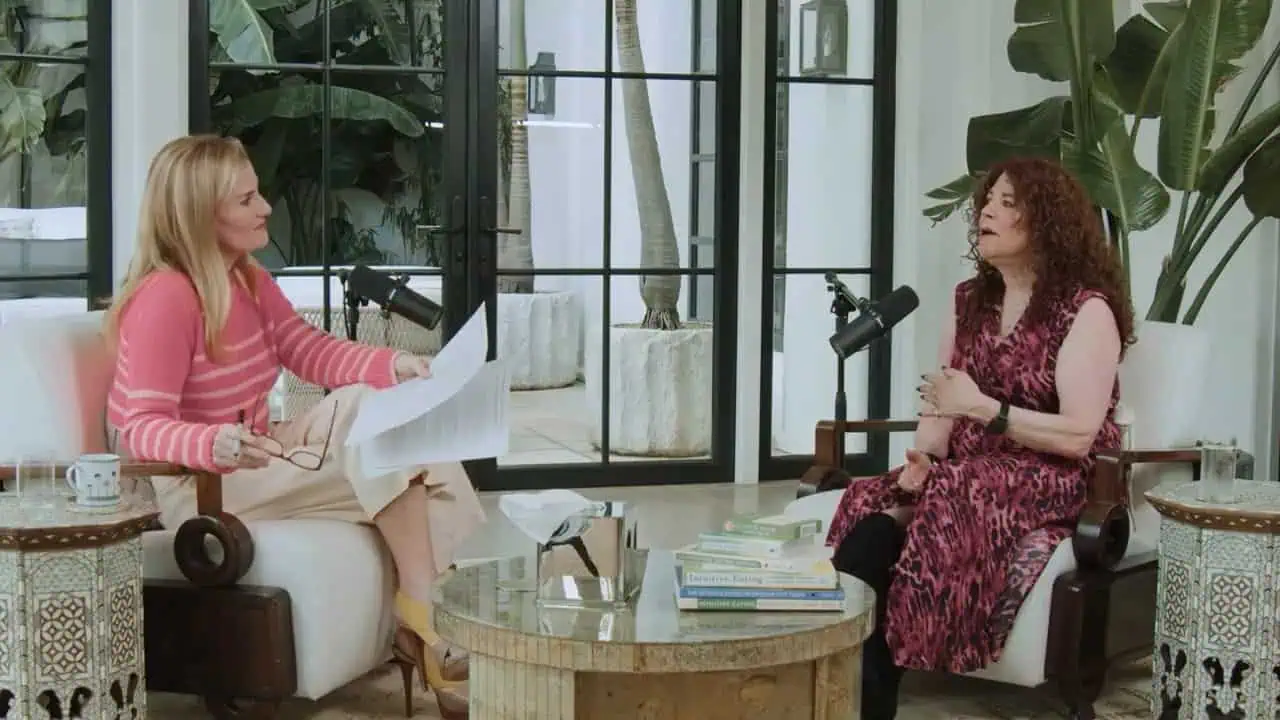
Elyse Resch joins Dr. Thais Aliabadi and Mary Alice Haney to talk practical approaches to food. We can start by noticing how much of our day food occupies, even when we are not eating. Are we replaying what we ate yesterday? Planning how to make up for it today? Deciding whether we have exercised enough to deserve dinner? That mental work can become exhausting.
At 21, living in Los Angeles and attending graduate school, Mary Alice Haney found herself in exactly that cycle. She might exercise intensely, eat very little, then find herself eating far more than she intended. A bag of potato chips was never just a bag of potato chips. It came with guilt, another plan to restrict, and another trip to the gym. Beneath it all were feelings that deserved attention, including loneliness after a move to a new city.
That is one reason we have to look beyond a food diary or an exercise schedule. If our eating feels chaotic, the answer is not automatically more discipline. We may be dealing with deprivation, rigid food rules, emotional needs, or some combination of all three. We can ask whether food has become so charged that it is keeping us from the rest of our lives.
When Mary Alice sought help, she did not arrive with a neat diagnosis or a perfect explanation. She knew she was tired of feeling controlled by food. That was enough reason to begin.
Why might we be encouraged to eat a food we have been trying to avoid?
Mary Alice’s most memorable early assignment sounded completely backward to her. She could not stop thinking about chocolate chip ice cream at night, so rather than giving her another rule against it, Elyse Resch encouraged her to have it regularly for a time.
There was a reason for that. When we label a food forbidden, we can make it feel scarce and unusually important. We may eat it urgently because we believe we will have to give it up again tomorrow. Permission changes the situation. If ice cream is available tonight and can be available another night, we do not have to treat this serving as our last chance.
Resch calls part of this process habituation. As a once-forbidden food becomes familiar, its emotional intensity may diminish. That does not mean we will stop liking it. It means we can enjoy it without giving it command of our thoughts. We might discover that a small bowl satisfies us on one occasion and that we want more on another. Either way, we can listen rather than panic.
We also make room to notice what the ice cream cannot do. It can taste wonderful, but it cannot resolve loneliness or a painful breakup. Once we stop fighting the food itself, we may be better able to care for the feelings underneath.
What Intuitive Eating Actually Means
What is intuitive eating, and is it simply eating whatever we want?
We often hear “intuitive eating” and imagine abandoning thought altogether. That misses the point. Intuitive eating is a self-care approach that helps us reconnect with internal cues while making thoughtful choices about nourishment, pleasure, and our circumstances. Its ten principles are guides, not a new set of rules we must perform perfectly.
We are born with a capacity to respond to hunger and fullness. A baby signals hunger and turns away when satisfied. As we grow, outside messages can become louder than those signals. We learn which foods are supposedly virtuous, which bodies are praised, and which choices we are expected to regret. Over time, it can become difficult to hear ourselves.
Resch offers a useful way to understand the process: instinct, emotion, and thought all have a place at the table. Our instinctive responses help us recognize physical needs. Our emotions influence what we want and how we experience eating. Our thinking helps us plan and respond when circumstances make our cues less clear.
Suppose we are ill and food has lost its taste or appeal. We may need to rely on thought to remember that our bodies still require nourishment. Likewise, if we have spent a long time restricting food, our hunger signals may not feel reliable right away. Using structure to eat enough while we reconnect with those signals is not a failure of intuitive eating. It is an act of care.
Autonomy is central. We are not handing authority from one diet plan to another. We are learning to trust ourselves, with appropriate support when we need it.
Does letting go of food rules mean nutrition no longer matters?
Not at all. We can recognize that foods differ in nutrient density without deciding that our worth differs according to what we eat. Broccoli offers nutrients that jelly beans do not. That does not make us a better person for eating broccoli or a worse person for enjoying jelly beans.
Resch describes foods as emotionally equivalent in that sense. We can value the foods that support our bodies and also enjoy foods we choose for pleasure. A baked potato and potato chips do not offer identical nutrition, but neither has to be forbidden. When we have genuine freedom, we have an opportunity to notice how a variety of foods feels, what satisfies us, and what helps us function through the day.
This is a more useful conversation than sorting every bite into “good” and “bad.” Moral labels can make us feel ashamed, and shame rarely helps us understand our needs. For more perspectives on nourishment without reducing health to a single rule, we can explore the women’s health nutrition articles.
Why Diets So Often Backfire
Why can eating too little lead us to eat more later?
Imagine we decide not to eat today because we ate more than planned yesterday. By evening, we are thinking constantly about food and feel drawn toward whatever will give us energy quickly. We may interpret that response as a lack of willpower. Resch asks us to consider a simpler explanation: our bodies have been underfed.
Physical deprivation matters. When we do not eat enough, biological processes push us toward food. Resch points to neuropeptide Y, which is involved in the drive to seek food during deprivation. The precise experience varies from person to person, but the practical lesson is clear: we cannot expect ourselves to feel calm around food while repeatedly denying our bodies enough of it.
Psychological deprivation matters too. A restrictive plan may allow us to eat enough overall while still making certain foods feel off-limits. We can spend days thinking about the fries, bread, or dessert we are supposedly not allowed to have. By the time we finally eat it, we may be responding to weeks of accumulated longing rather than the food in front of us.
That is why eating regularly and loosening food rules work together. Permission is harder to experience when we are intensely hungry. Hunger cues are harder to interpret when every choice comes with a judgment.
What does autonomy have to do with a diet failing?
We have all seen a young child discover the power of saying no. We see another expression of independence in adolescence. Wanting a say in our own lives is not a character flaw. It is part of being human.
Most diets ask us to follow a plan somebody else designed. Even when we assemble our own rules, we may be borrowing them from the latest promises circulating in diet culture. For a while, following the plan can feel exciting. Eventually, we may become tired of being told what, when, and how much to eat.
Resch does not see that moment of resistance as proof that we are failures. She sees a person asserting a sense of self. The problem is that diet culture teaches us to blame ourselves for leaving the plan, then offers us another plan to try. We can end up moving from one set of rules to the next without ever asking whether the rules were serving us.
There can also be stress in trying to maintain a diet: worrying about restaurant meals, parties, holidays, and the possibility of “breaking” a rule. Resch raises concerns about repeated weight loss and regain, often called weight cycling, as another reason to look beyond the short-term results of a restrictive plan. Health deserves a broader, more individual conversation than whether we managed to stay on a diet this week.
How do we stop treating food choices as a measure of our character?
We can begin by listening to the language we use. If we say we were “good” because we ate vegetables and “bad” because we ate fries, we have made eating into a test of morality. Food may offer different nutrients, energy, and pleasure, but it cannot determine whether we are good people.
We can try replacing judgment with curiosity. Did we eat enough earlier in the day? Were the fries satisfying? Do we want something different at our next meal? Are we worried about a food because of how it feels in our body, or because someone taught us to fear it? Those questions give us information. Shame shuts the conversation down.
This shift takes practice, especially when body criticism feels automatic. We can be firm about caring for ourselves without being harsh toward ourselves. That is the spirit of practicing more self-compassion, whether we are learning to eat differently or navigating another difficult part of life.
How Our Food Stories Begin
Can a comment about one meal really change our relationship with food?
Sometimes it can. Resch remembers preparing a tuna sandwich on her first day at UCLA. Another student commented on how fattening it looked. At 17, Resch had not grown up in a home that divided foods into good and bad. Suddenly, an ordinary lunch was being evaluated through the lens of body size.
Her later experiences included a period of intense concern with eating “healthily,” followed by dieting, restriction, and bingeing. Those experiences helped lead her toward nutrition therapy. Graduate study gave her a grounding in nutrition science, and therapy helped her work through her own relationship with food. She wanted others to have the freedom she eventually found.
We cannot assume every remark will affect every person in the same way. But we should not dismiss casual comments about bodies or meals as harmless, particularly when someone is already receiving messages that their body needs to change.
What is orthorexia, and how is it different from wanting to eat well?
Wanting nourishing food is not the problem. Resch uses the term orthorexia to describe an unhealthy preoccupation with eating in a way a person considers pure or healthy. The pursuit can become so restrictive that it interferes with meals at restaurants or friends’ homes and, in some cases, with getting enough food.
Weight loss need not be the goal. Someone may be trying to control health rather than body size. From the outside, the choices may look admirable because they are described as healthy. We have to consider the cost: Is our list of acceptable foods growing smaller? Are we anxious when we cannot follow our rules? Are we withdrawing from shared meals?
Orthorexia is not a separate diagnosis in the diagnostic manual Resch discusses, but the restrictive patterns can still be serious. If our pursuit of “healthy eating” is making it harder to nourish ourselves or participate in life, that deserves attention and, when needed, professional help.
Raising Children Without Food Shame
How can we help young children build trust around food?
We can offer variety, make food available, and share meals when possible. Resch encourages us to remember that children learn from what we do as well as what we say. When we eat a range of foods ourselves and sit together at the table, we give children a chance to become familiar with those foods without turning every meal into a negotiation.
She draws an important distinction between a parent’s responsibilities and a child’s. We provide food and a supportive eating environment. The child gets to respond to their appetite and decide how much to eat. That does not mean leaving a child to fend for themselves. It means being involved without attempting to control every bite.
Consider the familiar bargain that vegetables must come before ice cream. We may intend to encourage nutrition, but the bargain can make ice cream the prize and vegetables the obstacle. Resch would rather we avoid giving those foods opposing moral roles. When a desirable food is no longer presented as a rare reward, children may have more room to notice the rest of the meal.
We still take concerns seriously. If a child’s eating or growth worries us, we can speak with their pediatrician instead of assuming pressure at the table will solve it.
What if we have already been policing our teenager’s choices?
We can change course. Mary Alice raised a question many of us recognize: What do we do when teenagers have the freedom to buy their own meals and seem to want burgers or chicken fingers all the time? Repeating that they should make healthier choices may only lead to an understandable request to be left alone.
Resch’s suggestion is refreshingly direct. We can sit down with our teenager and acknowledge that our comments may have communicated a lack of trust. We can apologize. Then we can explain that our role is to keep a variety of foods, including foods they enjoy, available at home. We can let them know that we trust them to learn what satisfies them and supports their lives.
That is not a promise that we will never have another concern. It is a different starting point for the conversation. Rather than making every fast-food meal a referendum on their health or character, we create space for them to pay attention to hunger, energy, satisfaction, and choice.
We can also model the attitude we hope they will develop. Children and teenagers hear us criticize our own bodies. They hear us announce that we must compensate tomorrow for what we ate today. Resch asks us to notice those moments because our relationship with our own bodies can shape the messages we pass along. We do not have to parent perfectly. We can make repairs, speak more kindly about ourselves, and make it clear that our love is not conditional on anyone’s size or shape.
Is food the whole story when we talk about a child’s health?
No. Food and movement matter, and so do many other parts of life. Resch urges us to think about access to enough food, medical and mental health care, a safe place to live, education, social connection, stress, and genetics. Reducing health to what someone ate for lunch misses much of the context in which people live.
We can offer a wide variety of foods and encourage enjoyable movement without acting as though every choice determines a child’s future. That broader perspective may help us respond with care rather than fear.
Body Size, Weight Stigma, and Medication
Why do we need to be careful when talking about weight and health?
We need room for both medical care and dignity. Resch asks us not to assume that we know someone’s health by looking at their body. She distinguishes a correlation between body size and certain health conditions from a simple claim that size alone explains an individual person’s health. Genetics, medical history, stress, access to care, and past attempts to lose weight may also matter.
She is particularly concerned about weight stigma. If someone expects every appointment to become a lecture about their size, they may dread seeking care. Outside the clinic, judgment can affect work, social life, and everyday comfort. Those pressures are real health concerns in their own right.
We do not have to settle every complex scientific question about weight to agree on this: people of every size deserve respectful, individualized care. We can ask what a person needs medically without making their body a moral issue.
How do GLP-1 weight loss medications fit into this conversation?
Mary Alice and Resch approach this question from different concerns. Mary Alice points out that weight loss medications can be prescribed to address medical needs and that it is unfair to tell people with complex health conditions simply to eat less and exercise more. Resch agrees that these medicines have an important role in diabetes care. Her concern is what happens when medication is treated as an obligation for everyone in a larger body.
Resch asks us to pay close attention to whether someone is eating enough, how they feel while taking a medication, and what side effects they experience. She also asks us to consider the social pressure behind a decision to pursue weight loss. Some people may want relief from the judgment and barriers they face, and we should meet that desire with compassion, not criticism.
At the same time, medication decisions belong in an individualized conversation with a qualified medical professional. We should not assume that a medication is right for someone because of their appearance, or that it is wrong for everyone because it raises concerns about nourishment and stigma. We can ask about the person’s medical goals, treatment options, potential risks, and support for eating adequately.
The guiding question is not whether a person becomes acceptable at a different weight. They already deserve respect. The question is what care best supports their health and quality of life. We can explore more of the developing conversation about weight loss medications and their possible effects beyond weight while keeping individual medical decisions with a clinician.
Five Ways to Practice Intuitive Eating
Where can we begin if diet rules have been with us for years?
We do not need to master hunger and fullness overnight. Resch offers five practical places to start, and none requires us to eat perfectly.
- Reject diet culture. We can notice when we are treating intuitive eating as one last attempt to control our weight before returning to a diet. If we believe another period of deprivation is around the corner, it can be difficult to relax around food now.
- Make satisfaction matter. We can ask what we would genuinely enjoy, not just what seems permissible. Appetite, taste, and comfort all affect satisfaction. This is not a directive to ignore nourishment. It is permission to recognize that eating should be more than compliance with a plan.
- Stay present enough to notice our experience. We can pay attention to taste, hunger, and fullness without turning attention into another rigid rule. Some of us can enjoy a meal while reading or listening to something; others find that a screen pulls us too far away from the food. We can learn what works for us.
- Move in ways we enjoy. If we hate running or dread the gym, we do not have to make either one our test of commitment. We might dance, take a class, or find another pleasurable way to move. Resch wants movement to support our lives, not serve as punishment for eating.
- Make room for carbohydrates. Fear of bread, pasta, and other carbohydrate foods can become another source of deprivation. Carbohydrates provide energy, and Resch emphasizes their importance for brain function. We also need other nutrients and a variety of foods. Balance, not fear, is the aim.
How can we tell the difference between comfortable hunger and waiting too long to eat?
We can think about the experience of arriving at a favorite restaurant. Having some appetite can make the meal especially enjoyable. Arriving after denying ourselves food all day is different. We may be so hungry that we eat quickly and barely register what we like. Resch calls that intense state primal hunger, and it is not a reliable test of our ability to be “good” around a bread basket.
Likewise, we do not need to force ourselves into someone else’s breakfast schedule. If our first meal naturally happens later in the morning, that may simply be when breakfast works for us. The important distinction is between responding to our own needs and postponing food for hours because a fasting rule says we must.
We can practice checking in gently: Are we comfortably hungry? What sounds satisfying? How do we feel partway through the meal? What does comfortable fullness feel like today? Answers may take time, especially if we have spent years eating too little, eating past fullness, or rushing through meals. We are learning, not sitting an exam.
Should we expect intuitive eating to change our weight?
We should not treat intuitive eating as a weight loss plan in disguise. Mary Alice’s weight changed after she stopped cycling between restriction and overeating, and that was striking to her. Resch is careful to explain that this is not a promised result. Some people lose weight, some remain at a similar weight, and some gain weight, particularly if they have been suppressing their weight through restriction.
If we turn every intuitive eating practice into a strategy to reach a particular number, we risk recreating the pressure we hoped to leave behind. We can instead notice what else is changing: How much time are we spending thinking about food? Can we enjoy a meal without planning compensation? Do we have more room for relationships, work, rest, and pleasure? Those questions honor the larger purpose of the work.
When We Need More Support
What if hunger and fullness cues feel completely unfamiliar?
We can begin somewhere else. After prolonged restriction or other forms of disordered eating, hunger and fullness signals may be difficult to interpret. Resch does not expect us to read a book and immediately know exactly when to start and stop eating.
We can first work on eating enough, questioning diet rules, making meals more satisfying, and treating our bodies with respect. We can notice how we speak about ourselves and whether comparison is making it harder to care for ourselves. With time and, when appropriate, professional guidance, we may become better able to recognize physical cues.
We should also be honest about the limits of self-help. A book can offer language and direction, but it cannot replace treatment for an eating disorder.
When should we seek professional help for disordered eating?
If our eating is severely restricted, we are bingeing or purging, or food and body concerns are taking over our lives, we should seek qualified support. Resch recommends a psychotherapist and a registered dietitian with eating disorder training. Some people need a higher level of care through a treatment program.
We should not wait until we think our problem is “severe enough” to deserve attention. Eating disorders can be dangerous, and people of different genders and body sizes experience them. A trained professional can help us understand what is happening and what kind of care we need.
We can also be careful with one another, especially with children. Resch describes how restriction in a family and comments about a young person’s body can become part of a painful eating story. We may not be able to protect anyone from every message in the wider culture, but we can avoid making weight a condition of approval at home.
What does a healthier relationship with food make possible?
We can have meals that are meals, not calculations of what we must earn or undo. We can enjoy ice cream without feeling that it holds all the power. We can recognize when we are lonely, stressed, or hurting and respond to those feelings with something more fitting than another food rule. We can nourish ourselves and still experience pleasure.
Most of all, we can reclaim attention for our lives. That is the promise Resch keeps returning to: not a perfect way to eat or a guaranteed body size, but more autonomy, more self-compassion, and more freedom around food.
Concerned About Your Health? Talk to Dr. Aliabadi
Dr. Aliabadi is an expert OB/GYN who is knowledgeable in all aspects of women’s health and well-being. Dr. Aliabadi and her caring, supportive staff are available to support you through PCOS, endometriosis, menopause, childbirth, infertility, or routine gynecological care. We invite you to establish care with Dr. Aliabadi. Call us at (844) 863-6700 or