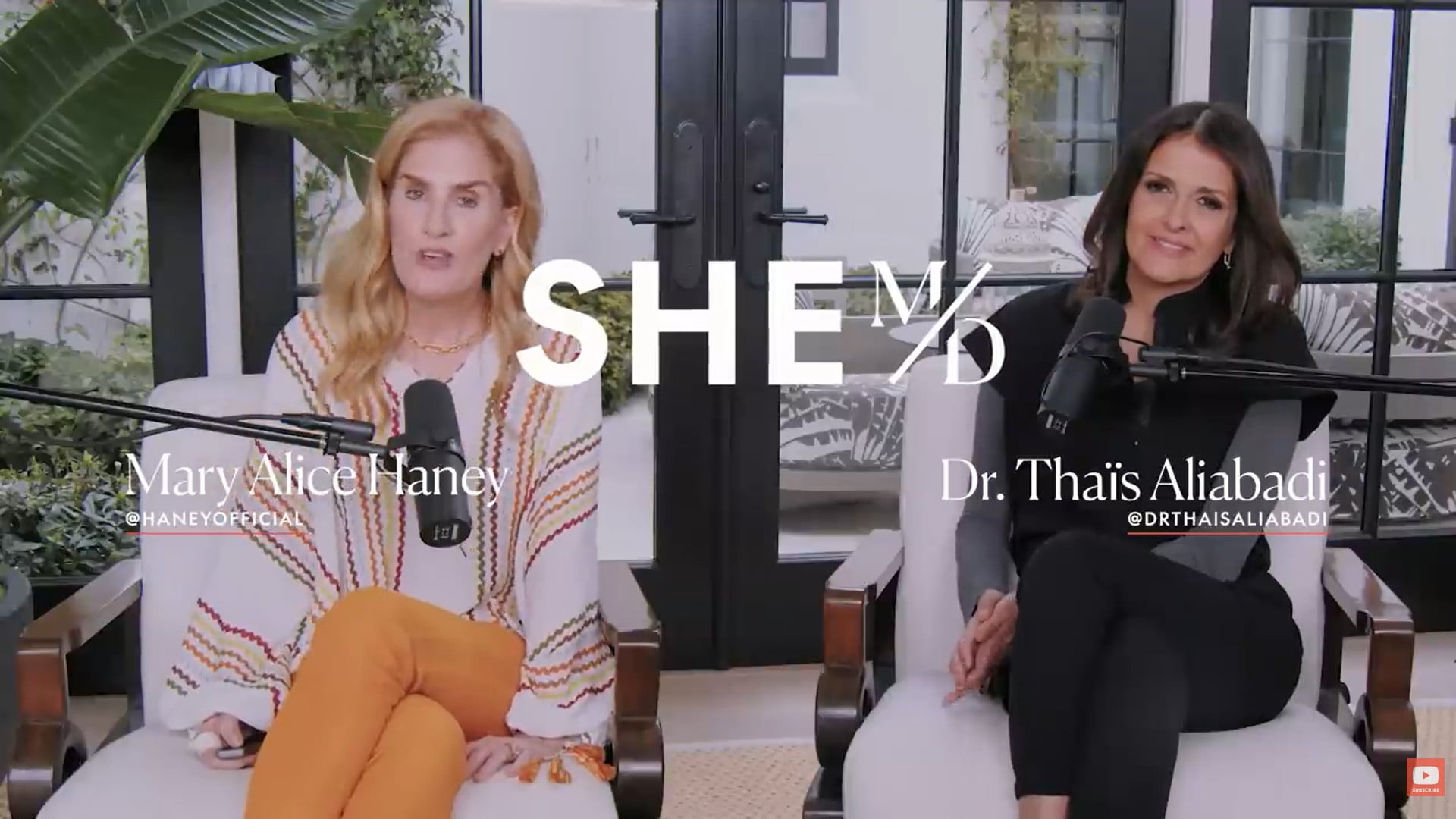
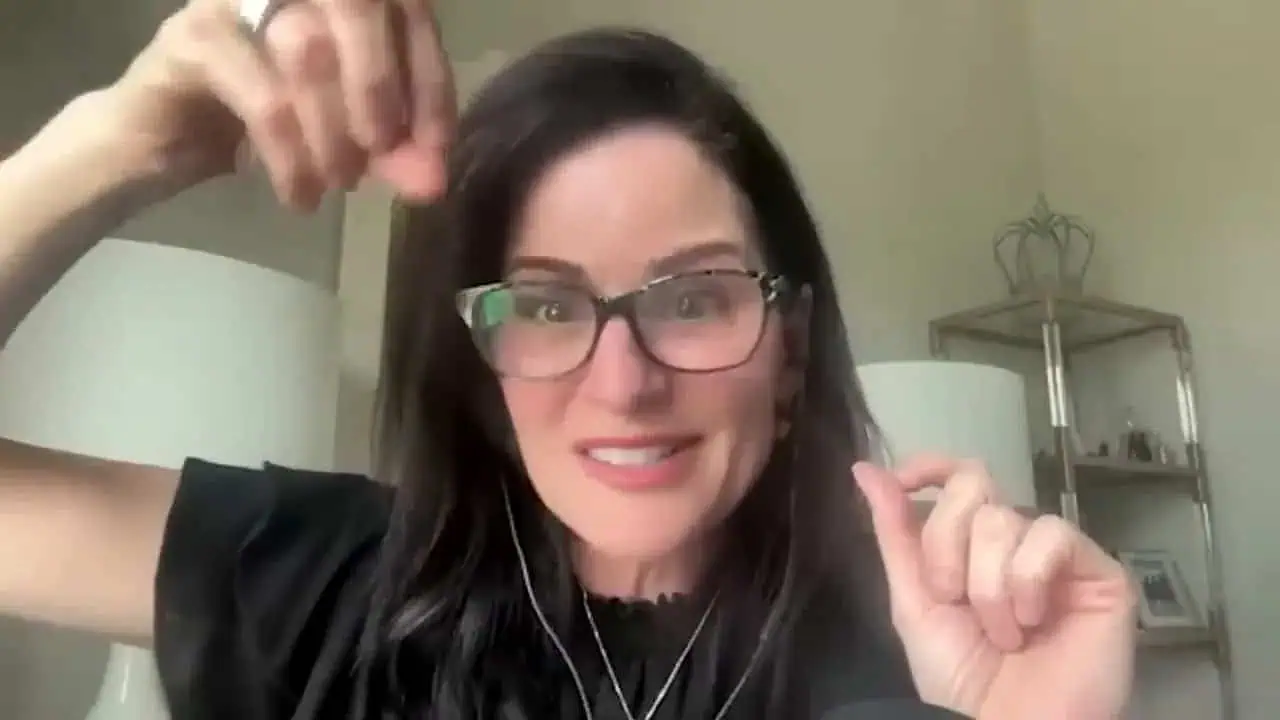
Dr. Mary Claire Haver joins Dr. Thais Aliabadi and Mary Alice Haney to talk menopause. It’s not one hot flash followed by the end of our periods. It is a transition that can change how we sleep, think, feel, move and experience our bodies. Yet many of us reach our 40s without anyone explaining what to expect. Too often, we are told that our symptoms are stress, aging or something we simply need to tolerate.
We need a more useful conversation. When we understand what is happening to our ovaries, we can recognize the patterns, ask better questions and make informed decisions about treatment. That includes hormone therapy, but it also includes nutrition, strength, sexual health and the conditions we may be trying to prevent as we get older.
Table of Contents
- Why Menopause Care Needs a Rethink
- What Happens During Perimenopause?
- Symptoms That Go Far Beyond Hot Flashes
- A Menopause Care Toolkit, Not a One-Symptom Fix
- Who Is a Candidate for Hormone Therapy?
- Understanding Estrogen, Progesterone and Testosterone
- Sexual Desire Is More Complicated Than a Testosterone Level
- Why We Are Cautious About Testosterone Pellets
- What “Bioidentical” Really Means
- How We Advocate for Better Menopause Care
Why Menopause Care Needs a Rethink
Why can menopause catch even experienced gynecologists off guard?
We were trained to recognize hot flashes, night sweats, vaginal changes and osteoporosis. We were not always trained to connect the much wider collection of symptoms that can arrive during perimenopause: disrupted sleep, anxiety, joint pain, brain fog, changes in body composition and much more.
Dr. Mary Claire Haver saw that gap in her own practice. She had cared for many patients for years, and they kept returning with similar concerns. They were gaining weight in unfamiliar places. They were not sleeping. They felt less resilient, but they could not explain exactly why. These were people she knew well, and they were telling her something had changed.
Then menopause hit home. After stopping birth control pills she had used for polycystic ovarian syndrome, she experienced intense hot flashes and night sweats. She was also grieving the death of her brother, which made it easy to attribute everything to grief. Months later, when the worst of that fog began to lift, the symptoms remained. Even as an OB-GYN, she had to stop and recognize her own menopause.
That experience changed how we think about care. We cannot dismiss someone because their complaints do not fit a short checklist. We need to get curious about the whole picture. The same curiosity led Dr. Haver to study menopause nutrition, write The Galveston Diet and continue the conversation in The New Menopause.

Should menopause education belong only to OB-GYNs?
No. We cannot put every consequence of menopause on one specialty. Hormonal changes may intersect with cardiovascular health, cognition, bones, muscles, mood and the urinary tract. A patient may first bring palpitations to one clinician, shoulder pain to another and sleep problems to a third. If none of us asks about the menopause transition, we miss the chance to connect those concerns.
We want more clinicians across specialties to understand menopause, and we want patients to feel comfortable bringing it up. Better care starts when we stop treating each symptom as though it exists in isolation.
What Happens During Perimenopause?
What is the difference between perimenopause and menopause?
We are born with our lifetime supply of eggs. Over time, that supply declines, and the ovaries become less responsive to the signals from the brain that coordinate ovulation. In earlier reproductive years, hormone levels follow a relatively predictable monthly pattern. During perimenopause, that pattern becomes less predictable. Ovulation may be delayed, and estrogen can surge and then drop sharply.
Perimenopause is the transition while ovarian function and hormone patterns are changing. It can last roughly seven to ten years. For many of us, the process begins somewhere between our mid-30s and mid-40s, although our individual experiences vary.
Menopause is identified after 12 consecutive months without a menstrual period. In the United States, the average age is about 51, with most people reaching it between 45 and 55. That definition is useful, but it has an important limitation: if we have an IUD that stops bleeding or have had a hysterectomy, we may not have periods to use as a marker. We still need to pay attention to our age, history and symptoms.
Can one hormone test tell us whether we are in perimenopause?
Usually, it cannot settle the question on its own. Hormones fluctuate throughout a normal cycle, and perimenopause makes those swings less predictable. A blood, urine or saliva test captures one point in time. A result may be useful in a particular clinical situation, but it does not necessarily explain months of changing symptoms.
We get more value from listening carefully: What has changed? Are periods different? When did the sleep trouble begin? Are new symptoms appearing together? We should not dismiss a person’s experience because a single hormone level looks ordinary.
Symptoms That Go Far Beyond Hot Flashes
What symptoms do we most often fail to connect with menopause?
Hot flashes are recognizable, but they are only part of the story. Sleep can become difficult even without night sweats. We may notice new anxiety or depression, worsening of a condition we already manage, heart palpitations or changes in concentration and memory. The timing of these symptoms matters, even though menopause should never be used to dismiss other possible causes.
Muscles and joints deserve special attention. We may develop aches without an obvious injury, including the painful stiffness of frozen shoulder. Bones and muscles also change over time. We generally reach peak bone density and muscle mass earlier in adulthood, then begin a gradual decline that can accelerate around menopause. This is about maintaining strength and independence, not just changing a number on a scale.
We can also experience headaches or migraines, bloating, changes in the gut, hair loss, drier or itchier skin and urinary symptoms. No two people will get exactly the same combination. Sisters may have very different experiences, and we do not need to have hot flashes for our other symptoms to count.
What happens to vaginal and urinary health?
Declining estrogen can affect the vagina, vulva, urethra and bladder. Vaginal tissue may become thinner and less well lubricated. We may experience dryness, irritation, painful sex, urinary urgency or more frequent urinary tract infections. These changes are often grouped under the term genitourinary syndrome of menopause.
We should not wait for these problems to become unbearable before asking for help. Treatments can be directed at the tissue and symptoms involved. For a closer look at the causes and available approaches, we have a guide to menopause and vaginal dryness.
Is menopause weight gain simply a matter of eating too much?
That question misses an important distinction between weight and body composition. We may gain weight as we age, but menopause can also change where fat is stored. More fat may accumulate inside the abdomen around our organs. That is different from the subcutaneous fat that gives us our natural curves.
We are not here to shame curves. We are here to recognize that visceral fat is associated with metabolic and cardiovascular risks. At the same time, we may be losing muscle. If we focus only on becoming smaller, we can overlook the strength and bone health we need for later life.
Dr. Haver’s experience is a powerful reminder. Restricting calories and exercising twice a day did not resolve her body changes, and the effort was taking a toll. We can approach nutrition and movement with a better question: How do we support a strong, healthy body now and in the decades ahead?
Why do hair and skin seem to change so dramatically?
Hair loss has more than one possible cause. We may see widening of the part, thinning around the temples or shedding related to other factors. As estrogen levels fall, changes in the activity of androgens can also show up as acne, new chin hairs or a different pattern of hair thinning. We need to identify what is driving the change because treatments are not identical for every type of hair loss.
Skin may become drier, thinner or itchier as collagen and elasticity change. Some people describe an uncomfortable crawling sensation on the skin or persistent itchy ears without an obvious infection. These symptoms can feel strange, but strange does not mean imaginary. We can bring them into the conversation rather than silently putting up with them.
A Menopause Care Toolkit, Not a One-Symptom Fix
How do we approach a patient who comes in with several symptoms at once?
We start with what is affecting daily life, then look further ahead. A person might come in because sleep, urinary urgency and hot flashes are making this week difficult. They may also be worried about the frailty, fractures or cognitive problems they have seen in older relatives. Both the immediate concerns and the long-term concerns deserve a place in the appointment.
Our toolkit includes a discussion of nutrition, movement, body composition, symptom-directed treatment and whether hormone therapy is appropriate. Dr. Haver measures muscle mass and visceral fat in her clinic so she can make her counseling more specific. The aim is not to hand everyone the same plan. It is to understand what needs attention for this person.
What would we change about the way many of us exercise?
We would stop treating thinness as proof of health. Many of us grew up believing that more cardio and less food were the route to a better body. Dr. Haver describes wishing she could tell her younger self to pick up weights and eat enough protein. She was exercising to be thin, without giving the same attention to the muscle and bone she would need later.
Resistance training and adequate nutrition matter alongside any treatment we choose. Stronger muscles support the body as we age, and exercise gives us something active we can do for ourselves. Hormone therapy does not replace the work of eating well and moving with purpose. Equally, we should not expect lifestyle changes alone to solve every menopause symptom.
Who Is a Candidate for Hormone Therapy?
Do we treat symptoms or chase a target hormone level?
We treat the person. Hormone levels do not give us a simple number that defines whether someone is sleeping well, functioning comfortably or getting relief from hot flashes. We begin with symptoms, medical history, family history and personal priorities. We then discuss the potential benefits and risks of each option and reassess how the person responds.
That conversation may lead to a local treatment for vaginal symptoms, systemic hormone therapy, a nonhormonal treatment or a combination of approaches. There is no reason to prescribe the same thing to everyone who happens to be 51.
What benefits and risks belong in the hormone therapy discussion?
Systemic menopausal hormone therapy is an effective treatment for hot flashes and other vasomotor symptoms. It can help protect bone health, and we consider its effects on quality of life as well as its risks. The discussion becomes more nuanced when we turn to cardiovascular and cognitive outcomes. Dr. Haver emphasizes that the age and stage at which therapy begins matter, but we should not turn population-level findings into a promise that a prescription will prevent heart disease or dementia for any one person.
We also need to look for reasons systemic therapy may not be appropriate, including relevant medical history or a hormone-sensitive cancer. Starting hormones in someone with established disease is not the same decision as considering them around the menopause transition in an otherwise healthy person. We weigh the route, timing and individual risk factors rather than making a blanket rule.
For a broader discussion of the benefits, limitations and individualized decisions involved, we can refer to our clinical guide to menopause nutrition and hormone therapy.
What if we have had breast cancer or have a high lifetime risk?
We take that history seriously and make a personalized plan. If systemic estrogen is not an option, we do not stop caring for the person. We can work on symptoms through other treatments, nutrition, movement and strategies suited to their medical circumstances.
Low-dose vaginal estrogen is a separate discussion from systemic hormone therapy. Dr. Haver points to reassuring evidence about its use even for patients with a breast cancer history. We still make this decision with the patient’s treating clinicians, particularly when they are taking medications that lower estrogen. We should not assume that all forms of estrogen have the same effects or that vaginal and systemic treatments are interchangeable.
Understanding Estrogen, Progesterone and Testosterone
When we say hormone replacement therapy, which hormones are we talking about?
We often begin with estradiol, the principal estrogen we are discussing in menopause treatment. If a person has a uterus and uses systemic estrogen, we must also address protection of the uterine lining with a suitable progestogen. Testosterone may come into the conversation for a narrower reason, particularly distressing low sexual desire.
We should not assume that adding more hormones automatically produces a better result. Each one has a role, and each decision depends on symptoms, anatomy, medical history and how we plan to monitor treatment.
Why is progesterone important if we still have a uterus?
The endometrium, or uterine lining, responds to estrogen. If we give systemic estrogen without adequate opposition, that lining can continue to thicken, raising the risk of abnormal growth and endometrial cancer. A suitable form and schedule of progesterone or another progestogen helps protect it.
Dr. Haver commonly uses oral micronized progesterone. Some patients also find that it helps with sleep or nighttime anxiety. If we have had a hysterectomy, the uterine-protection reason generally no longer applies, although symptoms may still shape an individual discussion. If we have an IUD, we need to confirm whether its type and placement provide appropriate endometrial protection rather than assuming that any IUD does.
Why might we choose an estradiol patch instead of a pill?
Both oral and nonoral estrogen can relieve symptoms. Dr. Haver often favors a patch because it offers adjustable strengths, is accessible for many patients and avoids the increased clotting risk she considers with oral estrogen. Affordability matters, too. A plan only works if we can realistically continue it.
We choose a starting approach, assess symptoms and adjust when needed. We are not looking for one perfect blood level that tells us everything. We are looking for a treatment that helps without ignoring safety, medical history or cost.
Once we start hormone therapy, is there an age when we must stop?
We do not set an automatic birthday on which everyone has to discontinue it. We reassess. Health circumstances can change over time, and a new cardiovascular condition, cognitive concern or hormone-sensitive cancer can change the balance of risks and benefits. Stroke risk and other age-related concerns also belong in an ongoing discussion.
Starting treatment and continuing treatment are both active decisions. We keep checking whether the approach still makes sense for the person in front of us.
Sexual Desire Is More Complicated Than a Testosterone Level
When might testosterone help?
Testosterone has evidence for helping some menopausal women with hypoactive sexual desire disorder: a loss of desire that is troubling to the person experiencing it. There is no FDA-approved testosterone formulation specifically for women, so prescribing requires an especially careful conversation about formulation, dosing and monitoring.
Before we prescribe anything, we ask what “low desire” means. Are we bothered by the change ourselves, or do we simply feel pressured to want sex more often? If we are content with our level of desire, we do not need to turn it into a diagnosis. Distress matters.
What else can affect sexual function?
We look beyond hormones because several different problems can overlap:
- Relationship concerns: If we do not feel safe, supported or connected, a prescription will not repair that foundation.
- Pain: Dryness, tissue changes or another vulvar condition can make sex unpleasant. We need to address pain rather than ask someone to push through it.
- Arousal difficulties: Desire may be present while the body’s physical response is not. That calls for a different assessment.
- Orgasm difficulties: These concerns deserve attention in their own right, not dismissal.
- Distressing loss of desire: We may still love our partner and want to want sex, yet find that desire has changed. This is where a discussion of testosterone may be relevant.
Sexual health is not one switch that we turn back on with one hormone. We can ask direct questions without embarrassment and identify the actual problem before choosing a treatment.
Why We Are Cautious About Testosterone Pellets
What worries us about pellet therapy?
We have seen patients come in after testosterone pellet treatment with very high testosterone levels, facial hair, acne and worsening scalp hair loss. A pellet is not easy to adjust once inserted. That lack of reversibility matters when a dose proves too high.
Our other concern is the consultation itself. People seeking help for menopause symptoms deserve to hear about their options, including FDA-approved treatments when available. They should not be presented with pellets as though they are the only route to feeling better.
Dr. Haver describes reviewing pellet-dosing materials that recommended testosterone levels far higher than those typically needed to address sexual function. We do not have to aim for very high levels to take someone’s symptoms seriously. Higher doses increase the likelihood of unwanted androgen-related effects.
Does caution about pellets mean we should never discuss testosterone?
No. We can recognize a legitimate role for carefully monitored testosterone treatment while questioning a delivery method that is difficult to reverse or practices that push levels too high. Dr. Haver often uses a compounded cream when discussing treatment with appropriate patients, then follows symptoms and monitors for adverse effects.
We also keep the rest of the plan in place. Testosterone is not a substitute for protein, resistance training, treatment of painful sex or a conversation about a relationship that is not working.
What “Bioidentical” Really Means
Are bioidentical hormones available only from a compounding pharmacy?
No. The word bioidentical describes a hormone with the same molecular structure as one made by the body. Estradiol fits that description, and we can obtain FDA-approved estradiol products through a regular pharmacy. The word does not, by itself, tell us whether a product was compounded or whether it has been shown to be safer or more effective.
That distinction gets lost in marketing. A compounded product may be presented as more natural or uniquely tailored, but those claims need evidence. Dr. Haver questions combinations of estrogens sold as superior when there is no good clinical reason to prefer them over established options. We should ask what is in a product, why we need it and what evidence supports it.
Do yams provide a natural shortcut to menopause hormones?
No. Plant materials can be used as starting ingredients in manufacturing, but they must go through substantial chemical processing to become hormones used in medication. Applying wild yam cream is not the same as receiving a measured dose of estradiol or progesterone.
We can appreciate the appeal of a “natural” label while remaining clear-eyed about what it means. What we want is a treatment with a known ingredient, a dependable dose and a reason to believe it addresses our particular needs.
How We Advocate for Better Menopause Care
What should we bring to a menopause appointment?
We can begin with a clear account of what has changed. We do not need to diagnose ourselves, and we do not need to arrive with a perfect hormone test. It helps to note when symptoms began, whether periods or bleeding patterns have changed, what is disrupting daily life and which long-term health concerns are on our minds.
We can also ask practical questions: Is this treatment for a specific symptom or for a broader goal? Why this formulation? If we have a uterus, how will its lining be protected? What risks in our personal history matter? How will we know whether the plan is helping, and when will we revisit it?
Most importantly, we can expect more than dismissal. Menopause is a major biological transition, but it does not look the same for all of us. We deserve care that is curious, individualized and honest about both the possibilities and the limits of treatment. That is how we move from simply enduring symptoms to making informed choices about our health.
Medical note: This discussion is educational and does not replace advice from our own healthcare professionals. We should review symptoms, treatment choices and personal risks with a clinician who knows our medical history.
Concerned About Your Health? Talk to Dr. Aliabadi
Dr. Aliabadi is an expert OB/GYN who is knowledgeable in all aspects of women’s health and well-being. Dr. Aliabadi and her caring, supportive staff are available to support you through PCOS, endometriosis, menopause, childbirth, infertility, or routine gynecological care. We invite you to establish care with Dr. Aliabadi. Call us at (844) 863-6700 or