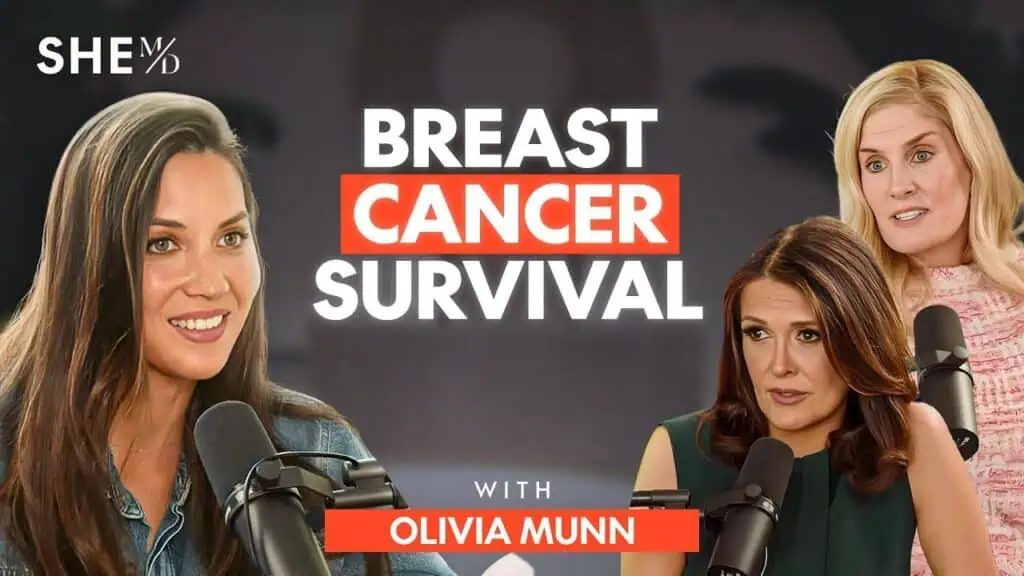
Dr. Thais Aliabadi and Mary Alice Haney sat down with Dr. Lisa Newman, a surgical oncologist and leader of the breast program at Weill Cornell/NewYork-Presbyterian, and William P. Lauder, co-chair of the Breast Cancer Research Foundation and grandson of Estée Lauder, to talk about how the next era of breast cancer care is being shaped by prevention, equity, research, and community. Our conversation ranged from the origin of the pink ribbon to the concrete prevention tools every woman can use today. Below we present their insights in a clear question-and-answer format so readers can act on what matters most.
Table of Contents
- About the conversation
- Interview: Questions and answers
- Practical action checklist for every woman
- Myths, clarifications, and what clinicians should stop saying
- On surgical choices and expectations
- How equity fits into the science
- FAQ
- Resources and ways to get involved
- Final notes from our conversation
About the conversation
This interview blends lived experience, clinical expertise, and philanthropic strategy. William Lauder told the family story behind the pink ribbon and how dignity and support for women became a mission for Estée Lauder and Evelyn Lauder. Dr. Lisa Newman explained two decades of research into breast cancer disparities, the role of genetics and ancestry in aggressive disease, and practical steps women and clinicians can take to prevent and detect cancers earlier.
Interview: Questions and answers
How did the pink ribbon and the Breast Cancer Research Foundation begin?
William Lauder: My mother was diagnosed with breast cancer when I was 29. After she recovered, she saw gaps in care that had less to do with medicine and more to do with dignity. Women were losing their hair, feeling isolated, and not finding centralized support. She partnered with the beauty industry—brands and associates in department stores—and helped create programs like Look Good Feel Better. Those small acts of support led to fundraising products in October and the launch of the Breast Cancer Research Foundation. The pink ribbon began as a quiet sign of solidarity; it became a public movement that changed how women talk about and access care.

Dr. Newman, what drew you to the study of breast cancer disparities?
Dr. Lisa Newman: Early in my career as a general surgeon in Brooklyn, I noticed that African American women were arriving younger, with more advanced tumors, and with worse survival. That observation pointed me toward research: What biological, genetic, environmental, and systemic factors explain these differences? Over the last 20 years, my work has focused on dissecting those drivers and on translating findings into better care.
What is triple-negative breast cancer, and why does it matter for women of African ancestry?
Dr. Newman: Triple-negative breast cancer is a subtype that lacks estrogen, progesterone, and HER2 receptors. Clinically, it behaves more aggressively and historically has fewer targeted therapy options. We now know triple-negative cancers are roughly twice as common in women of African American descent as in white American women. In studies on the continent, particularly western sub-Saharan Africa—which is the ancestral origin for many African Americans—these tumors are even more frequent. That pattern suggests there are inherited or ancestry-linked biological factors at play, and identifying those markers is a high priority for research.
How should clinicians and patients integrate risk assessment into routine care?
Dr. Newman: Risk assessment must become as standard as asking about allergies. Tools like the Tyrer-Cuzick (often called the IBIS or Tyrer-Cuzick risk model) let clinicians calculate lifetime risk quickly—under two minutes. Yet many women never have this done. We want every healthcare professional who interacts with women—primary care doctors, gynecologists, plastic surgeons, labor and delivery nurses—to know how to calculate lifetime breast cancer risk. Knowing your lifetime risk changes recommendations: the age you start imaging, whether to add MRI or whole-breast ultrasound, whether preventive medication is appropriate, or whether surgical risk reduction should be considered.

What factors beyond family history should women pay attention to?
Dr. Newman: Family history is essential, and don’t forget the paternal side. But other factors raise risk too: mammographic breast density, previous benign breast biopsies showing atypical hyperplasia, reproductive history, and lifestyle factors such as obesity and alcohol. For example, atypical lobular hyperplasia and atypical ductal hyperplasia are pathology findings that indicate a higher future risk. If you have these on a prior biopsy, you should know the exact pathology and discuss intensified surveillance or prevention options.
Genetic testing—who should get it, and what does a negative test really mean?
Dr. Newman: We now recommend genetic counseling and testing more broadly than in the past. BRCA1 and BRCA2 are well known, but multiple other genes influence breast and ovarian cancer risk. A negative test today does not mean you have no genetic risk; it means we have not yet identified a mutation in the genes tested. There are likely many more risk genes still undiscovered. Men can carry mutations too—BRCA increases risk for prostate and pancreatic cancers—so family-wide awareness is important.
How do you counsel patients who are at high lifetime risk about prevention options?
Dr. Newman: High-risk patients have a spectrum of options. We personalize recommendations based on the patient’s values and clinical picture. Options include intensified screening (earlier start, annual MRI, supplemental ultrasound), chemoprevention medications that reduce risk, and prophylactic surgery—removal of breast tissue to dramatically lower future cancer risk. I counsel thoroughly: prophylactic mastectomy often reduces risk substantially but not to zero, because microscopic breast tissue can remain under the skin. The choice is personal, and patients need to weigh cancer risk against surgical and cosmetic considerations.
Mary Alice, you underwent a prophylactic mastectomy. What was that experience like, and what should patients know?
Mary Alice Haney: For me, it started with a pathology report showing atypical lobular hyperplasia. My lifetime risk was high—about 37 percent—and I wanted decisive action. It took time to find a surgeon willing to perform the procedure. After surgery, I experienced complications and later discovered residual breast tissue required a second operation to remove. Key takeaways: find experienced surgeons, understand reconstruction options, and keep follow-up imaging and care in place because no surgery guarantees absolute elimination of risk.
Does reconstruction happen at the same time as a mastectomy?
Dr. Newman: For most appropriately selected patients, immediate reconstruction at the time of mastectomy provides the best cosmetic outcome and allows nipple-sparing and other enhanced techniques. Historically, patients were told to delay reconstruction for years; that has changed thanks to improved multidisciplinary planning and surgical advances. Immediate reconstruction must be planned carefully, with both the breast surgeon and plastic surgeon involved.
What is breast density, and why does it matter?
Dr. Newman: Breast density refers to how the tissue looks on a mammogram. Dense breast tissue both increases cancer risk and makes cancers harder to see on mammography. About 50 percent of women have mammographic breast density that may warrant supplemental imaging. Importantly, density on exam is different from density on mammogram—palpable fibrocystic changes do not equate to mammographic density. If your mammogram report says you have dense breasts, discuss a whole-breast ultrasound or MRI with your clinician.

When should screening start? Is “mammogram at 40” still a useful rule?
Dr. Newman: The blanket mantra “mammogram at 40” is misleading. Screening timing should be individualized by lifetime risk. Average-risk women typically benefit from annual mammography starting around 40, but high-risk women may need imaging as early as their 20s or 30s, and women with BRCA mutations often start MRI around age 25. The most important step is to calculate lifetime risk early so we can tailor screening to the individual.
What should a woman do if she finds a lump, but recently had a normal screening mammogram?
Dr. Newman: A screening mammogram is for asymptomatic women. If you discover a lump, bloody nipple discharge, skin changes, or a new underarm mass, seek medical evaluation regardless of recent screening. Mammograms are not perfect. Do not use a normal screening mammogram as reassurance when you have symptoms. If you are dismissed or not given clear answers, get a second opinion.
How do disparities and mistrust affect care in different communities?
William Lauder and Dr. Newman: Distrust and cultural factors play major roles. In some communities, women avoid care because of stigma, religious concerns, or historical mistreatment. Dose and presentation of medications designed primarily for men can also fuel mistrust. Health equity requires targeted outreach, culturally competent care, and accessible tools to calculate and act on risk. Funders and health systems must support community-based programs and research that specifically address these gaps.
What prevention steps have the biggest impact for most women?
Dr. Newman: The practical essentials are powerful and actionable:
- Know your lifetime risk. Use a validated risk tool to inform when to start screening and whether to add MRI or ultrasound.
- Maintain a healthy weight and activity. Obesity contributes substantially to breast cancer risk; addressing it could lower cancer rates significantly.
- Limit alcohol. Alcohol increases breast cancer risk in a dose-dependent way.
- Breastfeeding when possible. Nursing reduces risk for the mother and offers many benefits for the child.
- Understand your mammogram report. If you have dense breasts or prior atypical biopsies, ask about supplemental imaging or chemoprevention.
- Genetic awareness. Know your family history on both maternal and paternal sides and consider genetic counseling if appropriate.
How can technology and data improve prevention and access?
William Lauder: Big data and AI are accelerating discovery. Researchers report tasks that once took years in the lab being compressed into months thanks to computational tools. Clinically, digital risk tools and telehealth can put risk assessment into more hands earlier. We also need to deploy technology to train and support front-line staff and nurse practitioners who can multiply the reach of specialists.
Why invest in training nurse practitioners and community providers?
William Lauder: Skilled nurse practitioners can be deployed faster than doctors and provide high-quality care in underserved communities. Funding tuition for trainees who commit to underserved areas creates a pipeline to expand access. It is an efficient, high-impact way to increase preventive care reach while we continue to grow the specialist workforce.
What role does philanthropy play in advancing breast cancer research?
William Lauder: Philanthropy speeds research when it is strategic. The Breast Cancer Research Foundation emphasizes sharing results across funded teams, so discoveries multiply instead of being duplicated. That horizontal collaboration shortens the time from discovery to clinical benefit. BCRF also prioritizes funding investigators who are asking the most urgent translational questions—biology of aggressive subtypes, better screening algorithms, and new targeted therapies.
How can readers get involved or support research?
William Lauder: Learn about organizations like the Breast Cancer Research Foundation at bcrf.org or follow @BCRFCure on Instagram. Supporting science-driven charities, participating in community fundraising, and amplifying education campaigns are all tangible ways to help.
Practical action checklist for every woman
We want you to leave with an action plan. Here’s a compact checklist you can use at your next wellness visit:
- Complete a lifetime risk assessment (Tyrer-Cuzick or another validated tool) and keep the result on file.
- Ask your clinician for your mammogram density score and what supplemental imaging is recommended.
- If you have a prior benign biopsy, request a copy of the pathology report and ask whether atypical hyperplasia was present.
- Request genetic counseling if you have a family history of breast, ovarian, prostate, pancreatic, or early-onset cancers on either side of the family.
- Adopt lifestyle measures that reduce risk: achieve and maintain a healthy weight, increase physical activity, and limit alcohol.
- If you notice any new breast symptoms, seek prompt medical evaluation regardless of your last screening result.
- Keep vaccination, gynecologic, and primary care visits regular; use them as opportunities to update risk and prevention plans.
Myths, clarifications, and what clinicians should stop saying
Two persistent problems undermine prevention:
- “Mammogram at 40” as a universal rule. Screening must be individualized based on lifetime risk. Saying “mammogram at 40” discourages younger high-risk women from timely evaluation.
- Dismissing women’s concerns as “anxiety” or “paranoia.” This harms trust and delays diagnosis. Clinicians need to respond to symptoms and clearly explain reasoning when recommending watchful waiting.
On surgical choices and expectations
We emphasize realistic expectations about prophylactic surgery and reconstruction. Even the best mastectomy may leave microscopic breast tissue layered in the skin, so ongoing vigilance remains important. Reconstruction performed immediately often yields better cosmetic outcomes, but it requires careful preoperative coordination between breast and plastic surgeons and informed consent about risks and future imaging.
How equity fits into the science
Dr. Newman and William both repeated a key idea: science and equity must proceed together. Research must include diverse populations so discoveries benefit everyone. Community outreach and culturally tailored programs are not optional—they are essential to ensure that improved screening, genetic counseling, and treatments reach communities most at risk.
FAQs
What is the Tyrer-Cuzick risk assessment, and how can I access it?
The Tyrer-Cuzick model combines family history, reproductive history, breast density, and other clinical factors to estimate lifetime breast cancer risk. Many breast clinics and gynecology practices use it. There are online versions and clinic tools; ask your provider to run it for you, or look up a validated online version and bring the result to your appointment.
If my genetic test is negative, am I in the clear?
No. A negative test means we did not detect mutations in the genes that were tested. It does not eliminate genetic risk entirely because not all risk genes are known. Continue to use clinical risk factors, screening, and follow-up to guide care.
How often should I have a pelvic ultrasound to screen for ovarian cancer?
Routine pelvic ultrasound for ovarian cancer screening is not universally recommended for average-risk women because it has limited sensitivity and specificity. However, Dr. Newman recommends pelvic ultrasound as part of surveillance for women with high risk or symptoms, and she supports removing ovaries in some high-risk situations. Discuss your personal risk with a specialist.
What does “dense breasts” mean, and does it change screening?
Dense breasts on a mammogram mean a higher proportion of fibroglandular tissue versus fat. Dense tissue can hide cancers on mammograms and is itself a risk factor. If your mammogram report lists dense breasts, ask whether a whole-breast ultrasound or MRI is recommended for better detection.
Can men be affected by BRCA mutations?
Yes. Men can carry and pass BRCA mutations. These genes increase risks for prostate and pancreatic cancers in men, and male carriers may qualify for specific screenings. Family-wide genetic awareness is important.
Resources and ways to get involved
Here are quick action links mentioned in the conversation:
- Breast Cancer Research Foundation: bcrf.org (follow @BCRFCure)
- Weill Cornell/NYP Breast Center: search Weill Cornell Breast Center or visit weillcornell.org for program details
- Risk assessment tools: Tyrer-Cuzick model (ask your provider for access)
Final notes from our conversation
We walked away energized by two linked truths: prevention and early detection save lives, and community-driven advocacy transforms systems. Calculating lifetime risk is a simple step that unlocks a cascade of better, personalized care. Investing in research, making risk tools routine, and training more clinicians who serve communities are tangible levers to reduce disparities and shorten the timeline from discovery to cure. Both the clinical and philanthropic communities must keep pushing forward.
If you take one thing from this interview, make it this: know your risk and act on it. Ask your clinician for a documented lifetime risk assessment, be clear about your mammogram density and pathology history, and push for supplemental imaging or genetic counseling if indicated. That small act of preparation changes the conversation and can change outcomes.
Concerned About Your Health? Talk to Dr. Aliabadi
Dr. Aliabadi is an expert OB/GYN who is knowledgeable in all aspects of women’s health and well-being. Dr. Aliabadi and her caring, supportive staff are available to support you through PCOS, endometriosis, menopause, childbirth, infertility, or routine gynecological care. We invite you to establish care with Dr. Aliabadi. Call us at (844) 863-6700 or
This article was created from the video The Next Era of Breast Cancer Care w/ Estée Lauder’s William Lauder & Dr. Lisa Newman | SHE MD for Dr. Thais Aliabadi’s website.