Psoriasis is one of those conditions that can feel deeply personal because it shows up on the outside, even though it is driven by the immune system. It can be red, scaly, itchy, painful, unpredictable, and incredibly frustrating. It can also affect confidence in ways that are hard to explain to anyone who has not lived with it.
In this conversation, Dr. Thais Aliabadi and Mary Alice Haney get honest with Kim Kardashian and Dr. Dan Wallace about what it means to live with psoriasis, from confusing early symptoms and unsolicited home remedies to finding the right specialists, trying topicals, managing psoriatic arthritis, and eventually accepting that stronger medical treatment may be necessary. We also talk about self-care, fitness, family, advocacy, and why knowledge is power when it comes to our health.
Table of Contents
- Living With Psoriasis in the Public Eye
- What Psoriasis Is and Why It Is More Than a Skin Condition
- Psoriatic Arthritis: When Joint Pain Needs Attention
- Trying Everything: Topicals, Home Remedies, Lasers, and Medication
- The Whole-Body Side of Psoriasis
- Self-Care, Strength Training, and Building a Sustainable Routine
- Using Knowledge and Influence to Help Others
- Five Things We Should Do If We Think We Have Psoriasis
Living With Psoriasis in the Public Eye
When did psoriasis first show up for you?
Kim Kardashian: We remember the exact moment because it came on so suddenly. Psoriasis first appeared when we were 30, around a family birthday party. We had been in New York wearing a silver sequin dress that felt itchy, so our first thought was that it was simply a rash caused by the dress.
Then we went home, our mom saw our legs, and she immediately recognized it. She has psoriasis herself, so she knew what it looked like. At first, we were not convinced. We were basically like, “No, it is just an itchy dress.” But a dermatologist in our building looked at it and agreed that it was psoriasis.
It may have been triggered by travel, a cold, stress, medication, or a combination of things. That is one of the frustrating parts. We can often trace the moment a flare begins, but not always the exact reason it decided to happen.

Did it go away after that first flare?
Kim Kardashian: The first time, we received a cortisone shot and it went away for a few years. Then it came back around five years later, and it did not really go away again. That is when it became a much more constant part of life.
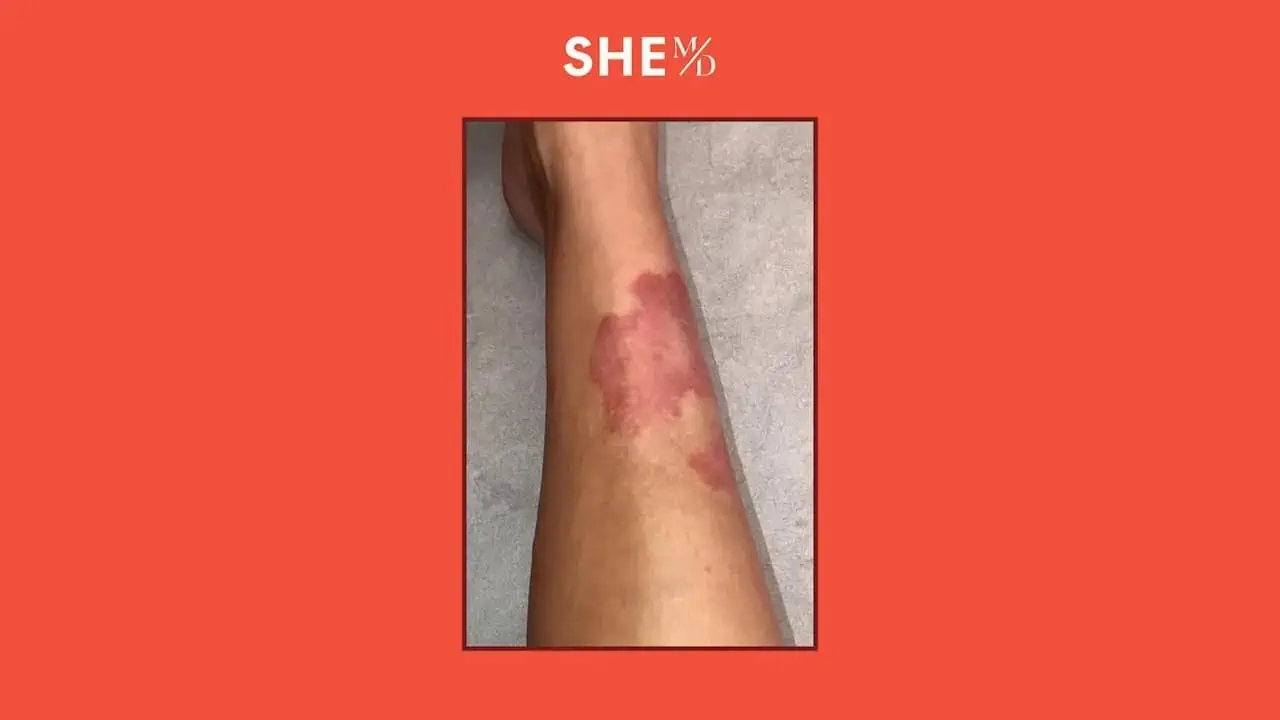
We often had one spot on the leg that was always there. Sometimes it was small, sometimes it expanded, and sometimes it would calm down but never fully disappear. There were also spots on the stomach, elbows, legs, buttocks, and at one point, the face.
When the lesions were active, they could become bright red and intensely itchy. Most of the time, they were not painful. But then an itch attack could come out of nowhere, and scratching could lead to bleeding. That is when it became almost impossible to ignore.
What does psoriasis actually look and feel like?
Kim Kardashian: It looks different for everyone. For us, it can be a very bright red, raised patch. It is not always itchy, which is why it can be confusing. Then suddenly, it can itch so badly that we just cannot take it anymore.
There is also the emotional part. We are all allowed to have days when we cover it with body makeup and feel insecure, and days when we simply do not care. Both are real. Both are okay. We do not have to be perfectly confident every second to be open about what we are dealing with.
What Psoriasis Is and Why It Is More Than a Skin Condition
Can you explain psoriasis in a way that is easy to understand?
Dr. Dan Wallace: We can think of the skin as having several layers. The upper layer contains cells called keratinocytes. In psoriasis, the immune system causes an overproduction and rapid turnover of these skin cells. Instead of shedding normally, cells build up quickly, which creates thick, scaly, inflamed patches.
The most common form is plaque psoriasis, which accounts for roughly 70 to 80 percent of cases. It tends to appear as thick, adherent plaques. There are other forms too, including:
- Guttate psoriasis, which may look like smaller scattered spots.
- Pustular psoriasis, which can involve pus-filled lesions.
- Erythrodermic psoriasis, a severe form marked by widespread red, inflamed skin.
It is important to get an accurate diagnosis because treatment depends on both the severity and the type of psoriasis involved.
Is psoriasis autoimmune?
Dr. Dan Wallace: Psoriasis is an immune-mediated inflammatory disease. It is not in the same category as conditions like lupus or rheumatoid arthritis, but it is still driven by an overreactive immune response. It also shares associations with inflammatory bowel disease, including Crohn’s disease and ulcerative colitis.
There is a genetic component, but genetics are not the entire story. Environment, stress, infections, and other factors can contribute. A person may have a family history and still develop psoriasis later in life, while siblings do not develop it at all.
For anyone navigating chronic symptoms, this is why it is so important to keep asking questions and pushing for clarity. We can find more practical guidance on communicating with providers in our guide to advocating for yourself at the doctor.
Can psoriasis be hereditary?
Dr. Dan Wallace: There can absolutely be a hereditary link. Kim’s mother has psoriasis, and Kim developed it while her siblings did not. Autoimmune and immune-mediated conditions can also appear in different forms within families. In the discussion, Kim shared that her son has mild vitiligo, another condition involving the immune system.
Having one immune-related condition does not guarantee that another will occur. But it can make family history worth discussing with a qualified physician, especially if there are new skin, joint, bowel, or eye symptoms.
Psoriatic Arthritis: When Joint Pain Needs Attention
How did psoriatic arthritis enter the picture?
Kim Kardashian: We woke up one night and could barely pick up the phone because our hands hurt so much. At first, we thought we had slept on them strangely or that they were numb. But the pain was still there the next day. Then the ankles started hurting too.
It was scary because it did not feel like normal soreness. It felt like something was wrong with the joints. That was the moment we met Dr. Wallace and learned that psoriasis can involve more than the skin.
How common is psoriatic arthritis?
Dr. Dan Wallace: Around 8 percent of people with skin psoriasis develop psoriatic arthritis. In many cases, the skin disease appears before joint symptoms. Psoriatic arthritis can affect the hands, feet, ankles, and other joints. There is also a form called psoriatic spondylitis that affects the spine and back.
Joint pain, swelling, persistent stiffness, ankle pain, hand pain, back pain, or reduced ability to grip objects should not be brushed off, particularly when psoriasis is already present. This is the kind of issue that deserves medical evaluation, not random internet advice.
Why can psoriasis sometimes be confused with lupus or eczema?
Dr. Dan Wallace: Diagnosing inflammatory conditions is not always straightforward. People with psoriasis can sometimes have low-level positive antinuclear antibody tests, or ANA tests, which are often associated with lupus. This can create confusion. Some people with lupus also have psoriasis.
Skin conditions such as eczema and psoriasis may overlap visually as well. A skilled dermatologist can often distinguish them clinically, but a skin biopsy may be needed when the diagnosis is unclear.
The usual pathway is to begin with a dermatologist. If there is joint pain, concern for systemic inflammation, or a need for certain medications, a dermatologist may refer to a rheumatologist. The point is not to panic. The point is to make sure the diagnosis is right before assuming every rash or ache is from the same condition.
Trying Everything: Topicals, Home Remedies, Lasers, and Medication
What did you try before finding a treatment that worked?
Kim Kardashian: Honestly, we tried everything. When we first shared about psoriasis publicly, people sent every possible home remedy. We tried tar tea, herbs, holistic approaches, a celery juice diet for six weeks, creams, soaps, natural products, less natural products, and more than a few ideas that sounded slightly wild.
We also tried lasers and different topicals. Sometimes we would see a little improvement, but nothing was consistent enough. When psoriasis is on the face or close to the eye, it becomes especially stressful. There was a point when a flare appeared near the eye shortly before the Met Gala, and it burned.
We used concealer and body makeup when we wanted to cover it. But under all of that, we were still trying to find something that truly controlled the condition.
Did the plastic wrap treatment really help?
Kim Kardashian: Yes. A dermatologist recommended applying a prescribed cream, covering the area with plastic wrap, then putting on socks or securing the wrap over elbows before bed. It was not glamorous. We sounded like the Tin Man walking around. But it helped the topical treatment stay in place and made a difference for us.
That said, this is not a universal treatment plan. We should always use prescribed medications exactly as directed by our own clinician, especially when wrapping skin or applying a strong product over a larger area.
What are the main treatment options for psoriasis?
Dr. Dan Wallace: Treatment begins with confirming the diagnosis and determining the form and severity of psoriasis. Many people have mild disease that can be managed with topical treatment. These may include:
- Topical corticosteroids
- Vitamin D based creams
- Calcineurin inhibitors for appropriate areas
- Retinoids
- Coal tar preparations
- Moisturizing ointments, creams, lotions, or emulsions
- Phototherapy or medically guided light therapy
Formulation matters. Ointments tend to stay on the skin longer and may be more moisturizing, while creams and lotions can feel lighter. The best option depends on the location of the psoriasis, the climate, the person’s skin, and what they can realistically use consistently.
Strong fluorinated topical steroids can be very effective on the body, but they must be used carefully. They can thin the skin, especially with prolonged use or use on sensitive areas like the face. We should never assume that a cream is harmless simply because it worked for someone else.
When is systemic treatment or a biologic considered?
Dr. Dan Wallace: About 20 percent of people with psoriasis eventually need systemic treatment, meaning treatment that works throughout the body rather than only on the skin. This may be appropriate for severe skin disease, psoriatic arthritis, or psoriasis that does not respond adequately to topical care.
Kim initially tried an oral medication for psoriatic arthritis but did not want to remain on it long term once the joint pain improved. Later, when the skin disease became more difficult to control, she decided it was time to try a stronger medication. After one injection, the psoriasis cleared completely.
Biologics can be transformative, but they require appropriate screening and follow-up. Depending on the medication, clinicians may test for tuberculosis, hepatitis, and other health concerns. These medicines affect the immune system and must be managed carefully by experienced clinicians.

The Whole-Body Side of Psoriasis
Can psoriasis affect areas beyond the skin and joints?
Dr. Dan Wallace: It can. Most people with psoriasis primarily have skin disease, but psoriasis can be associated with eye symptoms, inflammatory bowel disease, metabolic concerns, cardiovascular risk factors, and mental health challenges. That is why it is not helpful to dismiss psoriasis as merely cosmetic.
Regular primary care matters. A yearly checkup is a practical way to keep up with overall health, discuss changes in symptoms, and make sure any recommended screenings are up to date.
Weight and metabolic health can also be part of the bigger picture. A physician can help create an individualized plan when needed. For more information on medically supervised options, we can explore our obesity and weight-loss care resources.
Can stress trigger a psoriasis flare?
Kim Kardashian: Stress can absolutely be part of it, but it is not always predictable. We can go through an incredibly intense time and have no flare at all. Then something that seems small happens, and suddenly a spot is angry. We cannot always connect every flare to one event.
That is why self-care is not about blaming ourselves for being stressed. It is about supporting the nervous system and giving ourselves tools that help us feel more regulated. Prayer, yoga, Pilates, time to decompress, movement, and any healthy practice that helps us calm down can be valuable.
We also need to stop beating ourselves up when our body does something we did not ask it to do. There is a difference between taking responsibility for our care and blaming ourselves for our health. Our reflection on why we should stop being so hard on ourselves speaks directly to that distinction.
Is there a psoriasis diet?
Dr. Dan Wallace: There is not one proven universal psoriasis diet discussed here. There is growing interest in the microbiome, the community of bacteria in the gut, and how it affects inflammation and immune function. Research may eventually lead to more individualized nutritional approaches for psoriasis.
For now, we should be cautious about anyone promising that eliminating one food or drinking one thing will cure psoriasis. Kim tried eliminating citrus and acidic foods, among many other strategies, without finding a reliable answer. Nutrition matters for overall wellness, but psoriasis treatment should be guided by evidence and a clinician who understands the condition.
Self-Care, Strength Training, and Building a Sustainable Routine
What does self-care look like when life is extremely busy?
Kim Kardashian: We are big on taking care of the body and mind. We use skincare and body oils to help prevent skin from feeling dry or flaky. We like red light saunas and have a red light bed. But self-care is not one product or device. It is the choices we make repeatedly to protect our energy and feel good in our own body.
It is also about being realistic. Sometimes we want to put on makeup and conceal a patch. Sometimes we want to show up exactly as we are. We do not need to turn every difficult day into a confidence lesson. We can simply take care of ourselves.

What is your approach to exercise?
Kim Kardashian: We do not really believe in shortcuts when it comes to training. We work out about two hours a day, six days a week, and most of that is weight training. We know that is not realistic or necessary for everyone, but strength training has been a major part of our routine.
We have learned that lifting weights does not need to mean lifting extremely heavy. The goal can be strength, consistency, body composition, confidence, or simply feeling healthier and more capable. We can set specific goals over several months and focus on building muscle intentionally.
We also learned from age testing that adding more cardio could be beneficial. The takeaway is not that there is one perfect routine. It is that movement is an investment in long-term health, and we can make choices that work for our own body and life.
What wellness habits and supplements are part of your routine?
Kim Kardashian: We are interested in supplements, including fish oil, cognitive supplements, and NMN. We also spent two years eating vegan and still enjoy plant-based meals, including Beyond Meat tacos, even when not following a fully vegan diet.
But we have to remember that supplements are not substitutes for medical care, nutritious food, sleep, movement, or treatment for an autoimmune or inflammatory disease. We should always ask a healthcare professional what is appropriate for our individual health needs and medications.
Using Knowledge and Influence to Help Others
Why was it important to talk openly about psoriasis?
Kim Kardashian: We have always wanted to share the things we learn, whether that is skincare, makeup, health, or the little tips we pick up over decades of getting ready. Psoriasis is more personal, but that is exactly why it matters to talk about.
It is a blessing to learn about something that affects us and then be able to share it. We did not even know some of the medical details until this conversation, including how psoriasis could connect to family history, joints, and other inflammatory conditions.
Being open does not mean we have every answer. It means we are willing to say, “This happened to us, this is what we learned, and maybe it will help someone else ask a better question.”
How did prison reform work lead to law school?
Kim Kardashian: We wanted to do more in criminal justice reform. We were in clemency meetings and found ourselves texting attorneys about legal terminology and abbreviations we did not understand. There is an entire language within the legal system, and we wanted to know it ourselves.
Our father was a lawyer, and we had always been interested in his cases and crime scene materials. But law school was also about removing the barrier between us and the information. We thought that if we understood more, we could contribute more.
We also believe people do not need a degree to make a difference. A platform, voice, commitment, and willingness to learn can create real change. The degree is one path. Advocacy can take many forms.
What would you tell your younger self?
Kim Kardashian: We would not really change anything, even the embarrassing things, because all of it shaped who we are. We grew up with values around working hard, showing up on time, spending time with family, and taking responsibility.
We have grown, evolved, and learned more with age. Going back to school later in life has been one of the best decisions. But we do not look at the past with regret. We look back with appreciation for every phase, every lesson, every magazine cover, every career step, and every moment that brought us here.
Five Things We Should Do If We Think We Have Psoriasis
What are the most important takeaways for someone with possible psoriasis?
Dr. Dan Wallace: We can keep it simple:
- Seek medical attention for a persistent rash. Do not assume a red or scaly patch is harmless or self-diagnose based on photos online.
- Get the right specialist involved. A board-certified dermatologist can evaluate skin symptoms, and a rheumatologist may be needed for joint pain or systemic treatment.
- Do not rely on social media for everything. Personal stories can be supportive, but they cannot replace an accurate diagnosis or treatment plan.
- Address stress without blaming yourself. The mind-body connection matters, and calming practices can support overall well-being.
- Take care of the basics. Exercise, a balanced diet, regular primary care, and appropriate medical follow-up all matter.
Psoriasis can come and go, but we do not have to manage it alone. With the right diagnosis, thoughtful follow-up, and a care plan that fits our individual needs, there are more options than ever.
Concerned About Your Health? Talk to Dr. Aliabadi
Dr. Aliabadi is an expert OB/GYN who is knowledgeable in all aspects of women’s health and well-being. Dr. Aliabadi and her caring, supportive staff are available to support you through PCOS, endometriosis, menopause, childbirth, infertility, or routine gynecological care. We invite you to establish care with Dr. Aliabadi. Call us at (844) 863-6700 or
Psoriasis FAQs
What is the most common type of psoriasis?
Plaque psoriasis is the most common form. It often appears as thick, raised, red, scaly patches of skin.
Can psoriasis cause joint pain?
Yes. Some people with psoriasis develop psoriatic arthritis, which can cause joint pain, swelling, stiffness, and symptoms in the hands, feet, ankles, or back.
Should we see a dermatologist or rheumatologist for psoriasis?
A dermatologist is often the first specialist for psoriasis. A rheumatologist may be needed if there is joint pain, suspected psoriatic arthritis, or consideration of systemic immune-targeting medication.
Can stress make psoriasis worse?
Stress can contribute to flares for some people, although triggers are not always predictable. Stress-management practices can be a useful part of a broader treatment plan.
Can strong topical steroids be used on the face?
Strong topical steroids require caution, especially on the face, because prolonged use can thin the skin. We should only use them as directed by a qualified clinician.