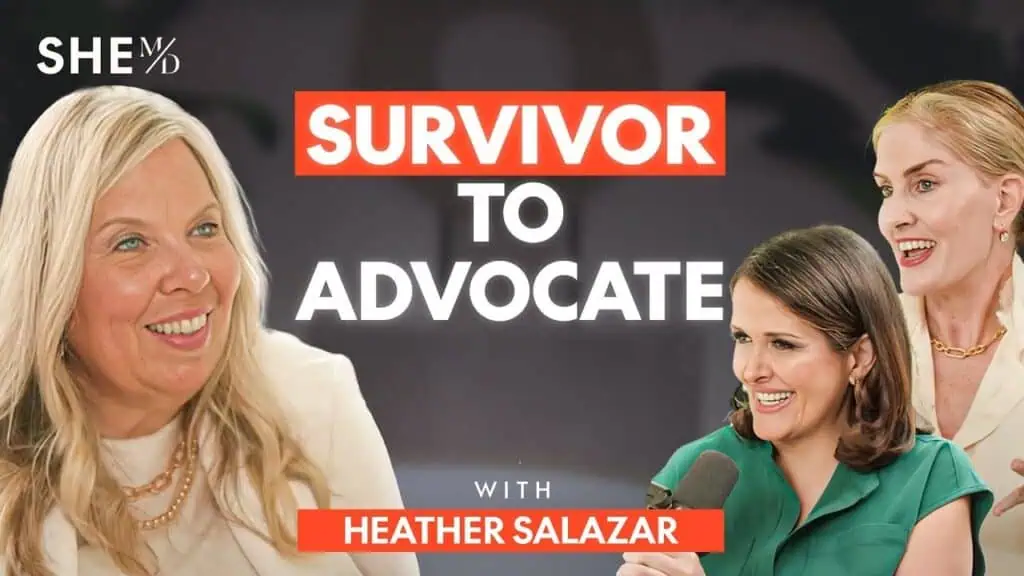
Some health stories begin with a diagnosis. Others begin years earlier, when we know something is wrong but keep getting told to try harder, eat less, worry less, or simply wait it out.
This conversation sits right at that intersection of women’s health, mental health, and self-worth. PCOS can show up as irregular cycles, acne, facial hair, body hair, hair thinning, weight changes, insulin resistance, anxiety, and fertility concerns. But it also reaches much deeper than lab results or ultrasounds. It can affect how we move through the world, how we see ourselves, and how much faith we have in our own body.
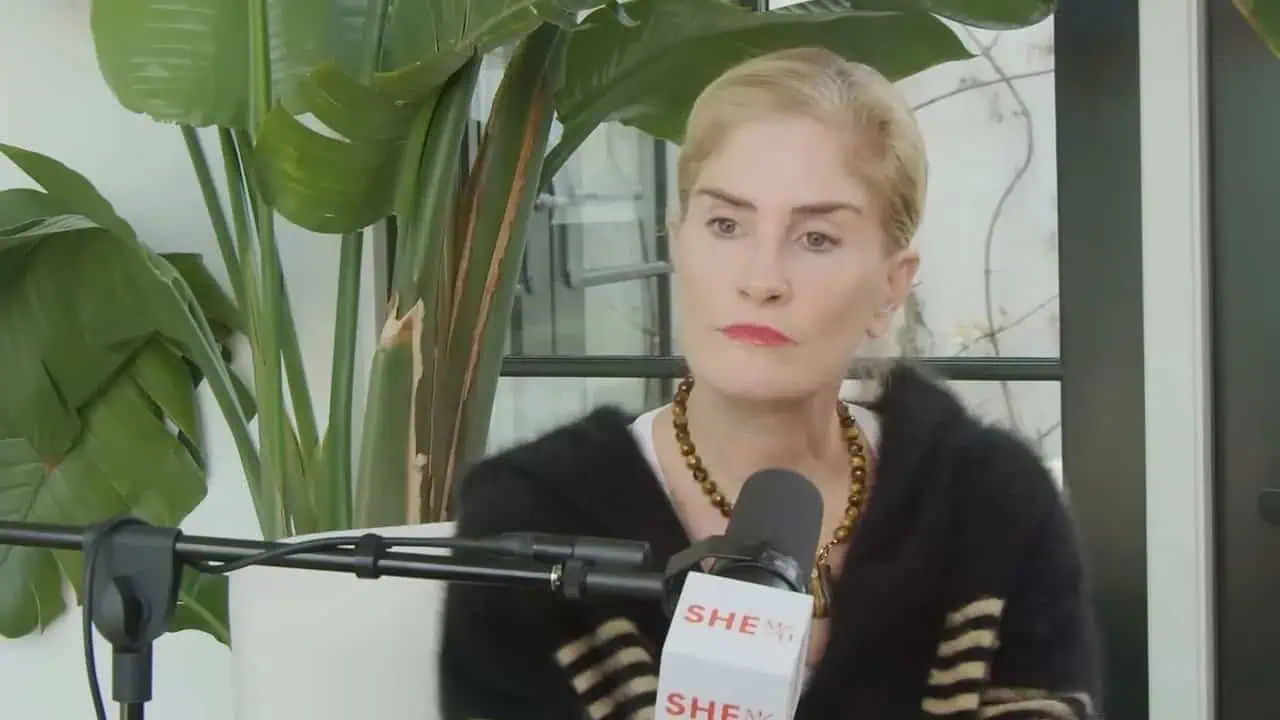
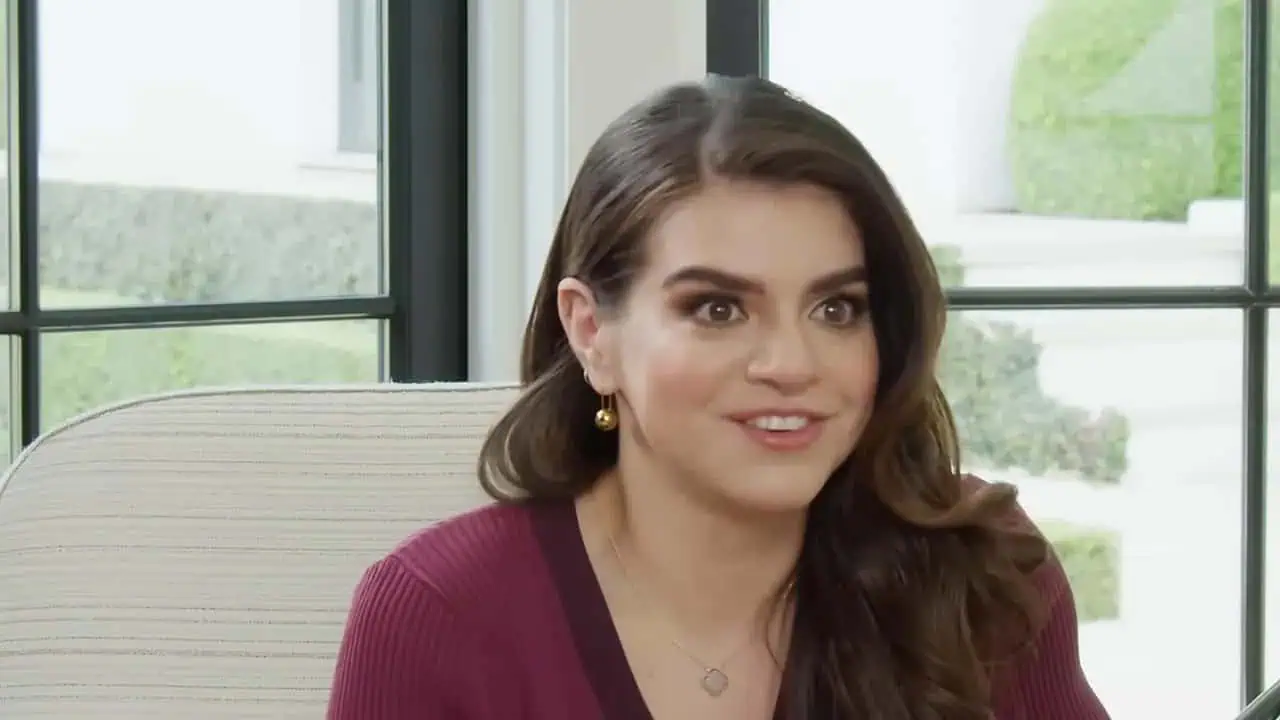
That is what makes Mayan Lopez’s story so powerful, and she sits down with Dr. Thais Aliabadi and Mary Alice Haney. It is not only about finally identifying polycystic ovary syndrome. It is also about what happens when a young woman who has been dismissed for years is finally heard, treated, and understood.

Table of Contents
- Getting honest about PCOS, depression, and feeling unseen
- What PCOS actually looks like in real life
- Treatment that addressed the whole person
- Binge eating, trauma, and the search for control
- Healing in public, and healing at home
- Complex PTSD and learning to protect the younger self
- Confidence is not beauty, and it is not pretend perfection
- What ongoing PCOS care can look like
- Why stories like this matter
- FAQ
Getting honest about PCOS, depression, and feeling unseen
When did we first hear that something felt off in your body?
Mayan describes noticing signs early. She got her period young and dealt with excess facial hair, something she initially brushed off. Later, as she moved into college, things escalated fast. Her weight changed dramatically in a short period of time, with no clear explanation. She was exercising a lot, trying to eat well, and still not seeing movement.
That mismatch is one of the most frustrating things about PCOS. We can be doing what we are told should work and still feel like our body is ignoring us. Instead of getting meaningful answers, many women get handed shame. They are told to be stricter, more disciplined, more consistent. When that advice does not solve the problem, the blame often lands back on them.
Mayan’s experience reflects that pattern. What should have been a medical investigation became a source of self-criticism. She began to internalize the idea that she was somehow failing.
How did those symptoms affect your mental health?
The effect was profound. She describes becoming deeply self-conscious, depressed, and isolated. At a stage of life that is usually about expansion, experimentation, and building identity, she felt herself shrinking. She pulled back socially and emotionally. Even while performing and pursuing comedy, she was carrying a heavy sense of self-hatred.
This is one of the most important parts of the PCOS conversation. We tend to talk about the outward symptoms first, like acne or irregular periods, but the internal toll can be just as serious. Mood changes, anxiety, low self-esteem, and depression often travel alongside hormonal imbalance and insulin resistance. If that connection matters to you, this resource on PCOS and depression offers more context on how closely these issues can overlap.
When someone feels like their body has turned against them, every mirror, every meal, and every social interaction can start to feel loaded. That emotional weight is real. It is not vanity. It is not weakness. It is often the result of living in a body that feels unpredictable while being told nothing is really wrong.
What finally led to answers?
Eventually, an internist suggested she see an endocrinologist. That was an important turn. Her lab work revealed serious metabolic concerns, including severe insulin resistance and a hormonal picture that did not make sense for someone so young.
From there, she was referred for more specialized care and was finally diagnosed with PCOS. That moment changed everything, not because it made the condition disappear overnight, but because it gave shape to years of confusion.
Sometimes the first real relief is not physical. It is emotional. It is hearing, “You were right. Something was wrong.”
What PCOS actually looks like in real life
What signs of PCOS were present?
The symptom list was extensive. Irregular periods. Acne. Facial hair. Body hair. Weight gain that resisted standard advice. Anxiety. Insulin resistance. Difficulty with self-esteem. A long battle with feeling dismissed.
Clinically, PCOS is often diagnosed when a person has at least two of three major features:
- Irregular or absent ovulation, often seen as irregular periods
- Signs or lab evidence of elevated androgens, such as acne, excess hair growth, or scalp hair thinning
- Ovaries that show a high number of follicles on ultrasound
Mayan had all three. That matters because her case was not subtle. It was obvious once someone took the time to connect the dots.
And that is part of the heartbreak here. This was not a mysterious condition hiding in the shadows. The signs were present. They just were not being interpreted together.
Why do so many women with PCOS go undiagnosed or undertreated?
Because symptoms often get split apart. One doctor sees acne. Another sees weight gain. Another hears irregular cycles and offers birth control without digging further. Another hears about mood struggles and focuses only on mental health. Each piece gets handled in isolation, while the larger hormonal pattern is missed.
PCOS is not rare. It is one of the most common hormonal disorders affecting women of reproductive age. Yet many still spend years searching for clarity. For a broader overview of how PCOS develops, how it is diagnosed, and the common long-term risks, the clinic’s detailed guide on Polycystic Ovary Syndrome is a useful companion.
Another reason diagnosis gets delayed is that weight bias still shapes care. When a patient gains weight, the assumption is often behavioral before it is biological. But with insulin resistance, the body can drive hunger, fat storage, and metabolic dysfunction in ways that are not solved by generic advice alone.
Can PCOS contribute to anxiety and disordered eating?
It can, and this conversation makes that painfully clear. When our hormones are off and our body feels impossible to manage, food can become emotionally charged. Restriction, bingeing, purging, and obsessive thoughts about control may follow. That does not mean PCOS is the only cause of an eating disorder, but it can absolutely be part of the picture.
The key point raised here is one that deserves more attention in medicine: whenever a young woman presents with significant weight struggle, irregular cycles, or signs of hyperandrogenism, insulin resistance should be considered. We should not assume the whole story is about willpower.
Treatment that addressed the whole person
What did treatment look like once the diagnosis was clear?
Care was not focused on one symptom. It was layered and comprehensive.
The treatment plan included:
- Medication to address insulin resistance
- Medication support for weight regulation and appetite control
- Spironolactone to help with acne and excess hair growth
- Hormonal birth control to regulate bleeding and cycles
- Ongoing monitoring of hormone levels and metabolic health
The larger goal was to correct the internal hormonal environment, not simply chase external symptoms. Insulin resistance, androgens, periods, appetite, mood, and self-esteem were all treated as parts of the same lived experience.
Why was self-esteem treated as part of the medical plan?
Because it had to be. When someone has been worn down by years of unexplained symptoms, treatment is not just about lab normalization. It is about helping them rebuild trust in themselves.
One of the most striking ideas in this conversation is that confidence is not superficial. It is foundational. Without it, everything becomes harder. Relationships. Work. Ambition. Boundaries. Recovery. Daily life.
That does not mean confidence depends on fitting some beauty ideal. It means feeling at home in our own body. Feeling like we can move through the world without carrying constant defeat.
For readers working on that part of healing, there is something deeply aligned with the message in this article on why we should stop being so hard on ourselves. Self-compassion is not fluff. It is part of survival.
How quickly did things begin to shift?
Mayan describes feeling a change quickly, including early weight loss and a huge wave of emotional relief. But the biggest shift was not just physical. It was being listened to. That feeling of being seen mattered as much as any prescription.
She knew the road ahead would still require effort. PCOS management is rarely one single fix. It often requires adjustment over time, ongoing check-ins, and awareness that hormones can fluctuate with age, stress, diet, and daily life. But now she had a roadmap instead of a mystery.
That difference can change everything.
Binge eating, trauma, and the search for control
How did food become part of the struggle?
Mayan talks candidly about binge eating during her parents’ divorce. Food became something she could turn to when life felt chaotic. Over time, the struggle evolved into cycles of bingeing, restriction, and purging.
That honesty matters. Disordered eating does not always begin with body image alone. Sometimes it begins with fear, grief, instability, or the need for comfort. Sometimes it is about control when the rest of life feels uncontrollable. In her case, family upheaval and untreated hormonal dysfunction fed into each other.
It is easy to miss how often trauma and metabolic issues overlap. When that happens, people may be judged from two directions at once. Their mental health struggles are misunderstood, and their hormonal symptoms are minimized.
What happens when trauma and PCOS collide?
We get a body that feels harder to trust and a mind that is already bracing for pain. That combination can be brutal. Mayan describes feeling like her body did not make sense. That kind of disconnection can intensify despair, especially when there is already a history of emotional distress.
The conversation also highlights something clinicians should take seriously: not every eating disorder points to PCOS, but PCOS can absolutely worsen disordered eating patterns. If insulin resistance is driving intense hunger, cravings, and weight gain, then telling someone to simply be stricter can deepen the shame and the cycle.
This is why better women’s healthcare has to be integrated. Hormones, mood, appetite, metabolism, and trauma are not neatly separated in real life.
Healing in public, and healing at home
How did humor and family shape your path?
Mayan also shares the deeply personal background behind Lopez vs. Lopez, the show she co-created and stars in. Born partly out of social media and partly out of a complicated father-daughter relationship, the show pulls from real emotional terrain while still making room for comedy.
That balance feels true to her story. Humor is not used to deny pain. It is used to carry it. She describes revisiting difficult memories through art instead of becoming trapped inside them. That distinction matters. It is one thing to relive a wound. It is another to transform it.
The show became one avenue for connection, but not an easy cure. Healing in families is rarely simple. Shared work does not automatically create emotional resolution. Sometimes it brings insight. Sometimes it reveals new limits.
What did you learn about acceptance?
One of the most mature parts of the conversation is the recognition that acceptance is not the same as giving up. There is strength in recognizing when we have to stop chasing a version of someone that does not exist.
Mayan speaks about grieving the idea of the father she hoped to have and facing the reality of the relationship as it truly was. That process took enormous resilience. Not because it made things tidy, but because it required letting go of fantasy without letting go of herself.
That lesson applies far beyond family. Many forms of healing involve the same choice. We stop bargaining with reality, and we begin caring for the part of us that has been waiting to be chosen.
Complex PTSD and learning to protect the younger self
How did trauma show up in your life?
Mayan shares that she has been diagnosed with complex PTSD. In her case, that meant repeated emotional injuries over time, disappointment, instability, and growing up under public scrutiny while family pain played out in front of others.
She describes how even everyday experiences became marked by humiliation and sadness, including invasive comments from adults during adolescence. Those moments stay with us. Trauma does not only come from one catastrophic event. It can also come from repeated emotional ruptures, especially during formative years.
She also speaks with enormous love about her mother, who became both anchor and protector. The message is moving and practical at the same time: one strong, loving parent can make a life-changing difference.
What helped you survive those years?
Several things. A treatment facility that gave her safety and structure. Therapists who helped her find language for what she was carrying. Creative outlets like theater and comedy. And a developing relationship with her own inner voice.
She describes reaching a point where she realized that even if painful situations were not her fault, healing was still her responsibility. That is not blame. It is agency. It is the moment we understand that the past may explain us, but it does not have to sentence us.
She also speaks powerfully about the younger versions of ourselves that stay with us. Instead of trying to erase those parts, we can learn to comfort them. To tell them they are safe. To become the caretaker they needed.
What would we say to someone in trauma who feels like there is no way out?
The message is simple and urgent. There is always someone who can listen. Help exists. Treatment can save lives. One therapist, one mentor, one parent, one friend, one safe place can become the turning point.
Mayan credits a residential treatment center with saving her life. That is not a small statement. It is a reminder that intensive support is sometimes exactly what is needed, and there should be no shame in that.
She also emphasizes the importance of finding even one thing that belongs to us. A creative outlet. A private practice. A place where we can feel like ourselves. Sometimes healing does not begin with a grand solution. Sometimes it begins with one honest conversation and one reason to stay.
Confidence is not beauty, and it is not pretend perfection
What changed most once your health became more regulated?
Yes, there were visible changes. Healthier skin. Fuller hair. Weight loss. Greater metabolic stability. But the hosts keep coming back to something more important: the way she carries herself now.
Confidence has become visible. Not because she suddenly became worthy, but because she finally got enough support to reconnect with the worth that was there all along.
That distinction matters. Confidence is not the reward for becoming flawless. It is what begins to emerge when we are no longer crushed by confusion, shame, and dismissal.
What is the framework for rebuilding confidence?
Dr. Aliabadi shares a three-part rule she teaches often: confidence, resilience, and effort. According to her, women need all three.
- Confidence helps us believe we belong in the life we want
- Resilience helps us recover when life knocks us down
- Effort is what turns intention into action
If one is missing, progress gets harder. Confidence without effort goes nowhere. Effort without resilience collapses under setbacks. Resilience and effort without confidence can keep us functioning, but make thriving feel out of reach.
It is a simple framework, but a useful one. We can ask ourselves where we are strongest and where we need support. That kind of self-reflection is often more productive than criticism.
What ongoing PCOS care can look like
Does treatment end once symptoms improve?
Not exactly. PCOS is usually a condition that requires ongoing management. Hormones shift. Stress matters. Weight can fluctuate. Insulin resistance can improve and worsen over time depending on many factors.
That is why follow-up still matters, even when someone is doing well. In this conversation, ongoing care includes hormone monitoring and periodic reevaluation of broader health risks.
That long-term lens is important because PCOS is not just a reproductive issue. It can affect blood sugar, cardiovascular risk, cholesterol, mood, and fertility planning.
How does fertility planning fit into the picture?
One important point raised here is egg count and egg quality. Women with PCOS often have a high number of eggs, but that does not automatically guarantee future fertility ease. Discussions around egg freezing and reproductive planning can be valuable, especially when started early enough to give real options.
This is another example of why thoughtful women’s healthcare cannot be purely reactive. It should include present symptoms and future goals.
Why were genetic testing and breast risk brought into the conversation?
Because health history does not happen in silos. Family history of ovarian cancer prompted genetic testing, and weight was part of a larger breast cancer risk calculation at one point. With improved health and substantial weight loss, that risk profile may change, but it still deserves attention and reevaluation.
That part of the discussion is a reminder that good care looks at the whole person, not just the headline diagnosis. A patient can have PCOS and still need thoughtful assessment of family cancer history, breast symptoms, and screening timing.
Why stories like this matter
What do we take away from all of this?
First, symptoms that look separate may belong to the same diagnosis. Irregular periods, acne, facial hair, hair changes, insulin resistance, anxiety, and weight struggles should not be brushed off or treated as unrelated inconveniences.
Second, being dismissed can be as damaging as the condition itself. Delayed diagnosis steals time, confidence, and peace. It can also deepen depression and disordered eating.
Third, effective treatment is not just about prescriptions. It is about restoring dignity. It is about being heard. It is about reducing shame. It is about helping someone feel at home in their own body again.
And finally, healing is layered. We may need medical treatment, therapy, boundaries, grief work, better language, creative outlets, and support from people who know how to listen. None of that makes us weak. It makes us human.
If we recognize ourselves in this story, what should we remember?
If our cycles are irregular, if our weight is changing in ways that do not make sense, if we are dealing with acne, excess hair growth, hair thinning, anxiety, or signs of insulin resistance, we deserve a proper evaluation.
If we have spent years blaming ourselves, we can stop there. We may still have work to do, but blame is not treatment.
If trauma is part of our story too, we are not disqualified from healing. We are not too complicated. We are not too much. We are allowed to seek help for the body and the mind at the same time.
FAQs
What are common symptoms of PCOS?
Common symptoms include irregular periods, acne, facial hair, body hair, scalp hair thinning, weight gain or difficulty losing weight, insulin resistance, and mood changes such as anxiety or depression.
Can PCOS affect mental health?
Yes. PCOS can be closely tied to anxiety, depression, low self-esteem, and body image distress. The hormonal and metabolic side of the condition can overlap with emotional health in significant ways.
How is PCOS usually diagnosed?
PCOS is often diagnosed using a combination of symptoms, hormone findings, and ultrasound. A common framework is having at least two of these three: irregular ovulation or periods, elevated androgens or their symptoms, and ovaries with many follicles on ultrasound.
Can insulin resistance be part of PCOS?
Yes. Insulin resistance is very common in PCOS and can contribute to weight changes, intense hunger, metabolic problems, and difficulty losing weight even with strong effort.
Can PCOS treatment improve confidence?
It can. When symptoms become more manageable and a person feels heard and understood, confidence often improves. That shift is not just about appearance. It is about relief, validation, and feeling more at home in one’s body.
Does PCOS always require long-term follow-up?
Ongoing monitoring is often helpful because hormones, cycles, insulin resistance, and weight can change over time. Long-term care may also include discussions about fertility, metabolic health, and other risk factors.
Concerned About Your Health? Talk to Dr. Aliabadi
Dr. Aliabadi is an expert OB/GYN who is knowledgeable in all aspects of women’s health and well-being. Dr. Aliabadi and her caring, supportive staff are available to support you through PCOS, endometriosis, menopause, childbirth, infertility, or routine gynecological care. We invite you to establish care with Dr. Aliabadi. Call us at (844) 863-6700 or
This article was created from the video Mayan Lopez: Finding Confidence Through PCOS, Healing, and Humor | SHE MD for Dr. Thais Aliabadi’s website.