Some conversations are polished. This one was not interested in polished.
It was honest, funny, self-aware, and deeply relatable. Aurora Culpo joined Dr. Thais Aliabadi and Mary Alice Haney for a conversation that went everywhere women’s lives actually go: hormonal health, miscarriage, postpartum depression, divorce, sex after kids, dating apps, alcohol, anxiety, exercise, skincare, gut health, and that ongoing attempt to figure out what our bodies are trying to tell us.
Aurora is the host of Barely Filtered, a mom of two, and someone who has built a platform around a simple but powerful idea: your mess is your message. That spirit shaped the entire interview. Nothing felt rehearsed. Nothing felt overly packaged. It felt like the kind of conversation women have when they finally stop pretending they are supposed to have everything figured out.
Table of Contents
- Real Talk on Women’s Health, Relationships, and Starting Over
- PCOS, Acne, Insulin Resistance, and Why So Many Women Go Undiagnosed
- Miscarriage, Pregnancy Loss, and the Grief We Do Not Talk About Enough
- Postpartum Changes, Sex After Kids, and the Emotional Disconnect No One Warns You About
- Divorce, Monogamy, and What We Learn the Hard Way
- Dating After Divorce and Treating Love Like a Job Search
- Being Sober Curious, Depression, and the Quiet Power of Not Numbing Out
- Exercise, Fasting, Gut Health, and the Wellness Habits That Actually Help
- Beauty, Melasma, and the Products Aurora Actually Uses
- Meditation, Spirituality, and Listening to Yourself Earlier
- The Advice She’d Give Her Younger Self
- FAQ
Real Talk on Women’s Health, Relationships, and Starting Over
You say, “Your mess is your message.” What does that mean to you?
For Aurora, that phrase came naturally from the way she approaches her life and her podcast. She tries to be open without simply dumping every private detail for shock value. The point is not oversharing for the sake of oversharing. The point is to be honest about the fact that most of us carry histories full of big traumas, little traumas, labels, diagnoses, confusion, and coping mechanisms.
She talked about growing up with labels placed on her, then carrying more of them into adulthood. ADHD. Hormonal issues. postpartum depression. Perinatal depression. Catastrophic anxiety. Divorce. Motherhood. The list is long, but what she has learned is that not everything needs a perfect label to be real.
That is part of what makes her perspective so compelling. She is not pretending to have solved herself. She is sharing what has helped her make sense of a life that has, in her words, been messy.
That idea is also very aligned with our larger mission on SheMD. So many women spend years trying to get answers, trying to be believed, and trying to find language for symptoms that are clearly affecting their lives. Sometimes the first step is simply hearing someone say, “Yes, this is happening to me too.”
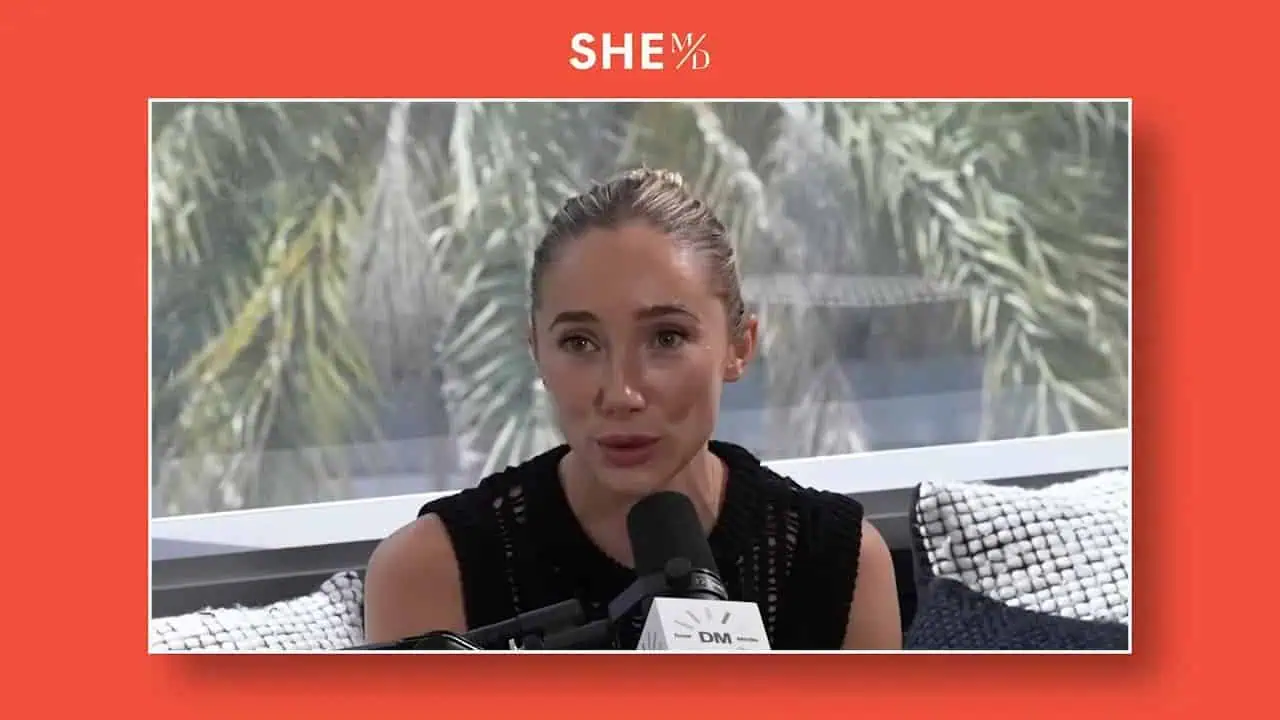
How did your own health journey push you into becoming your own advocate?
Aurora described what many women know all too well: a lot of self-research, a lot of trial and error, and, honestly, a lot of money spent trying to figure out what works. That is the frustrating part of modern wellness. There is more information available than ever, but access does not always equal clarity.
Still, we are in a better place than we used to be. We can listen to experts, compare experiences, and ask more informed questions. But there is also a responsibility that comes with that. Good information matters. Women’s health is not an area where guesswork should be the norm, even though so often it is.
That is why conversations like this matter. They sit at the intersection of lived experience and medical context. When someone shares her symptoms, and a physician can say, “Actually, that pattern may point to PCOS,” it helps women connect dots that may have been left disconnected for years.
PCOS, Acne, Insulin Resistance, and Why So Many Women Go Undiagnosed
Did you deal with endometriosis like your sister Olivia, or was your experience different?
Aurora’s story was different. She did not have the severe period symptoms her sister described, and she did not identify with endometriosis. What she did have were symptoms that sounded more like PCOS: cystic acne, hormonal fluctuations, ovarian cysts seen on scans, and a history of miscarriage.
That distinction is important because women often lump reproductive and hormonal symptoms into one category. But painful periods, endometriosis, PCOS, anovulation, insulin resistance, acne, irregular cycles, and miscarriage are not interchangeable. They can overlap, but they are not the same thing.
One point we emphasized strongly was this: painful periods are not normal. Heavy cramping that disrupts life should not be dismissed as something women just have to tolerate.
What PCOS symptoms did you experience?
The symptom that stood out most for Aurora was cystic acne, especially concentrated on the lower part of the face. That pattern often raises suspicion for androgen-related acne, which is common in PCOS.
She described how emotionally disruptive that acne was in her younger years. Anyone who has dealt with persistent cystic acne knows it is not “just cosmetic.” It affects confidence, social comfort, self-image, and sometimes obsessive attention to every change in the mirror.
Interestingly, one of the treatments that helped her most was acupuncture. That may surprise some people, but many women do find supportive therapies helpful, especially when stress, inflammation, and hormonal imbalance are all in the mix.
Dr. Aliabadi explained the physiology in a way that makes the picture clearer. In many women with PCOS, insulin resistance disrupts ovulation and contributes to elevated androgen levels, including testosterone. That can lead to:
Lower-face acne
Hair thinning or scalp hair loss
Excess facial or body hair
Difficulty losing weight despite effort
Irregular ovulation or cycles
Polycystic-appearing ovaries on ultrasound
And this is where women often get confused. You do not need every symptom to have PCOS. Some women have regular-ish cycles and still are not ovulating consistently. Some have acne and miscarriage. Some have insulin resistance and weight struggles without obvious ovarian symptoms. Diagnosis can be tricky.
That is one reason PCOS remains underdiagnosed. As Dr. Aliabadi noted, it is incredibly common. Many women do not realize they fit the pattern. If any of this sounds familiar, this overview on PCOS symptoms, diagnosis, and treatment is a helpful place to start.
Why does PCOS get missed so often?
Because women are told too often that their symptoms are random, cosmetic, stress-related, or normal.
If cycles are inconsistent, many are told to “wait and see.” If acne is severe, they are sent toward skincare without a hormone workup. If they gain weight or cannot lose it, they are blamed for discipline problems instead of being screened for insulin resistance. If they miscarry, they are offered sympathy but not always a deeper hormonal evaluation.
PCOS is not just about ovaries. It is a whole-body endocrine and metabolic condition. Aurora’s conversation highlighted what happens when women sense something is off but do not yet have the language or framework for it.
Miscarriage, Pregnancy Loss, and the Grief We Do Not Talk About Enough
What was your experience with miscarriage?
Aurora shared that she had several miscarriages. Three were very early, after a positive test but before hearing a heartbeat. One loss happened after hearing the heartbeat and then returning around 12 weeks to learn that there was no heartbeat anymore.
She described the physical and emotional trauma of being told to return the next day for a D&C, only to go home and begin miscarrying naturally that same night. She labored through that loss alone in her bathroom. She said it was more painful than the births of her children, in part because those births included epidurals and support, while this experience was devastating and isolating.
That kind of honesty matters because miscarriage is still often treated as something women should process quietly. Yet it is incredibly common, and it can be heartbreaking whether the loss happened at five weeks or twelve.
There is no correct way to grieve a miscarriage. Hearing a heartbeat and then losing the pregnancy can feel especially wrenching, but early loss is not “less real” emotionally. Many women bond with a pregnancy from the moment they see that positive test.
For anyone navigating early pregnancy loss and looking for reliable medical information, this resource on miscarriage symptoms, causes, and treatment options may be useful.
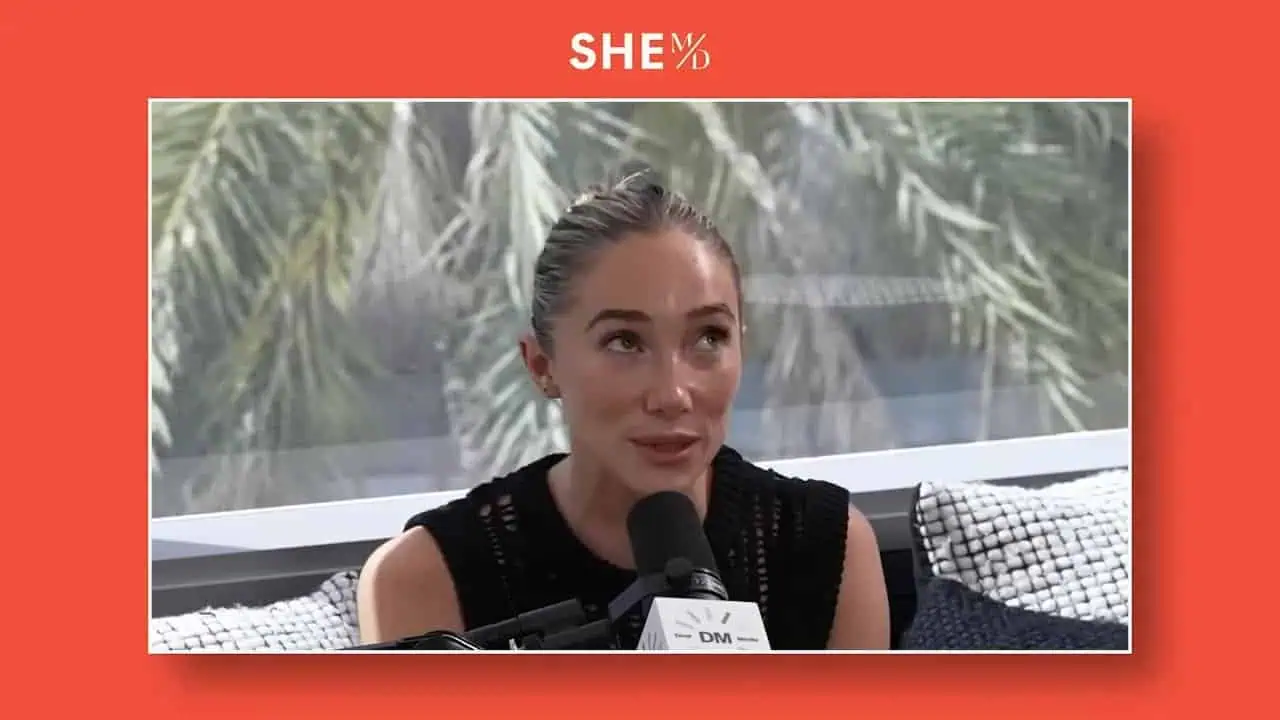
Did you have trouble getting pregnant, or was the issue staying pregnant?
For Aurora, conception was not the main problem. Staying pregnant was. That distinction matters clinically. Some women with hormonal dysregulation can become pregnant relatively easily but struggle with early pregnancy support, ovulation quality, insulin issues, or other underlying factors that affect pregnancy maintenance.
Again, this is one reason it is worth taking recurrent symptoms seriously. If a woman has acne, possible cystic ovaries, signs of inflammation, hormonal mood changes, and a history, those pieces should not be considered in isolation.
Postpartum Changes, Sex After Kids, and the Emotional Disconnect No One Warns You About
What changed in your marriage after having children?
This part of the conversation was especially candid. Aurora described a major emotional disconnect that developed after the birth of her first child. Her whole biology shifted toward the baby. She felt consumed by caregiving, touched out, overstimulated, and no longer emotionally available in the same way.
She also sensed that her husband felt rejected by that shift. From there, the relationship entered a difficult cycle. He sought sex elsewhere. She felt less emotionally connected. She wanted sex less. Then guilt entered the picture.
That dynamic is painfully common. So many women are told, directly or indirectly, that if they are not interested in sex after childbirth, something is wrong with them or they are failing their partner. But postpartum life is not a small adjustment. It is a physical, neurological, hormonal, and emotional transformation.
You have gone through pregnancy, delivery, healing, sleep deprivation, and often breastfeeding. For many women, libido does not simply bounce back on a schedule.
Why does sex often feel so different after having a baby?
Because everything is different.
There is the physical reality of birth and healing. There is the hormonal reality of postpartum recovery and lactation. There is the mental load of caring for an infant. There is the loss of privacy, the chronic exhaustion, the overstimulation, and, for many women, the feeling of having no ownership over their own bodies anymore.
Aurora said breastfeeding made her feel especially “over touched,” and that resonates with so many mothers. She described feeling like a cow, drained and physically claimed by another person all day long. When that is your baseline, it is not surprising that desire becomes complicated.
There was also a funny but deeply true exchange about how women often tell one another, “You just have to do it,” because once you start, sometimes you remember that intimacy can still feel good. But even that shared advice points to something bigger: why are so many women having the exact same conversation in private?
Because postpartum intimacy is not just about spontaneity. It is about emotional safety, rest, healing, and connection.
If you are navigating recovery after childbirth, this guide on exercise after pregnancy and postpartum healing is a helpful reminder that rebuilding strength and confidence takes time.
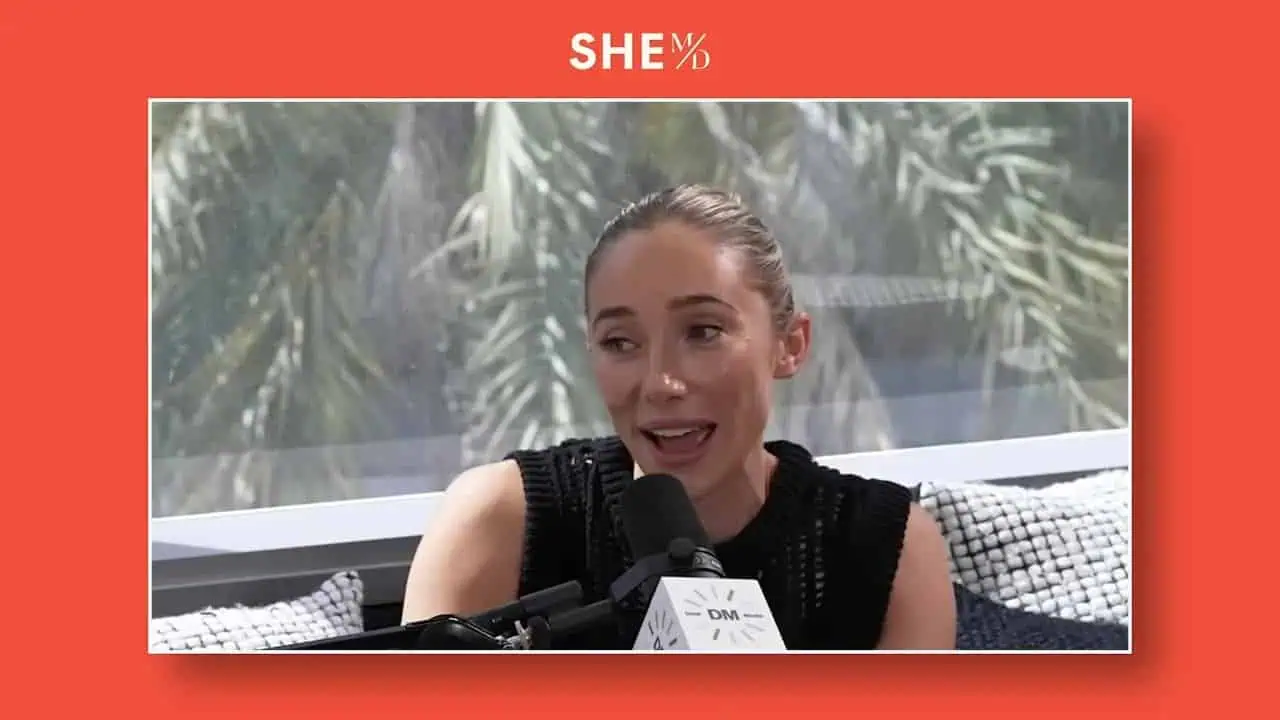
You’ve spoken openly about postpartum depression and catastrophic anxiety. What did that look like for you?
After her first child, Aurora experienced severe anxiety centered around the potential harm coming to a child. She described walking into a room and instantly scanning for danger: hot coffee, sharp objects, ledges. She could not let go of stories about children being harmed. Her mind latched on and would not release.
This kind of intrusive, catastrophic thinking is far more common than many women realize. Sometimes it is brushed off as “new mom worry,” but when it becomes relentless, it deserves support and treatment.
For Aurora, Zoloft helped tremendously. She said she was grateful for it because the anxiety had become serious. That is an important message. Medication is not a failure. For many women, it is exactly what allows them to stabilize, function, and feel like themselves again.
She also made an observation that many experts repeat because it is annoyingly true: hydration and exercise help. Not in a simplistic “just go for a walk and be grateful” way, but in a real physiological way. Movement can support mood, stress regulation, sleep, insulin sensitivity, and resilience.
For more on how postpartum depression can show up and when to seek help, this page on postpartum depression symptoms and treatment is worth bookmarking.
Divorce, Monogamy, and What We Learn the Hard Way
Was your divorce heartbreaking, or was it more complicated than that?
Aurora’s answer was nuanced. The divorce was difficult logistically and emotionally in waves, especially around the first holidays and the practical unraveling of a shared life. But she was also clear that they were no longer in love, and that made the decision easier in some ways.
That honesty was refreshing. Not every divorce fits one emotional script. Sometimes the greatest pain is not in the ending itself, but in the years of disconnection that came before it.
She also spoke warmly about co-parenting and the way young children often adapt better than adults expect. Kids can be surprisingly pragmatic. Two homes? Two holidays? Maybe two Christmases? Sometimes the adults are carrying more anticipatory grief than the children are.
What happened with the “one a year” arrangement in your marriage?
This was one of the most jaw-dropping and self-aware parts of the conversation. Early in the relationship, when Aurora was 25, and her husband was 40, he told her he did not want marriage, commitment, or monogamy. She, coming from a broken place and believing men were not capable of monogamy anyway, tried to be the “cool girl.”
So she gave him permission to sleep with one person a year under strict conditions: protection, no details, no continued contact.
Years later, while breastfeeding their second child, she received a message informing her that her husband was with someone else. His response was essentially that he was using the arrangement they had agreed to. Her response, with hindsight and humor, was basically: you were not actually supposed to do it.
It is funny when she tells it now, but the insight underneath it is serious. She recognizes that the agreement came from a place of fear, low expectations, and an attempt to avoid being hurt by preemptively lowering the bar.
Now her view is much clearer. She is not interested in being the cool girl. She is interested in honesty, boundaries, and actual commitment.
What do you believe now about monogamy and relationships?
Both of us agreed on a simple point: relationships are not supposed to feel impossibly hard all the time. That does not mean there will never be conflict. It means love should not require constant accommodation of betrayal, confusion, or chronic emotional starvation.
Aurora’s story illustrates how easy it is to negotiate against your own needs when you are trying to keep love from leaving. Many women have done some version of this, even if it was not as explicit. We downplay what we need. We call ourselves low-maintenance. We tolerate things that hurt because we think asking for more will push someone away.
Usually, the cost of that strategy is ourselves.
Dating After Divorce and Treating Love Like a Job Search
What has dating after divorce been like?
Aurora is dating, though not in anything serious at the moment. She talked about being on Raya, taking “breaks” that do not last very long, and trying to navigate modern dating with kids, limited time, and a much better understanding of herself.
Dating after children is not the same as dating before them. There is less fantasy time, less spontaneity, and a lot more scheduling. You cannot disappear into a crush for 72 hours. You have school pickups, dinners, bedtime, and maybe a narrow window next Tuesday between six and eight.
And yet there can be something healthier about dating in that phase, too. You know more. You notice more. You waste less time pretending.
What’s your advice for finding the right partner after divorce?
Mary Alice’s answer was one of the most entertaining parts of the interview. She said she treated finding love like a job. She actively recruited friends to set her up with every crush she had. She leveraged connections. She used early Facebook as a matchmaking tool. She even invented a party to get one particular man, later known as “Hot Tom,” into the same room.
The fake party worked. The relationship worked. And it was a reminder that sometimes finding love is not passive. Sometimes we have to put ourselves in the path of possibility.
There was a larger point underneath the humor. If you want a partnership, it is okay to pursue it intentionally. It does not make you desperate. It makes you honest.
Being Sober Curious, Depression, and the Quiet Power of Not Numbing Out
What does being sober curious mean to you?
Aurora was thoughtful and nuanced here. Her relationship with alcohol has not been black and white. During her divorce, she used it as a crutch. Not in the dramatic, stereotypical way people often imagine, but in a very common way: one or two glasses of wine at night to numb out.
That is part of what makes alcohol so slippery. A lot of problematic drinking can look socially acceptable. You can still parent, work, host, function, and check all the boxes. Meanwhile, your mood is worsening, your baseline anxiety is climbing, and your brain starts expecting that drink every evening.
She began questioning whether she was becoming an alcoholic, even though she did not fit the cliché version of one. She went to AA meetings with a friend, partly to learn from the 12 steps and partly to understand herself more clearly. She found the community deeply meaningful.
Over time, her relationship with alcohol changed. She realized she can have one drink and stop. But the bigger question became: Do I even want to?
Because for her, alcohol reliably makes depression and anxiety worse.
How can you tell when alcohol is affecting you, even if you are not “that bad”?
This part of the conversation hit home. Mary Alice described feeling like alcohol was controlling her, even when she was not getting drunk. If every day at five or six, you feel like you need that glass of wine, that dependency matters even if nobody around you would call it a problem.
Aurora talked about alcohol dulling the spirit. That phrasing felt especially accurate. Sometimes the issue is not chaos. Sometimes it is a low-grade flattening of joy, motivation, emotional clarity, and resilience.
That matters even more for women already dealing with ADHD, anxiety, depression, hormonal fluctuations, or major life stress. Add alcohol to the mix, and everything can get louder internally while looking normal externally.
The broader sober-curious movement makes sense in that context. More women are not waiting to “hit bottom.” They are simply noticing that alcohol no longer serves them.
Exercise, Fasting, Gut Health, and the Wellness Habits That Actually Help
If there’s no magic pill, what habits have made the biggest difference in your mental health?
Exercise, without question.
Aurora said she has never been depressed on a day she worked out. That is a big statement, but it captures how strongly movement affects her brain and body. We agreed that no matter the topic, whether it is anxiety, hormones, inflammation, longevity, or mood, experts keep coming back to the same basics:
Move your body
Drink water
Reduce or eliminate alcohol
Prioritize muscle and metabolic health
It is not flashy advice, which is probably why people keep searching for something more exciting. But the fundamentals remain powerful.
What kind of workouts do you actually enjoy?
Aurora prefers classes because she does not enjoy self-motivating at the gym. Her routine includes:
Megaformer Pilates
Weight training with a focus on building strength
Hot yoga, even though it can flare up her melasma
Barry’s Bootcamp-style workouts
She is also trying to be more intentional about strength training as she gets older, especially as a way to support testosterone naturally and build resilience.
Do you intermittent fast?
Usually, yes, but with more nuance now. After speaking with more experts about the menstrual cycle, she has become more careful about fasting around her period or in the days leading up to it. That is another area where women’s health advice often gets oversimplified. What “works” in a generic wellness sense does not always work equally well across all phases of the cycle.
One practice that has worked for her is a Monday bone broth fast. She likes it because it gives her some of the mental and metabolic benefits she associates with a keto approach, without having to maintain a strict ketogenic diet full-time. For her, that reset helps mood, energy, and mental clarity.
What about gut health?
Gut health came up repeatedly, especially as it relates to mood and inflammation. Aurora has become more focused on the gut-brain axis and regularly uses probiotics, prebiotics, and omega-3 fatty acids with DHA and EPA.
That section of the conversation was relatable for another reason, too. Constipation got an honest mention, because of course it did. It is another one of those things women deal with quietly until suddenly someone says, “Actually, me too.”
We also talked about how modern food quality complicates everything. It should not be harder or more expensive to feed your family real food. And yet many parents feel like they are constantly fighting a losing battle against additives, dyes, convenience foods, and ultra-processed options marketed directly to kids.
Beauty, Melasma, and the Products Aurora Actually Uses
What are the beauty products you truly can’t live without?
Aurora kept it pretty practical. Her staples include:
Dr. Dennis Gross peel pads or another nighttime exfoliant
A vitamin C serum, including options from SkinCeuticals and iS Clinical Pro-Heal
Daily SPF, especially vitamin C SPF from Murad
She also emphasized putting sunscreen on the tops of the hands, not just the face. It is such a small detail, but it matters. Our hands spend a lot of time exposed, especially while driving, and they often show sun damage and aging early.
How do you manage melasma?
Melasma, as many women know, is stubborn. Aurora uses prescription hydroquinone, which she described as a bleaching cream, and she also does the Cosmelan peel about once a year.
But she was also realistic: melasma does not simply disappear forever. Managing it means staying on top of sun protection, brightening products, and heat exposure. Hot yoga, one of her favorite things, can worsen it. Sometimes she avoids it. Sometimes she does it anyway and accepts that she may be covering a melasma mustache with makeup for a while.
That attitude was refreshing, too. There is room for treatment and room for not making your skin your whole personality.
Meditation, Spirituality, and Listening to Yourself Earlier
What moment changed the direction of your life?
Aurora pointed to her yoga instructor in her mid-twenties, a deeply spiritual person who introduced her to meditation and a whole new relationship with herself. At the time, Aurora was in law school. After beginning Transcendental Meditation, something shifted. Her decisions became clearer. She ended up dropping out of law school and getting a graduate degree in teaching.
She described it as feeling like the universe met her halfway once she began listening inward. Whether or not someone uses that language, the broader idea is powerful: when we get quiet enough to hear ourselves, a lot of externally driven ambition starts to lose its grip.
She learned to ask not “What does the world want me to do?” but “What actually feels true from the inside out?”
Do you still meditate every day?
Not anymore. For about three years, she did, and it helped immensely. Now it is more intermittent. She suspects she may need a different technique or a fresh approach.
That, too, felt honest. Wellness practices are often presented as all-or-nothing. But many of us cycle through what works, stop, return, adapt, and start again. That is not failure. It is life.
The Advice She’d Give Her Younger Self
If you could tell your younger self one thing, what would it be?
Aurora said she would care less about what people think.
More specifically, she would put less energy into trying to be perceived a certain way by people she does not know or even care about, and more energy into the quality of her actual relationships. Because at the end of the day, whether you are in the fanciest place in the world or sitting in a backyard on a lawn chair, it is the people around you who determine the quality of the experience.
That felt like the perfect note to land on. Not because it is original, but because it is one of those truths we have to keep relearning in new forms.
We can spend years trying to optimize the outside. The body. The image. The dating profile. The career path. The aesthetic. The performance. And then life keeps reminding us that what sustains us is far less performative: health, honesty, meaningful connection, self-respect, and enough self-awareness to stop negotiating against our own peace.
FAQs
What symptoms made Aurora Culpo suspect PCOS?
The biggest clues were cystic acne on the lower part of the face, ovarian cysts seen on scans, possible insulin-related inflammation, and a history of miscarriage. Dr. Aliabadi explained that women do not need every classic symptom to meet criteria for PCOS.
Can you have PCOS even if your periods seem somewhat normal?
Yes. A woman can still have PCOS even if she gets regular bleeding, because regular bleeding does not always mean regular ovulation. PCOS can also show up through acne, hair changes, insulin resistance, ovarian appearance on ultrasound, or fertility issues.
What did Aurora say helped her with her postpartum anxiety?
She said Zoloft helped significantly when her anxiety became severe after having her first child. She also emphasized that exercise has had a major positive effect on her mood and mental health overall.
What does “sober curious” mean in this conversation?
For Aurora, it means questioning whether alcohol adds anything positive to her life. Even though she does not identify with the stereotypical image of alcoholism, she noticed that alcohol worsened her anxiety and depression, and she could start to feel controlled.
What workouts does Aurora Culpo like most?
She enjoys structured classes more than solo workouts. Her routine includes Megaformer Pilates, weight training, hot yoga, and high-intensity class formats like Barry’s Bootcamp.
What beauty products did Aurora recommend?
She mentioned Dr. Dennis Gross peel pads, vitamin C serums from brands like SkinCeuticals and iS Clinical, and daily sunscreen, including a vitamin C SPF from Murad. She also stressed putting SPF on the tops of the hands.
How does Aurora manage melasma?
She uses prescription hydroquinone, annual Cosmelan peels, vitamin C products, and strict sun protection. She also knows heat can worsen melasma, which is why hot yoga can sometimes trigger flare-ups.
What was the biggest emotional theme of the interview?
That women often know something is off long before they have a clean diagnosis or explanation. Whether the subject is hormones, postpartum mental health, alcohol, or relationships, the conversation kept returning to the value of listening to yourself sooner and advocating for your own well-being.
What made this conversation so memorable was not just the range of topics. It was the tone. Honest, funny, occasionally chaotic, and deeply grounded in the reality of being a woman trying to take care of herself while also living a full and complicated life.
There was no pretending that healing is linear. No pretending that one supplement, one workout, one medication, or one insight solves everything. Just a real conversation about what happens when we stop performing wellness and start getting curious about what actually helps.
And maybe that is the clearest message of all: your mess does not disqualify you. Sometimes it is the very thing that teaches you how to live better.
Concerned About Your Health? Talk to Dr. Aliabadi
Dr. Aliabadi is an expert OB/GYN who is knowledgeable in all aspects of women’s health and well-being. Dr. Aliabadi and her caring, supportive staff are available to support you through PCOS, endometriosis, menopause, childbirth, infertility, or routine gynecological care. We invite you to establish care with Dr. Aliabadi. Call us at (844) 863-6700 or
This article was created from the video Aurora Culpo: A Candid Conversation on Pregnancy, Postpartum, PCOS & Being Sober Curious | SHE MD for Dr. Thais Aliabadi’s website.