Some health stories do not begin with one dramatic diagnosis. They begin with years of being told everything is probably fine, years of adapting to symptoms that do not feel normal, and years of trying to make peace with a body that seems to be working against us.
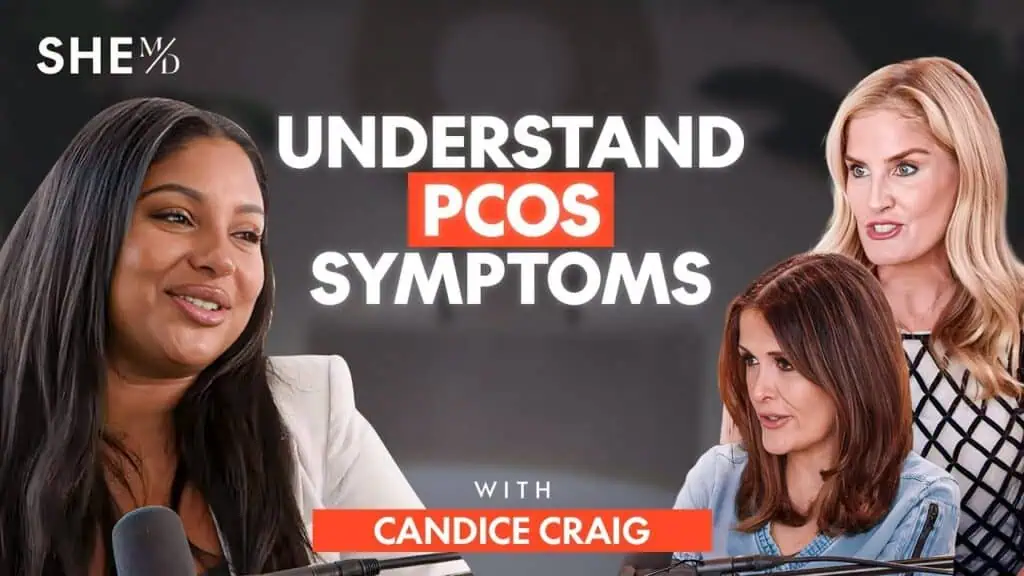
Hannah Brown joins Dr. Thais Aliabadi and Mary Alice Haney to discuss PMOS, infertility, and obstacles to women’s health . It is not just about PMOS, the updated language for what many still know as PCOS. It is about what happens when irregular periods, acne, bloating, anxiety, weight changes, and fertility concerns get treated as separate issues instead of pieces of the same puzzle. It is also about what changes when we finally get the right answers.

Table of Contents
- Starting with the symptoms that were there all along
- The diagnosis that finally made the symptoms make sense
- What PMOS actually is and why it affects so much more than periods
- What treatment finally helped symptoms calm down
- The uterine septum no one had found before
- Preparing for pregnancy after surgery
- How PMOS affected body image, career, and mental health
- EMDR, trauma work, and the hard work of getting better
- Becoming our own health advocate
- FAQ
- What we want to remember from this journey
Starting with the symptoms that were there all along
When did we first realize something deeper was going on with our cycle and hormones?
The story really starts at the very beginning. The first period came early, during an already intense time that involved treatment for a pancreatic tumor in childhood. That first cycle was extremely painful, then it disappeared for a year.
From there, the pattern never felt truly normal. Periods were unpredictable. Sometimes there were severe cramps with very little bleeding. Sometimes months passed with nothing at all. Bloating kept showing up. Weight would fluctuate. None of it felt stable, but it was easy to normalize because it had always been that way.
When symptoms start young, we often build our idea of normal around them. We assume our body is just quirky, or stress is the reason, or dieting is to blame, or we are somehow doing something wrong. That is especially easy when no one explains that irregular cycles are not just an inconvenience. They can be a sign that ovulation is not happening the way it should.

Why do so many people miss the signs of PMOS early on?
Because the symptoms are often brushed off one by one.
- Irregular periods are called stress
- Acne gets sent to dermatology
- Weight gain gets blamed on lifestyle
- Bloating is treated like a nuisance
- Anxiety and depression get separated from hormones and inflammation
When the full picture is never assembled, the condition stays hidden in plain sight.
That is one reason the broader conversation around PCOS and PMOS symptoms matters so much. Many of us do not need more dismissal. We need someone to connect the dots.
The diagnosis that finally made the symptoms make sense
What led us toward a real diagnosis?
Skin ended up being the tipping point. Cystic acne had become severe enough to seek help, and that opened the door to a gynecologic evaluation. For the first time, someone suggested PCOS. But even then, the explanation was minimal. The message was basically that lots of women have it, it was not a big deal, and metformin might help.
That kind of half-diagnosis can be almost more confusing than no diagnosis at all. We finally get a name, but not an explanation. We hear there is a treatment, but not why it works. We are told it is common, but not what it means for metabolism, ovulation, mood, inflammation, or fertility.
Later, a much more complete workup changed everything. A proper ultrasound was done. The ovaries were evaluated carefully. The hormonal pattern was explained. And for the first time, PMOS was framed not as something to shrug off, but as a real metabolic and reproductive condition that deserved attention.
What changed emotionally once we had real answers?
The biggest shift was relief. Not the kind that comes from being finished with a problem, but the kind that comes from finally understanding it.
There is something powerful about realizing we were not lazy, dramatic, or imagining things. There was a reason the body felt swollen, unpredictable, and hard to manage. There was a reason the scale did not reflect the effort. There was a reason the cycle would vanish for months.
Getting the right diagnosis does more than guide treatment. It gives us language. And once we have language, we can ask better questions, look for better support, and make more informed decisions about fertility and long term health.
What PMOS actually is and why it affects so much more than periods
How do we diagnose PMOS?
The diagnosis is usually made when two of these three features are present:
- Irregular or absent ovulation, often showing up as irregular periods
- Ovaries that have the typical follicle pattern on ultrasound
- Signs of elevated androgens, such as acne, hair thinning, or excess facial and body hair
That is why someone can have PMOS without matching every stereotype. Not everyone has the same symptom cluster. But if we know the criteria, it becomes much easier to recognize when a pattern needs evaluation.
Why has the language shifted from cystic to metabolic?
Because the old name points people in the wrong direction.
The problem is not simply that the ovaries have cysts. In fact, what shows up on ultrasound is usually a group of immature follicles that stalled rather than true cysts. The deeper issue is metabolic and hormonal dysfunction, especially insulin resistance and the chain reaction it creates.
That is why the updated language, polyendocrine metabolic ovarian syndrome, matters. It reflects what is actually driving the condition instead of focusing on one misleading feature.
What is happening inside the body with PMOS?
There are two major loops feeding the problem.
The first is the brain ovary loop. Hormonal signals between the brain and ovaries become dysregulated. Instead of the monthly pattern that helps one follicle mature and ovulate, the signaling becomes distorted. The ovaries start producing more testosterone. That extra testosterone disrupts follicle development, so the follicles get stuck partway through instead of releasing an egg.
No ovulation means progesterone stays low. Estrogen becomes erratic. Inflammation builds. Periods become infrequent or disappear.
The second is the insulin resistance loop. Many people with PMOS do not process carbohydrates efficiently. The body needs to make more insulin to deal with blood sugar. That extra insulin does more than affect metabolism. It also stimulates the ovaries to make even more testosterone. So now both loops are feeding each other.
This helps explain why PMOS is not just a period issue. It can also drive:
- Weight gain, especially around the abdomen
- Bloating and inflammation
- Cravings and blood sugar crashes
- Brain fog
- Anxiety and depression
- Acne and hair changes
- Infertility
The hormonal and metabolic systems are not operating in separate rooms. They are constantly affecting each other.
Why can PMOS feel so personal and so discouraging?
Because it often makes effort feel invisible.
When we are exercising consistently, eating carefully, and still feel swollen, exhausted, or unable to lose weight, it can become deeply discouraging. It is not just about appearance. It starts to affect trust in our own body.
For a lot of us, that emotional weight gets heavier in public or high pressure environments. But even in ordinary life, it can make us feel alien in our own skin.

What treatment finally helped symptoms calm down
What role did metformin play?
Metformin was part of the picture, but it was not the whole picture. It is commonly used to improve insulin sensitivity, which can be helpful in PMOS because insulin resistance is such a major driver. But dosing matters, follow up matters, and context matters.
If someone is prescribed medication without understanding the metabolic reason behind it, it can feel random. It can also lead to undertreatment or to giving up too early because the support around it is incomplete.
What made the biggest difference in symptom control?
For this particular journey, adding a GLP 1 medication was a turning point. It helped regulate insulin more effectively, reduced bloating, stabilized weight, and most importantly restored a regular cycle. Instead of having long stretches without a period, cycles started coming every 30 days.
That matters because a more regular cycle often means ovulation has improved. And improved ovulation changes the fertility conversation.
This is also why broader metabolic health matters so much in fertility planning. If insulin resistance is part of the problem, treating it can improve the entire hormonal environment. That is one reason resources on how health impacts fertility can be so useful when we are trying to understand the bigger picture.
Why do metabolic treatments help ovulation?
When insulin levels calm down, ovarian testosterone production often drops too. Once testosterone is no longer flooding the ovarian environment, follicles have a better chance of maturing normally and releasing an egg. Inflammation goes down. Blood sugar becomes steadier. Crashes and cravings often improve as well.
That is why addressing the metabolic side of PMOS can change so much more than the number on a scale. It can improve periods, mood, energy, skin, and the odds of conceiving without immediately needing advanced fertility treatment.
The uterine septum no one had found before
What was discovered on ultrasound beyond PMOS?
An important structural issue was found too: a deep uterine septum.
This means there was a wall of tissue dividing the inside of the uterus more than it should. In severe cases, it can make the cavity look almost doubled. That matters because a septum can increase miscarriage risk and interfere with carrying a pregnancy to term.
Finding that out can be a shock, especially when pregnancy is not even on the immediate horizon. It raises questions we may not feel ready to answer yet. Do we want kids? When? What will surgery mean? What if we wait too long?
That emotional delay is understandable. Sometimes information arrives before we feel equipped to act on it.
Why does a uterine septum matter so much for fertility?
A septum is a congenital uterine anomaly, meaning it forms during fetal development. The uterus begins as two structures that should fuse and then lose the dividing wall between them. When that wall does not fully disappear, the septum remains.
Mild septa may not affect fertility much. Deeper septa are a different story. They are associated with higher miscarriage risk and lower live birth rates. Once a significant septum is removed, pregnancy outcomes often improve dramatically.
That is why diagnosis matters before repeated loss if possible, not after.
How is a septum different from a bicornuate uterus?
This distinction is crucial.
With a septate uterus, the outside of the uterus is smooth, but the inside has a dividing wall. That is the kind that can be surgically corrected.
With a bicornuate uterus, the outer shape of the uterus is indented, often described as heart shaped. That is a different condition, and it is not treated by cutting the inner wall the same way.
Because the treatment depends on making the right distinction, imaging matters a lot. Sometimes 2D imaging is not enough. Sometimes even MRI can be confusing. In more complex cases, surgeons may combine hysteroscopy with laparoscopy to confirm exactly what the anatomy looks like before proceeding.
Why keep talking about 3D ultrasound?
Because a simple scan can miss the finding.
If someone is evaluating fertility, recurrent miscarriage, or unexplained gynecologic symptoms, it helps to specifically ask whether the uterine cavity is being assessed for a septum. A 3D view can show the cavity shape far more clearly than a routine look that focuses only on whether the uterus and ovaries are generally present and normal appearing.
That kind of self advocacy can save years of confusion. It also fits with the larger message of advocating for yourself at the doctor, especially when symptoms are getting minimized or fragmented.

Preparing for pregnancy after surgery
What happened once it was time to start thinking seriously about pregnancy?
Once family planning became real, the next step was addressing the anatomy as well as the hormones. The septum was removed hysteroscopically. That means a camera was passed through the cervix into the uterus and the tissue was resected from inside the cavity.
There was also an HSG done beforehand to check whether the fallopian tubes were open. That test matters because if there is scarring or inflammation, especially when endometriosis is suspected, the tubes can be blocked.
So by that point, several pieces were in place:
- PMOS symptoms were much better controlled
- The uterine septum had been resected
- The tubes had been checked and were open
- Pregnancy planning was finally on the near horizon
What is the usual plan after septum surgery if we want to conceive?
The post op plan described here was practical and specific. Allow the uterus to heal. Use estrogen followed by progesterone to help the uterine lining regrow properly and shed cleanly. Wait for one menstrual cycle. Then begin trying.
At the same time, because GLP 1 medications are not used while trying to conceive, the metabolic support plan shifts. That can mean stopping the GLP 1, increasing metformin, continuing foundational lifestyle support, and taking prenatal vitamins.
Trying for several months before escalating care makes sense if ovulation is happening and the anatomy has been corrected. If pregnancy does not happen in that window, then it is time to revisit the plan and look at whether endometriosis, egg reserve, or some other factor needs attention.
Where does endometriosis fit into this story?
It remains a possibility because painful periods, bloating, and pain with deep penetration can all point in that direction. Endometriosis and PMOS can coexist, which makes fertility and symptom management more layered.
But coexistence does not mean pregnancy is impossible. It means we may need a more strategic sequence: address the most immediate barriers first, support ovulation, confirm the tubes are open, then reassess if pregnancy does not happen.
For anyone wanting more background on structural uterine issues, this overview of vaginal and uterine septum surgery can help explain how diagnosis and treatment are usually approached.
How PMOS affected body image, career, and mental health
What did it feel like to live with untreated PMOS during major career moments?
On the outside, life looked exciting. Big opportunities, public success, high energy environments. On the inside, it felt like suffering in silence.
Inflammation was everywhere. Sleep was poor. Stress was constant. The body felt uncomfortable in fitted costumes and formal clothes. The mind felt overwhelmed. The gap between what the world saw and what was actually happening internally became enormous.
That disconnect can intensify shame. When everyone assumes we should feel lucky, strong, or glowing, it becomes even harder to say that our body hurts, our hormones are chaotic, and our mental health is slipping.
Can PMOS really affect mental health that strongly?
Yes, and not just emotionally in the vague sense. The physiology matters.
When insulin is unstable, inflammation is high, testosterone is elevated, ovulation is inconsistent, and progesterone stays low, the brain feels it. Anxiety, depression, irritability, cravings, brain fog, and mood swings can all intensify in that state.
That does not mean every mental health symptom is caused by PMOS. It means hormone and metabolic disruption can add a very real layer to the psychological load.
What was the wake up call that something had to change?
The breaking point came when the stress and trauma were no longer just emotional. They became unmistakably physical.
There was a moment when even walking upstairs became nearly impossible. The body hurt. The legs changed color. An emergency room visit followed because something felt profoundly wrong. No single dramatic diagnosis emerged from that moment, but it made one truth impossible to ignore: pushing through was no longer working.
That is often the point where survival strategies stop being enough. The body starts demanding a different kind of care.
EMDR, trauma work, and the hard work of getting better
What role did therapy play alongside medical treatment?
It became essential.
Medical treatment helped stabilize hormones and metabolism, but that was only part of the healing. Therapy, psychiatry, and trauma work helped address the emotional backlog that had built up over years. The message was simple but not easy: do the hard work.
Traditional talk therapy was one step. EMDR became another.
What is EMDR in simple terms?
EMDR stands for eye movement desensitization and reprocessing. Different clinicians do it in different ways, but the basic idea is to help the brain reprocess distressing memories so they do not keep hitting with the same force.
In this experience, that involved bilateral stimulation with small handheld tappers alternating left and right while revisiting difficult memories. The goal was not to erase the past. It was to store it differently, so everyday triggers would not pull the nervous system back into the same intense state so quickly.
Does trauma always have to be one huge event for EMDR to help?
No. Sometimes trauma is a major event. Sometimes it is a collection of smaller experiences that shaped beliefs about safety, worth, and identity. What looks minor to someone else can still land deeply in our own nervous system.
That is part of why trauma work can feel so personal. We are not just discussing events. We are untangling the meaning our brain attached to them.
What does healing actually look like in practice?
It looks less glamorous than people imagine. It is consistency. It is building a toolbox. It is finding professionals who listen. It is checking labs. It is staying on top of treatment. It is paying attention to how stress shows up physically. It is learning when to push and when to rest.
It is also accepting that strength is not the same thing as pretending nothing hurts.
Real resilience often looks like this:
- Getting a second or third opinion
- Asking for the scan nobody offered
- Taking the medication that actually fits the problem
- Following up on surgery instead of avoiding it forever
- Going to therapy even when it feels intimidating
- Letting support become part of the plan
Becoming our own health advocate
What does self advocacy look like when we move or have to start over with new doctors?
It means walking in prepared. Knowing the diagnosis. Knowing what imaging has shown. Knowing what medications have worked. Knowing what surgery has been recommended. Knowing what questions still need answers.
That kind of preparation makes a huge difference when continuity of care is imperfect. It also helps protect us from being reset back to square one every time we meet someone new.
What advice matters most for anyone who feels dismissed right now?
Keep trying.
That does not mean endlessly tolerating poor care. It means do not stop until you find support that takes your symptoms seriously. If one doctor is not listening, keep going. If the explanation does not fit, ask more questions. If your intuition says there is more to the story, trust that enough to investigate it.
Maintenance is not vanity. Support is not weakness. Follow up is not overreacting.
We deserve care that looks at the whole picture.
FAQs
What is the difference between PMOS and PCOS?
PMOS is updated language that emphasizes the metabolic and endocrine roots of the condition. PCOS focused attention on ovarian appearance, which can be misleading. The newer framing better reflects insulin resistance, hormone disruption, inflammation, and ovulation problems.
What are common signs that someone should be evaluated for PMOS?
Irregular periods, skipped ovulation, cystic acne, facial or body hair growth, hair thinning, bloating, cravings, weight gain that feels resistant to effort, anxiety, depression, and fertility struggles can all be part of the picture.
Why can PMOS affect fertility?
PMOS often interferes with regular ovulation. If an egg is not released consistently, conception becomes harder. The hormonal environment can also become more inflammatory and androgen dominant, which further disrupts reproductive function.
How do metformin and GLP 1 medications help in PMOS?
They can improve insulin sensitivity and reduce the insulin spikes that drive excess ovarian testosterone production. When insulin is better controlled, inflammation often improves and ovulation may become more regular.
What is a uterine septum?
A uterine septum is a wall of tissue dividing the inside of the uterus because the partition that formed during fetal development did not fully disappear. A deep septum can raise the risk of miscarriage and poor pregnancy outcomes.
Why is a 3D ultrasound important when evaluating a uterine septum?
A routine scan may miss the shape of the uterine cavity. A 3D ultrasound gives a clearer view of whether there is a septum and how deep it is, which matters for treatment planning.
What is the difference between a septate uterus and a bicornuate uterus?
A septate uterus has a normal smooth outer shape with a dividing wall on the inside. A bicornuate uterus has an indented outer shape as well. That distinction matters because a septum can often be resected, while a bicornuate uterus is managed differently.
Can mental health symptoms be connected to PMOS?
Yes. Insulin resistance, inflammation, hormone imbalance, and chronic stress can all contribute to anxiety, depression, irritability, cravings, and brain fog. Mental health support is often an important part of treatment.
What is EMDR therapy?
EMDR is a trauma focused therapy that uses bilateral stimulation while processing distressing memories. The goal is to help the brain store those memories in a less triggering way so they no longer dominate the nervous system as intensely.
What we want to remember from this journey
The biggest takeaway is not just that PMOS is common, or that uterine septa can be missed, or that fertility care should start earlier than many of us realize. It is that answers change outcomes.
When symptoms are connected instead of separated, treatment gets smarter. When anatomy is evaluated before repeated loss, options improve. When mental health is treated as part of the story instead of a side note, healing becomes more complete.
And when we stop accepting dismissal as normal, everything can begin to shift.
We can ask for the ultrasound. We can question the vague reassurance. We can push for a full explanation. We can do the hard work. We can build the toolbox. We can learn our own body well enough to protect it.
That is what this story really offers. Not perfection, not instant fixes, but proof that better information can change the path ahead.
Concerned About Your Health? Talk to Dr. Aliabadi
Dr. Aliabadi is an expert OB/GYN who is knowledgeable in all aspects of women’s health and well-being. Dr. Aliabadi and her caring, supportive staff are available to support you through PCOS, endometriosis, menopause, childbirth, infertility, or routine gynecological care. We invite you to establish care with Dr. Aliabadi. Call us at (844) 863-6700 or
This article was created from the video PMOS, Infertility, and Finding Answers ft. Hannah Brown | SHE MD for Dr. Thais Aliabadi’s website.