Women’s health has never been only about breasts, pregnancy, periods, or reproductive organs. Yet for generations, that narrow idea has shaped who gets studied, who gets believed, what gets funded, and which symptoms are dismissed as stress, hormones, anxiety, or hysteria.
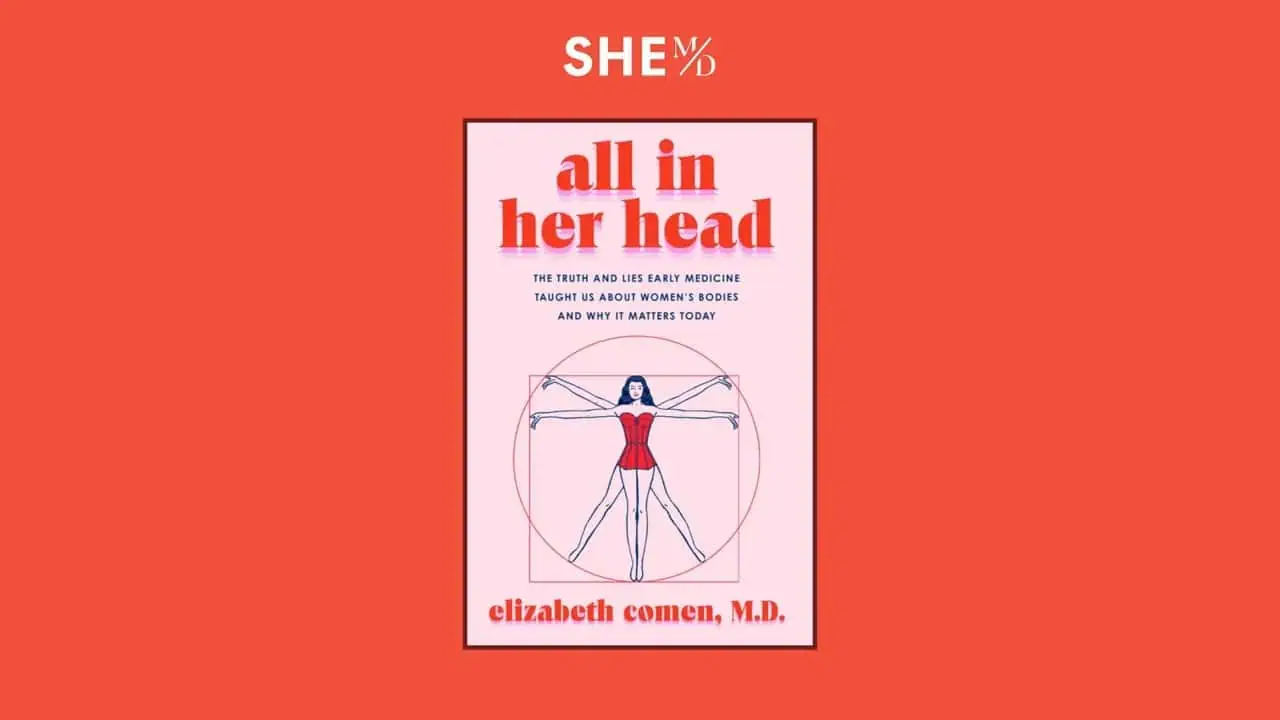
Dr. Thais Aliabadi and Mary Alice Haney sat down with Dr. Elizabeth Comen to talk about the troubling history behind these patterns and the reasons they still matter in medical offices today. As an oncologist, medical historian, and author of All in Her Head: The Truth and Lies Early Medicine Taught Us About Women’s Bodies and Why It Matters Today, Dr. Comen connects the medicine of the past to the everyday experiences women still have when trying to get care.
Table of Contents
- Women’s Health Is Whole Body Health
- Research Gaps Are Not Ancient History
- The Shame Women Carry Into the Exam Room
- Breast Cancer Care Must Center Personal Choice
- The Dangerous History of Controlling Women’s Bodies
- Listening Is a Clinical Skill
- From Dismissal to Advocacy
Women’s Health Is Whole Body Health
Why did you write a history of women’s health as an oncologist?
We cannot understand medicine without understanding the culture that produced it. Medicine and science do not live in a vacuum. They are deeply connected to religion, social norms, power, gender roles, and the stories societies tell about bodies.
As an oncologist caring for women with breast cancer, Dr. Comen has long been interested not only in disease itself, but in the experience of illness. Who gets heard? Who is believed? Who is made to feel embarrassed, difficult, needy, or dramatic when they ask for care?
That is the question at the center of her work. The history is not just a collection of outrageous old stories. It explains why a woman can still walk into a medical office today with serious symptoms and leave feeling invalidated, ashamed, or unsure of her own reality.
What does it mean to say women are not small men?
For too long, women’s health has been treated as “bikini medicine,” meaning breasts and reproductive organs. But women are biologically different from head to toe. Cardiovascular disease, gastrointestinal disease, neurologic disease, autoimmune illness, medication responses, and many other conditions can look different in women.
Dr. Comen’s book moves through the body by organ system, not simply by gynecology. That framing is essential. Women need care that recognizes their whole bodies, not care that treats reproductive function as the only relevant difference.
The lingering problem is that the male body has long been treated as the default reference. Historically, medical education and research often used the image of a white, 70-kilogram male as the standard human body. Women appeared mainly in discussions of menstruation, pregnancy, breast health, or reproduction.
That historical default did not emerge from nowhere. It reaches back to early medical ideas that viewed women as imperfect or inverted versions of men. It sounds absurd, but its influence remains visible whenever women’s symptoms are treated as secondary, atypical, or less urgent.
Research Gaps Are Not Ancient History
Why does the lack of research on women still affect medical care?
Women make up half the population, yet they were not required to be included in NIH-funded clinical trials until 1993. That is remarkably recent. And inclusion in a trial is not the same as research designed to understand sex-specific outcomes.
The gap starts even earlier than clinical trials. In laboratory research, drug development has historically relied heavily on male cells and male mice. One explanation was that female hormones made research too complicated. The irony, of course, is that male animals are hormonal too. Complexity was not the real reason to exclude women. It was often a reason to avoid doing the harder, more complete science.
Heart disease is the number one killer of women in the United States, yet much of the foundational evidence behind cardiovascular medications and treatment approaches was built largely from studies of men. When research does not adequately reflect women, diagnosis and treatment can suffer.

How does gender bias show up for women physicians?
Gender bias does not disappear when we put on a white coat. Dr. Aliabadi shared that people frequently assume she is a nurse, even in a hospital and even when she is clearly the physician. Social media comments can make the same assumption when she is pictured caring for a patient.
There is nothing lesser about nursing. Nurses and nurse practitioners are essential healers, clinicians, and advocates. The problem is the automatic cultural script that associates doctoring with men and comfort with women.
Women physicians are also often expected to perform a very particular version of professionalism. We may be scrutinized for our voices, our clothes, our hair, and whether we appear warm enough but not too emotional, authoritative but not too forceful, feminine but not too feminine.
At the same time, women doctors are often expected to provide a “mom consult,” to listen longer, comfort more, and absorb more emotional labor. Compassion and nurturing should never be treated as distractions from excellent medicine. They are part of excellent medicine. And men can absolutely bring those skills to care too. The goal is not to assign empathy by gender. The goal is to value it throughout the health system.
The Shame Women Carry Into the Exam Room
Where does the shame around women’s bodies come from?
Many of us learned early that periods, sweat, body hair, vulvas, sexual desire, and ordinary bodily functions were somehow embarrassing. Mary Alice remembered hiding her period from her parents because she felt ashamed. That experience is incredibly common, and it did not begin with any one family or generation.
In medical care, that shame can be devastating. Patients may feel pressure to wax, shave, get a pedicure, or somehow look “presentable” before childbirth or a pelvic exam. In oncology, Dr. Comen has cared for women who apologized for sweating or for normal bodily functions even near the end of life.
We need to pause on that. A person fighting for her life should never feel she must apologize for having a body.
Women have been taught, directly and indirectly, that our bodies must be private, polished, attractive, and controlled, even in illness. We are often expected to look beautiful while sick, to minimize pain, and to speak about our physical reality without making anyone uncomfortable. That burden keeps people silent about symptoms that deserve medical attention.

How does body shame affect sexual health and gynecologic care?
It affects everything. Women’s sexual desire and pleasure have historically been neglected, moralized, or treated as suspicious. During the conversation, we discussed the orgasm gap and how a lack of sexual pleasure among women would likely receive much more urgent attention if it affected men at the same rate.
Shame also contributes to delayed conversations around painful periods, pelvic pain, libido changes, pain with sex, irregular cycles, acne, unwanted hair growth, and weight changes associated with insulin resistance. These are not frivolous concerns. They are often clues to underlying medical conditions.
For women with endometriosis or PCOS, being heard can be life changing. Dr. Aliabadi described a familiar moment in her practice: after years of being dismissed, patients finally receive a diagnosis and say they feel validated for the first time in their lives.
Validation is not a luxury. It is often the first step toward appropriate care.
Breast Cancer Care Must Center Personal Choice
How should we think about breast surgery, reconstruction, and survival?
Breast cancer decisions are profoundly personal. There is no universal right choice about mastectomy, lumpectomy, reconstruction, flat closure, implants, or breast conservation. The right path depends on the diagnosis, the medical options available, a woman’s values, and what she needs to feel safe and whole.
Dr. Aliabadi shared her own perspective as a breast cancer survivor and mother of three. For her, breast tissue felt like an appendage. Survival was the priority. But she also made clear that her choice is not the right choice for everyone.
That distinction is everything. In the past, medicine often made broad declarations about women’s bodies without listening to women themselves. Some doctors even referred to breasts as useless appendages. That judgment is no better than insisting all women must feel a certain way about losing breast tissue. Both erase individual autonomy.
Today, women may have several options depending on their diagnosis. Some may choose a lumpectomy followed by radiation. Some may choose mastectomy. Some may choose nipple-sparing surgery, reconstruction with implants, other reconstructive approaches, or aesthetic flat closure. Every option deserves thoughtful counseling and respect.

What is the important distinction between preventive surgery and breast cancer treatment?
Preventive surgery for someone at elevated risk is different from surgery after a breast cancer diagnosis. This distinction matters because conversations about survival can easily become confusing.
For many people diagnosed with breast cancer, lumpectomy plus radiation can offer survival outcomes equivalent to mastectomy. What determines the danger of breast cancer is not simply the amount of breast tissue present. The major concern is whether cancer cells have moved outside the breast to another part of the body, such as the lungs, liver, or brain. This is metastatic disease.
That does not mean surgery choices are unimportant. They can matter deeply for local control, risk reduction, peace of mind, recovery, body image, and quality of life. It means every person needs a clear conversation about her specific situation, rather than fear-based or dismissive messaging.
No woman should be called hysterical, paranoid, or irrational for wanting to understand her risk and consider her options. Knowledge is how we make decisions, not how we make people afraid.
The Dangerous History of Controlling Women’s Bodies
What were some of the most shocking beliefs uncovered in your research?
The stories are genuinely shocking because they reveal how often women’s health was filtered through attempts to control sexuality, desire, independence, and behavior.
In earlier medical writing, masturbation was blamed for female scoliosis and other ailments. Women could be institutionalized for having more sexual desire than their husbands. In the 1920s, psychiatrist Henry Cotton promoted the idea that mental illness came from hidden infections. He removed patients’ teeth as treatment, and when that did not work, he could remove reproductive organs and parts of the bowel. He claimed extraordinary cure rates, despite a reported mortality rate of 30 percent.
These were not fringe internet theories. They came from doctors who were celebrated in their era. That should make all of us humble about medical certainty and deeply committed to evidence, consent, and accountability.
How did witchcraft accusations shape the history of women healers?
In the fifteenth century, the Malleus Maleficarum, often translated as Hammer of the Witches, helped fuel the persecution of women accused of witchcraft. The text treated women’s bodies and sexuality as evidence of danger. Even the clitoris was described in deeply sinister terms.
Of course, the more important question is not why people feared witches. It is why societies accepted the persecution and killing of women healers in the first place.
For centuries, women cared for women as midwives and community healers. But as formal medical science rose in the nineteenth century, men increasingly took control of obstetrics and gynecology. Midwives were pushed aside and prevented from gaining access to medical education and evolving knowledge about surgery, germ theory, and antiseptics.
As women were excluded, gynecology became dominated by men who often carried deeply distorted ideas about women. The notion that women existed primarily as vessels for children became embedded in care. It is no surprise that menopause, sexual health, and life after reproduction were neglected for so long.

Who was Horatio Storer, and why does his story matter?
Horatio Storer was a Harvard Medical School graduate and a founding member of the Boston Gynecological Society. Dr. Comen encountered one of his published cases while researching the history of women’s sexuality in medicine.
The patient, identified only as Mrs. B, was brought to Storer by her husband because she had a stronger sexual desire than he did. Reading the details today, it becomes clear that the husband may have been experiencing erectile dysfunction. Yet the medical focus was placed entirely on the woman.
Storer diagnosed her with nymphomania and recommended punishing, controlling interventions, including replacing her pillow with needles, avoiding “excitable” foods and romantic novels, and applying chemicals to her clitoris. If those measures failed, she could be sent to an asylum.
Storer’s first wife was also sent to an asylum, where she died at 39 from what was described as “catamenial mania,” a term connected to menstruation and what we would now recognize as PMS-related symptoms. He later became a central figure in the physician-led crusade against abortion in the United States.
This history is horrifying. But its relevance is not merely historical. Women are still often blamed first for infertility, sexual problems, weight changes, pain, or relationship concerns. Dr. Aliabadi sees this in fertility visits when a couple assumes the problem must be with the woman before male-factor testing has even been discussed.
Listening Is a Clinical Skill
What changes would make the biggest difference in women’s healthcare now?
We need to stop treating women’s health as a narrow specialty category. Menopause, autoimmune disease, irritable bowel syndrome, cardiovascular risk, brain health, cancer, mental health, and neurologic disease all belong in the women’s health conversation.
Autoimmune diseases are far more common among women. Alzheimer’s disease is also more common in women. These are not side issues. They are central health issues that deserve research investment, medical education, and clinical attention.
We also need more women in clinical trials, laboratories, research leadership, hospital leadership, and policymaking. It is not enough to enroll women in medical school if women are still underpaid and underrepresented in the rooms where decisions get made.
Dr. Aliabadi also made a powerful case for giving gynecologists enough time to listen. Obstetrics and gynecology are demanding fields, and when an OB-GYN practice is overwhelmed by pregnancy and delivery care, gynecologic patients can receive too little time for complex concerns.
Listening is not an optional soft skill. Conditions such as endometriosis and PCOS are often recognized through a detailed history. Yet endometriosis can take nine to 11 years to diagnose, and many people with PCOS go undiagnosed for years, including those facing infertility.
When medicine is rushed, women pay the price.
How do racism and misogyny overlap in healthcare?
We cannot talk honestly about gender bias without talking about race. Racism and misogyny have been intertwined throughout medical history, and the consequences are still visible in access to care, maternal outcomes, cancer outcomes, and whether a patient’s pain or symptoms are taken seriously.
Dr. Aliabadi described the danger of a postpartum patient whose bleeding was repeatedly dismissed after a cesarean delivery. This is not simply an issue of individual bedside manner. It is a structural issue involving assumptions, delayed escalation, inequitable access, and longstanding bias.
Black women diagnosed with breast cancer in the United States are substantially more likely to die than women of other racial or ethnic backgrounds. While there can be differences in tumor type, Dr. Comen emphasized that the higher mortality cannot be explained only by biology. Access, socioeconomic barriers, systemic bias, and experiences inside the medical system all matter.
Any meaningful vision for women’s healthcare must include equity. When we fail to address compounded bias, we leave far too many women behind.
From Dismissal to Advocacy
What can women do when they feel unheard in a medical appointment?
Education gives us language, and language helps us advocate. We should not need a medical degree to be believed, but understanding our symptoms and asking direct questions can help us navigate an imperfect system.
When preparing for an appointment, it can help to bring:
- A clear timeline of symptoms, including when they began and what makes them better or worse.
- A list of medications, supplements, relevant family history, and prior test results.
- Specific questions about possible causes, testing, treatment options, and follow-up.
- A trusted support person when we feel overwhelmed or expect a difficult conversation.
- A willingness to seek a second opinion when concerns are repeatedly dismissed.
We also need to name dismissal when it happens. If a concern is being attributed to anxiety, stress, weight, or hormones without an adequate evaluation, it is reasonable to ask what else is being considered and why. For practical guidance on preparing for these conversations, read our resource on advocating for yourself at the doctor.
We are allowed to ask for clarity. We are allowed to ask for time. We are allowed to say, “This symptom is affecting my life, and I need help understanding it.”
Is there reason to feel hopeful?
Yes. There is a real groundswell of momentum. Patients, advocates, researchers, women’s groups, policymakers, and clinicians are pushing for women to be heard, studied, and respected.
More women are entering medical school. There is growing investment in women’s health research. There is increasing public conversation about menopause, endometriosis, PCOS, breast cancer, maternal mortality, sexual health, and medical gaslighting. These conversations are changing expectations.
But representation is only the beginning. We need women in positions of power where they can decide what research gets funded, what outcomes matter, how clinical care is organized, and how patient time is valued.
We also need to raise children who understand equality and compassion. Dr. Comen shared a moving story about her young son who protected a little girl after she had an accident at school, shielding her from embarrassment and asking for help from an adult. That is the world we want: one where girls are empowered to use their voices and boys are taught that dignity, gentleness, and respect are part of strength.
Women’s healthcare will improve when we stop expecting women to shrink themselves to fit a system that was not built with them in mind. We deserve whole-body care, rigorous science, personal choice, and doctors who listen.
Concerned About Your Health? Talk to Dr. Aliabadi
Dr. Aliabadi is an expert OB/GYN who is knowledgeable in all aspects of women’s health and well-being. Dr. Aliabadi and her caring, supportive staff are available to support you through PCOS, endometriosis, menopause, childbirth, infertility, or routine gynecological care. We invite you to establish care with Dr. Aliabadi. Call us at (844) 863-6700 or
Frequently Asked Questions
What is bikini medicine?
Bikini medicine is the narrow idea that women’s health consists only of breasts and reproductive organs. It overlooks the ways sex and gender can affect health across the cardiovascular, neurologic, gastrointestinal, immune, and other body systems.
Why were women excluded from clinical trials?
Women were historically excluded because researchers often treated hormonal cycles as an inconvenience or source of complexity. NIH-funded clinical trials were not required to include women and minorities until 1993, leaving major gaps in evidence that continue to affect care.
Can a lumpectomy and radiation be as effective as a mastectomy?
For many people with breast cancer, lumpectomy plus radiation can have survival outcomes equivalent to mastectomy. The best choice depends on the diagnosis, cancer characteristics, medical recommendations, and personal preferences.
Why can endometriosis and PCOS take so long to diagnose?
Symptoms such as pelvic pain, irregular periods, acne, weight changes, and infertility are often minimized or attributed to stress or normal hormones. Accurate diagnosis frequently requires a detailed history, enough appointment time, and a clinician who takes symptoms seriously.
What should we do if a medical provider dismisses our symptoms?
Document symptoms, ask what diagnoses are being considered, request a clear follow-up plan, and seek a second opinion if concerns are not being adequately addressed. Persistent symptoms deserve thoughtful evaluation.