Some conversations stay with us because they are practical, heartfelt, and honest all at once. This was one of those conversations. Dr. Thais Aliabadi and Mary Alice Haney sat down with Jay Shetty to talk about the big questions so many of us carry: How do we find purpose? How do we build healthier relationships? How do we stay grounded when life feels uncertain? And what does meditation actually look like for people whose minds never seem to slow down?
Jay brings a rare combination of spiritual wisdom and real-world clarity. His journey from London to monkhood, and then into global media as the host of On Purpose, is compelling on its own. But what makes his perspective resonate is that he doesn’t present purpose as something reserved for the lucky few. He treats it as something we can practice, refine, and live, one decision at a time.
What follows is our interview-style conversation, adapted into a written format, with Jay’s most meaningful ideas on self-awareness, love, purpose, meditation, gratitude, exercise, sleep, and the courage to keep going even when we do not have all the answers.
Table of Contents
- Purpose, Service, and the Inner Life
- How Helping One Person Became a Global Platform
- Hope, Fear, and the Courage to Follow a Different Path
- Relationships, Love, and the Power of Self-Awareness
- Meditation for Real Life, Not Perfect Life
- The Daily Habits That Support a Purposeful Life
- What Jay Has Learned From Interviewing Extraordinary People
- Finding Purpose When You Feel Stuck
- Books, Mindset, and a Different Way to Measure Progress
- FAQ
- A Few Ideas Worth Carrying Forward
Purpose, Service, and the Inner Life
How did your path begin, and what first pulled you toward a spiritual life?
Jay’s story starts in London, where he was raised in a home where religion existed, but mostly in a ritualistic way. It was present, but not deeply explained. As a child and young teenager, he described himself as shy, obedient, and generally following the path expected of him. Like many young people, he imagined a conventional future: college, a respectable career, marriage, children, and the usual boxes checked in the usual order.
Then something unexpected happened. He met monks in his late teens, around age eighteen or nineteen, and that encounter interrupted the script he thought he was supposed to follow.
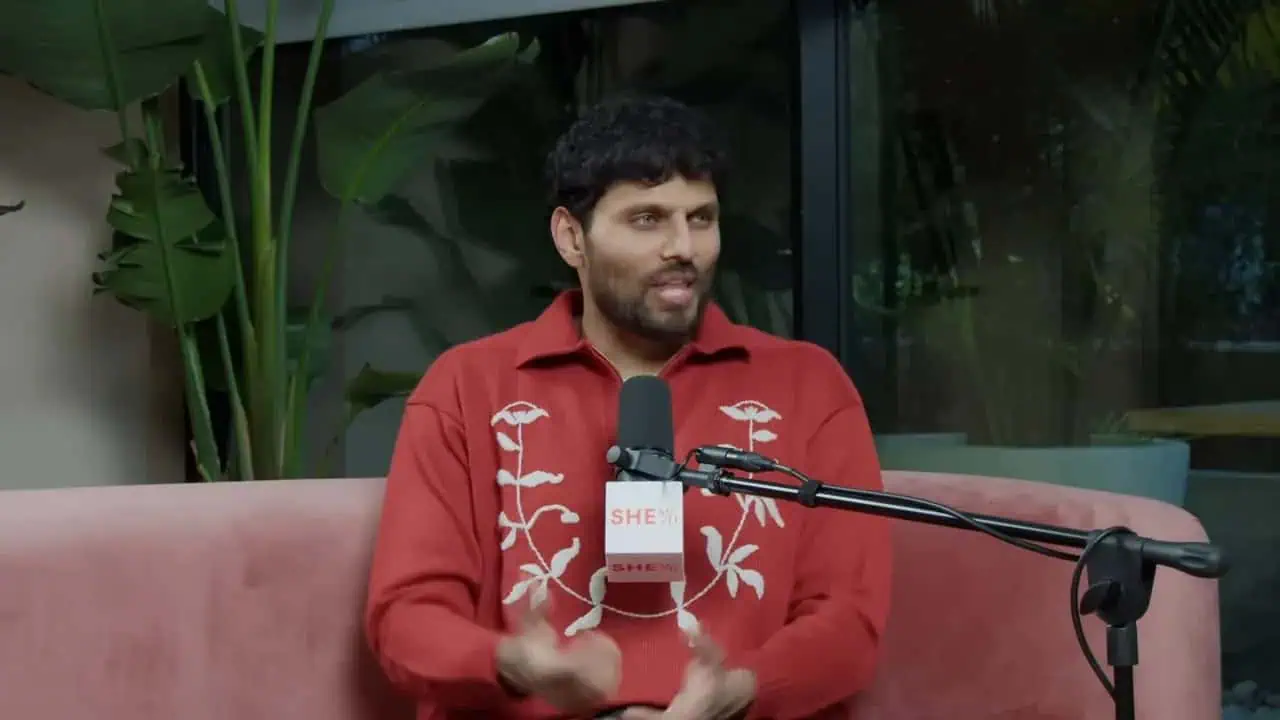
One monk in particular changed his trajectory. Jay was struck by the fact that this teacher was not someone who had simply inherited a spiritual life. He was highly accomplished academically and had chosen monkhood deliberately. That fascinated Jay. Why would someone with intelligence, opportunity, and worldly promise walk away from all of it?
Curiosity became commitment. Jay started attending lectures, asking questions, and listening closely. Two teachings especially landed for him.
First, that one of the great goals of human life is to master our emotions and senses.
Second, that our gifts only become meaningful when they are used in the service of others.
Those ideas are simple, but they are not small. Mastering emotions is not about suppression. It is about learning not to be run entirely by every craving, every fear, every impulse, every momentary reaction. And service is not about self-erasure. It is about directing our abilities toward something larger than ourselves.
For Jay, those ideas were powerful enough that he decided, deep down, almost immediately, that he wanted to become a monk.
You actually became a monk after college. What did that period of your life give you?
After graduating, Jay went to India instead of attending his graduation ceremony. He trained as a monk and spent three years living across India, the UK, and Europe, studying, practicing, teaching, and serving. He describes those years as some of the best of his life.
What stands out most is not just the fact of monkhood, but what he took from it. He did not leave with a fantasy that he had perfected himself. He left with tools. Tools for managing emotions. Tools for understanding desire. Tools for listening more deeply. Tools for orienting life around service rather than image.
That distinction matters. A lot of people assume personal growth means reaching some flawless state. Jay talks about it differently. The goal is not perfection. The goal is practice.
Why did you eventually decide to leave the monastery and enter the wider world again?
When Jay left monkhood, he carried a strong internal tension. On one hand, he had benefited tremendously from what he had learned. On the other hand, he felt it would be selfish to keep those insights only for himself.
That instinct is at the center of his work to this day. He has often said that if wisdom improves your life, there is a responsibility to share it. Do not perform it. Don’t brand it. Share it.
At first, that sharing looked very small. He spoke to tiny groups. He gave talks wherever anyone would invite him. Sometimes that meant two people. Sometimes five. Sometimes ten. He taught meditation classes while working a regular job and trying to pay his bills. There was no overnight leap from monk to media star. There were years of humble repetition.
That part of the story is important because it quietly dismantles a myth. We tend to notice people only once they are visible. We often miss the years when they were practicing in obscurity.
How Helping One Person Became a Global Platform
How did you go from small talks and office meditation sessions to YouTube and a major podcast platform?
After leaving the monastery, Jay worked at Accenture. During that time, he kept teaching and speaking whenever he could. He also wanted to reach more people, so he started looking toward television and media in London. But every application came back with the same response: no media experience, no interview.
Then came one of those moments that only makes sense in hindsight. At a BBC training day for ethnic minorities interested in presenting, he was told he had strong on-screen potential, but there were no jobs available. Instead, he was advised to start a YouTube channel.
At the time, that did not sound especially promising to him. This was still early enough that YouTube did not yet feel like the obvious professional path it later became. But he remembered a Thomas Edison quote that had stayed with him: when you think you have exhausted all options, you probably have not.
So he tried the one thing he had not yet tried.
His first videos got modest traction. A hundred views. Then five hundred. Then, around a thousand subscribers in the first month. He was thrilled, even while many people around him were skeptical. Friends criticized his pacing, editing, and thumbnails. Family members had already questioned his nontraditional choices for years. None of that made the uncertainty easy. It simply meant he had become more familiar with it.
Then everything changed through a moment of synchronicity. A senior leader at Accenture showed his videos to Arianna Huffington at Davos. Huffington agreed to share one on the HuffPost page. That first video hit a million views in a week. The next accelerated even faster. Within a short period, several videos had generated extraordinary reach across platforms.
But Jay’s takeaway from that moment is not just about virality. It is about human nature.
What did that early success teach you about what people actually want?
Jay’s view is that people are often underestimated. He believes that if we present thoughtful, healthy, meaningful ideas compellingly and compassionately, people will choose them.
That insight applies far beyond media. It applies to health. It applies to education. It applies to parenting. It applies to relationships.
If we present truth in a way that feels shaming, condescending, or punishing, people naturally resist it. But if we present wisdom with care, beauty, accessibility, and compassion, people are far more open to receiving it.
He was trying to prove something that still feels radical: that wisdom could spread, not just distraction. That people would respond to content that nourished them, not only content that exploited their attention.
That belief is also part of why the SHE MD podcast platform resonates with so many women. When expert insight is made accessible and human, people do not turn away from it. They lean in.
What were some of the first ideas you shared that connected so strongly?
One early video centered on the idea that changing the world starts with changing ourselves. Inspired by Gandhi’s famous line about being the change we want to see, Jay argued that the outer conflict we witness is deeply connected to inner conflict. If we cannot make peace with our own confusion, fear, resentment, and ego, we have very little chance of contributing meaningfully to peace outside ourselves.
Another video challenged the myth of overnight success. He focused on stories of people who found purpose and momentum later in life, emphasizing that timelines are often socially constructed and deeply misleading.
This remains one of his most reassuring messages: you are not late. You are not behind. You are not failing simply because your life does not match someone else’s calendar.
Hope, Fear, and the Courage to Follow a Different Path
What do you say to people who feel pulled toward a different life, but are terrified they may be making a mistake?
Jay is unusually honest about this. He does not pretend criticism bounced off him. When relatives told him becoming a monk was a waste of his life, or that he would never recover professionally or personally, he heard those fears. Some part of him worried they might be right.
But he makes a crucial distinction. Fear does not necessarily mean stop. Helplessness does not necessarily mean hopelessness.
One of the most powerful ideas he shared is that we can feel helpless and hopeful at the same time. We do not need 100 percent certainty to move toward what matters. In fact, most meaningful decisions are made without certainty.
That is such an important corrective in a culture that often glorifies confidence and certainty as prerequisites for action. They are not. Sometimes what we have is a quiet pull, a sense of rightness, and just enough hope to take one more step.
How does service help when life feels uncertain?
Jay recalled a teaching from his monk mentors that has clearly stayed with him: when times are uncertain, do not look for certainty. Look for service.
That reframes uncertainty in a beautiful way. Instead of waiting to feel stable before we contribute, we can contribute now. There is almost always someone to help, someone to encourage, someone to support. Service gives us direction when certainty is unavailable.
That mindset can be especially grounding in health struggles, career confusion, relationship transitions, grief, and periods of identity change. We may not control outcomes, but we can often control whether we show up generously.
Relationships, Love, and the Power of Self-Awareness
You’ve spoken beautifully about how our childhood shapes the way we love. What do you mean by that?
Jay believes that many of our love patterns are rooted in what our parents gave us and what they could not give us. Sometimes we seek partners who recreate a familiar emotional environment. Other times, we seek people who fill a missing gap. Often, we are doing this subconsciously.
That insight can explain a lot. Why do we cling to some people? Why do we dismiss others? Why certain dynamics feel magnetic even when they are not healthy.
He uses a striking metaphor for relationships: each person is coming from a “broken home,” not necessarily in the sense of divorce or overt dysfunction, but simply because no life, family, or upbringing is perfect. We do not need to force someone to live inside our unfinished structure. The healthier goal is to take the strongest bricks each of us has and build something new together.
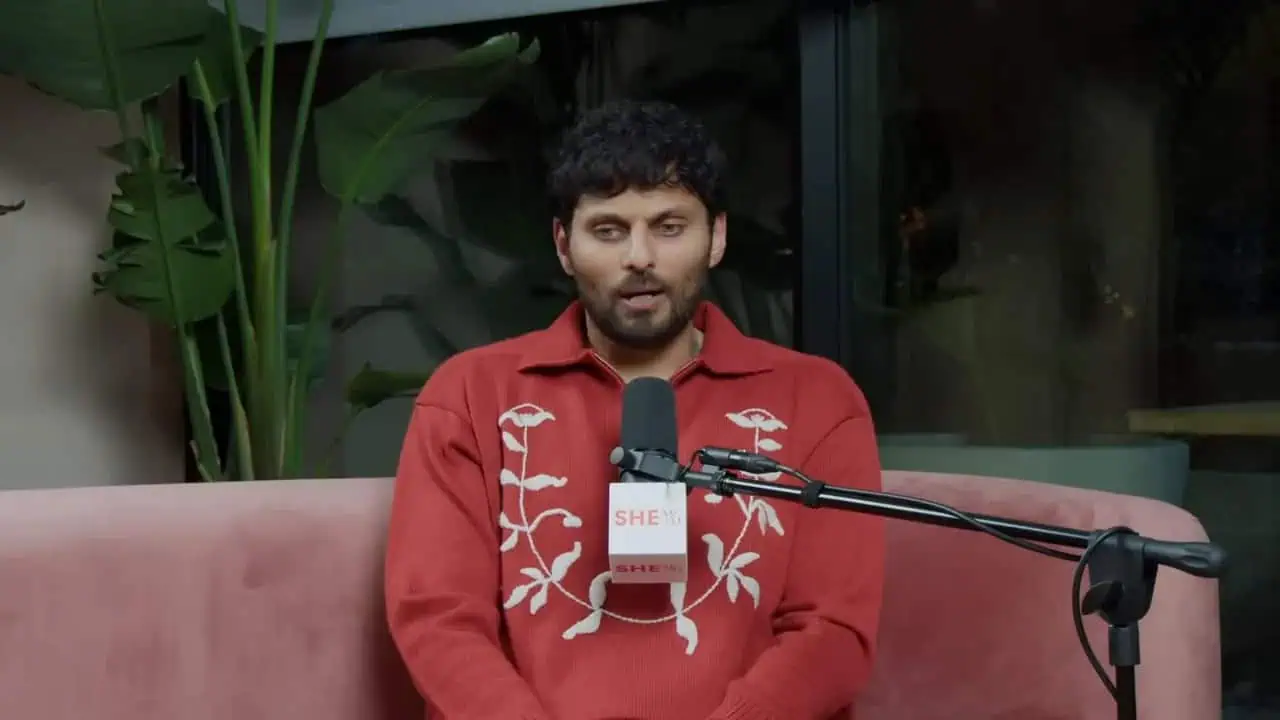
That image lands because it moves the conversation away from blame and toward co-creation. Relationships work better when they are not rescue missions, correction projects, or reenactments of childhood. They work better when they are built consciously.
What does self-awareness have to do with finding the right partner?
For Jay, self-awareness is step one. Before we can really build with another person, we need language for who we are, what we value, and what our priorities actually are.
When he met his wife, he was clear with her about his purpose and the life he wanted to build. He told her the work of helping people was his top priority. She was equally clear that her family was central in her life. Because both were honest early, they had a real foundation for understanding one another.
That level of clarity is rare. Many couples never articulate their deepest priorities explicitly, and then they are shocked when conflict reveals the difference.
Jay even described an exercise he gives couples: each person privately writes down their top three priorities in life, then they compare lists. What often emerges is not betrayal, but a mismatch in ordering. One partner may put children first, the other may put the relationship first. One may place work second, another may place family there. The point is not that one is correct. The point is that unspoken assumptions often create unnecessary pain.
What is one of your strongest pieces of relationship advice?
Do not try to change people.
He says this clearly and repeatedly. Do not try to shape someone into the potential you see for them. Do not try to force them into a profession, personality, parenting style, or version of success that fits your fantasy but not their own truth.
That does not mean we never grow together. It means change has to be chosen, not imposed.
Trying to mold someone into your ideal partner is often a sign that you do not actually want the person in front of you. You want a different person. And even if your partner made all the changes you requested, Jay points out that dissatisfaction would probably still find a new target.
This idea pairs beautifully with broader work around self-compassion and acceptance. If this resonates, Dr. Aliabadi’s reflections on why we should stop being so hard on ourselves offer a helpful companion perspective, especially for those who bring perfectionism into love as well as achievement.
Meditation for Real Life, Not Perfect Life
What do you say to people who have tried meditation and feel like they simply cannot do it?
Jay’s answer is refreshingly compassionate. He does not shame people for struggling. He acknowledges that learning meditation well can require support, repetition, and real practice. In his ideal world, he says, he would sit with someone for days and guide them through building a habit step by step.
But for those of us living normal, full, complicated lives, he offers a more accessible starting point.
His definition of meditation is not “having no thoughts.” It is mastering our thoughts, or at least learning to guide them more intentionally.
That matters because many people assume they have failed at meditation the moment their mind wanders. But wandering is the default state for most minds. He cites research suggesting we have tens of thousands of thoughts each day, many of them repetitive and many of them negative. Meditation is not the fantasy of eliminating all thought. It is the practice of interrupting the automatic stream.
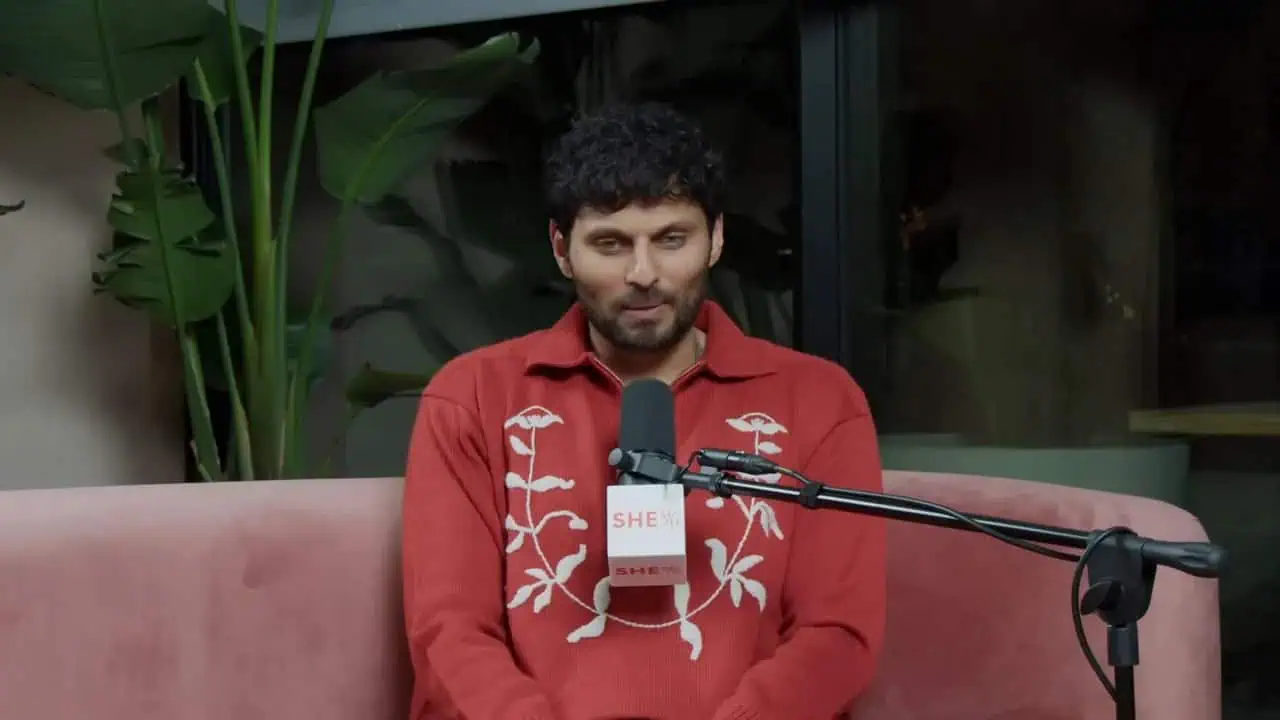
If someone cannot manage ten minutes of meditation, where should they begin?
Jay suggests starting with two anchor points:
Your first thought of the day
Your last thought of the day
Most of us cannot control every thought that crosses our minds. But we can practice choosing the thought we go to sleep with and the thought we wake up with.
His advice is simple and actionable. Before bed, intentionally “program” the state you want to enter the next day. That might sound like:
I am waking up energized, calm, and ready.
I am waking up rested and clear.
I am waking up with gratitude and enthusiasm.
The point is not magical thinking. The point is direction. Instead of ending the day in chaos and beginning the next one in reactivity, we create a little more authorship over our inner life.
That is a powerful form of meditation in itself.
The Daily Habits That Support a Purposeful Life
You often return to five foundational practices: thankfulness, inspiration, meditation, exercise, and sleep. Why these five?
Because they are accessible, repeatable, and deeply regulating. Jay is not talking about flashy optimization trends. He is talking about habits that restore the mind and body to a more grounded state.
These five pillars are worth naming clearly:
Thankfulness for perspective and emotional balance
Inspiration for mental nourishment and expansion
Meditation for directing thought rather than being ruled by it
Exercise for energy, resilience, and physical strength
Sleep for restoration, detoxification, and emotional processing
None of these are revolutionary on paper. That is exactly why they matter. The most transformative habits are often the least glamorous.
What does your exercise routine look like now?
Jay shared that his routine has evolved over the years. He used to rely mostly on sports, and he still loves them. Soccer, tennis, pickleball, dancing, all of that movement still matters to him. But over time, he came to appreciate the value of strength training and building muscle.
His current rhythm is more structured. He aims to wake around 6 a.m., meditate for about ninety minutes, and then strength train for an hour. He now trains roughly five days a week.
The key point, though, is not that everyone should copy his exact schedule. It is that movement that needs to fit the person. If dancing gets you moving, dance. If hiking gets you moving, hike. If sports motivate you more than a gym, lean into that. The best exercise routine is often the one you can return to consistently.
Why do you talk about sleep with so much intensity?
Because Jay sees sleep as one of the most underrated forms of mental and emotional care. He wants around eight and a half hours a night. Not because sleep is laziness, but because sleep is processing.
He describes it as a cleansing system for stress and complexity. During the day, the mind collects fragments: unfinished thoughts, tensions, decisions, emotional residue, and overstimulation. Sleep helps organize and simplify that noise.
He also shared a few habits that support better sleep:
Eat dinner about three hours before bed when possible
Get off the phone at least an hour before sleep
Turn toward a book instead of endless scrolling
Be careful about what you consume at night, especially content that spikes anxiety
That last point is especially relevant now. It is not just thriller shows and true crime. Social media itself can flood the nervous system with fear, urgency, and stimulation. If we are prone to anxiety, our evening content diet matters.
What Jay Has Learned From Interviewing Extraordinary People
After years of hosting one of the most successful podcasts in the world, what has surprised you most?
Jay mentioned a few lessons from guests that deeply shifted his thinking.
One came from Dr. Daniel Amen, who shared that the human brain does not really have the capacity to process fame well before age twenty-five. That insight made Jay think more seriously about young people growing up in an age of constant exposure, visibility, and pressure.
Another came from Dr. Gabor Maté, who challenged the way many of us express love. We often say, “I love you because…” because you are smart, beautiful, talented, kind, and successful. But Maté pointed out that every “because” can become a burden. If someone believes they are loved only because of a trait, achievement, or role, they may fear losing love the moment that trait feels threatened.
That is such a profound idea. Unconditional love does not require us to deny someone’s gifts. It asks us not to make their gifts the condition of their worth.
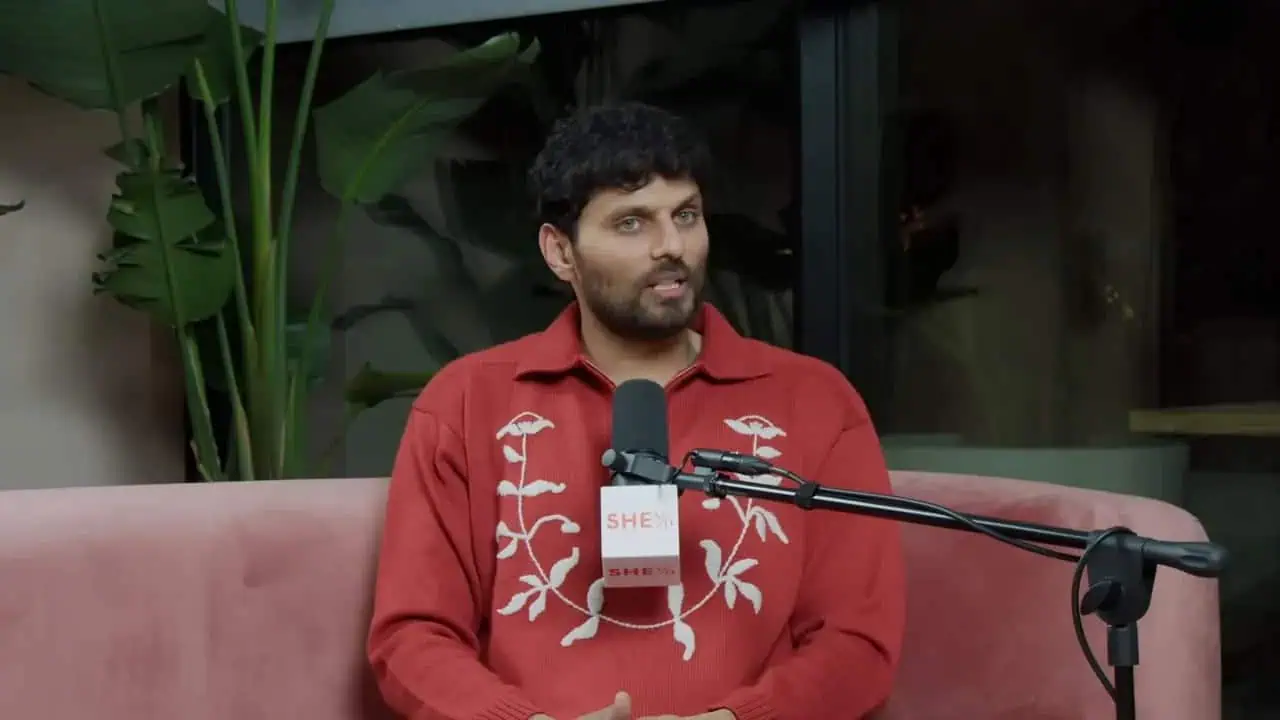
Jay’s gratitude for his guests also reflects something important about good interviewing. The best interviews are not performances. They are acts of trust. People share openly when they sense the space is safe enough to hold truth.
Finding Purpose When You Feel Stuck
What is your advice for someone who feels stuck in work, relationships, or life in general?
Jay answered this with one of the most memorable stories in the conversation, drawn from research at the Yale School of Management. The study looked at hospital cleaners, a job many might assume feels invisible, exhausting, and low-status. Researchers found something fascinating.
Some cleaners described themselves simply as cleaners. They saw their work as low-skilled labor, focused on tasks like wiping floors, changing beds, and cleaning bathrooms.
But another group, with the same pay, same hours, and same hospitals, described themselves as healers.
Why? Because they believed a clean hospital was part of the healing process. A clean room helps a patient feel dignified. It helps families stay longer. It contributes to emotional comfort and physical safety. In their minds, they were not just removing dirt. They were supporting recovery.
This is not semantics. It has meaning.
Jay paired that story with a Wayne Dyer idea: when we change the way we look at things, the things we look at change.
That does not mean pretending pain is pleasant or convincing yourself to tolerate what should be changed. It means that perspective can create enough strength to begin changing what is not working.
His advice for people who feel trapped is not to force gratitude for everything. It is to identify the 1 percent that works. The part of the job that helps your family. The part of the relationship that gave you something beautiful. The part of the day that still contains possibility.
Build from there.
That 1 percent matters because hopelessness tends to erase nuance. It tells us that because something is imperfect, nothing is valuable. Jay rejects that all-or-nothing thinking. He suggests that when we reconnect to even a tiny pocket of meaning, we gain the energy to make healthier decisions.
For people navigating health uncertainty or feeling dismissed in care settings, that same mindset can be empowering. Sometimes purpose begins with asking better questions, seeking support, and refusing to disappear inside discouragement. Resources on advocating for yourself at the doctor can be part of that process, too.
Books, Mindset, and a Different Way to Measure Progress
Is there one book you recommend everyone read?
Jay named Thinking, Fast and Slow by Daniel Kahneman. He loves it because it helps explain the two major systems of human thinking: the rapid, instinctive, automatic response and the slower, more deliberate, analytical response.
That framework is useful in nearly every area of life. It helps us understand impulsive reactions, emotional decision-making, and why some situations deserve more reflection than others. It also aligns well with so much of Jay’s work, which is really about creating a gap between stimulus and response.
What is one mindset shift you hope more people embrace?
That life is not a race against a universal clock.
So many people carry shame because they have not hit milestones by a certain age. Not married by thirty-five. Not wealthy by thirty. Not fully established by forty. Jay pushes back on the whole framework. Purpose is not invalidated by timing. Some of the most impactful lives and careers become clear much later than culture tells us they should.
That is one reason his story resonates so strongly. It is not a straight line. It is a path interrupted by wonder, uncertainty, discipline, criticism, service, and reinvention.
FAQs
What are Jay Shetty’s main teachings on finding purpose?
His central message is that purpose is closely connected to service. He believes our gifts gain meaning when they help others. He also emphasizes that purpose does not have to begin with a huge audience or grand plan. It often starts by helping one person and growing from there.
What does Jay Shetty say about meditation for beginners?
He defines meditation as learning to guide and direct your thoughts rather than being ruled by them. For beginners, he recommends starting with the first and last thoughts of the day. Choosing those thoughts intentionally can become a simple but powerful meditation practice.
What is Jay Shetty’s best relationship advice?
Know yourself first, communicate your values clearly, and do not try to change people into your ideal version of them. He believes healthy relationships require self-awareness, honest conversations about priorities, and deep acceptance of who the other person really is.
How did Jay Shetty become successful on YouTube and in podcasting?
He spent years speaking in small rooms before he ever reached a large audience. After repeated rejection from traditional media, he started a YouTube channel. His videos later gained major visibility when Arianna Huffington shared them through HuffPost, which helped bring his work to a much larger audience.
What are Jay Shetty’s five daily pillars for a better life?
He highlights thankfulness, inspiration, meditation, exercise, and sleep. Together, these practices support emotional regulation, mental clarity, physical health, and a stronger sense of purpose.
What book does Jay Shetty recommend?
He recommends Thinking, Fast and Slow by Daniel Kahneman for its explanation of how our minds use both fast, instinctive thinking and slower, more reflective thinking.
A Few Ideas Worth Carrying Forward
If there is a thread running through everything Jay shared, it is this: we do not need to wait until we are fearless, fully healed, completely clear, or universally validated to begin living with intention.
We can start where we are.
We can master one thought at a time.
We can help one person at a time.
We can choose not to build our lives around timelines that were never ours.
We can stop trying to force love into formulas and instead build it with honesty and awareness.
We can remember that service is not what comes after certainty. It is often what guides us through uncertainty.
That is what makes Jay Shetty’s perspective so useful. It is spiritual without being detached from real life. It is practical without losing depth. And it reminds us that purpose is not always found in one dramatic revelation. More often, it is found in the repeated act of aligning who we are with how we live.
For more conversations like this one on women’s health, personal growth, and practical tools for living better, explore the wider SHE MD ecosystem and its growing library of expert-led discussions.
Concerned About Your Health? Talk to Dr. Aliabadi
Dr. Aliabadi is an expert OB/GYN who is knowledgeable in all aspects of women’s health and well-being. Dr. Aliabadi and her caring, supportive staff are available to support you through PCOS, endometriosis, menopause, childbirth, infertility, or routine gynecological care. We invite you to establish care with Dr. Aliabadi. Call us at (844) 863-6700 or
This article was created from the video Jay Shetty on Relationships, Passion, and Finding Purpose in Your Life | SHE MD for Dr. Thais Aliabadi’s website.