When our shower drain suddenly fills with hair, where should we start?
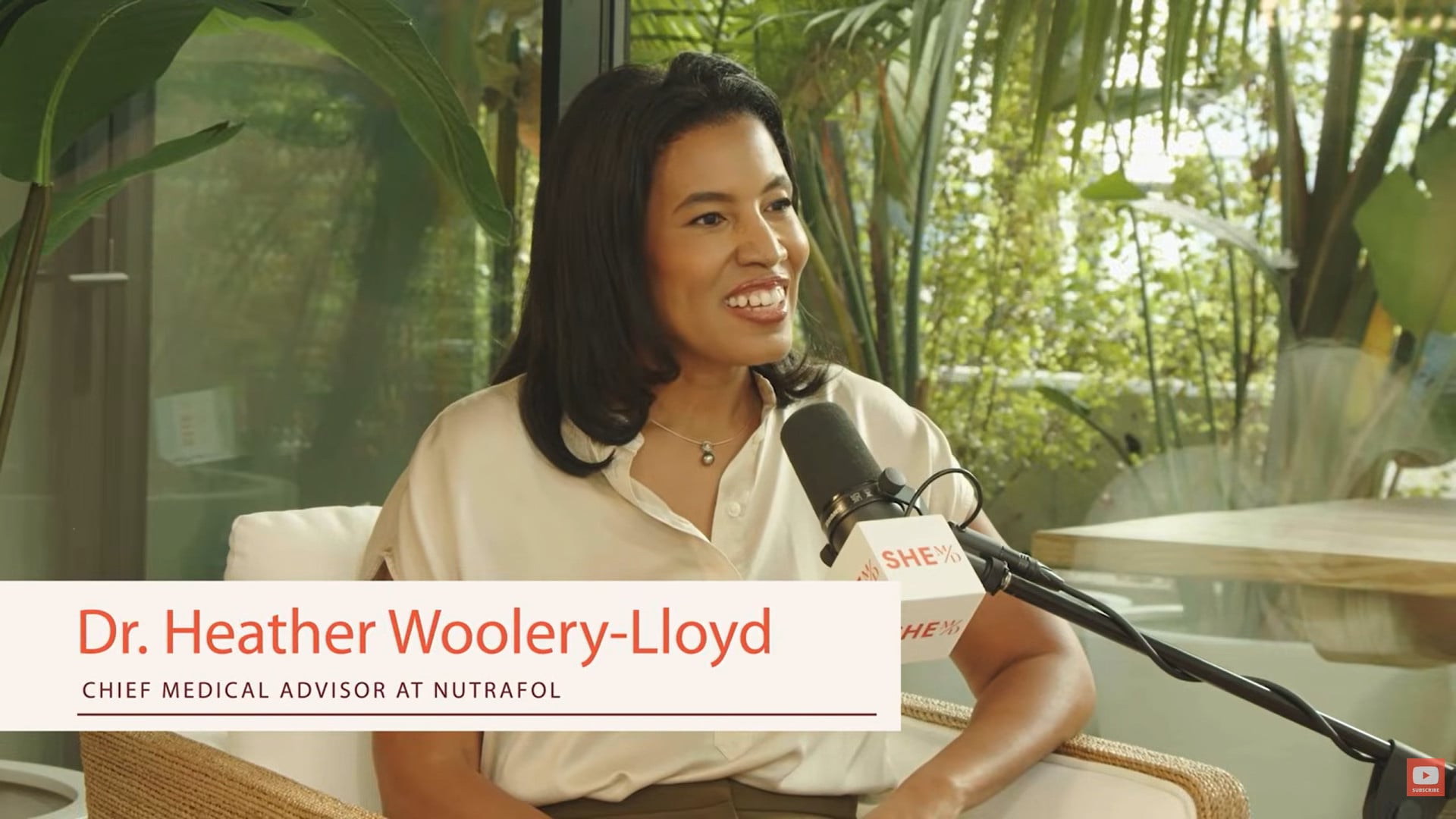
Dr. Heather Woolery-Lloyd joins Dr. Thais Aliabadi and Mary Alice Haney to discuss this issue. We start by asking why, not by buying another product. Hair shedding, thinning, and breakage can look similar in the mirror, but they do not necessarily have the same cause. A widening part, a smaller ponytail, round bald patches, and a receding hairline give us different clues.
We also need to get away from the idea that hair loss only happens later in life. We see it in younger women, after childbirth, with polycystic ovary syndrome, during perimenopause and menopause, and after significant physical or emotional stress.
One of our most useful questions is simple: What happened three to six months ago? The shedding we notice today may reflect surgery, childbirth, a major move, divorce, or rapid weight loss months earlier.
And we should not assume there is only one explanation. Hormonal thinning and stress-related shedding can happen together. Understanding which factors are involved is how we build a treatment plan that makes sense.
Table of Contents
- Understanding Shedding, Thinning, and Breakage
- Stress, Hormones, and Life Stages
- GLP-1 Medications, Nutrition, and Medical Causes
- Hairstyles, Autoimmunity, and Hair Shaft Damage
- Diagnosis and a Realistic Hair Regrowth Plan
- Daily Habits and the Takeaways That Matter
Understanding Shedding, Thinning, and Breakage
How does the hair growth cycle explain what we are seeing?
Our hair does not all grow continuously. Each follicle moves through a cycle that includes active growth, a transition, rest, and eventually shedding. In a healthy scalp, roughly 85% of our hair is actively growing, while a smaller proportion is resting or approaching shedding.
That balance matters. When more follicles leave active growth, we can eventually see more hair in the brush, on the floor, or in the shower. The visible change is not necessarily immediate because the follicles still have to move through their cycle.
This is also why hair regrowth takes patience. We cannot push a whole head of hair back into its growth phase overnight. Once we understand the biology, promises of dramatic regrowth in two weeks become much less convincing.
We want treatment expectations to follow the hair cycle, not the timeline on a product advertisement.
Is losing 50 to 100 hairs a day normal, or should we be concerned?
We often hear that losing approximately 50 to 100 hairs daily is normal. Natural shedding is part of the cycle, so finding some loose hair does not automatically mean something is wrong.
But we should not let a number dismiss a noticeable change. We know our own hair. If our usual shedding has increased, our part looks wider, or our ponytail feels substantially smaller, that deserves attention even if we have not counted every strand.
Other changes worth discussing with a dermatologist include:
- New bald patches.
- Thinning around the edges or frontal hairline.
- Scalp burning, pain, or tenderness.
- Loss of eyebrows or eyelashes.
- Persistent shedding that feels different from our baseline.
We do not need to prove that we have crossed a particular daily hair count before asking for help. An early evaluation is more useful than months of anxious counting.
How is breakage different from hair shedding?
With shedding, hair is being released from the follicle. With breakage, the hair shaft itself is becoming fragile and snapping. Both can make our hair look less full, but they point us toward different problems.
Our scalp and hair age, just as our facial skin does. Over time, our hair can become drier, more brittle, and less tolerant of the styling habits we once got away with. A routine that worked beautifully in our twenties may be too harsh later on.
That distinction is especially important during perimenopause. We may have hormonal thinning at the follicle and increased fragility along the shaft at the same time. A growth-focused treatment does not remove the need to reduce damaging styling habits.
We need to ask both questions: Are we losing more hair from the scalp, and are we breaking the hair we already have?
Stress, Hormones, and Life Stages
What is telogen effluvium, and why does stress-related shedding show up months later?
Telogen effluvium is a common form of shedding that can follow a major stressor. More hair shifts out of active growth into the resting phase, and we notice the resulting shedding around three to six months later.
The stress can be emotional or physical. We see this after childbirth, surgery, significant weight loss, bereavement, relationship changes, demanding work events, and other major disruptions.
We sometimes explain it this way: our hair matters enormously to us, but during a stressful period, our body does not prioritize it in the same way it prioritizes essential functions.
The delay can be confusing. By the time the shedding starts, we may feel much better and assume the two events cannot be connected. That is why looking back several months is so valuable.
We also tend to minimize our own stress. Caring for a sick parent or going through a divorce can become our everyday reality without feeling any less demanding. Our discussion of stress-related hair loss explores that connection further.
What does a widening middle part tell us about female pattern hair loss?
A widening central part is one of the most common complaints we hear with female pattern hair loss. We may start seeing more scalp on top even without dramatic handfuls of hair coming out.
In susceptible follicles, the hair shaft gradually becomes finer. We call this miniaturization. The hair is still present, but thinner strands provide less coverage. Family history can be another clue.
Hormonal changes can contribute. As estrogen declines with age, the relative influence of androgens becomes more important, particularly in follicles that are sensitive to them.
This is different from a temporary shift in the growth cycle after a stressful event, although the two can overlap. Our approach to women’s hormonal hair loss therefore begins with identifying the pattern and contributing factors.
We usually think in terms of combination treatment rather than one universal solution. Depending on the individual, that may include minoxidil, an appropriate prescription medication, nutritional support, and other therapies.

Why can postpartum hair loss feel so dramatic?
Postpartum shedding has two important contributors. During pregnancy, higher estrogen supports the active growth phase, which helps explain why our hair can feel especially thick and full.
After delivery, estrogen drops. At the same time, pregnancy, birth, and the demands of caring for a newborn create substantial physical and emotional stress. Those influences can shift more follicles toward rest and eventual shedding.
We commonly notice the change three to six months after childbirth. Recovery can take more than a year because the follicles need time to cycle back into active growth.
We also consider nutrition, especially during breastfeeding. The important issue is whether we are meeting our nutritional needs, not an assumption that breastfeeding inevitably causes hair loss. If deficiencies are present, they can affect hair health.
We want reassurance to come with a proper evaluation. A common postpartum pattern should not keep us from looking for additional contributors when the symptoms warrant it.
What changes during perimenopause and menopause, and can hormone therapy fix the thinning?
During perimenopause and menopause, declining estrogen can contribute to changes in hair density. In susceptible follicles, the relative androgen influence can encourage miniaturization, making the part more visible.
At the same time, aging hair may become drier and more prone to breakage. We can therefore have several things happening at once: finer hairs, increased shedding, and fragile strands.
We should also acknowledge the life stage itself. Many of us are managing teenagers, aging parents, and demanding careers. Those pressures do not replace the hormonal explanation, but they can add to it.
We do not consider menopausal hormone therapy a reliable treatment for female pattern hair loss. Even though estrogen plays a role in hair biology, that does not mean hormone therapy will reverse this particular pattern.
Our menopause and hair loss guide provides more context. The practical message is that we need a hair-specific assessment rather than assuming all menopausal symptoms respond to the same intervention.
How can PCOS cause thinning on our scalp but more facial and body hair?
Polycystic ovary syndrome, or PCOS, often presents with a constellation of symptoms. Scalp thinning may occur alongside acne and increased facial or body hair. Those associated changes help us recognize that hormones may be involved.
Androgens can have different effects in different locations. We may see scalp hair becoming finer while unwanted hair becomes more noticeable elsewhere.
For many patients with PCOS, insulin resistance is an important part of the picture. Higher insulin levels can stimulate ovarian androgen production. Addressing that metabolic dysfunction can therefore help address one of the drivers behind the hair symptoms.
We may also use medication such as spironolactone when appropriate. The broader point is that we should not treat the scalp in isolation while ignoring the metabolic and hormonal condition underneath it.
PCOS-related hair thinning calls for an individualized plan that connects dermatologic care with the rest of our health.
GLP-1 Medications, Nutrition, and Medical Causes
When shedding starts during GLP-1 treatment, is the medication necessarily the cause?
We need to look beyond the timing of the prescription. Rapid or significant weight loss is a recognized stressor that can shift hair out of active growth. Reduced food intake, inadequate protein, and nutritional deficiencies may also contribute.
In clinical practice, we often interpret this pattern as weight-loss-associated telogen effluvium rather than simply assuming the medication is directly damaging the follicles.
There can also be overlapping causes. For example, we may already have perimenopausal thinning and then develop increased shedding during substantial weight loss. That combination can feel like a sudden, dramatic change.
Interestingly, some patients may report improvement as their metabolic health improves, although that is not the usual concern bringing patients into the office.
We should not stop a prescribed GLP-1 on our own because of shedding. We need to discuss the change with the prescribing clinician and evaluate the rate of weight loss, nutrition, and other possible causes.
What can we do if we want to continue GLP-1 treatment while protecting our hair?
We start with the basics: are we eating enough, and are we getting adequate protein? Appetite reduction can make it easier to fall short without realizing it.
We also consider iron stores, vitamin D, and other nutritional factors when clinically indicated. It is hard to support healthy hair growth while leaving a meaningful deficiency unaddressed.
The pace of weight loss deserves discussion, too. We do not need to pursue the fastest possible result or assume everyone needs the highest medication dose. A slower approach may be appropriate, but changes belong in a conversation with the prescriber.
- Review overall food intake and prioritize protein.
- Discuss rapid or substantial weight changes.
- Check for relevant deficiencies rather than guessing.
- Look for hormonal, thyroid, or other overlapping contributors.
- Make medication decisions with the treating clinician.
We want to preserve the benefits of necessary treatment while addressing the factors that may be stressing our hair.
Which other medical conditions and medications should we consider?
Both an underactive and an overactive thyroid can contribute to hair thinning. Thyroid testing is therefore a common part of the evaluation when appropriate.
We also look for anemia and low iron stores, particularly when heavy menstrual bleeding is part of the history. Vitamin D and other nutrient levels may be relevant depending on diet, symptoms, and medical background.
Medication history matters as well. Some blood pressure medications, retinoids, anticoagulants, and antidepressants can be associated with hair changes. We ask when a medication started and how that timing relates to the shedding.
But we should not assume every new prescription is responsible. Stress-related shedding, hormonal thinning, and PCOS are common explanations that still deserve consideration.
Our job is to connect the history, examination, and appropriate testing. We do not want to stop an important medication unnecessarily or overlook a treatable condition by blaming everything on one factor.
Hairstyles, Autoimmunity, and Hair Shaft Damage
Can our everyday ponytail or extensions actually cause hair loss?
Yes. Repeated pulling can cause traction alopecia, often along the frontal hairline. Tight ponytails, tight braids, heavy extensions, and repeated tension during styling can all contribute.
We should take pain seriously. A hairstyle that hurts is not something our scalp needs to tolerate for the sake of looking polished.
Simple changes can reduce tension:
- Choose a loose, low ponytail instead of a tight, high one.
- Use gentle, silky hair ties rather than tight elastics.
- Reduce the weight and tension of extensions.
- Avoid repeated pulling during blow-drying and styling.
Early traction-related thinning can be reversible when we remove the source of tension. But years of continued pulling can lead to scarring and permanent loss.
That makes early action especially important. We should not wait for a hairline to become dramatically sparse before changing the style that is stressing it.
How is autoimmune hair loss different from hormonal thinning?
Alopecia areata is an autoimmune form of hair loss. Instead of protecting the follicle, the immune system mistakenly targets it. A common presentation is a smooth, round patch of hair loss on the scalp.
That pattern looks different from diffuse shedding or a gradually widening central part. Sometimes the examination is characteristic enough to make the diagnosis. In less straightforward cases, we may need a scalp biopsy.
Treatment also differs. We may use injected corticosteroids or topical anti-inflammatory medications to address the immune activity around the follicle.
Many patients can experience regrowth with treatment, but we still need to assess the individual pattern and course. A bald patch is not something we should automatically label as stress or try to solve with a supplement alone.
This is another reason diagnosis matters so much: a treatment aimed at hair growth is not necessarily addressing the process that caused the loss.
What damages the hair shaft, and can we prevent more breakage?
We think about four broad sources of damage: chemicals, heat, mechanical forces, and environmental exposure.
Chemical treatments can weaken the shaft. Heat styling can increase fragility. Repeated brushing, tugging, tight styling, and excessive manipulation can cause further damage. UV exposure and time spent in the ocean can also affect the hair.
The hair shaft contains a structural cortex protected by an outer cuticle. We can picture the cuticle as overlapping scales. When that protective layer is disrupted, the underlying structure becomes more vulnerable.
That is why protecting existing hair matters alongside encouraging growth. Products designed to support the shaft and smooth the cuticle may have a role, but we also need to change the habits creating the damage.
We cannot keep applying the same chemical, heat, and mechanical stress and expect a growth supplement to cancel it out. Less manipulation is often an important part of the plan.
Why does chemotherapy cause a different kind of hair loss?
Our hair follicles contain rapidly dividing cells. Many chemotherapy medications target rapidly dividing cells as part of cancer treatment, so the follicles can be affected along with the cancer.
That can lead to substantial hair loss. But not every chemotherapy works through the same mechanism, and not every regimen has the same effect on hair.
We therefore cannot make one promise about shedding or recovery that applies to all chemotherapy. The specific treatment matters.
The broader lesson is that hair loss describes an outcome, not a single disease. Chemotherapy-related loss, autoimmune alopecia, traction, hormonal miniaturization, and stress-related shedding involve different processes. We need to understand which process we are treating before choosing an intervention or setting expectations.
Diagnosis and a Realistic Hair Regrowth Plan
What should a thorough hair loss evaluation include?
We begin with a detailed history: recent stressors, surgery, childbirth, weight changes, family history, medications, diet, menstrual bleeding, and styling practices.
Then we examine the pattern. Central thinning suggests something different from diffuse shedding, a round patch, or loss along the edges. A gentle hair pull test can help us assess whether shedding is active.
Laboratory testing is individualized. Depending on the situation, we may consider:
- A complete blood count to assess for anemia.
- Iron and ferritin, which help us assess iron stores.
- Thyroid testing.
- Vitamin D and selected nutritional tests, such as zinc, B12, or folate.
- Hormonal testing when PCOS or androgen-related symptoms are relevant.
- Autoimmune testing when the history or examination supports it.
We do not need every possible test for every patient. Occasionally, a more unusual exposure history may prompt additional testing. When the diagnosis remains uncertain, a scalp biopsy can be helpful.

Why should we mention biotin before having blood tests?
Biotin can interfere with certain laboratory tests, including thyroid assays. The important distinction is that it can affect the test result without actually changing thyroid function.
That matters because we may be taking biotin specifically for our hair while a clinician is checking whether thyroid disease is contributing to the shedding.
We should bring a complete list of supplements, including doses, to the appointment and ask for instructions before the blood draw. High-dose products deserve particular attention. We should follow the clinician’s or laboratory’s guidance about whether and when to pause them rather than guessing.
Even a product that feels like an ordinary beauty supplement belongs in our medical history.
How do minoxidil and other prescription treatments fit into the plan?
We generally use a multimodal approach, meaning we address more than one contributor when needed. Minoxidil may be used topically or prescribed orally, depending on the patient and the clinical situation.
Oral minoxidil requires individualized prescribing. Increased facial hair is one possible side effect discussed in practice. We should not borrow someone else’s dose or assume a regimen that worked for a friend is right for us.
The topical formulation matters, too. Some of us prefer a lightweight product that does not leave our hair oily. Others with dry hair may find an alcohol-based solution too drying and prefer a different base.
Spironolactone can be useful for appropriate patients with androgen-related symptoms. Finasteride or dutasteride may be considered in selected circumstances, particularly after menopause. Pregnancy considerations are important when discussing these medications.
For inflammatory hair loss, topical anti-inflammatories or corticosteroid injections may be more relevant. We choose treatment to match the diagnosis, not the popularity of the prescription.
Do light therapy and PRP deserve a place in treatment?
They can be useful additions for appropriate patients. Light therapy devices have supporting data, but schedules vary. Some require daily use, while others are used less frequently. We need a device and routine we can realistically maintain.
Platelet-rich plasma, or PRP, uses a sample of our own blood. After it is processed, the platelet-rich portion is used on or injected into the scalp as a source of growth factors.
In practice, we may begin with a series of three treatments spaced approximately four to six weeks apart, then reassess. The injections can be uncomfortable, so we should discuss the experience as well as the potential benefit.
We think of PRP as an adjunct, not a substitute for identifying the underlying cause. A procedure should sit within a coherent plan that also addresses nutrition, hormones, inflammation, or traction when those factors are present.
What should we look for in a hair growth supplement?
We want evidence for the finished product, not just an impressive list of ingredients. Ideally, that includes randomized, placebo-controlled trials evaluating the formulation people actually take.
We also look for independent quality testing. NSF certification can help us assess whether a product meets relevant quality standards. NSF Certified for Sport adds testing related to banned substances and contaminants.
Nutrafol is one product we use in practice because of its clinical testing and quality credentials. But the more useful lesson is how we evaluate any supplement: What has been studied, and what has been independently verified?
Ingredients discussed for different contributors include saw palmetto, ashwagandha, and vitamin D when deficiency is relevant. We should not interpret any one ingredient as a universal answer.
A supplement may provide support, but it does not replace diagnosis, adequate nutrition, or prescription treatment when needed. Our choice should reflect our health history and the factors affecting our hair.

How long should we give treatment before deciding whether it is helping?
We need to think in months, not days. Around three months may be needed to notice reduced shedding, and six months or longer may be needed for meaningful regrowth. Some plans require a longer horizon.
We should not abandon an appropriate treatment after a few weeks simply because our ponytail does not feel fuller yet. At the same time, patience should include follow-up rather than continuing indefinitely without reassessment.
Our expectations need to account for the diagnosis, the treatment, and whether contributing factors are still active. Ongoing nutritional shortfalls or continued traction can make progress harder.
Anything promising substantial new growth in two or three weeks deserves skepticism. We can be proactive without expecting our follicles to ignore their biology.
Daily Habits and the Takeaways That Matter
How often should we wash and brush our hair, and which myths can we stop believing?
There is no universal washing schedule. Oily hair may need washing daily or every other day. Drier hair may do well with a longer interval, sometimes a week or more. We want to meet our scalp’s needs without repeatedly stripping and overmanipulating fragile hair.
For brushing, the key is how much tugging and pulling we create. A brush should move through smoothly. Wet hair is more fragile, so gentle tools with widely spaced bristles can be helpful when detangling.
Two common myths are worth clearing up:
- Cutting hair does not make it grow thicker. A blunt end can look fuller than a naturally tapered tip, but cutting does not change the follicle.
- Hats do not suffocate hair follicles. An overly tight hat can create friction and breakage, which is a different issue.
We do not need the perfect brush or a rigid schedule. We need a routine that avoids unnecessary damage.
What are the five things we should remember when our hair no longer feels like our own?
We want to leave with a plan, not another reason to blame ourselves.
- Get evaluated early. A changing part, persistent shedding, scalp symptoms, or patchy loss deserves attention.
- Look back several months. Physical and emotional stress can affect our hair long after the event.
- Prioritize nutrition. Adequate protein, enough food, and a varied diet with fruits and vegetables matter more than searching for one magic food.
- Choose support thoughtfully. Supplements, medications, and procedures should match the cause and have realistic expectations.
- Give ourselves grace. Hair changes can be deeply upsetting. We can take them seriously without making them a personal failure.
We do not have to accept every change as inevitable, and we do not have to solve it alone. The most useful next step is understanding what is happening, then giving the right plan enough time to work.
We share this information for education, not as a substitute for individualized medical advice. We should consult our healthcare team before starting supplements or changing prescribed treatment.
Concerned About Your Health? Talk to Dr. Aliabadi
Dr. Aliabadi is an expert OB/GYN who is knowledgeable in all aspects of women’s health and well-being. Dr. Aliabadi and her caring, supportive staff are available to support you through PCOS, endometriosis, menopause, childbirth, infertility, or routine gynecological care. <br><br> We invite you to establish care with Dr. Aliabadi. <br>Call us at (844) 863-6700 or