Does menopause really mean our sex lives are over?
We need to retire that idea. Somewhere along the way, we inherited a story that sex belongs to youth and that, after a certain age, we should quietly redirect our enthusiasm toward gardening. Beautiful gardens are wonderful. But we can want beautiful gardens and good sex.
We also need to leave room for different choices. If we are content with affection, companionship, or less frequent sex, there is nothing to fix. The concern is when we still want intimacy but dryness, pain, difficulty becoming aroused, or shame makes it feel out of reach.
That distinction runs through our conversation with Naomi Watts, Dr. Cindy Meston, Dr. Thais Aliabadi, and Mary Alice Haney: we are not trying to persuade women to have more sex. We are challenging the assumption that unwanted changes are something we simply have to accept.
Our bodies can change without pleasure becoming a thing of the past. Understanding those changes, finding knowledgeable care, and talking honestly with our partners can help us build a sexual life that fits this chapter rather than trying to recreate an earlier one.
What did Naomi’s experience at 36 reveal about the silence surrounding early menopause?
Naomi was trying to conceive when blood work raised the possibility that she was heading toward early menopause. Her follicle-stimulating hormone, or FSH, levels prompted that conversation. She was 36, and the news left her shocked and frightened.
When she called her mother, she discovered how much had gone unsaid. Her mother had experienced menopause earlier than average, but they had never really discussed what that might mean. The previous generation had not had those conversations either. Silence had been passed down almost as faithfully as family history.
We can see how isolating that becomes. Naomi was gathering fragments of information while also trying to get pregnant, without the open menopause conversations and online communities we have now. Even the word perimenopause was missing from the discussion with her doctor.
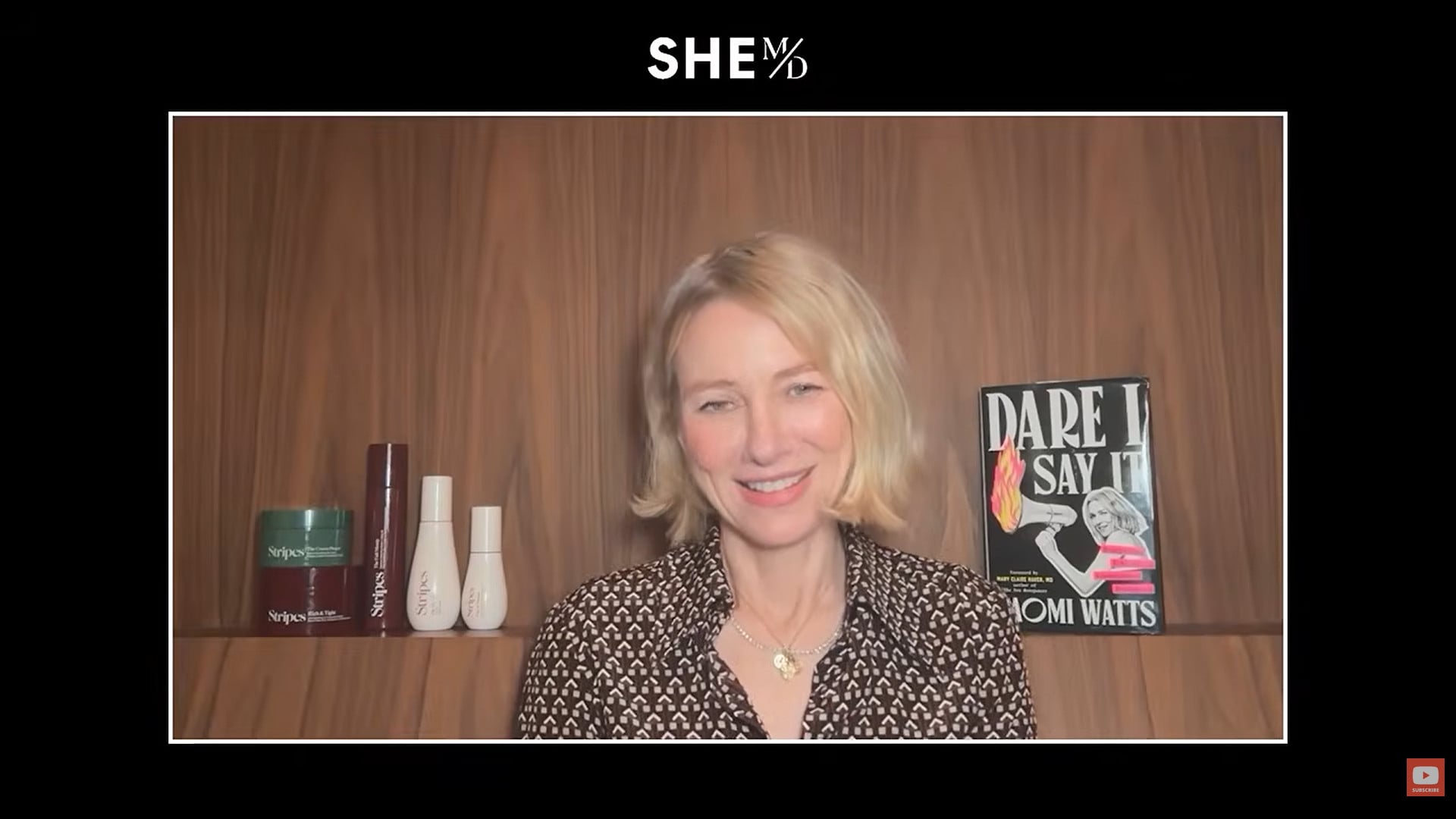
Years later, that need for support helped shape her book, Dare I Say It: Everything I Wish I’d Known About Menopause, and her company, Stripes Beauty. The impulse was straightforward: if one woman felt this confused and alone, other women probably did too.
We should not have to discover a major life transition only when we are already struggling with it.
Which perimenopause symptoms do we miss when we focus only on hot flashes?
We tend to recognize the dramatic version of menopause: a sudden hot flash, a fan, perhaps a joke about mood swings. But that picture leaves out an enormous amount.
Dr. Aliabadi describes menopause occurring, on average, around age 51 and a half, while emphasizing that the timing varies. Perimenopausal symptoms can begin years before menopause, including in our late 30s or early 40s. We do not need to fit one age or one familiar symptom pattern to deserve an evaluation.
The changes discussed include:
- Disrupted sleep, anxiety, irritability, and brain fog.
- Hot flashes and night sweats.
- Vaginal dryness, itching, burning, and painful sex.
- Urinary urgency, frequency, and recurrent bladder infections.
- Skin changes, hair loss, and dry eyes.
- Shoulder pain and frozen shoulder.
We often begin with a less precise complaint: we simply feel off. That matters too.
Estrogen receptors are distributed throughout the body, which helps explain why hormonal changes can affect more than our reproductive organs. Dr. Aliabadi discusses inflammation around the shoulder and changes in the tear film as examples. These symptoms still deserve individual assessment, rather than an automatic assumption that hormones explain everything.
How are vaginal dryness and recurrent urinary tract infections connected?
We need to think beyond lubrication. Estrogen helps support the vaginal tissue and its microbial environment. Dr. Aliabadi explains that mature vaginal epithelial cells contain glycogen. As those cells break down, glycogen becomes available to support lactobacilli, bacteria that help maintain an acidic vaginal environment.
With declining estrogen, that support can diminish. Lactobacilli decrease, vaginal pH rises, and the microbial balance changes. We may notice irritation, odor, discharge, or greater vulnerability to infections.
The vagina, vulva, urethra, and bladder are closely connected in this discussion. Changes in vaginal health can accompany urinary urgency, frequency, and recurrent UTIs. Vaginal tissues may also become less comfortable and narrower, contributing to pain during penetration.
These changes are often discussed under genitourinary syndrome of menopause, or GSM. We should not reduce GSM to a bedroom problem. It can affect daily comfort and urinary health even when we are not sexually active.
Our guide to menopause and vaginal dryness explores these symptoms and treatment options in more detail. The practical point is that recurring urinary complaints deserve a conversation about vaginal health, not just repeated treatment of each episode in isolation.
Why might arousal need to come before desire?
We have been taught a tidy sequence: first we want sex, then we become aroused, then we have an orgasm. Dr. Meston explains that this linear model describes some sexual experiences, but it is not the only pattern.
Many women, particularly as we move through perimenopause and menopause, experience responsive desire. We may begin in a sexually neutral state. We are not actively thinking about sex, but we are not opposed to the possibility either.
Then something welcome happens. A partner says something appealing, offers a shoulder rub, or initiates affectionate contact. We begin to feel mentally engaged and notice pleasurable genital sensations. Desire follows that arousal rather than starting the process.
Rosemary Basson’s circular model of sexual response makes room for this less orderly experience. We do not all move through the same stages in the same direction every time.
This can be reassuring when we worry that the absence of spontaneous desire means something is broken. We may need different conditions for desire to emerge. Being open to an experience is also different from feeling obligated to continue it. Responsive desire is a description of how interest can develop, not a reason to override our boundaries.
What makes arousal so important to comfort and orgasm?
We need to distinguish between feeling turned on mentally and responding physically. Dr. Meston describes both cognitive arousal, our thoughts and subjective excitement, and genital arousal, including increased blood flow and lubrication.
These responses influence each other. When pleasurable sensations support what we are feeling mentally, we can become more engaged. But if we feel interested and our body is not responding as expected, we may start questioning ourselves.
We can move quickly from enjoying the moment to evaluating it: why is this different? Is our body failing us? Are we getting too old? That self-monitoring can pull our attention away from sensation and interrupt arousal.
Discomfort creates another problem. If sex feels dry or painful, we are unlikely to look forward to repeating it. A physical difficulty can become entangled with worry, avoidance, and reduced desire.
Dr. Meston’s research has focused on arousal for more than 30 years because it matters to both desire and orgasm. Adequate arousal and attention to sexual sensations are important parts of reaching orgasm. We cannot separate pleasure from the physical and mental conditions that allow it to develop.
What did Naomi learn from telling Billy Crudup about her hormone patch?
We can understand menopause stigma in theory, but Naomi’s dating story makes it painfully recognizable.
Early in her relationship with her now-husband, Billy Crudup, she was wearing a hormone patch and worried that he would see it. She excused herself to the bathroom, carrying supplies to remove the patch and its adhesive. What she imagined would be a discreet little detour became an extended, frustrating effort that left her skin red.
Eventually, he checked whether everything was all right. Naomi came out flustered and explained that she was menopausal and using patches to help manage her hormones. The explanation arrived with a rush of embarrassment and fear about what that might mean for her attractiveness.
His response was reassuring. They were the same age. He was glad she was getting help. The patch represented science and care, not something repellent.
We see the shift immediately: a moment Naomi feared would destroy intimacy became deeply intimate instead. The anxiety had been built around an anticipated rejection that did not happen.
We do not have to treat medical support as a secret flaw. With a caring partner, honesty can remove a distraction and make connection easier.
Can exercise help our bodies respond to sexual stimulation?
We usually hear that we should relax before sex. Dr. Meston’s research adds an interesting complication: activating the sympathetic nervous system before sexual stimulation can help prepare the body for genital arousal.
In one laboratory study, women attended two sessions. Before one session, they spent 20 minutes reading. Before the other, they exercised for 20 minutes on a treadmill or stationary bike at a fairly vigorous intensity. Researchers then compared genital responses to nonsexual and sexual films.
A vaginal photoplethysmograph, a small light-based device, measured changes associated with blood flow in vaginal tissue. Dr. Meston reports an increase of more than 150 percent in the measured genital response after exercise during the sexual condition.
The important detail is that exercise did not produce the same difference during the nonsexual condition. We are not simply talking about blood moving around the body after a workout. The exercise appeared to prime the response to sexual stimulation.
We should keep that finding in proportion. It describes a laboratory response, not a guarantee of desire, comfort, or orgasm. It also does not mean everyday stress is helpful. Rather, it challenges the assumption that complete physical relaxation is the only route into female arousal.
What does nitric oxide have to do with female sexual arousal?
We have erectile tissue too. Dr. Meston points specifically to the clitoris and vestibular bulbs, where networks of blood-filled spaces are surrounded by smooth muscle.
Nitric oxide helps facilitate blood flow through a pathway involving cyclic GMP. The surrounding smooth muscle relaxes, allowing those spaces to fill. That process contributes to genital arousal and is relevant to vaginal lubrication.
L-arginine is an amino acid involved in nitric oxide production. Dr. Meston also discusses L-citrulline in relation to that pathway.
Her 2002 study involved postmenopausal women with persistent, distressing difficulties becoming genitally aroused. In a three-condition crossover design, participants received placebo, yohimbine, or L-arginine combined with yohimbine. The combination condition produced a significantly greater genital arousal response than the other conditions, with the strongest measured response approximately 60 minutes after ingestion.
We need to preserve what the study actually tested. It was a combination, not L-arginine alone, and the outcome was a measured genital response to erotic material. We should not turn that finding into a promise that any supplement containing the ingredient will restore desire. The biological rationale is interesting; claims about an individual product require their own evidence.
When sex becomes difficult, what should a thorough medical conversation cover?
We start by asking what “difficult” means. Are we dealing with pain, burning, dryness, bladder symptoms, low interest, difficulty becoming aroused, or several things at once?
Dr. Aliabadi emphasizes looking at the whole person. We cannot isolate vaginal symptoms from nights of poor sleep, anxiety, hot flashes, body-image concerns, job stress, or a relationship under strain.
A useful appointment should make space for questions such as:
- How are we sleeping, and are night sweats interrupting that sleep?
- Have anxiety, mood, or irritability changed?
- What is happening in our relationship?
- Does sex hurt, and what does that pain feel like?
- Are we experiencing itching, burning, dryness, urgency, or infections?
- Could our medications be contributing to sexual difficulties?
Depending on our needs and medical history, care may involve systemic hormone therapy, local vaginal treatments, or referrals for psychological or relationship support. We do not all need the same intervention.
Our resource on decreased libido during menopause provides another way to organize these concerns before an appointment. The goal is a clear picture of what has changed, rather than a quick prescription for a loosely defined problem.
How do vaginal moisturizers, lubricants, and vaginal estrogen differ?
We should not treat these as interchangeable products. They address different parts of the problem and may sometimes be used together.
Vaginal moisturizers support hydration and ongoing comfort. Dr. Aliabadi discusses hyaluronic acid-based moisturizers, including as a starting point when we want or need a nonhormonal option.
Lubricants help reduce friction during sexual activity. They can make sex more comfortable when dryness contributes to irritation, but they do not explain or resolve every cause of pain.
Vaginal estrogen addresses estrogen-related changes in local tissue. Dr. Aliabadi describes it as having the strongest evidence among the GSM treatments discussed. It is available in creams, vaginal tablets, and rings.
The treatment is not an overnight fix. We need to follow the prescribed schedule consistently rather than use it sporadically and conclude that it does not work. Some regimens begin with more frequent use and then move to maintenance treatment.
The form matters too. A cream can allow treatment of relevant external tissue under a clinician’s direction, while a ring can offer a practical option when remembering repeated applications is difficult. We should choose the approach with our clinician, based on symptoms, preferences, and medical history.
Should we discuss vaginal health even if we are not dry or sexually active?
Yes. We should not make intercourse the entry requirement for vaginal care.
Dr. Aliabadi strongly favors proactive conversations about vaginal estrogen during menopause, including before symptoms become troublesome. Her reasoning is that GSM differs from hot flashes: hot flashes may eventually settle, while estrogen-related vaginal and urinary changes can persist or worsen without treatment.
We should understand that as her clinical approach, not as a universal instruction to begin a prescription without an assessment. Our symptoms, medical history, and treatment preferences still belong in the decision.
The broader message is especially important as we age. Recurrent UTIs, urgency, frequency, and discomfort are not irrelevant simply because we are not having sex. Dr. Aliabadi warns against repeatedly treating bladder infections without also considering the underlying vaginal environment.
We can ask whether GSM might be contributing to recurrent urinary problems and whether local treatment is appropriate. That does not replace evaluation or treatment of an active infection. It opens a wider conversation about why the problems keep returning and how we can support long-term comfort.
How should breast cancer survivors approach vaginal symptoms?
We need thoughtful, coordinated care, not an automatic dismissal of sexual health.
Dr. Aliabadi shares her own experience of severe pain after breast cancer treatment and aromatase inhibitor therapy, which reduces estrogen. The pain was so intense that giving up sex altogether felt understandable. That account illustrates how profoundly treatment-related hormonal changes can affect quality of life.
For women with a breast cancer history, she describes beginning with nonhormonal vaginal moisturizers and lubricants. When symptoms remain difficult, she discusses local vaginal estrogen in collaboration with the oncology team.
She distinguishes between tamoxifen and aromatase inhibitor treatment and acknowledges that small amounts of vaginal estrogen can be absorbed. We should therefore avoid blanket claims that it is appropriate for every survivor. The type of cancer, current treatment, and individual circumstances need to guide a shared decision.
We deserve to have this conversation even when our care is medically complicated. Severe discomfort is not a trivial concern, and it should not disappear from the agenda after cancer treatment.
For more context, our article on telling a doctor about painful sex explains why bringing the problem into the open is such an important first step.
Where do other prescription treatments and vaginal lasers fit?
We have additional options, but we need to distinguish established evidence from clinical enthusiasm.
Dr. Aliabadi discusses prescription vaginal DHEA, which can be converted locally into estrogen and androgens. She also mentions ospemifene, an oral selective estrogen receptor modulator used for certain moderate to severe GSM symptoms. Because it is systemic, medical history matters, including breast cancer considerations and a history of blood clots.
Vaginal laser treatment is another subject of discussion. Dr. Aliabadi reports positive experiences with MonaLisa Touch for some patients with painful sex and urinary symptoms. However, she repeatedly acknowledges that the evidence is less robust than the evidence for vaginal estrogen.
In her practice, an initial course involves three CO2 laser treatments approximately six weeks apart, followed by maintenance treatment according to the patient’s response. She does not describe the laser as a replacement for vaginal estrogen.
We should hear the distinction clearly: a clinician’s favorable experience is not the same thing as strong comparative research. Before choosing a procedure, we need a discussion of the evidence, uncertainties, alternatives, and whether it makes sense for our particular symptoms.
Can testosterone help with low desire during menopause?
We should separate low desire from dryness and pain, even though they can overlap. Testosterone is discussed primarily in relation to hypoactive sexual desire disorder, rather than as a substitute for treating uncomfortable vaginal tissue.
Dr. Aliabadi describes prescribing topical testosterone off label. At the time of the conversation, she notes that it was not FDA approved for this indication in women. She also explains that a low blood testosterone result is not the sole basis for considering treatment; the symptom pattern matters.
She favors topical treatment because it can be adjusted or stopped. Potential side effects discussed include acne and increased hair growth.
She is strongly opposed to testosterone pellets in her practice, citing experiences with hair loss and agitation and the difficulty of reversing treatment once pellets have been inserted.
We should not translate these comments into a do-it-yourself dosing plan. Testosterone requires a knowledgeable prescriber and individualized follow-up. We also need to understand what we are hoping it will change. A treatment aimed at desire will not automatically resolve relationship distress, distraction, or pain during sex.
Why did Stripes move beyond skin care into sexual wellness?
We can see the same stigma operating in product development that operates in our private lives. Naomi initially felt comfortable discussing face, body, and hair products but hesitated around vaginal care. Publicly owning that part of the menopause experience felt like a bigger leap.
Eventually, she recognized that addressing menopause in half measures would leave important needs unanswered. Stripes developed a lubricant, Oh My Glide, and a vaginal moisturizer, Vag of Honor, to support comfort.
Listening to women also revealed that dryness was not the only concern. Difficulty becoming aroused could affect confidence and relationships even when friction and irritation had been addressed. That feedback helped motivate the arousal-focused product discussed with Dr. Meston.
Naomi emphasizes wanting a scientific basis for products rather than simply selling an appealing promise. We should keep that standard while remembering that ingredient research and finished-product evidence are different questions.
The playful names have a purpose too. We can acknowledge that menopause is hard without presenting every part of it as doom and gloom. A little humor can make an uncomfortable topic easier to discuss, provided it never trivializes the symptoms.
How do stress, sleep, relationships, and distraction affect desire?
We are not disembodied genitals. Exhaustion, resentment, anxiety, medication effects, and the everyday mental load can all enter the room with us.
Dr. Meston describes female sexual response as highly contextual. We may be distracted by unfinished chores, pets, body-image worries, or a sense that our partner is not meeting our needs. A routine that felt good for years may no longer work in the same way.
Her laboratory discussion also highlights that genital response and reported mental arousal do not always closely match in women. We cannot assume that increasing blood flow will automatically make us feel interested or emotionally connected. That is one reason the search for a simple female equivalent of Viagra has been inadequate.
Communication belongs at the center of care. We can discuss changes at breakfast or over coffee, when we are not rushed, rather than first raising everything during sex.
We can frame the conversation around exploration: our bodies are changing, and we want to discover what feels good now. That invites collaboration instead of blame. We are not grading our partner’s performance or apologizing for our body. We are updating our shared understanding.
What should we do if sex keeps hurting?
We should stop trying to push through it.
Dr. Meston is emphatic that painful sex needs evaluation, not a wait-and-see approach built around repeatedly enduring pain. Lubrication may reduce friction-related discomfort, but it is not a way to mask unresolved pain.
Repeated painful experiences can create a negative association between sex and hurt. Fear enters the picture, desire decreases, and we may begin anticipating pain before intimacy even starts. Dr. Aliabadi also discusses pelvic floor spasms and dysfunction in that cycle.
We need a clinician who understands women’s sexual health and can investigate the symptoms. We should explain whether the pain involves burning, penetration, dryness, or other discomfort, and how it affects our willingness to be intimate.
This is not about proving that we still have an active sex life. It is about protecting comfort and giving pleasure a chance to return without fear. We do not owe anyone painful intercourse, and we do not have to accept pain as the inevitable price of aging.
What everyday adjustments and mindset shifts can help us navigate this chapter?
We can start with practical things without pretending they solve everything. Naomi’s hot flash suggestions are refreshingly uncomplicated: control the air conditioning when possible, dress in removable layers, and keep a fan handy.
Her morning routine is equally human: black coffee first, exercise when she can fit it in, then yogurt with seeds and blueberries. Dr. Aliabadi uses the coffee discussion to point out that caffeine can aggravate urinary urgency. If bladder symptoms or nighttime bathroom trips are troubling us, our caffeine habits are worth discussing.
The larger shift is from pleasing to pleasure. We may have sex less often but approach it more intentionally, with greater confidence about what we need. We can also choose not to prioritize sex without shame. Agency means both choices are ours.
We should retire the messages that pain is normal, that we should endure it quietly, and that menopause is the end. We have experience, responsibilities, accomplishments, and failures behind us. None of that disqualifies us from feeling good.
Dr. Meston’s central advice is to find a trusted healthcare provider who understands current sexual medicine research and available treatments. We have options. We deserve accurate information, individualized care, and room to ask for what we want next.
Medical note: We share this conversation for education, not as a substitute for individualized medical advice. Hormones, supplements, prescription treatments, and procedures should be discussed with our healthcare team. Product discussions include Naomi’s own brand and should not be interpreted as guarantees of benefit.
Concerned About Your Health? Talk to Dr. Aliabadi
Dr. Aliabadi is an expert OB/GYN who is knowledgeable in all aspects of women’s health and well-being. Dr. Aliabadi and her caring, supportive staff are available to support you through PCOS, endometriosis, menopause, childbirth, infertility, or routine gynecological care. We invite you to establish care with Dr. Aliabadi. Call us at (844) 863-6700 or