Health is not a scavenger hunt for the one lab value that explains everything. It is not a scorecard of cholesterol, weight, hormones, supplements, and perfect habits. It is a relationship with our bodies, our minds, our environments, and the people helping us make sense of all of it.
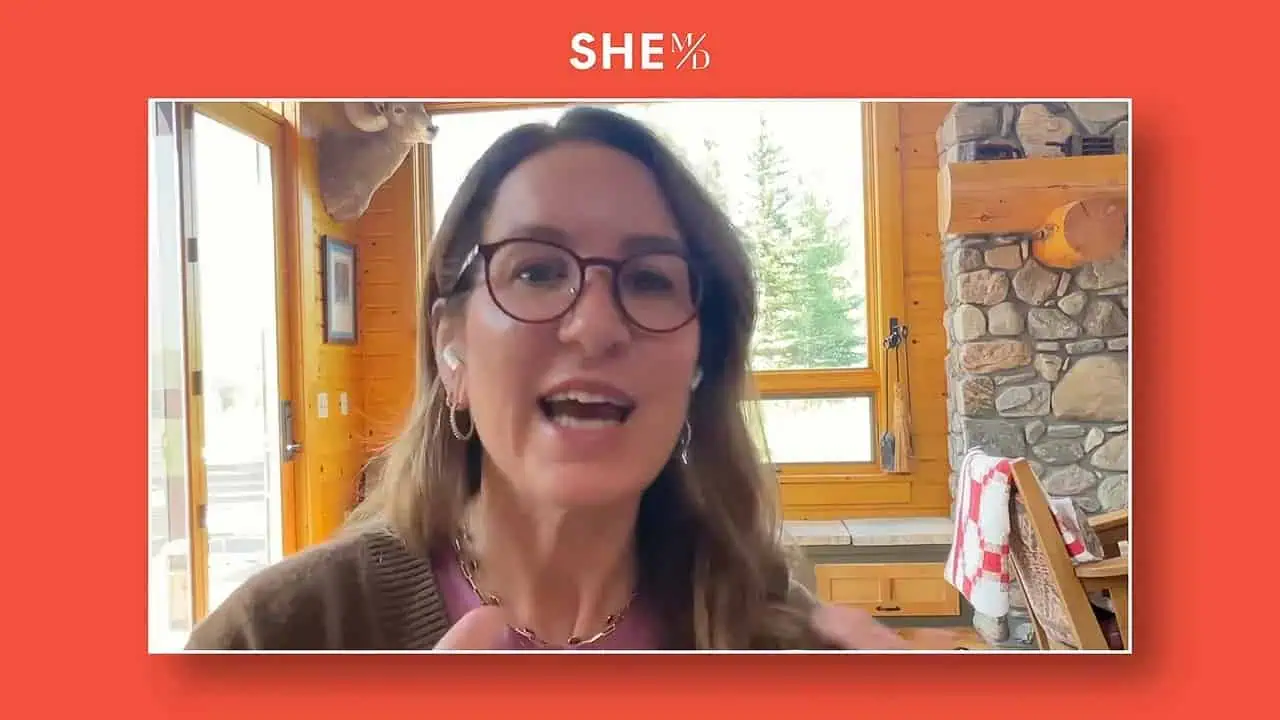
Dr. Lucy McBride has spent more than 25 years practicing medicine, and she has also been on the other side of the exam table. She joins Dr. Thais Aliabadi and Mary Alice Haney to share how her own experience of being tested, reassured that everything was “fine,” and still not feeling well shaped her approach to care. It also inspired her book, Beyond the Prescription, which is about learning how to ask better questions of ourselves and the people responsible for our care.
Table of Contents
- A Better Way to Think About Health
- How to Advocate for Ourselves in a Short Medical Appointment
- Perimenopause, HRT, and Treating the Person Instead of the Calendar
- Cortisol, Stress, Alcohol, and the Search for a Single Villain
- GLP-1s, AI, and Medical Information That Actually Helps
- How to Spot Misinformation and Read Health Headlines
- Three Things to Take Into Our Next Appointment
A Better Way to Think About Health
You have said that the medical system often treats symptoms and body parts instead of whole people. Why does that matter?
Dr. Lucy McBride: We can do incredible things in medicine, but the system often divides people into organ systems and appointments. We may get a test for one symptom, then a referral for another, and then a message that everything is normal. Meanwhile, nobody may have asked the most basic questions: What is happening in our lives? How are we coping with stress? How are we sleeping? How do we relate to food, alcohol, movement, or our own bodies?
Those questions matter because so many things that affect health do not appear neatly on a blood test. Anxiety, depression, loneliness, burnout, grief, body image, relationship strain, and an exhausting caregiving load are not incidental details. They are part of the clinical picture.
We do not need to pit laboratory data against lived experience. We need both. A normal test result can be reassuring, but it should not become the end of the conversation when we are still suffering.
What are the “four I’s” in your health ecosystem?
Dr. Lucy McBride: The four I’s are informatics, inputs, infrastructure, and insight. They offer a more complete way to understand health than simply asking whether a lab panel is normal.
- Informatics means the measurable information, including blood pressure, cholesterol, blood counts, inflammation markers, thyroid tests, and other relevant data.
- Inputs means what goes into our body and ecosystem, including food, alcohol, substances, supplements, vitamins, medications, peptides, and other products.
- Infrastructure means the physical container that carries us through life. Pain, mobility limitations, injury, strength, physical therapy needs, and barriers to movement all belong here.
- Insight means how we relate to ourselves and our circumstances. It includes stress, anxiety, coping skills, self-talk, expectations, and beliefs such as “I should” or “I can’t.”
We are often more likely to take a car to the mechanic than to seek help for pain or physical limitation. Then we tell ourselves we should exercise more without asking what is actually making movement hard. That is not a sustainable health plan.
How to Advocate for Ourselves in a Short Medical Appointment
What can we realistically do when we only have 10 or 15 minutes with a doctor?
Dr. Lucy McBride: We should prepare before the appointment. The goal is not to impress a doctor, perform wellness, or leave with a stack of normal test results. The goal is to use the limited time for the questions that matter most.
Before going in, write down:
- Our main pain points and what feels most urgent.
- Symptoms, patterns, and vulnerabilities we want to discuss.
- The two or three questions we most need answered.
- Any family history, medications, supplements, or life changes that could be relevant.
- What we hope will be different after the appointment.
We also need to assess whether the clinician is the right fit. If we consistently feel talked over, dismissed, rushed out the door, or unable to schedule follow-up conversations, that relationship may not be serving us. Health is not supposed to be a transaction. It should be a relationship over time.
If there is not enough time to discuss every issue, we should make another appointment. We are allowed to return for a focused conversation about cholesterol, fatigue, sleep, hormone therapy, alcohol, mental health, or anything else affecting our wellbeing. In a fragmented payment system, those conversations may need to be scheduled separately. That is frustrating, but it is still better than leaving important concerns unspoken.
For practical strategies on being heard and following up when concerns are dismissed, we can also read Dr. Aliabadi’s guide to advocating for yourself at the doctor.
What are examples of sophisticated questions we can bring to a preventive-health visit?
Dr. Lucy McBride: We can ask questions that reach beyond a lab report. For example:
- What changes could help us protect our health as we age, even if we do not have a diagnosis today?
- Could improving sleep help our cardiovascular or metabolic health?
- Could stress be affecting our mood, drinking, irritability, decision-making, or eating patterns?
- Could body image or our relationship with food be interfering with nutrition?
- What do you see as the biggest opportunities to improve our health that are not visible in our test results?
Preventive health is not just about avoiding disease. It is about thinking ahead to the person we want to be at 80, then identifying the everyday choices and supports that help us get there.
Perimenopause, HRT, and Treating the Person Instead of the Calendar
How should we think about a midlife patient who is exhausted, irritable, gaining weight, and not feeling like herself?
Dr. Lucy McBride: We have to begin with the whole person. A perimenopausal woman may be dealing with fluctuating hormones while parenting, caregiving, working, sleeping poorly, using alcohol to take the edge off, and trying to meet an impossible standard around food and exercise.
We should talk about symptoms, hormone changes, sleep, mood, protein, fiber, healthy fats, alcohol, movement, strength, and relationships. There are no simple solutions to being alive. Sometimes someone needs hormone therapy. Sometimes a GLP-1 medication may be appropriate for metabolic health. Sometimes relationship counseling is the intervention. Sometimes the problem is that we are not eating enough lunch and our bodies are desperately asking for more food.
The point is not to reject medication. The point is to avoid reducing a complicated person to a prescription pad.
When is hormone replacement therapy appropriate?
Dr. Lucy McBride: Hormone replacement therapy, or HRT, has been over-scrutinized and often presented as more dangerous than it is for many patients. For women with symptoms around menopause, hormone therapy is generally standard care unless there is a reason not to use it, including personal preference.
Hot flashes, night sweats, vaginal dryness, brain fog, disrupted sleep, and irritability are not things we must simply endure because we are still having intermittent periods. We treat the patient, not the calendar.
Perimenopause is the period in which the ovaries produce variable and gradually declining amounts of estrogen and progesterone. Someone in her 40s with irregular periods and significant symptoms may be able to start hormone therapy before periods stop completely. She may need a different dose than she will years later, but there is no rule that says treatment must wait until she has gone a full year without menstruation.
The process requires listening. If someone is symptomatic despite a hormone level that appears robust on paper, a clinician may adjust treatment, reassess after a month, and learn from the patient’s response. Our bodies provide important information that cannot always be captured in a single number.
Regular breast screening remains a meaningful part of preventive care. For a detailed checklist, we can review how to prepare for a mammogram.
What should we know about testosterone for women?
Dr. Lucy McBride: Testosterone levels begin declining in women around age 30, not only at menopause. It plays a role in maintaining muscle mass, metabolic health, cognitive health, likely bone health, and sexual desire.
Testosterone is not FDA-approved for women in the United States, though it is used off-label in appropriate situations. It can be helpful for hypoactive sexual desire, meaning low libido, and may be considered for patients who are already using estrogen and progesterone but continue to have concerns with libido or muscle mass. It is not right for everybody, and it is not a cure-all. It is one tool that belongs in an individualized conversation.
Cortisol, Stress, Alcohol, and the Search for a Single Villain
Why has cortisol become such a misleading wellness obsession?
Dr. Lucy McBride: Cortisol has become the wellness world’s boogeyman. It is a naturally occurring stress hormone produced by the adrenal glands. Adrenaline rises quickly in an acute threat. Cortisol is more connected to sustained stress, such as burnout, grief, divorce, loss, or a difficult period at work.
The trouble with telling everyone, “It’s your cortisol,” is that it gives us no agency. We cannot crawl under the hood and tinker with cortisol the way we might change a car part. Except in specific medical situations such as Cushing’s disease, knowing a cortisol level usually does not solve the larger problem.
What can help is asking where stress is living in our life and what it is doing to our sleep, alcohol use, mood, relationships, irritability, and decision-making. Therapy, mindfulness, exercise, changing a work situation, reducing alcohol, and other support can matter far more than chasing a cortisol supplement or testing trend.
Is there any amount of alcohol that is okay?
Dr. Lucy McBride: Alcohol is associated with increased risks for heart disease, stroke, cancer, addiction, depression, anxiety, and insomnia. But the most useful clinical question is not only, “How much do we drink?” It is, “What is our relationship with alcohol?”
A person who occasionally enjoys a glass of wine with food is in a different place from someone who needs alcohol to sleep, is experiencing rising blood pressure, worsening anxiety, sleep apnea, atrial fibrillation, relationship strain, or a feeling that alcohol is in control.
The potential benefit of sobriety is proportional to the harm alcohol is causing in an individual life. Some people will decide that alcohol no longer fits their health goals. Others may decide to drink occasionally while understanding the risks. We do better with honesty and individualized care than with shame or simplistic rules.
GLP-1s, AI, and Medical Information That Actually Helps
How should we approach GLP-1 medications?
Dr. Lucy McBride: GLP-1 medications are complicated medicines with broad applications and real benefits for some people. But we should not get medical advice about them from a person we met for five minutes on the internet. The question is not simply, “Should I be on a GLP-1?” It is, “What is happening in my life and body that makes this seem like the answer?”
For some people, a GLP-1 may help manage metabolic health during perimenopause. For others, it may not be the intervention that addresses the real issue. We may need rest, a more nourishing eating pattern, help with stress, treatment for sleep problems, or support around alcohol. These medications deserve careful, credentialed guidance rather than hype or blanket dismissal.
For further context on the medical uses of GLP-1 drugs, see unexpected medical benefits of Ozempic and related medications.
How can we use AI without letting it replace real medical care?
Dr. Lucy McBride: AI is an incredibly powerful answer generator. The issue is not that it cannot provide useful information. The issue is that it cannot always surface the question we should have asked in the first place.
Instead of asking an AI tool to prescribe a solution, we can ask it to help us prepare for a conversation. We might say:
- Here are my symptoms, life circumstances, medications, and labs. What questions should I ask about my metabolic health?
- What questions should I bring to my doctor about persistent fatigue or my afternoon energy crash?
- What information would be useful to track before discussing low libido or sleep disruption with a clinician?
That approach uses AI as a thinking partner, not as a pseudo-primary-care doctor. It can help organize a story, identify questions, and prepare us for a better appointment. It cannot replace an ongoing relationship with a clinician who knows us, follows the details, and can investigate beyond the obvious answer.
How to Spot Misinformation and Read Health Headlines
What should we look for before trusting a health claim online?
Dr. Lucy McBride: First, ask whether the person sharing information is credentialed in the specific topic. A nutritionist may be the right person for nutrition advice, but not necessarily for menopause management. A social-media personality may be compelling, but that is different from having the expertise to explain a complex medication.
Second, ask what incentives may be present. Is someone selling a product, promoting an ideology, chasing engagement, or using fear as a business model? The pandemic made it clear how often politics, profit, and science can become tangled together.
Third, pay attention to language. “Associated with” does not mean “caused by.” An observational association can point researchers toward a useful question, but it does not establish cause and effect. Randomized controlled trials are more helpful for answering whether an intervention actually produces an outcome because they reduce confounding variables.
We should be especially skeptical of frightening, absolute claims. For example, discussions about reducing unnecessary long-term antidepressant use should not be distorted into “antidepressants are evil.” Antidepressants can be life-saving for the right person. They can also be the wrong intervention when the underlying issue is alcohol use, an abusive relationship, a toxic job, or another unaddressed problem. Context is everything.
How do you approach vaccines and long COVID amid so much noise?
Dr. Lucy McBride: Vaccines should be discussed through evidence, risk, and public-health impact, not fear. Certain vaccines, including MMR and tetanus, are core standards of care because they have clear individual and community benefits. Other vaccine decisions may be more individualized when the primary benefit is personal rather than population-wide.
COVID vaccination was especially important for reducing hospitalization and death among high-risk people during the height of the pandemic. Risk assessment continues to matter. An older patient with COPD who is on oxygen has very different risks from a healthy young person. Well-studied vaccines have been given to millions and billions of people globally, and that scale of use provides important safety data.
Long COVID is also real, but it can describe different phenomena. One person may be severely deconditioned after a long ICU hospitalization. Another may develop a post-viral autoimmune condition that deserves its own diagnosis and treatment. Another may have persistent fatigue, weakness, and blood-pressure instability after extensive evaluation reveals no other explanation.
We should not use “long COVID” as a substitute for curiosity. The essential question is: What is actually happening to this person, and have we looked carefully enough?

Three Things to Take Into Our Next Appointment
What do you most want patients to remember?
Dr. Lucy McBride: First, we should feel less alone and less as though we are doing health wrong. The healthcare system is difficult by design. It is not a personal failure to need more time, more explanation, or another appointment.
Second, we should arrive with better language to advocate for ourselves. We do not need to win an appointment or prove we are a good patient. We need to honor our goals, identify our pain points, and ask the questions that help us move forward.
Third, we should demand a better primary-care system. Doctors and patients both want time, rapport, and the ability to understand a whole person rather than simply react to test results. Change can begin one empowered patient at a time.
Health is not about having every answer. It is about knowing what we need, how to frame the question, and who we can trust to help us find the next right step.
Concerned About Your Health? Talk to Dr. Aliabadi
Dr. Aliabadi is an expert OB/GYN who is knowledgeable in all aspects of women’s health and well-being. Dr. Aliabadi and her caring, supportive staff are available to support you through PCOS, endometriosis, menopause, childbirth, infertility, or routine gynecological care. We invite you to establish care with Dr. Aliabadi. Call us at (844) 863-6700 or
Frequently Asked Questions
Can we start HRT during perimenopause?
For patients with symptoms of perimenopause, HRT may be appropriate before periods have stopped completely. Treatment should be based on symptoms, health history, preferences, and a discussion with a qualified clinician.
What are the four I’s of health?
The four I’s are informatics, inputs, infrastructure, and insight. Together, they include measurable medical data, what goes into our bodies, physical function and limitations, and our emotional and behavioral patterns.
How should we use AI for health questions?
AI can help us organize symptoms and prepare better questions for a medical appointment. It should not replace a clinician who can evaluate our history, examine us, interpret findings, and provide ongoing care.
Does an association in a health headline prove causation?
No. An association means two things may occur together. It does not prove that one caused the other. Randomized controlled trials are better suited to testing cause and effect.