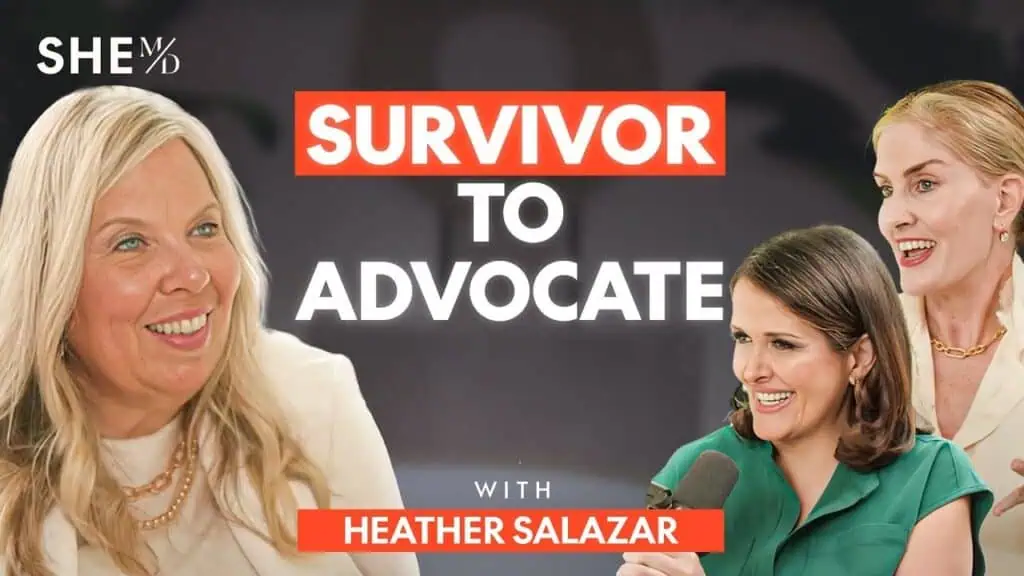
Reproductive health cannot be something we only investigate once we are trying to have children. By then, many people have spent years living with symptoms that were normalized, misunderstood, or simply dismissed.
In this conversation, Dr. Thais Aliabadi and Mary Alice Haney spoke openly with Florence Pugh about polycystic ovary syndrome, commonly called PCOS, endometriosis, fertility planning, body image, and what it means to advocate for our own health. Florence Pugh shared the deeply personal experience of learning at age 27 that she had PCOS and possible endometriosis, information that changed how she thought about her body, her future, and the importance of acting early.
Table of Contents
- PCOS, Endometriosis, and the Power of Finding Out Early
- Symptoms We Should Not Be Told to Ignore
- Why Fertility Planning Can Begin Earlier Than We Expect
- Body Image, Insulin Resistance, and the Relationship With Food
- When a Doctor Dismisses What We Know About Our Body
- Body Positivity Is Not Perfection
- A Gentler Approach to Wellness
- FAQ
PCOS, Endometriosis, and the Power of Finding Out Early
What led you to seek a gynecologic evaluation in the first place?
Florence Pugh: It was really an instinct. We had a sudden feeling that it was time to get everything checked out. There was not one dramatic event that forced it. We had a few strange dreams, a sense that something needed attention, and a desire to be proactive rather than wait until there was a bigger problem.
That kind of decision is not always culturally encouraged. In England, regular gynecologic care and checking in before there is an emergency can be less common than it should be. We can be taught to wait until we have a major problem, until we are ready for children, or until the pain becomes unbearable.
But taking our health seriously before a crisis is not overreacting. It is care.
After meeting with Dr. Thaïs Aliabadi, Florence was asked whether she had ever had her egg count checked. Like many people in their twenties, she did not think she needed to consider it yet. She felt young, her family had a strong history of pregnancies into their thirties and forties, and fertility had never felt like an immediate concern.
Testing showed PCOS, and her longstanding history of pelvic pain also raised concern for endometriosis. The discovery was jarring, but it created an opportunity to make informed decisions much earlier than she otherwise would have.
What did the diagnosis mean to you emotionally?
Florence Pugh: It was a complete shift in perspective. We had always wanted children one day, and we had never thought we would need to consider fertility planning so early. Learning that egg freezing might be worth discussing at 27 was mind-boggling.
At the same time, there was relief in having context. So many things that had seemed random or inevitable suddenly had a possible explanation. That does not mean receiving a diagnosis is easy, but information gives us somewhere to begin. We can take it seriously, learn what our body needs, and think ahead rather than feeling blindsided years later.
That is why these conversations matter. Florence shared what she learned with friends and family, and several friends sought evaluations after hearing about her experience. Some discovered similar concerns. When one person speaks honestly, it can help another person make an appointment that changes their future.
Symptoms We Should Not Be Told to Ignore
What symptoms did you experience growing up?
Florence Pugh: As a teenager, our periods changed dramatically. We went from barely noticing a period to bleeding for roughly two weeks at a time, being off only a few days, and then bleeding again. There was significant pain, and it became impossible to keep up with dancing, acting, school, relationships, and everyday life.
At 16, a progesterone IUD was placed. It helped relieve symptoms and likely helped suppress the endometriosis-related pain. But it also meant we had fewer obvious signs that something else might be happening beneath the surface.
There were other symptoms too:
- Acne
- Hair growth in places where it felt unexpected
- Weight fluctuations
- Painful, prolonged, and irregular bleeding
- A body that seemed to change size frequently despite eating well and exercising
For years, these experiences seemed like ordinary parts of being a woman, having a curvy body, living a busy life, or dealing with stress. And of course, bodies do naturally vary. But we should not have to accept persistent symptoms without asking whether there is an underlying reason.
Why can PCOS and endometriosis be difficult to recognize?
Dr. Aliabadi: PCOS can begin around the time periods begin and can affect someone throughout life. Its symptoms can be wide-ranging. Some people have irregular cycles, acne, facial or body hair growth, hair loss, weight changes, insulin resistance, anxiety, or difficulty with ovulation. Others may not fit the stereotype people associate with PCOS at all.
Not every person with PCOS is overweight. In fact, a significant group of people with PCOS are lean, yet may still have insulin resistance and irregular ovulation. That is precisely why appearance cannot be used as a shortcut for deciding whose symptoms deserve investigation.
Endometriosis can be equally complex. Painful periods are commonly minimized, yet severe pain, heavy bleeding, pelvic discomfort, or pain that disrupts school, work, movement, and relationships deserve a proper conversation. Our detailed resource on endometriosis symptoms, diagnosis, and treatment options explains why individualized evaluation matters.
PCOS and endometriosis can also coexist. When a patient has symptoms or risk factors for both, we need to look carefully at the whole picture, especially when fertility is a future priority.
Why Fertility Planning Can Begin Earlier Than We Expect
How do PCOS and endometriosis affect the egg-freezing conversation?
Dr. Aliabadi: Fertility planning should always be personal, and no single recommendation fits everyone. But PCOS and endometriosis are both reasons to have an earlier, honest conversation about ovarian reserve and reproductive goals.
People with PCOS often have many eggs, yet egg quality declines with age, particularly after 30. Endometriosis, when untreated, may affect egg count and egg quality. If someone has one condition or possible signs of both, an early conversation can give them choices.
For patients with PCOS or endometriosis, we often begin discussing egg freezing around age 28. That does not mean everyone needs to freeze eggs immediately. It means the person deserves information. If egg reserve is reassuring, we may monitor. If it is unexpectedly low, they have time to think, plan, and act without panic.
What is AMH, and why was it discussed?
Dr. Aliabadi: Anti-Müllerian hormone, or AMH, is a blood test that can help assess ovarian reserve. It can be performed at any point in the menstrual cycle. It does not tell us everything about fertility, nor does it predict every individual outcome, but it can be an important starting point for a discussion with a qualified clinician.
For someone concerned about fertility, especially with PCOS, endometriosis, a history of pelvic pain, or a desire to delay pregnancy, checking AMH may help guide next steps. It is not about creating fear. It is about replacing uncertainty with a plan.
Egg freezing is one option, not an obligation. It should be considered with a trusted gynecologist or reproductive endocrinologist who can discuss the person’s history, age, goals, testing, finances, and timeline. For more information about the process and the importance of age in egg-freezing outcomes, read our guide on egg freezing and fertility planning.
Can people with PCOS still become pregnant?
Dr. Aliabadi: Absolutely. A PCOS diagnosis does not mean pregnancy is impossible. We know how to help many people with PCOS ovulate and conceive. The important thing is to address the individual factors involved, including irregular ovulation and insulin resistance, with a medical professional.
Insulin resistance is a central issue for many people with PCOS. It can contribute to irregular periods and symptoms linked to higher testosterone levels. Treatment plans vary and may include lifestyle support, prescription medication such as metformin when appropriate, and clinician-guided strategies to support ovulation before moving to fertility treatment.
We do not want people to assume that a fertility clinic or IVF is automatically the first step. In some situations, addressing insulin resistance and ovulation through appropriate medical care may be helpful before more intensive and expensive interventions are considered.
Body Image, Insulin Resistance, and the Relationship With Food
Why can PCOS make body image so complicated?
Dr. Aliabadi: For many patients, PCOS begins during the years when body image is already intensely vulnerable. Some experience acne, unwanted hair growth, hair loss, or weight changes. Others find that their bodies respond differently to food or exercise than a friend’s body does. That comparison can be brutal.
We need to be careful with the language we use here. Not every person with PCOS has an eating disorder, and not every person has the same experience with weight. But disordered eating, anxiety, mood symptoms, and a difficult relationship with food can be real concerns, particularly when someone feels they are working hard and not seeing the results they expect.
Our goal should never be to shame someone into changing their body. It should be to identify whether a medical condition is contributing to what they are experiencing and to support both physical and emotional health.
How did learning about insulin resistance change your perspective?
Florence Pugh: Understanding that our body may not break down insulin in the same way was huge. It explained why weight fluctuation might not simply be a matter of effort, discipline, or being “good” with food.
We had always understood that people have different bodies, different family histories, different shapes, and different experiences. That remains true. But it was a revelation to learn there might be a medical reason behind some of the changes we had lived with for years.
That knowledge gave us more compassion for ourselves. It became less about fighting our body and more about learning alongside it. We can support our body rather than deciding that we are simply stuck with whatever happens.
PCOS is never a personal failure. If acne, irregular cycles, hair changes, or weight changes are affecting quality of life, it is worth bringing them to a clinician who takes the full picture seriously. More PCOS education and resources are available in our PCOS health library.
When a Doctor Dismisses What We Know About Our Body
What happened when you sought care again after your diagnosis?
Florence Pugh: After returning home, we went to see another gynecologist because we wanted someone local who could be part of our care. We explained the PCOS diagnosis, the discussion of endometriosis, and the fertility concerns.
The response was dismissive. We were told that it was not possible, that we did not have PCOS, and that we could not possibly have endometriosis. The reasoning seemed to be our age. We were told that even if those conditions were present, there was no reason to worry about having children later.
That was difficult because the first appointment had been so different. Dr. Aliabadi slowed the room down, explained what was happening, outlined what needed attention over the following years, and made it clear that taking action now could help preserve options later.
Different clinicians can have different perspectives, and medicine is not always simple. But dismissing someone’s symptoms or concerns without a meaningful explanation is not acceptable care. We deserve to be heard, especially when the subject is as consequential as pain, hormonal health, fertility, and future family planning.
What can we do if we feel dismissed in a medical appointment?
Dr. Aliabadi: We can seek another opinion. We can ask why a diagnosis is being ruled out, what evidence supports that decision, what testing is appropriate, and what symptoms should prompt follow-up. We can bring records, write down our questions, and ask for an explanation in language we understand.
Self-advocacy is not being difficult. It is participating in our own care. Helpful questions include:
- What could be causing these symptoms?
- Could PCOS, endometriosis, or another condition be part of the picture?
- What tests or referrals would help clarify this?
- How could this affect fertility, if that is important to us?
- What is the follow-up plan if symptoms continue or worsen?
For practical guidance on preparing for appointments and recognizing medical dismissal, visit our resource on advocating for yourself at the doctor.
Body Positivity Is Not Perfection
How has your relationship with your body shaped your public approach to fashion?
Florence Pugh: We have always had this body. We have hips, small breasts, broad shoulders, and a shape that is simply ours. Our mother did her best to teach the women in our family that beauty does not depend on looking like the woman standing next to us.
That lesson has mattered enormously. Especially in an industry full of cameras, commentary, scrutiny, and unrealistic expectations, we have tried to remain as authentic as possible. Feeling comfortable in our own skin can make other people uncomfortable, but that is not a reason to become smaller.
When we wore a sheer Valentino dress, there was commentary, as expected. But there was also a conscious decision behind it. We felt beautiful, we felt comfortable, and we were not nervous about our body before, during, or after the event.
There is something quite absurd about the uproar people can create over a woman simply feeling good in her own body. But when women share that confidence openly, others often reach out and say it helped them feel differently about themselves too.
How do we hold body positivity alongside the unreality of celebrity and social media images?
Florence Pugh: It is important to be honest. A red-carpet moment is not ordinary life. There may be a beautiful couture dress, a talented styling team, hair and makeup professionals, fittings, preparation, lighting, and hours of work. We do not wake up looking like that.
There is joy in those moments, and there is nothing wrong with enjoying fashion, glamour, or dressing up. But we need to acknowledge the difference between a specially created event and normal life. Social media can create a false reality when it presents polished images without context.
We do not need to sell a life that is not real. We are all people with health concerns, changing bodies, complicated feelings, and things that need checking. Fame, filtered images, and a perfect-looking photograph do not erase the fact that we have reproductive health to care for.
A Gentler Approach to Wellness
What does health and movement look like for you now?
Florence Pugh: It is always changing, and that is part of growing up. We are no longer angry with ourselves for not finishing a run or being able to make it around the park twice. When we were younger, we might have pushed through and hurt our body because we thought that was what fitness required.
Now we are trying to listen. We go for walks with the dog. If we feel like running, we run. If we do not, we do not. Maybe we stop for squats. Maybe we do not. The point is not to punish ourselves into becoming someone else.
Listening to our body is a skill. It takes time, practice, and often a few hard lessons. But it can be a far healthier foundation than guilt.
What helps you feel grounded outside of work?
Florence Pugh: Cooking is a big one. We love cooking for ourselves and cooking when friends come over. There is something grounding about making food, creating a homey moment, and slowing down.
Time with the dog matters too. Sometimes it is just sitting on the sofa, cuddling, and putting on silly television. Walks, occasional crunches, a bit of movement, a bit of rest. Nothing has to become a performance.
We are in a stage of life where we are listening to what we actually want to do rather than guilt-tripping ourselves into decisions that supposedly might make us feel good someday, while making us miserable in the present.
FAQ
What are common signs of PCOS?
Possible PCOS symptoms include irregular or infrequent periods, acne, facial or body hair growth, hair loss, weight changes, insulin resistance, and difficulty with ovulation. Symptoms vary widely, and a clinician should evaluate concerns in the context of the whole person.
Can someone have PCOS without being overweight?
Yes. Some people with PCOS are lean and may still experience insulin resistance or irregular ovulation. Body size alone cannot determine whether someone has PCOS or whether their symptoms deserve care.
Does having PCOS mean we cannot get pregnant?
No. PCOS does not mean pregnancy is impossible. Many people with PCOS become pregnant, sometimes with support to address irregular ovulation or insulin resistance. Individual medical guidance is important.
Should we consider egg freezing if we have PCOS or endometriosis?
It is worth discussing fertility goals, ovarian reserve testing, and egg freezing with a trusted gynecologist or fertility specialist. Whether egg freezing is right for someone depends on age, medical history, ovarian reserve, personal goals, and many other factors.
What should we do if a clinician dismisses our symptoms?
Ask questions, request a clear explanation, document symptoms, and seek a second opinion when needed. Persistent pelvic pain, abnormal bleeding, major cycle changes, acne, hair changes, or fertility concerns deserve thoughtful medical attention.
Our bodies do not need to earn care by becoming sick enough, thin enough, old enough, or desperate enough. The earlier we learn to notice symptoms, ask questions, and demand thoughtful answers, the more choices we give ourselves.
This content is for educational purposes only and is not a substitute for personalized medical advice. Please consult a qualified healthcare professional regarding your symptoms, diagnosis, treatment, fertility, and reproductive health decisions.
Concerned About Your Health? Talk to Dr. Aliabadi
Dr. Aliabadi is an expert OB/GYN who is knowledgeable in all aspects of women’s health and well-being. Dr. Aliabadi and her caring, supportive staff are available to support you through PCOS, endometriosis, menopause, childbirth, infertility, or routine gynecological care. We invite you to establish care with Dr. Aliabadi. Call us at (844) 863-6700 or
This article was created from the video Florence Pugh on PCOS, Endometriosis, Egg Freezing, and Navigating Body Image in Hollywood | SHE MD for Dr. Thais Aliabadi’s website.