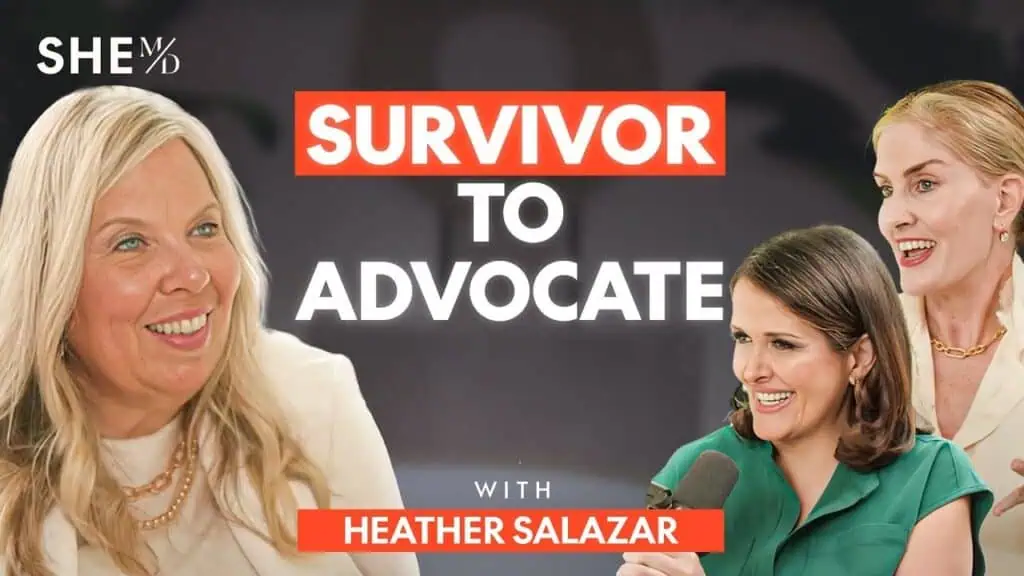
Some conversations change us because they force us to confront what we spend so much of life trying not to think about: how fragile health can be, how quickly everything can change, and how much love can carry a family through the impossible.
This is Taylor Odlozil’s story of loving Haley from high school through an aggressive ovarian cancer diagnosis, years of treatment, the birth of their son through surrogacy, hospice, grief, and a purpose neither of them could have predicted. Joined by gynecologic oncologist Dr. Kristin N. Taylor, Dr. Thais Aliabadi and Mary Alice Haney, Taylor Odlozil talks honestly about ovarian cancer symptoms, treatment, family history, genetic testing, and why women must trust their bodies and push for answers when something feels wrong.
Table of Contents
- Love, Loss, and Ovarian Cancer
- Why Ovarian Cancer Can Be So Difficult to Recognize
- Chemo, Surgery, and a Wedding in the Middle of Everything
- Fertility, Surrogacy, and Becoming Parents
- Parenting Through Serious Illness
- Hospice, Grief, and the Meaning of Presence
- Taking Action for Ovarian Cancer Awareness
- FAQ
Love, Loss, and Ovarian Cancer
How did you and Haley first meet?
Taylor Odlozil: We met in high school. I had just finished my sophomore year and Haley had finished her freshman year. We were at an end-of-the-year baseball party, playing pickup baseball in the street, and she arrived in a black bathing suit with a black cover-up. I remember seeing her and immediately thinking she was beautiful. I wanted to talk to her.
It turns out she noticed me too. We were together from then on. We were young, but it did not take long for us to know we had found our person. We met as teenagers, grew up together, and built one life together. We never had the experience of dating around or imagining another future. It was always us.

When did Haley first begin feeling that something was wrong?
Taylor: Within about a year of meeting, Haley would sometimes ask us to feel her stomach because she thought there might be a lump. At the time, we did what many people do. We told her she was probably worrying about nothing.
But the concerns continued. She experienced constipation, abdominal bloating, and a feeling that something was inside her. As time went on, the symptoms became more frequent and more difficult to ignore. She asked about an ultrasound. She wanted someone to look. But because she was young, the concern was often dismissed as an ovarian cyst or something that would resolve on its own.
By 2015, she was gaining weight despite being active, eating well, and working with a trainer. At one point she passed out during a workout that was not especially strenuous. She had no energy, felt full quickly when she ate, and her abdomen became visibly distended. She eventually looked several months pregnant, with stretch marks across her belly.
At home, we knew something was not right. The hard part is that ovarian cancer symptoms can look like so many everyday gastrointestinal or hormonal issues. But when symptoms persist, worsen, or do not make sense for our bodies, they deserve a real evaluation.
What finally led to Haley’s ovarian cancer diagnosis?
Taylor: Haley went back to her gynecologist, and at that point her symptoms could not be ignored. An ultrasound showed something concerning, which led to a CT scan and an urgent oncology appointment. She was 22 years old.
We went to that appointment with her mother, terrified but still hoping it was something minor. The oncologist came in visibly emotional and explained that the scan looked like advanced ovarian cancer. Haley’s first question was not about herself. It was, “Can I have children?” Being parents was something we had talked about from the earliest days of our relationship.
A biopsy confirmed ovarian cancer that had spread extensively. She was diagnosed with stage 3C serous ovarian cancer, with a rare mix of low-grade and high-grade disease.
Why Ovarian Cancer Can Be So Difficult to Recognize
What symptoms should women take seriously?
Dr. Kristin N. Taylor: Ovarian cancer symptoms are often vague, which is one reason diagnosis can be delayed. People may experience bloating, constipation, indigestion, abdominal weight gain, pressure, early fullness after meals, fatigue, or a persistent change in how their body feels.
One symptom by itself does not necessarily mean cancer. Many of these issues are common and may happen for benign reasons. What matters is persistence. When symptoms continue for weeks, recur repeatedly, grow worse, or do not match what is normal for us, it is important to seek care and ask for a proper workup.
Haley’s symptoms are sadly familiar to many ovarian cancer stories. Her abdominal bloating, weight gain focused in the belly, constipation, and early satiety were all signals that something deeper needed to be investigated.
For more information about warning signs, risk factors, diagnosis, and treatment, visit our ovarian cancer resource page. If symptoms such as pelvic pain, abnormal bleeding, painful sex, or urinary changes are affecting daily life, our guide to signs you need to call your OB/GYN can help clarify when it is time to seek care.

What does stage 3C ovarian cancer mean?
Dr. Kristin Taylor: Stage 3C ovarian cancer means the disease has spread above the pelvic bones and into the abdominal cavity. There may be small tumors scattered along the intestines or on the surfaces of organs such as the liver or spleen.
This is why surgery for stage 3C disease can be extensive. The goal is often to remove as much visible tumor as possible, a process called tumor debulking. Ovarian cancer is commonly diagnosed in later stages because symptoms often become noticeable after the disease has already spread.
The average age at diagnosis for ovarian cancer is around 63. Only a small percentage of ovarian cancers occur in women in their twenties, thirties, or younger. Haley’s age and her combination of high-grade and low-grade serous disease made her case unusually rare and especially difficult to treat.
Why did Haley’s cancer behave so differently?
Dr. Kristin Taylor: High-grade and low-grade serous ovarian cancers can behave very differently. High-grade cancer usually grows more quickly and often responds to standard chemotherapy. Low-grade disease typically grows more slowly and may be driven by different genetic changes, but it often does not respond as well to traditional chemotherapy.
In Haley’s case, treatment could control one component while the other component continued to grow. Chemotherapy could affect the high-grade disease, while the low-grade disease remained active. Hormonal therapy or surgery might control low-grade disease, while the high-grade component could return. It meant she and her care team were constantly adapting.
Chemo, Surgery, and a Wedding in the Middle of Everything
What happened after Haley was diagnosed?
Taylor: Everything moved immediately. She had a port placed and began chemotherapy, receiving carboplatin and paclitaxel. She had nine weekly treatments, and the final week fell during our wedding week.
That period was a whirlwind. Haley lost her hair, which was incredibly emotional with her wedding approaching. Steroids caused swelling, her dress had to be altered, and she had to wear a wig that was secured in place for the ceremony. Yet she was determined to be present for that day. She was a warrior.
Dr. Kristin Taylor: Carboplatin and paclitaxel are a long-standing standard treatment combination for ovarian cancer. Treatment can cause exhaustion, nausea, flu-like symptoms, muscle aches, joint pain, and bone pain. Supportive medicines have improved nausea management, but chemotherapy is still difficult. Going through it while planning a wedding is almost unimaginable.
What happened when the first chemotherapy plan did not work?
Taylor: After the wedding, Haley had a scan to assess whether chemotherapy had shrunk the cancer before surgery. Instead, there was no meaningful shrinkage. The cancer had continued to grow.
Her physician was direct with us, and we respected that honesty. We learned that the prognosis was very serious. But Haley did not know every detail at first because her doctor wanted her to have the chance to enjoy our honeymoon without carrying that weight.
After we returned, we traveled to New York to meet with Dr. Dennis Chi at Memorial Sloan Kettering. He was compassionate, confident, and willing to take on a surgery that others may not have attempted because of Haley’s age and the extent of disease.
What did surgery involve?
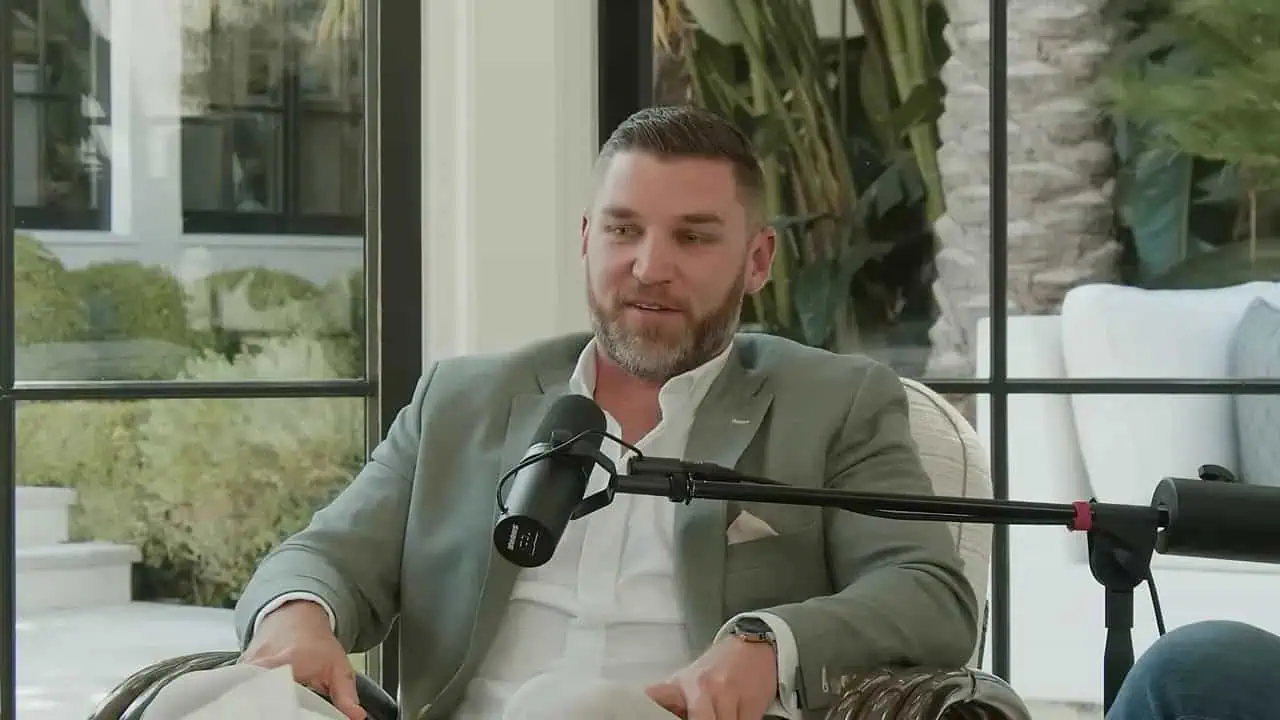
Taylor: It was a major operation. We knew there was a real possibility that Haley might not survive the procedure. We had been married only weeks, and suddenly we were facing the possibility of saying goodbye.
The surgery lasted about nine hours. When the surgeon came into the room afterward, he calmly explained that he had removed all visible cancer. That did not mean Haley was cancer-free, because microscopic cancer can remain, but it was an extraordinary surgical result.
She needed weeks in the hospital and a very long recovery. The operation was life-altering, but she did not need the colostomy bag that had been anticipated. The amount of colon removed was just below the level where that would have been necessary.
Could HIPEC have been an option?
Dr. Kristin Taylor: HIPEC, or hyperthermic intraperitoneal chemotherapy, is heated chemotherapy placed directly into the abdominal cavity during surgery. Research suggests that, for certain ovarian cancer patients who receive chemotherapy before surgery and have a successful tumor debulking, HIPEC may improve survival on average.
However, the data in the United States have been mixed, and researchers are continuing to study which patients benefit most. It is a highly specialized and demanding treatment, and it is not appropriate for every patient. These decisions need to be individualized with a gynecologic oncologist who understands the person’s exact diagnosis, treatment response, surgical findings, and overall health.
Fertility, Surrogacy, and Becoming Parents
How did cancer affect your plans to have children?
Taylor: After surgery, Haley entered menopause at 23. The loss of her uterus and ovaries was not only physical. It was emotional. We were grieving the ability to have children the way we had always imagined.
But a close friend named Jacqueline had offered on our wedding night that, if we ever wanted to have a child, she would be willing to be our surrogate. That generosity is hard to put into words. It came from someone who had seen Haley care for her child before the diagnosis and knew what a beautiful mother Haley would be.
When Haley’s disease had been stable for more than a year, we made the decision to move forward with IVF and surrogacy. We had embryos available, and we chose to transfer the healthiest embryo. I had always wanted a boy, while Haley had always pictured a girl. In the appointment, she decided that we would transfer a boy embryo. She told me she could not give me children in the way we had imagined, but she could give me my boy.
In January 2019, our son Weston was born healthy. Haley was there and helped deliver him. We saw her become what she had always been meant to be: a mom.

How did you live with a cancer diagnosis that was never truly gone?
Taylor: We learned not to live too far ahead. Cancer makes us confront the fact that tomorrow is not promised. We stopped letting fear of a future scan steal the day we were in.
We used to say: be where your feet are. Be present. If we are constantly worried about the diagnosis getting worse or the next scan, it becomes impossible to experience joy. Haley loved life. Her goal was always more time. She chose quantity of life, even when treatment was hard, because she wanted to be here with us.
Over the years, there were changing treatments, chemotherapy, hormonal therapy, scans, small tumors, and periods where things were stable. There were side effects and setbacks. But there was also family life, laughter, a little boy growing up, and precious ordinary moments that became everything.
Parenting Through Serious Illness
How did you explain Haley’s illness to Weston?
Taylor: We did not sugarcoat things. Since Weston was born, he knew Mommy was sick and that she could not always do what other moms could do. But he also knew she loved him deeply and did everything she could with the energy she had.
We explained things in age-appropriate language. We told him that his job was not to fix her health. Our job was to help Mommy smile, laugh, and feel loved. We wanted him to understand that being present, gentle, and loving mattered.
When she got sicker, we kept talking honestly. We told him that Mommy was going to heaven someday, even though we did not know exactly when. We also made sure he understood that none of this was his fault. Children can carry guilt in ways adults do not always recognize, so it was important to say that plainly and repeatedly.
Why did you begin sharing your family’s story publicly?
Taylor: In late 2022, after another major setback, we knew time was limited. We posted a video around Thanksgiving, then another short clip of Haley and Weston talking about how she would always be in his heart. The response was immediate and overwhelming.
At first, it felt strange. We did not set out with a content strategy. We were simply sharing real moments from a real life. But Haley and I had talked for years about how people can lose sight of what matters. We realized the platform could help people appreciate their families, their health, their time, and their relationships.
So we chose to keep sharing. Not everything was planned. Most of it was just raw life unfolding in front of us. But the response showed us that honest stories about love, caregiving, grief, and cancer can help people feel less alone.
Hospice, Grief, and the Meaning of Presence
What did hospice teach your family?
Taylor: Haley entered hospice in January 2023. At first, we feared it because it felt like surrender. But hospice brought comfort, support, and space for deeply meaningful moments. Her hospice nurse, Marcy, became such an important part of our family’s journey.
Haley had once said she wished she could avoid the suffering ahead and be done with it on her own terms. We understood that fear. But as time passed, we realized hospice gave us conversations we would not have otherwise had. Friends and family came to hold her hand, thank her, tell her they loved her, and tell her what she had meant to them.
There was pain and heartbreak, absolutely. But there was beauty too. The kind of beauty that comes from being completely present with someone we love.

What do you remember about Haley’s final days?
Taylor: Near the end, we knew we were there. We brought Weston home so he could be with his mom. I sat with him and explained that she was close to going to heaven. I told him that his mother and I were proud of him, that he had been a wonderful son, and that she was not leaving because of him. She had fought as long as she did because she loved him.
He climbed up, kissed her, and she woke enough to say, “I love you, Weston.” He told her he loved her too. Those were the last words she said.
Haley died peacefully on July 14, 2023. The grief was physical. It felt as if something had been removed from our bodies. We had been together since we were teenagers. Losing her meant losing a part of ourselves and the future we thought we would have.
How do you carry grief now?
Taylor: Grief does not disappear. We can be fine for weeks, then one day it can feel as if it all happened again. We call those grief relapses. But alongside the sadness, there is immense gratitude.
Haley changed us. She taught us to value health, family, time, love, and the ordinary moments we usually rush past. Her story gave us a purpose. We did not choose this path, but we can choose what we do with it.
If Haley could endure what she endured with love and courage, then we can keep moving forward. We can raise Weston. We can speak her name. We can encourage people to be grateful, to be present, and to take their health seriously.
Taking Action for Ovarian Cancer Awareness
What should women know about genetic testing?
Dr. Thais Aliabadi: Family history matters. Haley’s grandmother had ovarian cancer, which is important information for a medical team to know. When there is a close relative with ovarian, breast, colon, or other cancers, genetic counseling and testing may be appropriate.
Testing can identify inherited gene mutations associated with hereditary cancer risk, including BRCA-related hereditary breast and ovarian cancer syndromes. Not every cancer is hereditary, and a negative test does not mean someone has zero risk. But genetic information can guide screening, preventive decisions, and conversations for family members.
Women with a meaningful family history should ask about genetic counseling and a test that appropriately evaluates hereditary cancer risk. Learn more through our genetic testing for cancer resource.
What does it mean to be our own health advocate?
Dr. Kristin Taylor: It means listening when our bodies tell us something is different. Persistent bloating, abdominal changes, early fullness, pelvic pain, abnormal bleeding, or a change below the belt deserve attention. We should not be afraid to ask questions, request follow-up, seek a second opinion, or ask for imaging when symptoms continue.
Dr. Thais Aliabadi: No woman should have to beg for care when she is telling us something is wrong. We need to respect symptoms, family history, and intuition. We need to create relationships with physicians who listen and who take persistent concerns seriously.
Annual preventive care gives us a chance to discuss symptoms, family history, and changes in our health before they become emergencies. See our guide to annual well-woman exams for an overview of what preventive gynecologic care can include.
FAQs
What are common symptoms of ovarian cancer?
Symptoms can include persistent bloating, abdominal swelling, pelvic or abdominal discomfort, constipation, indigestion, feeling full quickly, unexplained changes in weight, fatigue, and urinary changes. These symptoms can have many causes, but persistence or worsening deserves medical evaluation.
Can young women get ovarian cancer?
Yes. Ovarian cancer is more commonly diagnosed later in life, but it can occur in younger women. Haley was diagnosed at 22, which was rare but possible. Age should never be the only reason persistent symptoms are dismissed.
What is stage 3C ovarian cancer?
Stage 3C ovarian cancer has spread beyond the pelvis into the abdominal cavity. Tumors may be present on surfaces within the abdomen, including around the intestines or other organs. Treatment often involves chemotherapy and extensive surgery to remove visible disease.
Should we consider genetic testing if ovarian cancer runs in our family?
Family history of ovarian cancer can be a reason to speak with a healthcare professional or genetic counselor. Testing may identify inherited cancer risk genes and help guide monitoring, prevention, and family planning decisions.
What should we do if symptoms keep being dismissed?
Keep advocating for answers. Document symptoms, including when they began and how often they occur. Ask what the next step is, request a follow-up plan, and seek a second opinion if symptoms persist or worsen. We know our bodies best, and persistent changes deserve attention.
Medical note: This article is for educational purposes and does not replace individualized medical advice. For symptoms, screening questions, treatment decisions, or concerns about cancer risk, consult a qualified healthcare professional.
Concerned About Your Health? Talk to Dr. Aliabadi
Dr. Aliabadi is an expert OB/GYN who is knowledgeable in all aspects of women’s health and well-being. Dr. Aliabadi and her caring, supportive staff are available to support you through PCOS, endometriosis, menopause, childbirth, infertility, or routine gynecological care. We invite you to establish care with Dr. Aliabadi. Call us at (844) 863-6700 or
This article was created from the video Love, Loss, and Ovarian Cancer: Taylor Odlozil and GYN Oncologist, Dr. Kristin N. Taylor | SHE MD for Dr. Thais Aliabadi’s website.