Some of the most interesting breakthroughs in beauty do not begin in a lab with a trend forecast. They begin with a personal crisis, an unanswered question, and a stubborn refusal to accept that the usual options are good enough.
That is exactly how this story starts.
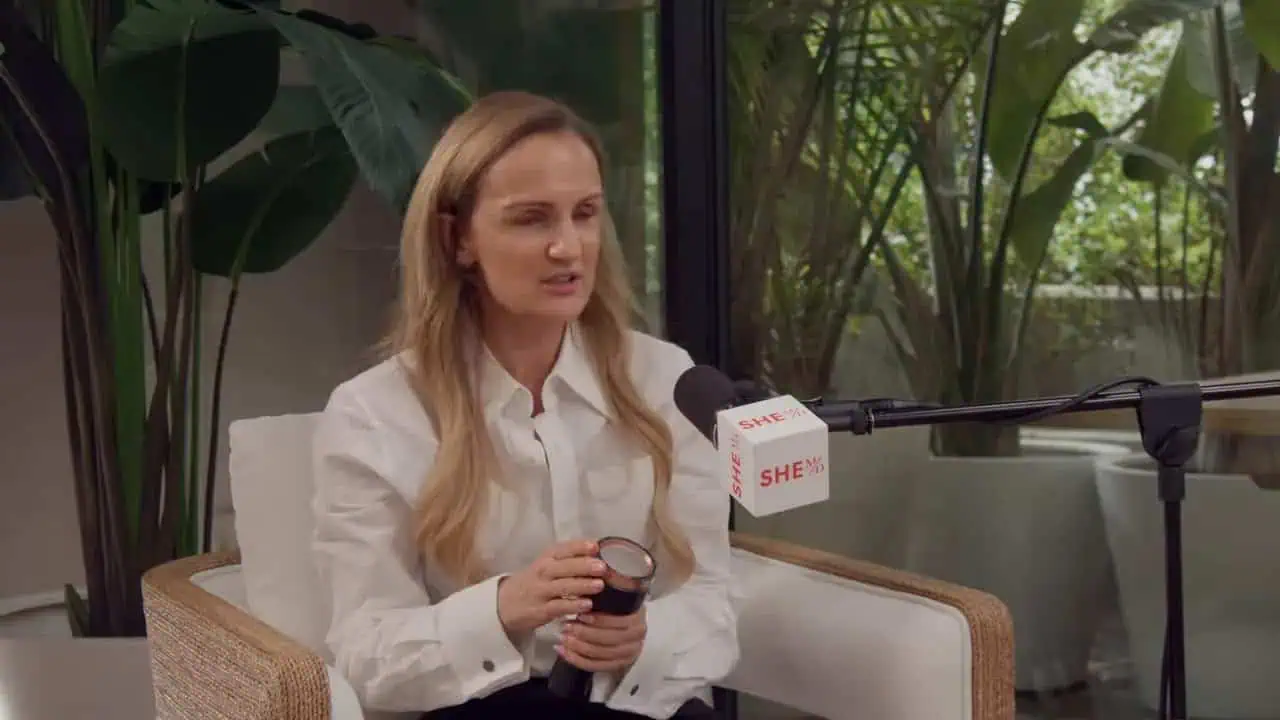
Luck Goff joins Dr. Thais Aliabadi and Mary Alice Haney to discuss what began as a devastating postpartum health emergency that eventually led to a broader search into recovery, resilience, inflammation, sleep, skin, and longevity. From there came a supplement company built around evidence-based ingredients, and later a beauty device that set out to do something very different from the rest of the market.
At the center of it all is one big idea. We do not necessarily need to injure skin in order to improve it.
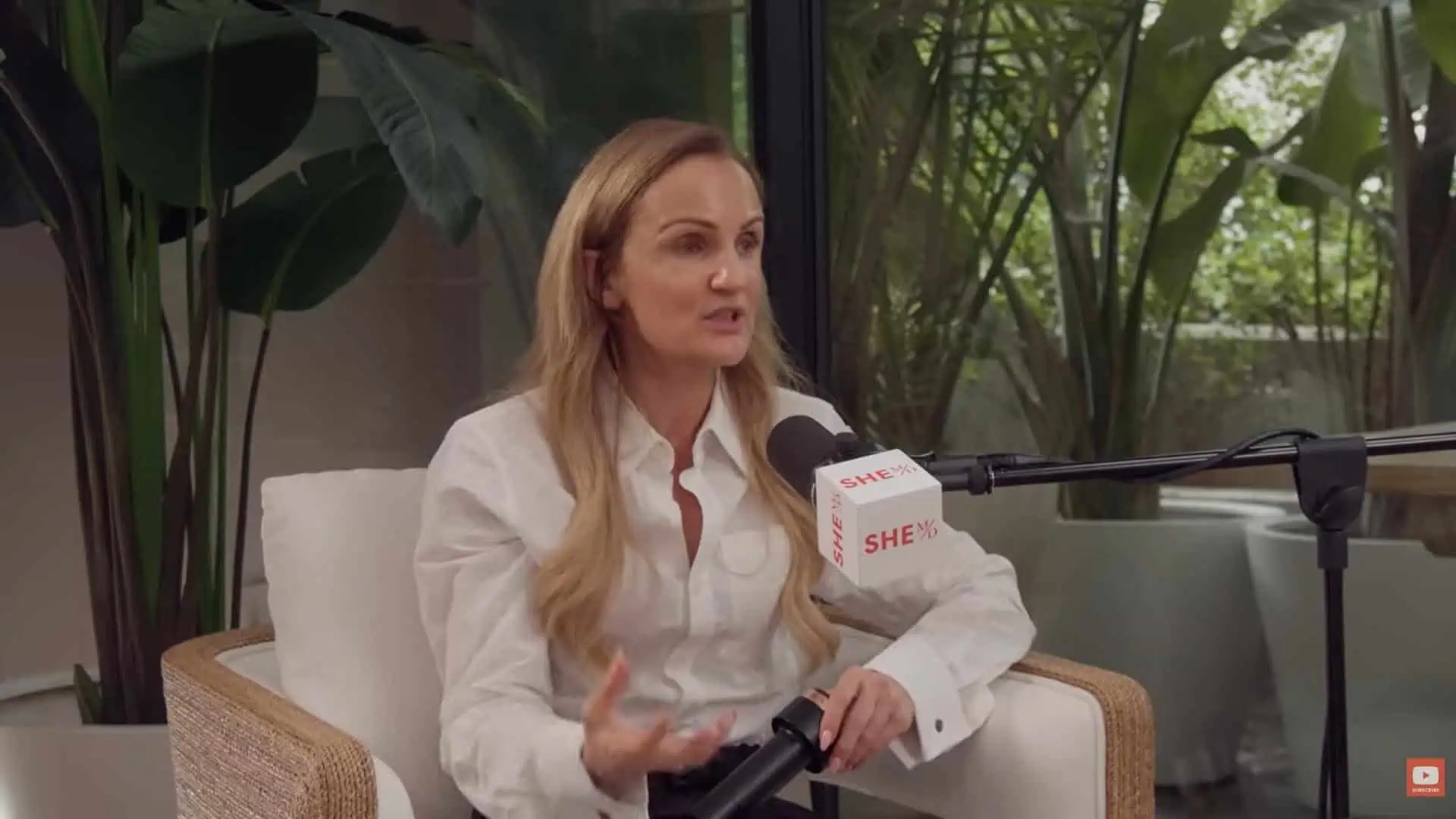
Table of Contents
Q&A with Lucy Goff
How did LYMA begin?
It started from a frightening turning point in our life.
During pregnancy, what should have been a routine lead-up to birth became a medical emergency. There was a sudden collapse at the hospital, an emergency delivery, and then a recovery that simply did not feel normal. Even after reassurances that the body had just been through a lot, there was a strong sense that something deeper was wrong.
That instinct turned out to be right. A breast infection had escalated, then spread, and eventually led to sepsis. It became a full-body crisis that required intensive care and weeks of treatment.
Sepsis is one of those conditions that can move terrifyingly fast. It often starts with what seems like a localized infection, but once the immune response spirals and the infection spreads through the bloodstream, the entire system can be affected. Blood pressure drops, breathing changes, organs can come under stress, and people often describe it exactly the way it feels: as though their body is shutting down.
After leaving the hospital, there was a real need to rebuild from the ground up. That search led to a clinic in Geneva and, by chance, to Professor Paul Clayton, a longevity expert who would become a major part of the LYMA story.

He introduced us to a category of ingredients that were miles away from the average supplement aisle. The focus was not on vague wellness promises. It was on patented, studied, traceable ingredients that had been evaluated for how they actually behave in the body.
That mattered because one of the biggest problems in supplements is not just what an ingredient is. It is whether it remains stable, whether the body can absorb it well, whether it reaches the intended target, and whether it has evidence behind that exact form and dose.
After beginning that protocol, there was a dramatic shift in how the body felt. Within a few weeks, there was a sense of feeling like ourselves again. That experience became the spark for LYMA.
Why start with supplements before creating a laser?
Because recovery came first.
The company was originally built around a formula designed to support the relationship between sleep, stress, inflammation, and skin. Those things are often treated as separate problems, but in real life they feed into each other constantly.
If stress is high, sleep usually suffers.
If sleep suffers, inflammation often rises.
If inflammation rises, skin tends to look worse and the body feels worse.
That loop becomes especially important in perimenopause and menopause, when many women feel as if their body has become unfamiliar overnight. Hormone therapy can be incredibly helpful, but it is not always the whole answer. A lot of women still need support for the knock-on effects of those hormonal changes.
The supplement side of LYMA was built around that bigger picture. Not a quick fix. Not a stimulant. Not a sedative. More a formula aimed at helping the body regulate itself more effectively.
That philosophy, the idea that we should work with biology rather than fight it, later carried over into the laser.
What made LYMA’s supplement approach different?
The difference was rigor.
There are plenty of supplements that sound healthy, natural, and appealing. But when we look closely, many products rely on generic ingredients without much certainty around purity, consistency, or performance inside the body.
LYMA took a different route by focusing on:
- Patented ingredients
- Peer-reviewed evidence
- Traceability back to source
- Doses intended to be effective, not decorative
- Formulations designed around bioavailability and stability
That may not sound glamorous, but it is crucial. Two products can both list the same ingredient on the label while functioning very differently in practice.
There was also a strong design philosophy behind the brand. Rather than hiding supplements in a drawer or cabinet, the idea was to make them beautiful enough to live in the home. That turned them into part of a lifestyle rather than something forgotten in the back of a bathroom cupboard.
That may seem superficial, but it actually matters. Ritual and consistency play a major role in wellness. If a product is inviting to use and easy to keep visible, people are more likely to stay with it.
So how did the laser enter the picture?
Completely by accident, which often turns out to be how the best ideas arrive.
Professor Paul Clayton was at a conference in Germany focused on cold laser technology. The clinical interest in the room was centered on cartilage regeneration in a man’s knee. Doctors were studying scans showing improvement over a period of weeks.
But something else stood out.
The skin on the treated knee looked dramatically younger than the untreated side. That observation raised a bigger question. If this form of light technology could affect tissue regeneration in a medically meaningful way, why was the beauty industry mostly focused on something much more superficial?
That was the lightbulb moment.
The ambition then became very clear: take a large hospital-grade cold laser system, the kind of machine that costs tens of thousands of dollars, and re-engineer it into a handheld device that could be used safely at home.
That is a very different challenge from simply making another beauty gadget. It meant preserving meaningful power and performance while making the device practical, portable, and safe enough for regular use outside a clinic.
What is the difference between laser and LED?
This is where a lot of confusion starts, because beauty marketing often groups all light-based tools together as though they are basically the same thing.
They are not.
The distinction here is not just about color or wavelength. It is about how the light behaves.
Laser light has specific physical properties that make it fundamentally different from LED light. In simple terms, the argument is that laser light is structured in a way that allows it to travel into tissue with biological effect, while LED light is much more diffuse.
That means LED can create a temporary surface glow and may support superficial activity near the outermost layers of skin, but it does not penetrate in the same way.
According to the research discussed, for light to have true biological penetration, it needs three properties:
- It must be monochromatic, meaning a single color
- It must be polarized, meaning organized in one direction
- It must be coherent, meaning it travels in a straight, unified line
Those features belong to laser light, not LED.
This is why the comparison matters. Two devices can advertise the same wavelength, but wavelength alone does not determine biological impact. The structure of the light source matters just as much, if not more.
Was that difference actually studied?
Yes, and this is one of the most compelling parts of the discussion.
Rather than relying on assumptions, LYMA conducted a study comparing its cold laser with an LED device built to match the same wavelength and power. The goal was to see what happened deeper in the skin, specifically in the dermis.
The result, as described, was a significant difference in gene expression.
The laser expressed dozens of genes in the dermis, while the LED counterpart expressed only one. Most strikingly, the laser was said to markedly increase activity associated with SIRT1, a gene often discussed in longevity science.
The broader claim here is that the device is not just lighting up the skin in a cosmetic sense. It is influencing cellular behavior in a way that aligns with regeneration.
That is why the conversation shifts from beauty into longevity. It is not only about looking brighter after use. It is about whether the skin is being nudged back toward a more youthful biological state.
What does “switching skin back into youth mode” actually mean?
It means moving away from damage-based beauty and toward regeneration-based beauty.
Many popular treatments improve skin by first injuring it. Heat, abrasion, micro-injury, or controlled trauma signal the body to repair the area, and collagen is produced as part of that repair response.
That approach can work, but it comes with limitations. It often means downtime, inflammation, discomfort, risk, and reduced suitability for many darker skin tones.
LYMA’s argument is that damage-driven collagen is not the same as youthful collagen.
The explanation given is that when the body is repairing injury, it lays down collagen in a pattern more similar to scar tissue. That is efficient for healing, but not necessarily ideal for creating the supple, organized structure associated with younger skin.
Cold laser, by contrast, is presented as a way to encourage collagen production without forcing the skin into a repair crisis first.
Instead of creating damage and waiting for the body to patch things up, the light is said to activate beneficial genetic pathways directly. In other words, not repair after harm, but regeneration without harm.
That is the core difference.
Why is this such a big deal for darker skin tones?
Because so many cosmetic treatments are harder to use safely on melanin-rich skin.
That reality came up clearly in the conversation. Many women with darker complexions approach lasers and heat-based devices with caution, and for good reason. Treatments that rely on thermal injury can increase the risk of peeling, pigment disruption, irritation, or post-inflammatory hyperpigmentation.
That is why a non-damaging approach is so appealing.
Since this device is described as cold and non-thermal, the claim is that it can be used across skin tones, including darker skin, without the same concerns that come with heat-based resurfacing technologies.
That makes it especially interesting for anyone who has felt excluded from a large part of the beauty technology landscape. If a treatment depends on controlled injury, not everyone gets equal access to the same intensity or same outcomes. A regenerative approach potentially changes that conversation.
For readers exploring broader skin health resources, the skin care podcast archive is a useful place to find related discussions on evidence-based approaches to aging, acne, and overall skin wellness.
What kinds of results is the LYMA Laser supposed to target?
The list is broad, which is one reason the device gets so much attention.
In the discussion, the main areas highlighted included:
- Fine lines
- Skin laxity
- Neck aging
- Jowling
- Redness
- Elasticity
- Tone and texture
- Loose skin on the body
- Pigmentation from sun exposure
- Scars and post-surgical healing
There was also an emphasis on muscle support beneath the skin, particularly in areas where facial sagging becomes more obvious with age, such as the neck and jawline. The idea is that reaching deeper tissue may contribute to a more lifted appearance, not just a smoother surface.
That makes this feel less like a one-note wrinkle tool and more like a skin longevity device.
How do we use it?
The usage is straightforward.
The device is held over each area for three minutes a day. After three minutes, a flashing light signals that it is time to move to the next section.
It can be used over bare skin, over sunscreen, and even over makeup. There is no need to apply a conducting gel or special product first.
There are also two sizes mentioned:
- The standard LYMA Laser with a smaller treatment lens
- The LYMA Laser Pro with a larger treatment lens for covering broader areas more quickly
The difference is not that one is stronger than the other. The difference is coverage area.
If we are treating a small scar, a patch of redness, or a targeted concern, the smaller device may be enough. If we are thinking about face, neck, chest, or larger body zones, the larger treatment window makes more sense.

Can it help with scars and wound healing?
This part of the conversation was especially interesting because it moved beyond beauty into genuine tissue recovery.
Cold laser technology has been used in medical settings for decades, including wound care and healing support. The discussion referenced clinical work involving difficult wounds, including diabetic ulcers, where meaningful wound-size reduction was observed compared with placebo.
It was also stated that the device can be used after surgery once a surgeon has confirmed there is no internal bleeding, generally after the first 24 hours. Even steri-strips do not prevent use, since the device can be applied over them.
That opens up intriguing possibilities for post-procedure scar support.
The examples discussed included:
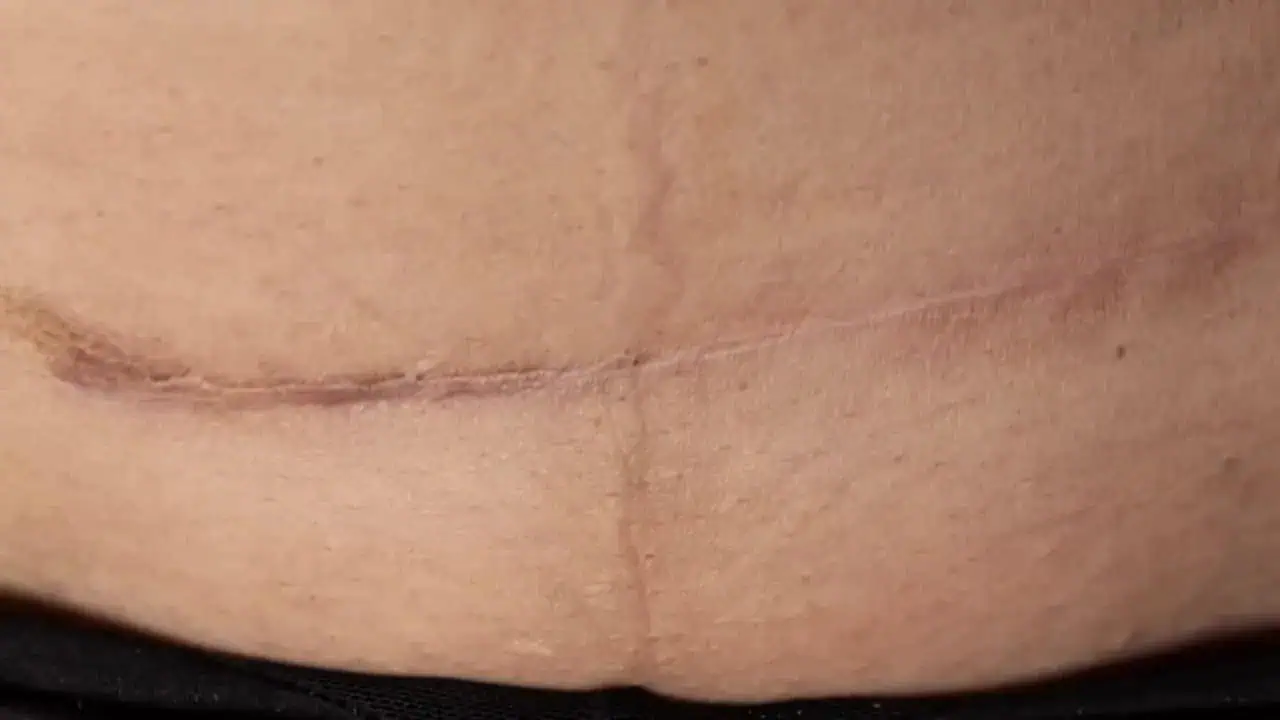
- C-section scars
- Laparoscopic surgery scars
- Hysterectomy recovery
- Old hypertrophic scars
- Keloid-like or raised scarring concerns
One particularly memorable example involved treating only half of a C-section scar to demonstrate the difference between treated and untreated healing. Another involved an older raised scar that gradually flattened over a much longer treatment period.
For people navigating recovery after childbirth or gynecologic procedures, scar healing is only one part of the broader comfort equation. Related concerns such as tissue dryness, irritation, and pain often overlap, especially in midlife. Helpful resources on these topics include menopause and vaginal dryness and non-hormonal options for painful dryness and intimate discomfort.
Can it replace CO2 lasers, microneedling, and other in-office treatments?
That depends on what we mean by replace.
If we mean, does it work through the same mechanism? No.
If we mean, can it deliver visible improvement in concerns that people often pursue with those treatments? That is the claim being made.
The comparison to CO2 laser resurfacing was handled carefully. Traditional CO2 works by heating and damaging tissue, which triggers a healing response and new collagen formation. The results can be impressive, but so can the downtime and the risk profile, especially for anyone with darker skin.
LYMA’s proposition is different. It aims to create comparable categories of benefit, such as smoothing fine lines and improving laxity, but without the heat injury and extended recovery.
So the more accurate framing is not that it is the same as CO2 in miniature. It is that it is trying to solve a similar set of aging concerns through a different biological route.
That distinction matters. One path is controlled damage. The other, at least according to the case being made here, is regeneration.
What about the longevity science angle?
This may be the most ambitious part of the whole conversation.
Most skin care conversations stay at the level of ingredients, surface renewal, hydration, or collagen support. Here, the framing moves into epigenetics and gene expression.
The central idea is that aging changes how effectively cells read and carry out their genetic instructions. Some helpful functions become less active over time, while less desirable pathways may become more active.
The claim is that this cold laser technology helps restore a healthier balance by nudging cells toward more youthful behavior.
That is why the SIRT1 discussion is significant. SIRT1 is often described in longevity circles as an important regulator connected to healthy aging. The suggestion that a beauty device can influence that pathway is what moves this from beauty novelty into a more serious scientific category.
Of course, a single device is not the whole story of longevity. Sleep, stress regulation, nutrition, hormone health, inflammation, movement, and recovery all remain foundational. But this conversation raises the possibility that skin technology can be part of that larger ecosystem rather than sitting outside it.
What makes people skeptical about a product like this?
Honestly, the promise sounds almost too neat.
An at-home laser with no heat, no damage, minimal hassle, broad skin-tone compatibility, and a long list of uses naturally raises eyebrows. And that skepticism is healthy.
Beauty is full of exaggerated claims, and expensive devices often over-promise while under-delivering.
That is why the emphasis on clinical data matters so much here. The case being made is not just that people like the product, but that the technology has been studied in ways that try to explain both what it does and why it does it differently from other devices.
That does not mean every claim in beauty should be accepted without question. It means this conversation is at least grounded in a more serious attempt at scientific validation than we usually see in the category.
Who seems most likely to benefit from this kind of device?
From the way it was discussed, a few groups stand out.
- People over 40 noticing changes in laxity, neck aging, or fine lines
- People with darker skin tones who cannot comfortably pursue aggressive resurfacing
- Anyone interested in non-damaging skin maintenance rather than occasional dramatic procedures
- Those with post-surgical scars or healing concerns
- People thinking about skin as part of a larger longevity strategy
There was also an interesting point made about younger users. If someone is in their late twenties or thirties and not yet seeing major signs of aging, the device may be less about reversal and more about delaying visible decline.
That is a different mindset from reactive beauty. It is more preventive, more cumulative, and more aligned with how we think about long-term health generally.
What is the broader takeaway from this conversation?
We are seeing a shift in how skin health is being framed.
For years, the dominant beauty model has been to force a result. Exfoliate harder. Heat more deeply. Resurface more aggressively. Trigger more inflammation. Accept the downtime.
This conversation offers another possibility. What if the future of skin care is less about controlled destruction and more about precise regeneration?
That idea has obvious appeal, especially for people who have felt left out by mainstream device marketing, people wary of heat and trauma, and people who want their skin strategy to make sense not just cosmetically but biologically.
We do not need to pretend every beauty device changes the game. Most do not. But when a product enters the conversation with a credible origin story, a novel mechanism, and a serious attempt at clinical backing, it is worth paying attention.
That is what makes LYMA interesting. It is not merely a sleek gadget. It is part of a much larger discussion about recovery, aging, and what it means to support the body instead of pushing it into repair mode over and over again.
FAQs
Is the LYMA Laser the same as red light therapy?
No. The main distinction discussed is that LED and laser are different light sources. The LYMA device uses cold laser technology rather than LED, and the claim is that laser has deeper biological penetration because of how the light is structured.
Does the LYMA Laser use heat?
No. It was described as a cold, non-thermal device. The handle may feel warm during use, but the treatment itself is not intended to heat or damage the skin.
Can darker skin tones use the LYMA Laser?
According to the discussion, yes. One of the major selling points is that it is suitable for melanin-rich skin because it does not rely on thermal damage the way many in-office lasers do.
How often do we need to use it?
The recommendation given was three minutes per section, every day. A flashing light indicates when it is time to move to the next area.
Can it be used over makeup or sunscreen?
Yes. It was specifically stated that the device can be used over makeup, sunscreen, or bare skin.
Can the LYMA Laser help with scars?
Scar improvement was one of the most emphasized use cases in the conversation. Examples included C-section scars, surgical scars, raised scars, and difficult wound healing situations.
Is this meant to replace in-office CO2 laser treatments?
Not in the sense of being the same procedure. The idea presented is that it can address similar aging concerns, such as fine lines and laxity, but through regeneration rather than through heat injury and recovery.
What is SIRT1 and why does it matter here?
SIRT1 is often discussed as an important longevity-related gene. The research described in the conversation highlighted increased activity in this pathway, which is part of why the device is framed as a skin longevity technology rather than just a cosmetic tool.
Concerned About Your Health? Talk to Dr. Aliabadi
Dr. Aliabadi is an expert OB/GYN who is knowledgeable in all aspects of women’s health and well-being. Dr. Aliabadi and her caring, supportive staff are available to support you through PCOS, endometriosis, menopause, childbirth, infertility, or routine gynecological care. We invite you to establish care with Dr. Aliabadi. Call us at (844) 863-6700 or
This article was created from the video Professional Laser Results at Home? The Science Behind Healthier, Younger Skin | SHE MD for Dr. Thais Aliabadi’s website.