There are some conversations that feel like they cover a woman’s whole life in one sitting. Lindsey Metselaar joins Dr. Thais Aliabadi and Mary Alice Haney to talk about dating, confidence, fertility, PCOS, pregnancy, and motherhood. There’s a pressure to “figure it all out,” but in reality, most of us are making our way through it in real time.
That is exactly what made this conversation with Lindsey Metselaar, creator and host of We Met at Acme, so refreshing. Lindsey built one of the original dating podcasts by talking honestly about what modern dating actually feels like. Not the fantasy. Not the filtered version. The real version. Being dumped on your birthday. Getting better at choosing partners. Learning that confidence changes everything. And eventually meeting the right person.
But this conversation also went deeper than dating. Lindsey opened up about discovering she had PCOS only after trying to get pregnant, the confusion that can happen when birth control masks underlying symptoms, her IVF journey, ovarian hyperstimulation syndrome, and what it was like to move from infertility uncertainty into motherhood.
What we loved most is that none of it felt performative. It felt practical, honest, and very human. So we’re sharing the full interview in a written Q&A format, with Lindsey’s best dating advice, her health journey, and the mindset shifts that can help women feel more empowered in both love and life.
Table of Contents
- Starting a dating podcast after heartbreak
- What modern dating really looks like now
- How Lindsey met her husband
- Trying to get pregnant and discovering PCOS
- IVF, infertility, and what PCOS can complicate
- Pregnancy, gas scares, and the reality of birth
- The confidence shift that changes dating
- Lindsey’s first-date rules and relationship philosophy
- The top five dating tips Lindsey wants every woman to hear
- What women in their 20s, 30s, 40s, and beyond need to remember
- FAQ
- A healthier way to think about love, fertility, and timing
Starting a dating podcast after heartbreak
How did We Met at Acme begin?
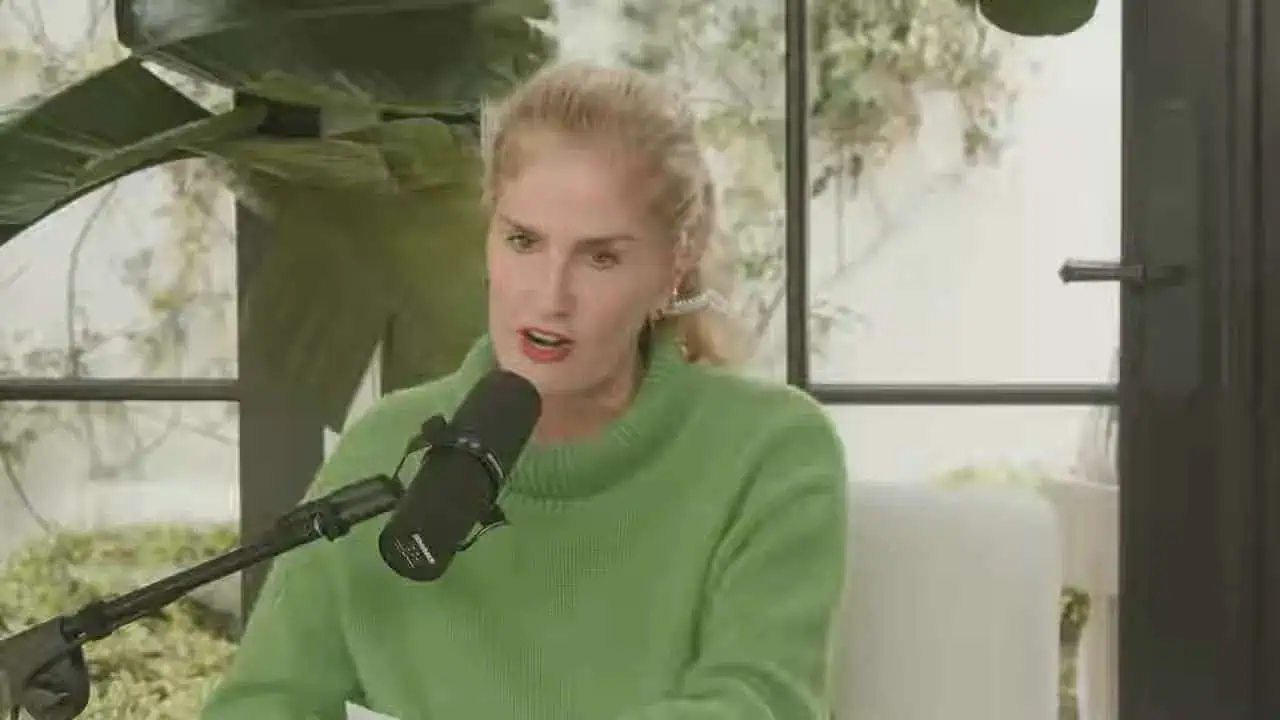
Lindsey’s podcast started seven years ago, and like a lot of great ideas, it came from a very personal moment. She was dumped on her 27th birthday and had the immediate thought that dating in New York City was absurdly hard, and surely she could not be the only person feeling that way.
So she did something simple and smart. She sat down with a friend, recorded their conversation about dating, and released it. It was raw, unfiltered, and relatable. People responded because it sounded like the conversations women were already having privately.
Over time, that one conversation turned into a major platform. Lindsey went on to interview dating experts, therapists, professionals, celebrities, and everyday people about relationships and modern romance. What started as emotional honesty became a body of work that has helped a lot of women feel less alone.
That origin story matters because it says something important about dating advice in general. The best guidance usually doesn’t come from pretending everything is easy. It comes from being willing to say, “This is hard, this is weird, and we need to talk about it.”
Did talking publicly about dating make dating easier or harder?
Lindsey said it definitely took a certain kind of man to date someone who spoke openly about her dating life. Naturally, that weeded some people out. But in her view, that was not a bad thing. If someone was deeply uncomfortable with honesty or transparency, they probably were not the right fit anyway.
In some ways, it actually made dating easier. She did not have to over-explain how she felt because her values and perspective were already very clear. That kind of clarity can save time. It can also attract people who are more emotionally aligned from the start.
There’s a larger lesson here. The more honest we are about who we are, the less energy we waste trying to convince the wrong people to like us.
What modern dating really looks like now
Should women be using dating apps?
Yes, but not only dating apps.
Lindsey’s perspective is balanced and practical. She believes apps matter because they are one of the main ways people meet now. Ignoring them completely can mean missing real opportunities. But she also believes women should not rely on apps alone.
That means saying yes to the dinner party, going to the event where you may not know many people, getting off your phone when you’re out, and noticing who is actually around you. Real-life chemistry still matters. Presence matters. Energy matters.
Her advice is to use every resource available. That includes online dating, setups from friends, social events, and chance encounters. The bigger point is not to become passive. If love is something you want, create opportunities for it.
She also made an observation that feels especially true right now: people are often too quick to dismiss someone on a dating app that they might genuinely like in person. A profile is limited. A photo is limited. Even a prompt answer is limited. In-person connection can reveal warmth, humor, confidence, kindness, and chemistry that a screen cannot.
What is Lindsey’s favorite dating app?
Hinge, without hesitation.
She described Hinge as the app where people tend to be more serious and more genuinely interested in meeting someone. In her experience, many of the successful couples she knows met there. Other apps can work, of course, but she sees Hinge as the strongest overall option for people who are truly looking for a relationship.
On the other hand, she was candid about Raya. While it may have an exclusive reputation, her experience was not good. She found that a lot of the men there seemed more invested in image, status, and social media than in being grounded, available partners.
That doesn’t mean no one meets someone wonderful there. It just means the app’s branding does not necessarily translate into relationship quality.
What role should friends play in helping single women date?
A much bigger one.
This part of the conversation was so important because it addressed something people do not say enough: when you are single, it can feel like everyone else is coupled up and moving through life in pairs. And when friends are married or busy with children or careers, they may unintentionally forget what single life actually feels like.
Both Mary Alice and Lindsey are passionate setup people. They see introducing friends to potential partners as a real act of support. Not a casual gesture. Genuine support.
Mary Alice shared a remarkable story about setting up her ex-husband with his now fiancée after meeting her while getting her hair highlighted. They have now been together for years, and she is a loving bonus mom to Mary Alice’s children. It is one of those stories that only works when people are emotionally mature and deeply generous.
Lindsey said she has also set up multiple couples who went on to get married or build serious relationships. It makes her incredibly happy.
The takeaway is simple. If we say we support women, one way to live that out is to think actively about the great people in our lives and help make meaningful introductions.
How Lindsey met her husband
What was your love story?
Lindsey and her husband were not total strangers. They had long moved within the same broader social orbit because one of her college best friends had gone to high school with him. They knew of each other, but timing had never lined up.
Then, when they were both 29, they ran into each other on New Year’s Eve in Miami, right before the world changed in 2020. It was one of those moments that ends up becoming a hinge point in life. They started dating, had about two months of normal pre-pandemic courtship, and then suddenly had to make a decision that many new couples faced at the time: what now?
Do we go home to our families? Do we stop seeing each other? Do we quarantine together?
They chose to quarantine together. And yes, it was early. Very early. They were still in that brand-new stage where everything is polished and private and no one is totally relaxed yet. Moving in after just a few months of dating is intense under any circumstances. Doing it during a global crisis is another level entirely.
But for them, the pressure created vulnerability. It accelerated emotional honesty. It forced them to decide whether this connection was real. In their case, it was. They got married in 2022.
It’s a great reminder that while some relationships crumble under pressure, others reveal themselves through it.
Trying to get pregnant and discovering PCOS
Did you know you had PCOS before trying for a baby?
No, and that is one of the most important parts of Lindsey’s story.
She had gone on birth control at 15 and stayed on it continuously until she was ready to try to conceive. That is a common experience. Many women are prescribed hormonal birth control as teenagers and never told that it may be covering up signs of an underlying issue, like irregular ovulation or PCOS.
When Lindsey stopped taking birth control, she did not get her period back. At first, she did what many women do. She filled in the blanks with common assumptions. Maybe she was pregnant. Maybe she was too thin. Maybe her body just needed time to adjust.
PCOS was not even on her radar because she did not know what it was.
It took about eight months to get the diagnosis.
That delay is not unusual. PCOS is one of the most common causes of infertility, and yet many women do not know they have it until they are trying to conceive. If you want a deeper overview of symptoms, diagnosis, and treatment, the PCOS resource archive on Dr. Aliabadi’s site is a helpful place to start.
What symptoms did you experience after stopping birth control?
Once she went off the pill, the symptoms started to show themselves. At first there were none. Then, within a few months, the classic signs of PCOS began appearing:
- Weight gain
- Acne
- Significant hair loss
- No return of a normal menstrual cycle
Her hair loss was especially dramatic. Lindsey already had thin hair and wore extensions. When the extensions were removed at one point, she said she was left with barely any hair. It was shocking and deeply upsetting.
This is where so many women get stuck. They may notice symptoms one by one, but they do not always connect them to a hormonal pattern. Or they are told to wait it out. Or they are brushed off.
That is why self-advocacy matters. If something feels off, keep asking questions. Keep following the symptoms. Advocating for yourself at the doctor is not being difficult. It is often the key to getting the right diagnosis.
Can birth control mask fertility issues?
Yes, it can mask the signs of them.
This was one of the clearest takeaways from the conversation. Birth control does not cause infertility, but it can hide symptoms of conditions that affect ovulation and fertility, including PCOS. If someone has irregular cycles, acne, or other hormonal issues that are well controlled on the pill, she may not know there is an underlying disorder until she stops taking it.
That is why women who want children someday benefit from understanding their cycles and reproductive health before they are ready to conceive. If this topic sounds familiar, this overview on whether birth control can mask fertility issues explains the concept in more detail.
IVF, infertility, and what PCOS can complicate
What happened after the PCOS diagnosis?
Lindsey was working with a fertility doctor, not just an OB-GYN. She explained that her regular OB really came into the picture once she was pregnant. Before that, the fertility specialist was the person handling diagnosis and treatment.
Along with PCOS, she and her husband also learned they had some genetic factors that made IVF a smart path for them. So they moved forward with treatment.
The hopeful part is that they were very lucky with embryo transfer. Their first transfer worked.
But that does not mean the process was easy.
What is ovarian hyperstimulation syndrome, and how did it affect you?
After egg retrieval, Lindsey developed ovarian hyperstimulation syndrome, or OHSS. This is a known complication in fertility treatment, and women with PCOS are at higher risk because their ovaries can respond very strongly to stimulation medications.
She described it in very plain terms: it was extremely painful. She could barely walk.
OHSS causes the ovaries to swell and can make recovery after retrieval miserable. It is one of those parts of IVF that often gets overshadowed by the broader story of “just do treatment,” but the physical toll is real. Recovery is not always straightforward, and women deserve to be prepared for that.
Even when IVF succeeds, it can still be physically intense, emotionally exhausting, and full of uncertainty. Lindsey’s story reflects both sides at once. Gratitude and struggle can absolutely coexist.
What should women know if they are trying to get pregnant and something feels off?
First, do not assume you are overreacting.
Second, do not assume that because you are young, or because you have been on birth control for years, everything will naturally sort itself out.
And third, if your cycle does not return, if you are noticing hormonal changes, or if conception is not happening, get evaluated. A proactive workup can make a huge difference. For women who are wondering what kinds of tests and next steps are commonly involved, this fertility checklist can be a useful guide.
Information is power, especially in reproductive health.
Pregnancy, gas scares, and the reality of birth
How was pregnancy after such a long fertility journey?
Relatively smooth, which Lindsey said felt like a gift after everything it took to get there.
She did have one memorable scare. At around 26 weeks, she ended up at the hospital convinced something was wrong with either her or the baby because she was in severe pain. It turned out to be gas.
It is funny in hindsight, but also incredibly relatable. Pregnancy can produce sensations so intense and so unfamiliar that it is hard to know what is normal. That uncertainty is part of why women need support, education, and reassurance throughout pregnancy, not just at major milestones.
Outside of that episode, she said she did not deal with much sickness. She had cravings and developed a complete aversion to fish for the full nine months, but overall her pregnancy was manageable.
Was birth what you expected?
No. Lindsey said her birth experience was not great, and Mary Alice agreed that this is one of those areas where women are often underprepared for what real postpartum recovery can look like.
That part of the conversation was refreshingly blunt. There is still so much sugarcoating around labor, delivery, tearing, stitches, pain, and the intensity of postpartum healing. Women are often told the broad headline, “healthy mom, healthy baby,” but not always given the full picture of what the body may go through to get there.
What we appreciated was the honesty. Women do not need fear-based messaging. But we do need truthful messaging. It can be beautiful and hard. Worth it and painful. Joyful and physically brutal. Saying that out loud helps more women feel normal in their experience.
The confidence shift that changes dating
Were you always this confident in dating?
Not at all.
Lindsey was very candid that in her earlier dating years, she was a bad picker. She gravitated toward men who had status, swagger, social appeal, or mystery, but not necessarily character. The result was what so many women know firsthand: inconsistent behavior, cheating, lack of commitment, and the familiar internal spiral of asking what is wrong with us.
Over time, she realized the real issue was not that she was impossible to love. It was that she was choosing people who were not capable of loving her well.
That insight changed everything.
Where does real dating confidence come from?
For Lindsey, confidence grew as she built a life she was proud of outside of relationships.
That included:
- Having a career she genuinely loved
- Feeling proud of her work
- Knowing her values
- Taking care of her body
- Recognizing what she brought to the table
That is such an important distinction. Confidence is not just about feeling attractive. It is about self-respect. It is about knowing, in specific terms, why you are a catch. Not because someone chose you, but because you have built substance in your own life.
When women know who they are, they become less seduced by chaos and less impressed by people who are simply hard to get.
Why do so many women chase the wrong person?
Lindsey’s answer was sharp and honest. In our early twenties especially, a lot of us confuse challenge with chemistry. We think the chase means excitement. We think mystery means depth. We think someone being hard to read means there is something special to unlock.
But often the chase is happening for a much simpler reason: they are not interested enough.
That may be one of the most useful dating truths in this entire conversation. If someone likes you and is emotionally available, you should not have to decode every interaction.
If you’re confused, they’re not interested.
It is not glamorous, but it is clarifying.
Lindsey’s first-date rules and relationship philosophy
Do you believe in dating rules?
Absolutely, and Lindsey knows some of her rules are controversial.
She said that in heterosexual relationships, she believes the man should be the pursuer, especially in the early stages. Some people hear that and immediately call it old-fashioned or anti-feminist. But Lindsey’s point is really about effort and clarity. She wants women to be able to observe what a man does when he is genuinely interested instead of stepping in to over-function or force momentum.
Whether or not someone agrees with every part of that framework, what makes it compelling is that it is rooted in pattern recognition. She has spent years talking to daters and watching what works.
What are your first-date rules?
Lindsey’s first-date guidance is straightforward:
- Do not have more than two drinks. You want to be present, aware, and able to assess the person clearly.
- Do not let the date go on too long. Two to three hours is plenty. There is no need for a six-hour marathon that reveals your full life story.
- Leave a little mystery. You do not have to share everything right away.
- Ideally, let the woman end the date first. It helps maintain a sense of pacing and confidence.
- Do not have sex on the first date if you care about where this is going.
That last point led to one of the more talked-about moments of the interview.
How long do you think women should wait to have sex?
Lindsey’s answer: at least six dates.
She knows that sounds conservative to some people, and she is fine with that. Her reasoning is that emotional and relational clarity matter. Waiting helps you learn who someone is before physical intimacy starts influencing the pace and attachment of the relationship.
Mary Alice pointed out that younger women often push back on this kind of advice by saying they should decide for themselves when they want to have sex, and of course they should. But both women also acknowledged that a little mystery, pacing, and discernment can protect people from getting pulled into something before they really know the person.
The larger message was not shame. It was intention.
The top five dating tips Lindsey wants every woman to hear
If you had to give women your five best dating tips, what would they be?
Lindsey summed up her philosophy beautifully with five core ideas.
- If you’re confused, they’re not interested.
Stop wasting time trying to turn mixed signals into a relationship. - No sex on the first date, or the second, or the third.
Give the connection time to develop before adding physical intimacy. - Date someone you would be happy to see your daughter date.
This is such a smart filter because it shifts the focus to character, not chemistry alone. - Don’t settle.
Compromise is normal. Settling is sacrificing your true needs. - Try to have fun with dating.
If you approach dating like proof that life is unfair, that energy follows you. If you approach it with openness and lightness, that energy shows too.
That fifth point may be the hardest and the most transformative. Dating can feel exhausting, especially after disappointments. But desperation has a way of making everything feel heavier. Confidence, by contrast, says: I know what I want, I believe I will find it, and in the meantime I can still enjoy meeting people.
What is the difference between settling and compromising?
This distinction is so useful. Lindsey said settling means sacrificing things that are on your need list. Compromising means being flexible on your want list.
That is why she recommends making a needs-versus-wants list.
Your needs are the qualities and life circumstances you truly require in a partner. Shared values. Emotional availability. Desire for children or no desire for children. Respect for your career. Kindness. Stability. Integrity.
Your wants are the extras. Nice to have, but not relationship-defining.
Getting clear on that distinction can save years of confusion.
What women in their 20s, 30s, 40s, and beyond need to remember
Does dating change as women get older?
Yes, but not always in the ways people assume.
Mary Alice spoke from her own experience of getting divorced, dating again, and remarrying in her forties. She made the point that in some ways dating later in life is easier because you know yourself better. You may already have children. You may be more financially independent. You may be much clearer on what matters and what does not.
But there can also be new frustrations. The dating pool may feel narrower. People carry more history. And some women feel discouraged by the perception that men their age are only pursuing younger women.
Still, both women came back to the same principle: clarity matters. If you know what you want, and you are willing to pursue it intentionally, you can date from a much stronger position.
What is the best mindset to bring into dating at any age?
Be clear. Be open. Be discerning. And do not become overly judgmental about things that do not actually matter.
Lindsey encouraged women to get to the in-person meeting as soon as they can rather than endlessly texting or overanalyzing profiles. Mary Alice emphasized writing down the top things you absolutely need in a partner and being laser-focused about them.
Together, those ideas create a healthy middle ground:
- Know your non-negotiables.
- Use the apps if they help.
- Say yes to real-life opportunities.
- Meet people in person sooner rather than later.
- Do not reject someone over superficial details.
- Protect your standards without becoming rigid.
That is not just dating advice. It is discernment.
FAQs
What is Lindsey Metselaar known for?
Lindsey Metselaar is the creator and host of the dating podcast We Met at Acme. She is known for candid conversations about dating, relationships, confidence, and modern love.
What dating app does Lindsey Metselaar recommend most?
She recommends Hinge most strongly, saying it tends to attract people who are serious about meeting someone and building a real relationship.
What are the common signs of PCOS Lindsey experienced?
After stopping birth control, Lindsey experienced no period, weight gain, acne, and significant hair loss, all of which are common symptoms associated with PCOS.
Can birth control hide PCOS symptoms?
Yes. Hormonal birth control can mask symptoms like irregular cycles and acne, which may delay recognition of underlying conditions such as PCOS until someone stops taking it.
Did Lindsey Metselaar undergo IVF?
Yes. After learning she had PCOS and some genetic fertility concerns, she and her husband pursued IVF. Their first embryo transfer was successful.
What is ovarian hyperstimulation syndrome?
Ovarian hyperstimulation syndrome, or OHSS, is a complication that can happen after fertility medication and egg retrieval. It causes the ovaries to swell and can be very painful. Women with PCOS are at higher risk.
What are Lindsey’s top dating rules?
Her core rules include avoiding too many drinks on a first date, not letting a first date go on too long, not having sex too early if you want a serious relationship, and remembering that confusion usually means lack of interest.
What does Lindsey say about settling in relationships?
She says women should not settle on their true needs. Compromise is healthy, but settling means giving up qualities or values that are essential for a lasting, healthy relationship.
A healthier way to think about love, fertility, and timing
What made this conversation land so well is that it never pretended life moves in a straight line. We can be the woman who knows exactly what she wants in love and still choose the wrong guy for a while. We can be successful and confident and still feel scared when it comes to fertility. We can want a baby desperately and still feel blindsided by the realities of pregnancy and birth. We can be deeply grateful and still admit something was hard.
Lindsey’s story holds all of that.
She built a career from honesty. She learned to stop romanticizing unavailable men. She met the right person in a way she never could have planned. And when motherhood did not come easily, she kept going, asked questions, got answers, and came through it with more perspective and more compassion for other women in the same position.
If there is one thread running through all of it, it is this: clarity is power.
Clarity about who we are. Clarity about what we want. Clarity about our bodies. Clarity about what is acceptable in love and what is not. And clarity that when something feels wrong, whether in dating or in health, we do not have to silence ourselves just to seem easygoing.
That is the kind of advice that actually empowers women. Not perfection. Not performance. Just honesty, standards, and the willingness to advocate for ourselves.
Concerned About Your Health? Talk to Dr. Aliabadi
Dr. Aliabadi is an expert OB/GYN who is knowledgeable in all aspects of women’s health and well-being. Dr. Aliabadi and her caring, supportive staff are available to support you through PCOS, endometriosis, menopause, childbirth, infertility, or routine gynecological care. We invite you to establish care with Dr. Aliabadi. Call us at (844) 863-6700 or
This article was created from the video From PCOS Awareness to Dating Success: Empowering Women | SHE MD for Dr. Thais Aliabadi’s website.