Some conversations stay with us because they offer answers. Others stay with us because they tell the truth so clearly that something in us shifts. This is one of those conversations.
Amy Griffin, founder and managing partner of G9 Ventures and author of The Tell, joined us for a deeply personal discussion about childhood sexual abuse, repressed memory, perfectionism, shame, motherhood, PTSD, and the long road toward healing. What emerged was not just a story about trauma, but a story about what happens when a woman decides she can no longer outrun herself.
Amy speaks to Dr. Thais Aliabadi and Mary Alice Haney with remarkable honesty about building a beautiful, high-functioning life while carrying pain she had not fully faced. She also speaks about the moment that changed everything: realizing that being present, capable, successful, and endlessly responsible was not the same thing as being real.
What follows is an interview-style exploration of the ideas at the center of The Tell: why so many women hide behind perfection, how trauma can shape a life even when memory is fragmented, what healing can look like, and why vulnerability may be one of the greatest forms of power we have.
Table of Contents
- Trauma, Memory, and the Life We Build Around What We Cannot Yet Name
- When Children Reflect Back the Truth, We Are Avoiding
- Perfectionism as Protection
- The Hard Truth at the Center of The Tell
- MDMA-Assisted Therapy and the Search for Compassion
- The South, Sexuality, and the Weight of Cultural Conditioning
- The Investigation, the Need to Be Believed, and the Limits of Validation
- Relationships as the Real Container for Healing
- Vulnerability as Power
- Why The Tell Matters Beyond One Person’s Story
- FAQ
- A Story of Telling, Believing, and Becoming Real
Trauma, Memory, and the Life We Build Around What We Cannot Yet Name
What is The Tell really about?
Amy describes The Tell not simply as a trauma memoir, but as the story of a process. That distinction matters. The book is about what happened to her, yes, but it is equally about what happened when she finally turned toward it.
For years, she had built a life that looked extraordinary from the outside. She was successful, loving, devoted, high-achieving, deeply invested in her family, and widely seen as someone who gave generously to everyone around her. But beneath that polished surface, there was an inner knowing that something remained unresolved.
That gap is central to her story. So many women know this feeling. Life can be full and still feel incomplete. We can function brilliantly and still sense that some part of us is unaddressed, unspoken, or sealed off.
Amy’s decision to confront that missing piece did not begin with a book deal or a public plan. It began privately, in fragments of writing done for herself, often in the very early hours of the morning. She wrote before she knew anyone would ever read those words. She wrote because the writing itself became a way to search for honesty.
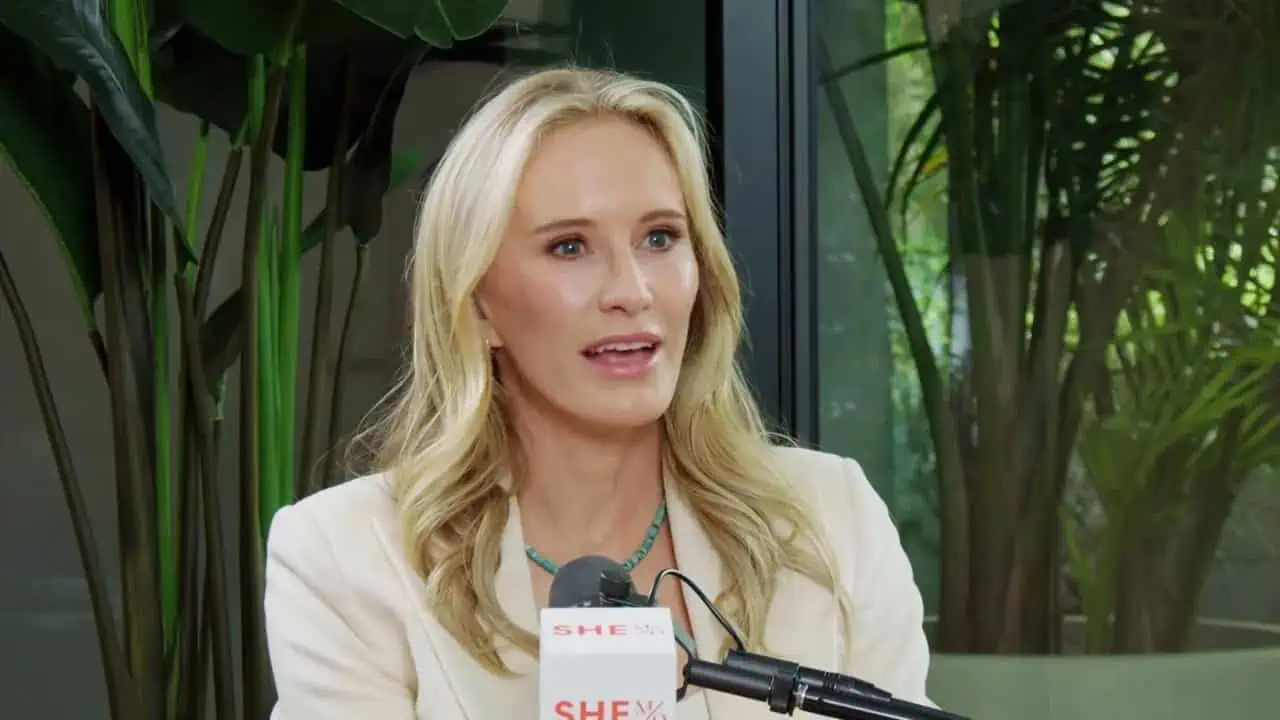
That is one of the most striking themes in her story: the telling began long before publication. First came the private act of trying to understand. Then came the harder act of trying to believe in herself.
How can someone look perfectly fine and still be carrying profound trauma?
One of the most powerful parts of Amy’s story is how much it challenges our assumptions about what trauma looks like.
There is a tendency to imagine survivors in narrow ways. We expect visible dysfunction, obvious collapse, or a life that bears clear external markers of suffering. But many trauma survivors become extraordinarily competent. They become hyper-responsible. They become high-performing. They become the one everyone relies on.
During our conversation, we reflected on how common it is for women with childhood trauma to embody traits like:
Perfectionism
People-pleasing
Hyper-independence
Emotional overcontrol
Fear of abandonment
Avoidance of confrontation
Hypervigilance
Overcompensating by meeting everyone else’s needs
Resilience that becomes almost armor-like
These qualities are often praised. In business, parenting, friendship, and leadership, they can look like excellence. But sometimes what gets rewarded by the world is also what helped someone survive.
Amy’s life reflected that tension. She did not disintegrate in public. She excelled. She built. She showed up. She cared for everyone. But eventually she recognized that some of her drive toward perfection and control was not just personality. It was an adaptation.
When Children Reflect Back the Truth, We Are Avoiding
What made Amy decide she could no longer keep running?
There were several threads, but one moment with her daughter became especially important.
One night, Amy’s 10-year-old daughter told her something that landed with enormous force: ” You are here, but you are not really here. You are nice, but you are not real. It was the kind of observation only a child can make with total clarity and no performance around it.
For Amy, that was a rupture. She realized that despite all the logistics, planning, and labor she poured into being an excellent mother, her daughter felt distance. Amy could do everything for her children and still not feel fully known by them.
That distinction is devastating and illuminating. Doing everything is not the same as being emotionally present. Perfection can disguise absence.
She also recognized another hard truth: in some ways, her child was trying to parent her. That realization forced a choice. She could continue operating as she always had, or she could listen.
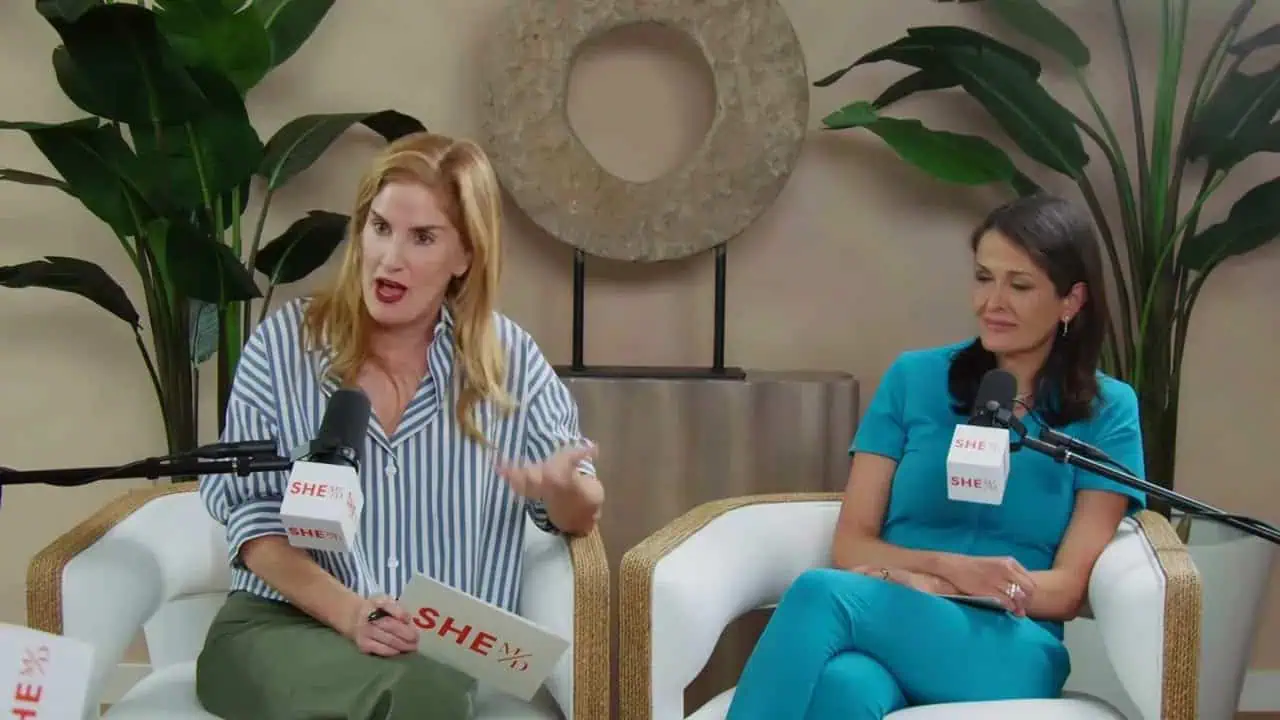
There is a broader insight here that many women will recognize. Trauma often resurfaces when our own children reach the age we were when something happened to us. Parenthood can stir dormant memories, body-based reactions, and emotional truths we have spent decades containing. A child’s vulnerability can wake up our own.
Why does trauma often emerge later in life?
There is rarely one neat answer. Amy is careful not to overstate certainty about the brain or memory, and that nuance is important. She speaks openly about trying to understand how the mind protects itself and why some experiences become inaccessible for periods of time.
What she did come to understand was that timing matters. Safety matters. Context matters.
She had a loving marriage. She had created a stable life. She had support. She had daughters who were reaching the ages she had been during her abuse. She was also learning more about PTSD through her husband’s interest in trauma related to veterans. That exposure expanded her understanding of post-traumatic stress beyond combat and made room for her to consider that trauma could also be shaping her own life.
Then came COVID, with its forced stillness. The busyness that once functioned like a shield fell away. There was nowhere to run. No endless movement. No constant external distraction. Just space, silence, and self.
And sometimes that is when what has been buried starts to speak.
Perfectionism as Protection
How did perfectionism show up in Amy’s life?
Amy speaks candidly about wanting to be the perfect daughter, the perfect wife, the perfect friend, the perfect mother, even the perfect survivor. That idea of becoming the “perfect survivor” is especially revealing.
Once she began investigating what had happened to her, she wanted a resolution. She wanted to pursue justice. She wanted to tie the story up neatly, almost like solving a case. She wanted an ending that would finally make the pain make sense.
That impulse is understandable, especially for women trained to perform strength and maintain order. If trauma created chaos, perfection promises mastery. If shame created silence, achievement creates applause. If violation creates helplessness, control becomes irresistible.
But healing does not usually obey the rules of performance. It is not linear, not tidy, and not always externally validating.
Amy describes how busyness had become a badge of honor. She kept many buckets going at once, just as so many women do. She ran a business, mothered four children, managed relationships, and pursued answers. The instinct was always to carry more, not less.
Yet the very strategies that made her effective were also part of what kept her from herself.
What role does control play after trauma?
Control can feel like safety. For someone who has experienced violation, staying in control of emotions, routines, body, and environment can become second nature.
Amy talked about being the responsible driver, the one who did not want to lose control. We discussed how many women who have lived through trauma avoid alcohol or other mind-altering substances for exactly that reason. The issue is not simply preference. It can be about never wanting to feel vulnerable again.
That need for control can seep into parenting, relationships, work, and identity. It can look admirable. It can even look healthy from a distance. But when overcontrol becomes constant, it often signals fear more than freedom.
This is why Amy’s eventual openness to a therapeutic process that involved surrendering some control was so profound. For someone whose life had been built around composure, certainty, and self-management, allowing herself to enter the unknown was itself a radical act.
The Hard Truth at the Center of The Tell
What happened to Amy as a child?
Amy shares that she was sexually abused by a trusted teacher beginning when she was 12 years old. The details are harrowing, and she makes the deliberate choice not to sanitize them in her book.
That decision was not easy. She has said there were moments when she wanted to remove the hardest lines, to soften what readers would encounter. But she ultimately understood that taking out the unbearable parts would also mean taking out the truth.
That honesty serves a purpose beyond memoir. It insists that abuse not be made palatable for public comfort. It refuses the habit of asking survivors to provide testimony without making anyone too uncomfortable in the process.
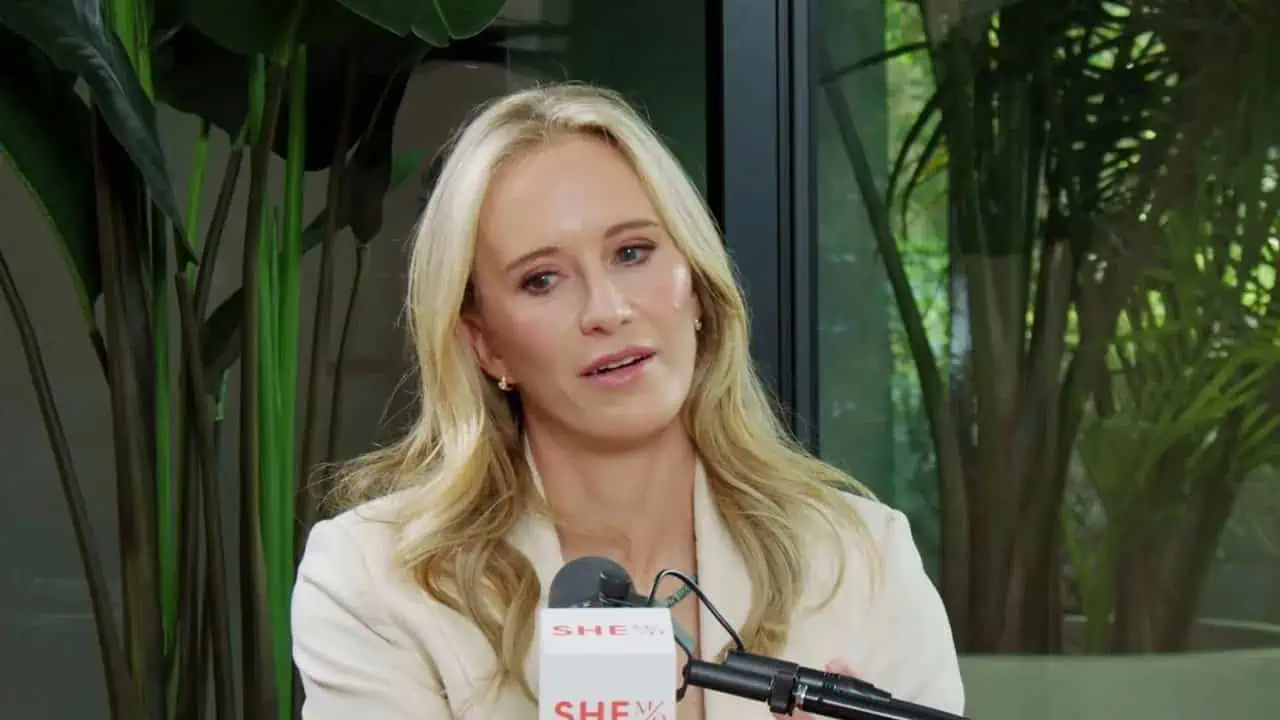
Amy also makes room for complexity. She describes having a beautiful family life and loving parents, while also carrying this devastating experience. That matters because abuse does not erase every good thing around it, and a good family does not make abuse impossible. Survivors often live inside these contradictions, and their stories deserve to hold all of it.
Why is it so hard for survivors to tell their stories?
Because telling is not just disclosure. It is exposure, risk, and often a confrontation with shame.
Amy names shame as one of the words she could not fully address while she was still sitting in it. That is such an important insight. Shame hides itself. It resists language. It encourages silence, distortion, self-doubt, and isolation.
And when survivors do tell, they are often met with questions that seek clean answers: Why now? Why not sooner? How could this happen? Why did no one know? Adult listeners often want a narrative that resolves uncertainty.
But trauma rarely offers that kind of neatness. Amy says that many of the questions people asked her did not have finite answers. The book itself became a way to move backward through confusion toward her younger self.
That framing is beautiful and heartbreaking. She did not write from childhood onward. She wrote from adulthood backward, trying to reach the girl inside her story and say: I believe you.
MDMA-Assisted Therapy and the Search for Compassion
How did Amy come to consider MDMA-assisted therapy?
It began when she noticed a profound shift in a close friend who had undergone psychedelic-assisted therapy. Amy could see that her friend was different in some essential way, especially in how she related to family and herself. That sparked curiosity.
Later, her husband also had a psychedelic experience of his own, and that further opened the possibility that this kind of therapeutic work might help her confront what conventional strategies had not resolved.
It is important to emphasize, as Amy does, that this was not impulsive. It was not about experimentation for its own sake. It was a serious therapeutic decision made in a context of trust and preparation.
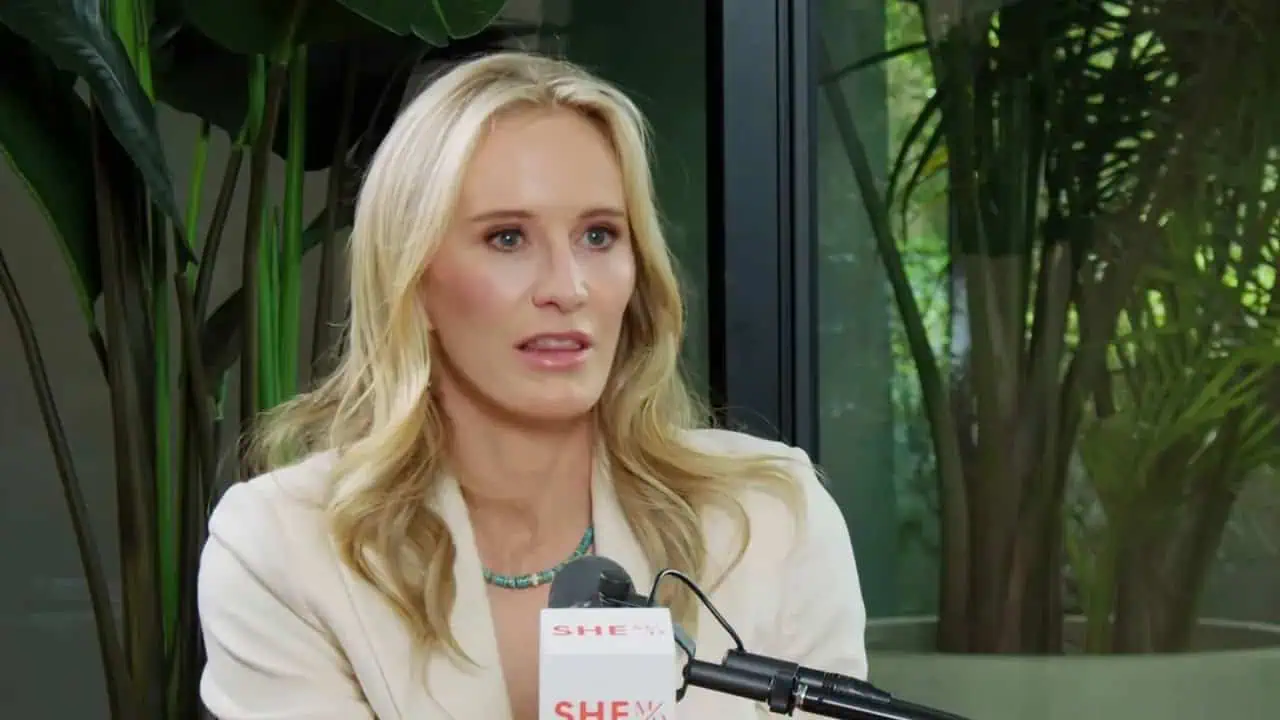
What did the experience do for her?
Amy entered the session thinking it might help her find compassion for herself. What unfolded was far more intense than she expected.
She describes the session as an eight-hour experience with a therapist she trusted deeply. Within minutes, she felt she was ready to tell everything. That response aligns with what Dr. Thaïs Aliabadi explained during our conversation: MDMA appears to help people access and process difficult memories and emotions by reducing fear and enhancing trust and emotional openness in a therapeutic setting.
In Amy’s case, the experience involved reliving dark memories and facing what had happened with painful clarity. But at the same time, she experienced a level of self-compassion she had never known before.
That duality is striking. The day was both brutal and kind. She revisited some of the hardest material of her life while, for the first time, extending to herself the tenderness she had always known how to offer others.
She described it as giving herself what she would naturally give a best friend. That may be one of the deepest lessons in her story: healing is not only about remembering. It is about changing the tone of our relationship with ourselves.
What should people understand about MDMA and PTSD?
During our discussion, Dr. Aliabadi noted that MDMA is not approved in the United States for PTSD treatment, though it has been studied extensively and came close to FDA approval. Research has generated significant interest because of its potential to help people process trauma in a therapeutic environment.
At the same time, this is not something to treat casually. Amy is clear that her experience was deeply intentional and guided. It was not a shortcut, and it was not a substitute for the larger work of healing.
We also discussed how some women live with complete or partial amnesia around childhood trauma, particularly when it occurs at a young age. They may be successful, resilient, and seemingly “fine,” while spending much of their lives running from something they cannot clearly identify. For some, therapies that help access memory or reduce fear around traumatic material can be life-changing.
Still, the larger message is not that one treatment is the answer for everyone. The larger message is that survivors deserve options, support, and informed care.
The South, Sexuality, and the Weight of Cultural Conditioning
How did Southern culture shape Amy’s understanding of herself?
Amy speaks movingly about being raised in Texas and the expectations placed on girls in Southern culture. There is pride in those roots, but there is also pressure: be polite, be proper, guard your sexuality, do not talk too openly, and keep yourself within certain lines.
That cultural conditioning can make trauma even harder to process. When girls are taught from a young age that sex is dangerous, shameful, or something to avoid discussing, abuse becomes even harder to name. The body becomes a site of secrecy instead of agency.
Amy mentions being unexpectedly triggered by hearing a young woman repeatedly say “yes ma’am,” not because the phrase itself was harmful, but because it tapped into a whole set of expectations and social scripts around femininity, obedience, and Southern womanhood.
This is an important part of the conversation. Trauma does not happen in a vacuum. It unfolds inside families, schools, communities, gender roles, and cultural rules. Healing often requires revisiting not just what happened, but the larger system of messages that shaped how we understood what happened.
What does permission have to do with healing?
Everything.
Amy returns again and again to the word permission. Permission to be honest. Permission to tell. Permission to care for herself. Permission to have boundaries. Permission to stop performing perfection. Permission to inhabit her own life fully.
That concept resonates far beyond trauma recovery. So many women are waiting for external approval before they allow themselves to make a change, tell a truth, set a limit, or choose themselves.
But one of the central insights of The Tell is that healing begins when we stop waiting for permission from the outside and start granting it from within.
The Investigation, the Need to Be Believed, and the Limits of Validation
Why did Amy feel driven to pursue justice so intensely?
Because justice can feel like proof. And proof can feel like relief.
Amy poured enormous energy into trying to bring her abuser to justice. She describes this period almost like living inside a thriller, one she had not intended to enter. She investigated, gathered, pursued, and searched for a meaningful ending.
But what became clear over time was that part of this drive came from wanting external validation. She wanted someone, somewhere, to confirm the truth in a way that would settle everything.
That longing is deeply human. Survivors often want what was denied to them in the original harm: belief, recognition, accountability, and protection.
Yet Amy eventually confronted a painful reality. Not everyone would believe her. Not every system would deliver closure. And if she made healing dependent on outside validation, she would remain trapped.
Her breakthrough came when she recognized that she did not need anyone else to validate her story for it to be true. She needed to believe in herself.
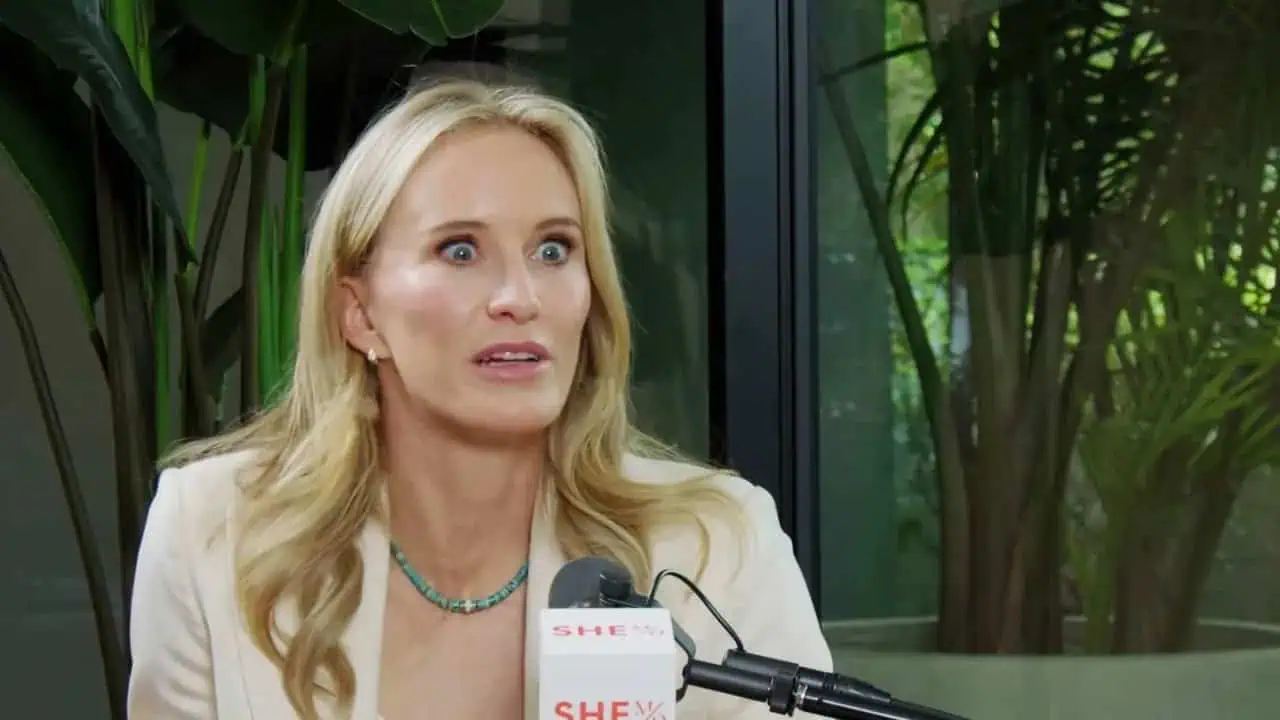
Why was the book almost called Believe Me?
Because that was the original plea at the heart of it.
Amy has shared that she first wanted to title the book Believe Me. But as she continued writing, she came to understand that the deeper work was not persuading others. It was arriving at self-belief. That shift changed everything, including the title.
The Tell is not just a statement made outward. It is also an internal crossing. It is the movement from uncertainty and self-doubt into self-trust.
Relationships as the Real Container for Healing
What role did relationships play in Amy’s recovery?
A tremendous one.
Although The Tell addresses trauma, Amy also describes it as a book about relationships. The people who received her story, held her through her unraveling, believed her when she could not always believe herself, and stayed near her while she moved through the telling were essential to her healing.
This includes her husband, though not in the way she first expected. At one point, she had to hear something difficult from her therapist: her husband could not be everything. He could not be her investigator, lawyer, doctor, and emotional anchor all at once. It was enough that he sat on the floor with her, held her hand, and remained present through the hardest moments.
There is wisdom in that. Even the most loving partner cannot occupy every role. Healing often requires a broader web of support and a clearer understanding of what each relationship can realistically hold.
Amy also emphasizes that some of the most transformative moments did not happen in formal therapeutic settings at all. They happened in one-on-one conversations with trusted friends. That reminder matters. Healing is not only clinical. It is relational.
What did she learn about parenting through this process?
She came to see both how her children had reflected truth back to her and how trauma had shaped some of her own controlling impulses as a parent.
One of her greatest hopes is that by blowing open the silence and telling the truth, she may have interrupted a cycle of trauma. She wants her children to know that they can come to her with anything. That is not a small thing. For many families, breaking a cycle begins not with perfection but with openness.
She also speaks with more compassion now for her childhood self. Looking back with an adult brain, she can see what her child self could not. That perspective allows for grief, but also for tenderness.
Vulnerability as Power
What did Amy discover about vulnerability?
That vulnerability is not a weakness. It is power.
She talks about seeing vulnerability almost as a math equation: vulnerability equals power. That is a radical reframe in a culture that often mistakes hardness for strength and concealment for dignity.
Her experience taught her that honesty levels the playing field. In business, in family, in friendship, in writing, truth changes the quality of connection. It removes the performance. It creates room for actual presence.
This does not mean disclosure without boundaries. Amy is thoughtful about what it means to tell carefully and responsibly, including with her children. But once she stopped trying to maintain the appearance of invulnerability, she found something sturdier on the other side.
She also decided something crucial about how she wanted to show up publicly. She did not want to become defined solely by sadness. She wanted to tell this story with joy, as herself, not as a flattened symbol of suffering. That choice is part of her power, too.
“There must be those among whom we can sit down and weep and still be counted as warriors.”
That quote, which Amy uses in connection with her journey, captures the spirit of her book beautifully. The ability to weep does not cancel strength. It reveals it.
Why The Tell Matters Beyond One Person’s Story
What can other women take from Amy’s story?
Amy resists prescribing a single takeaway, and that feels right. Different readers will find different threads that speak to them. Some will see themselves in the perfectionism. Some in the silence. Some in the motherhood. Some need control. Some are in a desperate search to be believed.
But a few core truths rise to the surface:
You can build a beautiful life and still need to heal.
Success does not erase trauma.
Busyness can hide pain, but it cannot resolve it.
Shame loses power when it is named.
You do not need external validation for your story to be real.
Support matters, and healing is often relational.
Vulnerability can become a source of strength rather than exposure alone.
To feel joy fully, many of us must first allow ourselves to feel pain honestly.
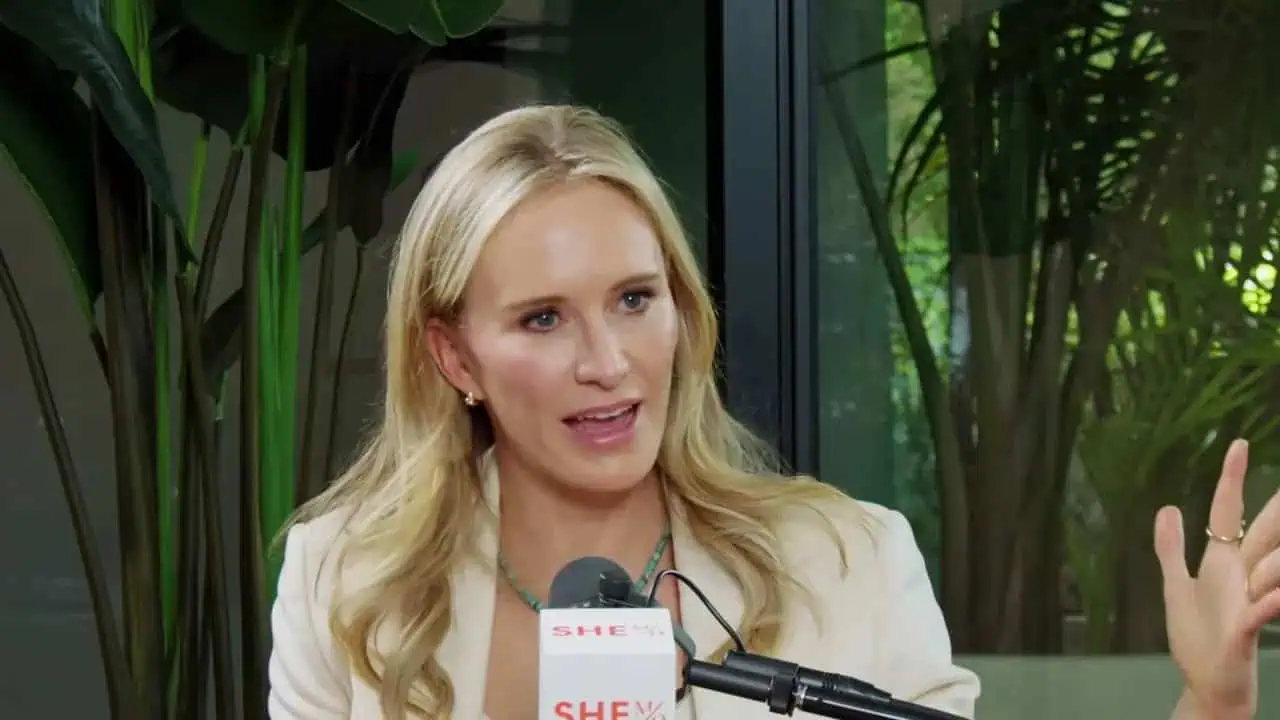
Dr. Aliabadi put this beautifully during our conversation: sometimes to reach the light, we have to go through the darkest dark. Amy echoes that idea in one of the most memorable lines connected to the book, saying that in order to feel the joy, we have to wallow in the pain.
Not everyone will take the same path. Not everyone will write a memoir. Not everyone will use medicine-assisted therapy. But the essential movement remains the same: away from performance, away from hiding, away from running, and toward truth.
FAQs
Who is Amy Griffin?
Amy Griffin is the founder and managing partner of G9 Ventures, an investor in generation-defining brands, and the author of the memoir The Tell. She is also a prominent supporter of women founders and female-led businesses.
What is The Tell about?
The Tell is Amy Griffin’s memoir about childhood sexual abuse, repressed memory, shame, perfectionism, the pursuit of justice, and the transformative power of telling the truth. It is also a book about relationships, self-belief, and healing.
What role did perfectionism play in Amy Griffin’s story?
Perfectionism functioned as both a coping strategy and a mask. Amy describes trying to be the perfect daughter, wife, mother, friend, and even the perfect survivor. Her story shows how high achievement and overfunctioning can sometimes be trauma responses.
Did Amy Griffin talk about repressed or recovered memories?
Yes. She speaks openly about having to work backward toward her childhood self and trying to understand fragmented or inaccessible memories connected to trauma. She is careful not to overstate certainty, but she discusses the difficulty of making sense of what the brain protects us from.
What did MDMA-assisted therapy mean in Amy’s healing process?
Amy describes MDMA-assisted therapy as a pivotal part of her process. In a guided therapeutic setting, it helped her access difficult memories while also experiencing an unusual level of self-compassion and emotional openness. She emphasizes that this was a serious and intentional therapeutic decision.
Is MDMA approved for PTSD treatment in the United States?
No. During the conversation, Dr. Thaïs Aliabadi noted that MDMA is not currently approved in the United States for PTSD treatment, although it has been studied extensively and has shown promising results in clinical research.
What are some common trauma responses discussed in this interview?
The discussion touches on anxiety, shame, people-pleasing, hyper-independence, overcontrol, perfectionism, avoidance of confrontation, hypervigilance, and resilience that can sometimes function as a survival strategy rather than a sign that someone is fully well.
What is the central message Amy Griffin wants people to understand?
One of the strongest messages in Amy’s story is that vulnerability is power. Healing begins when we stop waiting for others to validate us and begin believing in ourselves, telling the truth, and giving ourselves permission to live more honestly.
A Story of Telling, Believing, and Becoming Real
Amy Griffin’s journey is not inspiring because it is polished. It is inspiring because it is honest. She does not offer a neat formula for healing or a triumphant version of suffering scrubbed clean for public consumption. She offers something better: a record of what it means to live through the mess of remembering, investigating, grieving, believing, and becoming more fully oneself.
What stays with us most is not only the pain she endured, but the integrity with which she now speaks about it. She reminds us that many women are carrying stories they have not yet found words for. She reminds us that high function does not always mean wholeness. And she reminds us that truth, even when it arrives through darkness, can still become a path toward light.
The Tell is ultimately about more than disclosure. It is about what happens after the telling begins. It is about the long, brave work of turning toward yourself and refusing to disappear inside the life you built.
And maybe that is the real transformation at the center of Amy’s story: not simply that she remembered, not simply that she spoke, but that she allowed herself to become real.
Concerned About Your Health? Talk to Dr. Aliabadi
Dr. Aliabadi is an expert OB/GYN who is knowledgeable in all aspects of women’s health and well-being. Dr. Aliabadi and her caring, supportive staff are available to support you through PCOS, endometriosis, menopause, childbirth, infertility, or routine gynecological care. We invite you to establish care with Dr. Aliabadi. Call us at (844) 863-6700 or
This article was created from the video The Tell: Amy Griffin’s Journey Through Trauma, Truth, and Transformation | SHE MD for Dr. Thais Aliabadi’s website.