Most women have been told for years that a well-woman visit means a pap smear, maybe a breast exam, and a mammogram starting at 40. That framing, says renowned OB/GYN Dr. Thais Aliabadi, leaves out almost everything that actually matters for a woman’s long-term health.

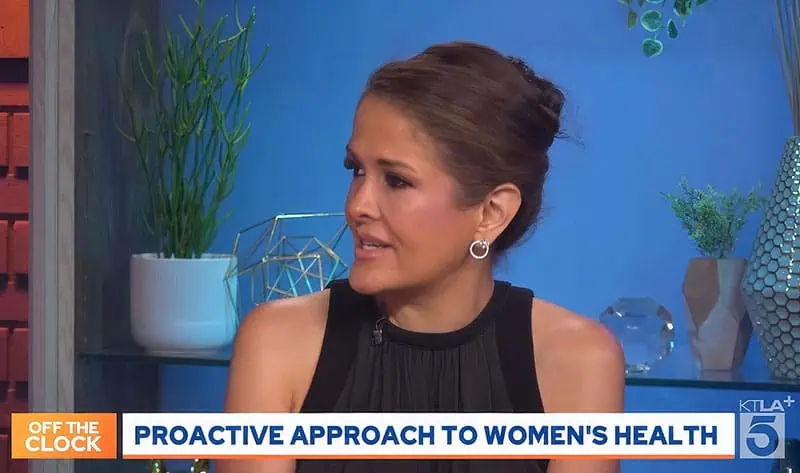
Dr. Aliabadi, widely known as “Dr. A” and as the OB/GYN to celebrities including the Kardashians, Hailey Bieber, and Rihanna, sat down with KTLA Morning News in Los Angeles in May 2026 during Women’s Health Month for a wide-ranging interview.
She covered the most important gaps in women’s healthcare, a major new medical name change, fertility preservation, a breakthrough prenatal test, and breast cancer risk assessment. The conversation was filled with information that many women have never heard from their own doctors.
Dr. Aliabadi is also the co-host of the SheMD Podcast, which she launched specifically to help women educate themselves and become their own healthcare advocates. Here is everything she covered in the interview.
Your annual well-woman visit should cover a lot more than a pap smear
Dr. Aliabadi opened by challenging the standard definition of a well-woman exam. While the traditional visit focuses on a pap smear, breast exam, STD screening, birth control discussion, and eventually a mammogram, she argues that this approach treats women as a reproductive system rather than as a whole person.
A truly comprehensive well-woman visit, she says, should address all of the following:
- Metabolic health
- Cognitive and brain health
- Gut health
- Bone health
- Fertility awareness and egg count
- Genetic testing
- Lifetime risk of breast cancer
- Sleep quality
- Eating disorders and food-related concerns
Her recommendation: women should begin having these comprehensive conversations with their OB/GYN three years after becoming sexually active, or at age 21, whichever comes first. Waiting until 40 for serious screenings means missing critical windows for prevention and early intervention.
A theme that ran throughout the interview was how often women’s symptoms are dismissed. Women who report irregular periods, brain fog, weight gain, acne, hair loss, or facial hair are frequently told their symptoms are normal. Dr. Aliabadi says that culture has to change and that the burden of advocacy falls more often on the patient than it should.
PCOS just got a new name, and it matters

One of the most significant announcements in the interview: Dr. Aliabadi revealed that polycystic ovary syndrome (PCOS) has been officially renamed. The new name is polyendocrine metabolic ovarian syndrome (PMOS).
The name change reflects a much deeper understanding of what the condition actually is. PMOS is not simply an ovarian problem. It is a complex endocrine and metabolic disorder, and the new name is meant to communicate that reality more accurately to both patients and clinicians.
How common is PMOS?
PMOS affects 15% of women of reproductive age. That represents millions of women, and yet 75% of them are never diagnosed. Dr. Aliabadi called this one of the most consequential failures in women’s healthcare. The condition is also a leading cause of infertility, which makes the diagnosis gap especially harmful. Many women only discover they have PMOS when they struggle to conceive, by which point the condition may have already caused lasting damage.
How PMOS is diagnosed
Diagnosis requires meeting two out of three criteria:
- A history of irregular periods
- PMOS morphology on ultrasound, or a high egg count on imaging
- Symptoms of high testosterone, including facial hair, body hair, acne, or hair thinning
Beyond those markers, PMOS shows up in a wide range of ways that often go unrecognized:
- Anxiety and depression
- Binge eating, food cravings, or disordered eating
- Significant weight gain that does not respond to diet or exercise occurs in approximately 75% of patients
- A lean body type with hormonal symptoms occurs in approximately 25% of patients
Dr. Aliabadi pointed out that PMOS patients are disproportionately represented inside eating disorder treatment centers, and that they are very often being treated for the eating disorder without anyone ever identifying the underlying hormonal condition that is driving it.
What to do if you think you have PMOS
Dr. Aliabadi has developed a free screening quiz on Ovii.com that helps women assess their likelihood of having PMOS. She encourages anyone who suspects they may have the condition to take the quiz and then bring the results to their doctor, asking for a more thorough workup that includes:
- Thyroid panel
- Prolactin levels
- Testosterone and DHEAS levels
- AMH (anti-Mullerian hormone) test to assess egg count
- Pelvic ultrasound
These are not tests most doctors will order unprompted. Dr. Aliabadi is direct about this: women need to ask for them by name.
Why fertility awareness should start in your 20s, not your 30s
Dr. Aliabadi walked through a set of facts about egg count that every young woman should understand. Women are born with one to two million eggs. By the teenage years, that number has already dropped to between 300,000 and 500,000. By age 30, it is typically around 200,000 or fewer. By menopause, it has declined to roughly 1,000.
That natural decline is made worse by environmental factors: exposure to toxins, smoking, a poor diet, and lack of exercise all accelerate both the quantity and quality loss. But two conditions are the primary drivers of preventable fertility loss: endometriosis and PMOS. Both are dramatically underdiagnosed, and both can quietly erode fertility for years before a woman knows she has either one.
The endometriosis diagnosis gap
Endometriosis is a condition in which tissue similar to the uterine lining grows outside the uterus, causing pain, inflammation, and scarring. Women with endometriosis often report painful periods, pelvic pain, pain with intercourse, and bloating. Despite these symptoms, the average time to diagnosis in the U.S. is nine to 11 years.
By the time many women with endometriosis are finally diagnosed, the disease has already done significant damage. Their pelvis may be scarred, their egg count depleted, their egg quality compromised. They end up in fertility clinics dealing with consequences that could have been prevented with earlier detection.
Dr. Aliabadi made a bold and direct point on this: “If you send every 20-year-old woman to my office one time, I will take them out of the hands of these fertility doctors.” The message is clear. If symptoms are taken seriously early and underlying conditions are diagnosed and treated, infertility in many of these women is preventable.
A new blood test can predict preterm birth risk before symptoms appear
Preterm birth, defined as delivery before 37 weeks of pregnancy, affects 10% of pregnant women and carries serious risks for the baby, including time in the neonatal intensive care unit (NICU) and complications with long-term effects.
The current standard of care has a major blind spot. Even with close to 9,000 deliveries of experience, Dr. Aliabadi says she can identify only about 20% of at-risk patients before labor begins. The other 80% remain invisible to clinicians until warning signs appear, by which point intervention options are limited.
The Preterm test from SARA Prognostics
A blood test called Preterm, developed by SARA Prognostics, is changing that picture. It is performed between 18 and 20 weeks and six days of pregnancy, and it identifies patients who appear low-risk by standard measures but who are actually at elevated risk for preterm delivery.
When a patient tests positive, the recommended protocol is:
- Nightly vaginal progesterone through 36 weeks of pregnancy
- Daily low-dose aspirin, 81 milligrams
- Modified activity level as needed
The results have been significant. Using this protocol, preterm birth before 32 weeks has been reduced by 56%, and preterm birth before 35 weeks by 32%. NICU admissions have dropped by 20%. Every patient in Dr. Aliabadi’s practice who tested positive and followed the protocol went on to deliver at or beyond 37 weeks.
The test is currently available but largely unknown, even among OB/GYNs. Dr. Aliabadi encouraged every pregnant woman to ask her provider about the Preterm test by name at her 18-week visit.
Every woman should know her lifetime risk of breast cancer

The average American woman has a 12.5% lifetime risk of developing breast cancer. But that is an average. Individual risk can be significantly higher depending on several factors, and knowing where you fall on that spectrum can entirely change your screening timeline and approach.
Dr. Aliabadi’s position is simple: if you know your name and your date of birth, you need to know your lifetime breast cancer risk. And calculating it is easier than most women realize.
How to calculate your personal risk
The standard tool is the Tyrer-Cuzick risk assessment model, which estimates a woman’s risk over 10 years and over her lifetime. Dr. Aliabadi offers a free version of this calculator on her website. The key factors include:
- Family history of breast or ovarian cancer, especially in first-degree relatives
- Prior breast biopsies that showed atypical cells
- Breast density
- Height and weight
If your lifetime risk is calculated at 20% or higher, you are in the high-risk category. That changes your recommendations significantly. Instead of starting mammograms at 40, screening should begin at 30. Imaging should include a 3D mammogram, an ultrasound, and an MRI. Dr. Aliabadi is clear that the MRI is not optional for high-risk patients.
Genetic testing for cancer risk
For women with a personal or family history of breast or ovarian cancer, Dr. Aliabadi recommends genetic cancer testing. She uses the MyRisk test by Myriad Genetics in her practice, which screens for 63 cancer-causing genes. It calculates the Tyrer-Cuzick score and incorporates DNA markers from the patient’s genome to further refine the lifetime risk estimate.
The test is available through a physician and gives a more complete picture of risk than a family history review alone. For any woman with a relevant family history, bringing this up at the next well-woman visit is a good first step.
How to actually talk to your doctor about all of this
One of the most practical threads in the interview was how to navigate a healthcare system that often fails to initiate these conversations. Dr. Aliabadi was candid: most of the tests and discussions covered in this interview will not occur unless the patient specifically requests them.
That is not entirely the fault of individual physicians. The traditional well-woman exam is structured around a narrow checklist of services, and anything beyond that checklist requires the patient to know what to ask for. Here are the key asks from the interview, organized by topic:
- For PMOS concerns: Request a thyroid panel, prolactin, testosterone, DHEAS, AMH, and pelvic ultrasound. Bring your Ovii.com quiz results as a starting point for the conversation.
- For fertility awareness: Ask about your AMH egg count even if you are not currently trying to conceive. Ask whether symptoms like painful periods or pelvic pain could point to endometriosis or PMOS.
- For pregnancy: Ask your OB/GYN about the Preterm blood test from SARA Prognostics at your 18-week appointment.
- For breast cancer risk: Use the Tyrer-Cuzick tool to calculate your lifetime risk. If it is 20% or higher, ask that imaging begin at age 30 and ensure that an MRI is included. Ask about MyRisk genetic testing if you have a relevant family history.
Dr. Aliabadi started the SheMD Podcast specifically because she saw how many women were leaving their doctors’ offices without this information. The podcast covers women’s health from fertility to menopause in depth, with episodes designed to help listeners walk into their next appointment better prepared.
Watch the full KTLA interview
This interview originally aired on KTLA Morning News in Los Angeles on May 12, 2026, during Women’s Health Month. The full segment is available on the KTLA Plus app. Dr. Aliabadi covers each of these topics in depth, and the video is well worth watching alongside this written summary.
Ready to take a more proactive approach to your health?
If this interview raised questions about your health, or if you recognized yourself in any of the conditions Dr. Aliabadi described, the best next step is to have a conversation with your OB/GYN. Come prepared with specific questions, ask for the tests by name, and do not accept “that’s normal” as a final answer if something does not feel right.
Source: KTLA Morning News, Los Angeles. Interview with Dr. Thais Aliabadi, OB/GYN, co-host of the SheMD Podcast. Aired May 12, 2026, during Women’s Health Month. Full segment available on the KTLA Plus app.