There are some decisions that look simple from the outside and feel anything but simple when we are the ones living them. Surrogacy is one of those decisions. Fertility treatment is one of those decisions. Divorce is one of those decisions. Brain surgery definitely falls into that category too.
When we talk honestly about motherhood, infertility, IVF, gestational surrogacy, neurological diagnoses, blended families, and starting over, we usually find that none of these stories fit into neat little boxes. They are emotional, messy, deeply personal, and often misunderstood.
That is exactly why this conversation matters.
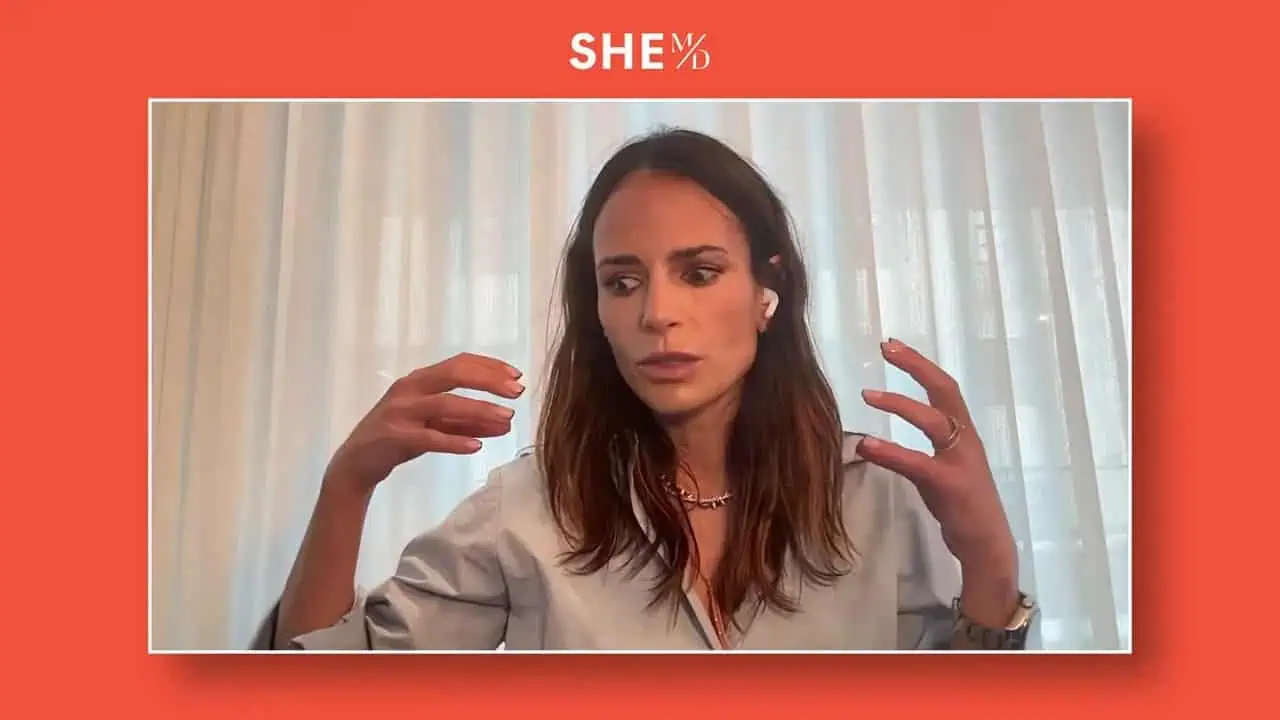
Here, Dr. Thais Aliabadi and Mary Alice Haney get into the full arc of Jordana Brewster’s journey, from having a seizure at 28 and learning she had a cavernous malformation in her brain, to making the difficult decision not to carry a pregnancy, to navigating IVF, trusting a surrogate, becoming a mother, undergoing awake brain surgery, and rebuilding her life in her 40s with more honesty and self-trust than ever.
Table of Contents
On Motherhood, Health, Surrogacy, and Reinventing Our Lives
When did we know motherhood was something we wanted?
We always knew children were part of the dream. But wanting kids in an abstract way and arriving at the moment when it feels urgent are two very different things. That shift often happens quietly. One day we are thinking, yes, someday. Then suddenly it becomes, okay, if this is happening, it is time.
For Jordana, that moment came in her 30s. There was desire, yes, but there was also the practical pressure so many women feel. Timing, career, age, and the fantasy that we can plan pregnancy neatly around the rest of life. That illusion is powerful. We tell ourselves we will do it between projects, during hiatus, at the perfect time. Then life reminds us that fertility does not always cooperate with scheduling.
That alone is a hard lesson. But in her case, there was much more at stake than timing.
What was the diagnosis that changed everything?
At 28, Jordana had her first seizure out of nowhere. No warning signs. No long history of symptoms. No obvious clue that a major neurological issue had been sitting quietly in the background.
After that seizure, she learned she had a cavernous malformation, sometimes referred to as a CVM, a vascular abnormality in the brain. In her case, it was located in a part of the brain tied to language and communication. That detail mattered enormously, both for daily life and for any future surgery.
The diagnosis changed her relationship to her body immediately. Seizures are terrifying on their own, but living with the possibility of another one creates a constant undercurrent of vigilance. We start monitoring everything. Sleep. Stress. Medications. Supplements. Anything that could affect risk. We want control, especially when control feels fragile.
It also changed the conversation about pregnancy. She was told that carrying a baby could be dangerous because of where the malformation was located. That is the kind of information that lands hard. It is not a cosmetic concern. It is not convenience. It is not vanity. It is a real medical risk with potentially devastating consequences.

For anyone navigating fertility while dealing with a medical condition, this part of the story feels very familiar. We may want one thing deeply while knowing our body cannot safely do it the way we imagined. That grief is real. So is the adaptation that follows.
If fertility questions are part of your own story, it can help to read broader resources on infertility and fertility care so the process feels less isolating and more informed.
Did surgery feel like an option at that point?
At first, there was discussion of removing the malformation. But once the details came into focus, it was not something to take lightly. During testing, it became clear that surgery itself carried major uncertainty. There was a possibility surgeons could open the skull and still not be able to remove the lesion safely.
That is an impossible kind of maybe. We understand why someone would pause there.
So instead of pushing toward a risky operation at that stage, Jordana made a different decision. She chose gestational surrogacy.
Was choosing surrogacy emotionally difficult?
Yes, but maybe not in the way people assume.
One of the most interesting things she shared is that she did not have a strong emotional attachment to the idea of carrying. For some women, pregnancy itself is central to the dream. For others, the core desire is to become a parent, however that happens. Those are both valid experiences.
In her case, that made the pivot toward surrogacy more straightforward emotionally than it might have been for someone who longed intensely for the physical experience of pregnancy.
Still, straightforward does not mean easy.
There was the reality of IVF. There was the search for the right surrogate. There was the business side of a profoundly intimate arrangement. There was also the cultural baggage. Surrogacy still gets flattened into lazy assumptions, especially when the public looks at women and decides they know why a reproductive choice was made.
That judgment is exhausting. It is also often wildly uninformed.
What do people get wrong about gestational surrogacy?
Almost everything, honestly.
One of the biggest misconceptions is that surrogacy is casual, exploitative by default, or chosen for shallow reasons. That framing ignores the fact that many women turn to surrogacy because carrying is medically dangerous, impossible, or deeply risky. It also ignores how regulated the process can be in the United States, and how many legal, medical, and ethical safeguards are involved.
Jordana also pointed to the language around surrogacy and how dehumanizing it can be. In Brazil, a phrase used for surrogacy translates roughly to “belly for rent,” which captures exactly the kind of reduction that makes this topic so loaded. It strips away dignity, complexity, and the human relationships at the heart of the process.
Her view is much more grounded. The contractual part may feel uncomfortable, but it exists to protect everyone involved. That does not make it cold. It makes it structured.
And the personal side of surrogacy is not mechanical at all. It requires trust, instinct, and a leap of faith.
How did we find the right surrogate?
Very carefully, and not without skepticism.
One of the strongest points in this conversation is that not every agency felt right. Some came across as transactional in the worst way, like a matching service trying to package something profoundly human into a glossy sales pitch. That can feel gross fast.
So the process became less about finding a perfect system and more about doing the research, asking hard questions, and trusting instinct when the right person appeared.
When Jordana met her potential surrogate, there was a gut feeling that clicked. She trusted her. She believed the motivation was genuine. She felt reassured by the fact that this woman was a mother herself and could communicate openly through the process.
That matters. So much of gestational surrogacy rests on our willingness to release the illusion that we can micromanage every outcome. The right match is not just a legal fit. It is an emotional fit.
How hard was IVF, really?
Not simple. Not neat. Not guaranteed.
This is another place where fantasy collides with reality. People talk about IVF as though it is a straightforward medical workaround. Do the treatment, get embryos, move on. But anyone who has lived it knows better.
IVF can be physically demanding, emotionally brutal, expensive, slow, and unpredictable. Success is never automatic. Bodies do not always respond the way we want. Protocols change. Follicles do not always cooperate. Embryo transfer is not magic.
Jordana’s first child, Julian, came after a second attempt. Her second son, Rowan, came through an even more difficult process. There may have been endometriosis in the picture. It became much harder to get her follicles working in sync and retrieve viable eggs.
That part of the story is important because it strips away the myth that once surrogacy enters the plan, the rest is easy. It is not. There is still a full fertility journey on the front end.
For a deeper overview of how treatment usually unfolds, this guide to IVF for infertility can help put the medical steps into context.
What is the fertility mistake we keep making?
We focus almost entirely on women.
Jordana put this bluntly, and she is right. When infertility enters the room, women often get scrutinized under a microscope. Hormones, egg quality, age, workouts, stress, birth control history, sleep, food, everything becomes our responsibility to decode and optimize.
Meanwhile, the other 50 percent of the equation can get treated like an afterthought.
That is a huge mistake.
Her advice was simple and practical: do not ignore the man’s role. Test sperm early. Ask direct questions. Make sure we are not putting ourselves through hell while overlooking something basic and measurable on the male side.
It sounds obvious, but as she pointed out, it often gets missed. Women blame ourselves fast. Medicine and culture sometimes help us do it. We need to interrupt that pattern.
What was the hardest part of surrogacy that nobody talks about?
The surrender.
If we are wired for control, surrogacy asks us to practice a form of trust that can feel almost impossible. We are relying on another person’s body, another person’s choices, another person’s rhythms. Even with legal agreements in place, we cannot control every bite of food, every stress response, every movement, every decision.
Jordana was clear that she was never going to be the kind of intended parent trying to police every detail. That was not her style. But she also admitted that this was the ickiest part of the process. Not because the surrogate did anything wrong, but because the arrangement itself exposes how little control any of us truly have.
The answer, again, was trust.
Ask the right questions up front. Choose someone healthy, self-aware, and willing to advocate for herself. Then loosen the grip.
In a strange way, that becomes preparation for parenthood itself. We all imagine we will shape every outcome. Then our children arrive as themselves, with their own personalities, needs, and opinions, and we realize the job is not control. It is relationship.
What was it like being in the delivery room?
It was intense, intimate, and unforgettable.
With Julian’s birth, the labor stretched on for hours. There was even a surreal moment when the original obstetrician fainted mid-labor and another doctor had to step in. Sometimes birth stories remind us that medicine can be dramatic in ways nobody scripts.
But through all of that, Jordana was right there. Front row. Ready to receive her son. That mattered deeply to her. She wanted skin-to-skin contact immediately. She wanted presence. She wanted the first moments to feel embodied and real.
That detail cuts through another common misconception about surrogacy. Intended parents are not emotionally distant from the birth. They are often profoundly present, carrying enormous anticipation, gratitude, fear, and love into that room.
Why does she regret not taking maternity leave?
Because she felt she had not earned it.
That one lands hard.
When Julian was born, she was working on Dallas and kept going. In her mind at the time, maternity leave did not fully belong to her because she had not carried the baby. And as an actor, there was already pressure to keep moving, take jobs when they come, and not create complications for production.
Looking back, she sees that differently.
She believes now that she cheated herself out of that tender early period, the nesting, the slowness, the uninterrupted bond-building that is just as meaningful for a non-gestational mother. She had more of that with Rowan and felt the difference.
It is an important reminder for all of us. Motherhood is not validated by pregnancy alone. If a baby arrives in our family, that transition deserves space. Full stop.
How did living with seizures affect daily life?
For years, the condition was medically controlled, but emotionally it was never really absent.
After that first seizure, Jordana lived with medication management and regular neurology appointments. She also lived with the practical consequences. After a seizure, driving restrictions kick in. There is always the fear of recurrence. There is the constant mental scanning for warning signs.
There was another layer too. She was a young actress in a business that was less open then about health struggles. She worried that if people knew she had a seizure disorder, they might stop hiring her. So she kept it close, telling only a small number of people, usually one trusted person on set in case of emergency.
That kind of secrecy takes a toll. When we cannot speak openly about a health condition, it often becomes heavier.
What changed after the breakthrough seizures?
For about a decade, medication kept things under control. Then at 38, breakthrough seizures started happening.
That was the turning point.
She had two major seizures close together, one in a car and another at Nobu Malibu, the kind of place that afterward becomes emotionally charged simply because something terrifying happened there. She was doing everything she could to reduce risk, controlling sleep, diet, medications, and anything that might contribute to bleeding or seizure activity. Yet it was still happening.
At some point, even highly disciplined people hit a wall where management no longer feels like enough. That was her moment. She knew the malformation needed to come out.
What does awake brain surgery actually feel like?
As wild as it sounds, it was exactly that. Awake. Interactive. Precise.
Because the malformation was in a language area of the brain, surgeons needed her conscious during critical parts of the operation. They shaved only part of her head, opened the skull, and had her respond to prompts, word associations, and questions while mapping which brain areas were safe and which were not.
If she could not produce a word or answer correctly, that signaled they were too close to a vital area and needed to back off.
One of the strangest parts she described was the experience of aphasia, knowing the answer internally but not being able to say it out loud. That gap between thought and expression shook her. It also changed how she thinks about people who cannot easily articulate what is happening inside them.
That is one of the hidden gifts of surviving something extreme. It often expands empathy.
Was the surgery successful?
Yes. Completely life-changing.
The surgeons removed the malformation, and she has now been seizure-free and symptom-free for six years. After living under that constant cloud of uncertainty, the relief was enormous.
For control-oriented people especially, seizures carry a particular kind of fear. The loss of control is not abstract. It is physical, public, and frightening. To have that burden lifted after years of vigilance is no small thing.
Why did 2020 become such a turning point?
Because everything changed at once.
It was the beginning of the pandemic. Her boys were young. She underwent brain surgery. She got divorced. She fell in love again. She described it like Eat, Pray, Love on steroids, with brain surgery added in.
That line is funny, but it also captures something true. Major reinventions rarely happen in one tidy category of life. Once one truth gets faced, others tend to follow. Health can force clarity. So can stillness. So can the realization that we do not want to keep living on autopilot.
For her, 2020 seems to have stripped away hesitation. She was no longer interested in carrying burdens just because she had learned to carry them well.
How did we know it was time to leave a marriage?
Not from one dramatic morning. From accumulation.
She described marriage in a way many people will recognize. At first there are goals, milestones, projects. Build the life. Buy the house. Have the children. Renovate. Keep moving. Achievement can cover disconnection for a surprisingly long time.
Then eventually the distractions quiet down enough for the harder questions to surface. Are we still aligned? Are we still intimate in the ways that matter? Do we actually like the life we are building together, or are we just continuing momentum?
For Jordana, the answer became clear slowly. The spark was gone. The partnership no longer felt true to who she was becoming. She also felt crowded by the communal shape of family life around her and wanted more agency, more space, more ability to mother and live in a way that felt like her own.
That kind of clarity can be painful, but it is also liberating.
What does good divorcing look like?
It looks like respect. It looks like co-parenting without turning the children into messengers. It looks like enough healing that everyone can stop performing war.
Jordana speaks warmly about her former husband as a co-parent, and that matters. Not every divorce gets to that place, but when it does, it creates a more stable environment for the kids and for the adults trying to rebuild their lives.
There is a larger lesson here too. Reinvention does not have to require destruction. Sometimes it requires honesty, boundaries, and enough maturity to let a family change shape without pretending it has disappeared.
That same spirit shows up in conversations about self-advocacy in medicine too. When something feels off, whether in our bodies or our lives, we owe it to ourselves to speak up. This piece on advocating for yourself at the doctor echoes that same principle.
What have we learned about blending families?
That fantasy and reality are very different things.
At first, Jordana imagined a kind of Brady Bunch setup. Everyone together, one home, one sweet integrated family unit. Instead, what emerged was something more nuanced and more realistic.
The children’s ages ranged widely. The exes mattered. Different cities actually worked better. The emotional needs were not the same across the board. Some children wanted closeness. Some needed respectful distance. None of that meant the family was failing. It meant the family was real.
Her advice here was practical and wise:
- Get along with your partner’s ex if at all possible.
- Use transparency as a default.
- Align on rules and values across households.
- Do not let the children triangulate the adults.
- Respect the role of existing parents instead of trying to replace them.
- Let relationships with stepchildren build at their own pace.
That last point is especially important. When she married Mason, his vows to her children were different from hers to his. His children already had a mother, and what they needed from Jordana at first was not a substitute parent but loving space. That distinction shows real emotional intelligence.
How did loss shape the next chapter of life?
When Mary Alice asked about Paul Walker, the answer shifted into something tender and heavy.
Paul died not long after Julian was born. The grief was daily and disorienting. There are losses that feel impossible because the person was so alive in the world, so warm, so present, that their absence does not make sense at first.
What stood out most was how she honors him now. Through the Paul Walker Foundation. Through closeness with his daughter Meadow. Through protecting his image from anything exploitative. Through memory that is active, not performative.
That is a meaningful model for grief. Not pretending it is over. Not commercializing it. Just tending it with care.
What would we tell our younger selves?
Relax.
Have more fun. Stop believing everybody is scrutinizing you. They are mostly thinking about themselves. Loosen up. Party a little more. Stop gripping so hard.
It is funny advice, but also serious. So many high-achieving women spend our younger years being good, being disciplined, being careful, being productive, being approved of. Then we hit our 40s and realize we mistook tension for virtue.
There is freedom in growing out of that.
What is she looking forward to now?
Aging, surprisingly enough.
Not because aging is always easy, but because it can bring a certain creative liberation. She talked about being less fixated on prettiness, more interested in messier and richer characters, and excited by the sense that she is just getting started.
That is a powerful note to end on. After seizures, stigma, IVF, surrogacy, surgery, divorce, grief, and a total life overhaul, the feeling is not depletion. It is momentum.
There is something deeply reassuring about that. We do not age out of becoming more ourselves. If anything, we grow into it.
FAQs
Why did Jordana Brewster choose surrogacy?
She chose gestational surrogacy after learning that carrying a pregnancy could be dangerous because of a cavernous malformation in her brain and the risk tied to that condition.
What brain condition was she diagnosed with?
She was diagnosed with a cavernous malformation, also called a CVM, which is a vascular abnormality in the brain. In her case, it was located in an area connected to language and communication.
Did IVF work right away for her?
No. Her first son was conceived after a second attempt, and the process for her second child was even more difficult, with challenges related to getting her follicles to respond properly.
What was the hardest part of surrogacy for her?
The hardest part was letting go of control and trusting another person to carry the pregnancy while accepting that not every detail could be managed.
Was she awake during brain surgery?
Yes. Because the malformation was near a critical language area, she underwent awake brain surgery so surgeons could test her speech and word recall during the procedure.
Has she had seizures since the surgery?
No. She shared that she has been seizure-free and symptom-free for six years since the surgery.
What fertility advice did she emphasize most?
She strongly emphasized not ignoring the male side of fertility. Her advice was to make sure sperm is evaluated early instead of placing all the scrutiny and blame on women.
What did she say about maternity leave after surrogacy?
She regrets not taking maternity leave after her first child was born because she felt she had not earned it since she had not carried the baby. Looking back, she believes that time was important and deserved.
What helped her navigate a blended family?
She highlighted transparency, respect for existing parents, getting aligned on household values, and allowing step relationships to build naturally instead of forcing instant closeness.
What larger message comes through in her story?
That there is no single right path to motherhood, healing, or reinvention. Medical realities, family structures, and second chapters can all look different from what we expected and still become something beautiful.
Concerned About Your Health? Talk to Dr. Aliabadi
Dr. Aliabadi is an expert OB/GYN who is knowledgeable in all aspects of women’s health and well-being. Dr. Aliabadi and her caring, supportive staff are available to support you through PCOS, endometriosis, menopause, childbirth, infertility, or routine gynecological care. We invite you to establish care with Dr. Aliabadi. Call us at (844) 863-6700 or
This article was created from the video Why I Chose Surrogacy After My Brain Disorder Diagnosis ft. Jordana Brewster | SHE MD for Dr. Thais Aliabadi’s website.