Some conversations stay with us because they are warm, funny, and deeply personal. Others stay with us because they may actually help someone recognize a medical problem before it becomes dangerous. This one does both.
When Dr. Thais Aliabadi and Mary Alice Haney sat down with Sofia Grainge for her first podcast interview, what unfolded was a candid conversation about love, motherhood, a frightening experience with postpartum preeclampsia, and the reality of living with PCOS from a young age. Alongside Sofia’s story, Dr. Thaïs Aliabadi brought the clinical insight every woman deserves to hear, especially around symptoms that are too often brushed off as “normal.”
The biggest takeaway was simple and powerful: if you do not feel well, trust yourself. That instinct matters during pregnancy, after delivery, and long before that if something feels off with your cycle, your skin, your weight, or your hormones.
Table of Contents
- From trusted doctor to chosen family
- Trying to conceive after birth control and living with PCOS
- When an “easy” pregnancy suddenly changes
- Postpartum preeclampsia: the complication many women do not expect
- What recovery looked like after postpartum preeclampsia
- PCOS symptoms can start young and still be missed
- How PCOS is treated and why early diagnosis matters
- Motherhood, confidence, and savoring the moment
- Why this conversation matters
- FAQ
- A final reminder worth carrying forward
From trusted doctor to chosen family
How did Sofia first connect with Dr. Aliabadi?
Sofia shared that she has been seeing Dr. Aliabadi since she was 15 years old. In classic parent fashion, the search for the best doctor began with her dad, Lionel Richie, who apparently takes medical research very seriously. Sofia joked that she and her father are both hypochondriacs when it comes to health, so his recommendation carried a lot of weight.
Over time, that doctor-patient relationship became much more personal. Dr. Aliabadi described Sofia as one of her daughters, and Sofia clearly feels the same bond. That closeness shaped the entire conversation. There was medical expertise, yes, but also the kind of honesty that only happens when trust is already there.

What was life like before pregnancy?
Sofia also spoke about her relationship with her husband, Elliot Grainge, and it gave useful context to the emotional part of the conversation. Their story started during COVID, with safe walks becoming a friendship and then something more. What stood out most was how she described knowing he was the right person.
In previous relationships, she felt herself changing to become what someone else wanted. With Elliot, she felt herself fully loved that way. That sense of ease, support, and partnership became especially meaningful once pregnancy complications entered the picture.
There was also something refreshing about how she talked about their wedding. Even though it was widely seen as glamorous, she described it as intimate, romantic, and centered on family and love. That emotional grounding carried straight into their decision to try for a baby soon after getting married.
Trying to conceive after birth control and living with PCOS
How long did it take Sofia to get pregnant?
After being on birth control for 10 years, Sofia stopped it right after the wedding. She and Elliot actively tried to conceive for about six months before she became pregnant. Dr. Aliabadi pointed out that this timeline is actually very normal, and by clinical standards, relatively fortunate.
That detail matters because so many women assume conception should happen instantly, especially after they decide they are ready. In reality, several months can be completely average even in healthy couples.
How did PCOS fit into her fertility story?
Sofia was diagnosed with PCOS as a teenager. Her case, according to Dr. Aliabadi, is relatively mild and very well managed. She eats well, exercises, and has symptoms controlled early. Because of that, she conceived without needing additional treatment.
But Dr. Aliabadi was careful to explain that Sofia is not the typical PCOS case. Many women with polycystic ovary syndrome struggle far more with irregular ovulation, weight gain, insulin resistance, acne, excess hair growth, hair loss, and fertility delays.
That distinction is important. PCOS does not look the same in everyone, and one woman’s experience should never be used to minimize another’s.
When an “easy” pregnancy suddenly changes
Was the pregnancy straightforward at first?
Sofia described her pregnancy as easy until it was not. Up to about 32 weeks, things were going well. Then one morning, she woke up feeling unusually tired, crampy, and uncomfortable, with back pain that felt different enough to mention.
She texted Dr. Aliabadi, expecting reassurance. Instead, Dr. Aliabadi recommended that she go in to be checked by a fetal specialist and get monitored. Sofia thought it would be one of those quick precautionary visits followed by going home.
It was not.
What happened at 32 weeks?
At the appointment, she was hooked up to a monitor and told she was in active labor at 32 weeks.
That is the kind of sentence that changes the mood in a room instantly. Sofia admitted she was terrified, even though she had complete faith in her doctor. What was supposed to be a short visit turned into a six-day hospital stay.

Dr. Aliabadi explained that preterm labor can happen for many reasons, including stress, trauma, infection, or for reasons no one can identify. In situations like this, the focus is often on delaying delivery as long as possible because every extra week matters for the baby, especially for lung development.
That became the goal: buy more time.
How was preterm labor managed?
After six days in the hospital, Sofia was allowed to go home on bed rest, but the contractions continued. For weeks, she lived in an uncomfortable in-between state, never quite knowing whether the baby would come that day or not. Medication was used for a time to help slow labor, and the medical team monitored her closely.
Emotionally, it was draining. Physically, it was exhausting. Dr. Aliabadi described it as a long six weeks, and Sofia agreed. Imagine having contractions for that long while being told to take it one week at a time.
Still, the strategy worked. Instead of delivering at 32 weeks, Sofia made it all the way to 38 weeks, when labor was induced.
How did delivery go?
By Sofia’s account, delivery itself was fantastic. After everything leading up to it, she felt triumphant. She had gone through weeks of uncertainty, reached a safe point in pregnancy, and delivered a healthy baby girl, Eloise.
At that moment, it felt like the hardest part was over.
But for some women, the danger is not always before birth.
Postpartum preeclampsia: the complication many women do not expect
What changed after Sofia went home?
After two days in the hospital following delivery, Sofia went home and quickly began to swell dramatically. She said she blew up like a balloon. She also felt deeply unwell, not simply tired in the way a new mother might expect, but ill.
That distinction became one of the most important themes of the conversation.
She was texting Dr. Aliabadi again, describing severe swelling, fatigue, and a vague but intense sense that something was wrong. She put it in a way many women will recognize immediately: she was physically present, conversations were happening around her, but “nothing was home.”
Dr. Aliabadi sent a nurse to check on her. Her blood pressure was 165/103.
That was postpartum preeclampsia.

What is postpartum preeclampsia?
Preeclampsia is often thought of as a pregnancy complication that shows up toward the end of pregnancy. That is true, but it is not the whole story. Dr. Aliabadi explained that preeclampsia can develop anytime after 20 weeks of pregnancy and up to six weeks postpartum.
That last part is what many people do not know.
Postpartum preeclampsia involves dangerously high blood pressure after delivery and can lead to seizures, stroke, and other serious complications if it is not recognized and treated quickly.
The frightening part is that symptoms are not always textbook. Some patients have headaches, visual changes, right upper abdominal pain, or dizziness. Others do not. Sometimes the clearest warning sign is simply this: I do not feel good.
“If you don’t feel good, something’s wrong.”
That line from Dr. Aliabadi cuts through so much of the confusion women are taught to sit with. New motherhood is exhausting, yes. Recovery is uncomfortable, yes. But feeling ill is different.
Why is postpartum preeclampsia so dangerous?
Because it can be missed.
Women are often told their symptoms are part of normal recovery. Family members may assume they are just overwhelmed. Even medical professionals can underreact if the patient does not fit the stereotype of someone in immediate danger.
This is exactly why the conversation around listening to women matters so much. Dr. Aliabadi emphasized that when a patient says she does not feel well, clinicians need to listen carefully. That instinct is often the first real clue.
Mary Alice Haney made an equally important point: as women, we are so often dismissed. We are told we just had a baby, we are tired, we are hormonal, and we should expect to feel off. Sofia herself admitted she tried to talk herself out of concern, telling herself to stop complaining and assume it was normal.
Thankfully, she did not ignore it.
What treatment did she need?
Sofia had to return to the hospital just two days postpartum, which she said was one of the hardest things she has ever done because it meant leaving her newborn daughter. She spent 24 hours there being treated, including with a magnesium drip for preeclampsia.
The emotional pain of that separation was intense. Her husband had to get her back to the hospital because staying home was no longer safe.
Physically, she was carrying a tremendous amount of retained fluid. She later said she lost 25 pounds in 48 hours in the hospital once that fluid started coming off. At one point, the swelling in her foot was so severe that pressing on it left an indentation.
This was not ordinary postpartum puffiness. It was a medical emergency.
What recovery looked like after postpartum preeclampsia
How long did recovery take?
Even after the hospital stay, Sofia’s recovery was not immediate. She remained on blood pressure medication for six to eight weeks, and she described those weeks as draining. The medication, while necessary, made her feel depleted. In her words, she still felt that same preeclampsia kind of sickness for a long time afterward.
That matters because postpartum recovery is often talked about as if there is a clean turning point. For many women, especially after a complication, there is not. Healing can be uneven and frustrating.
How did she navigate new motherhood while recovering?
Like many new mothers, Sofia felt overwhelming mom guilt almost immediately. She did not want to miss an awake window. She did not want someone else taking care of her baby. She was grateful for support, but she was also clear that she wanted to be the one raising her child.
That tension is something a lot of women understand. Help can be both a blessing and emotionally complicated. Sofia said she ultimately reframed support as teaching rather than replacement. Instead of seeing helpers as people doing motherhood for her, she saw them as guides helping her grow into it.
By three and a half months postpartum, she felt much more confident. She knew how to care for Eloise. She knew she could handle it. That confidence, she said, was one of the biggest surprises of motherhood. In the beginning, she worried she might not be cut out for it. A few months later, she realized she had figured it out.
What helped her feel like herself again?
Sofia said the first month after birth was devoted entirely to healing. No pressure, no weight-loss agenda, no pushing herself physically. She focused on nourishing foods and recovery.
During the second month, she started walking every day, morning and night. It gave her movement, fresh air, and a chance to get the baby out of the house.
In the third month, after being cleared to exercise, she added Pilates.
Her approach was refreshingly balanced. She did not focus on eating less. She focused on eating well. She also shared that she gained 70 pounds during pregnancy, much of which appears to have been related to fluid retention, especially late in the third trimester when her blood pressure started to become concerning.
By the time of the interview, she said she was finally starting to feel like herself again.
PCOS symptoms can start young and still be missed
How was Sofia diagnosed with PCOS?
Sofia’s diagnosis came in her mid-teens. She had severe acne, mood swings, and weight fluctuations. Like many teenagers, she did not initially think those concerns belonged in a gynecologist’s office. She expected a routine visit, not a deeper conversation about how she felt day to day.
But Dr. Aliabadi asked the right questions. She noticed Sofia’s skin, asked about mood and weight changes, evaluated her ovaries, and pieced together the pattern. The diagnosis was PCOS.
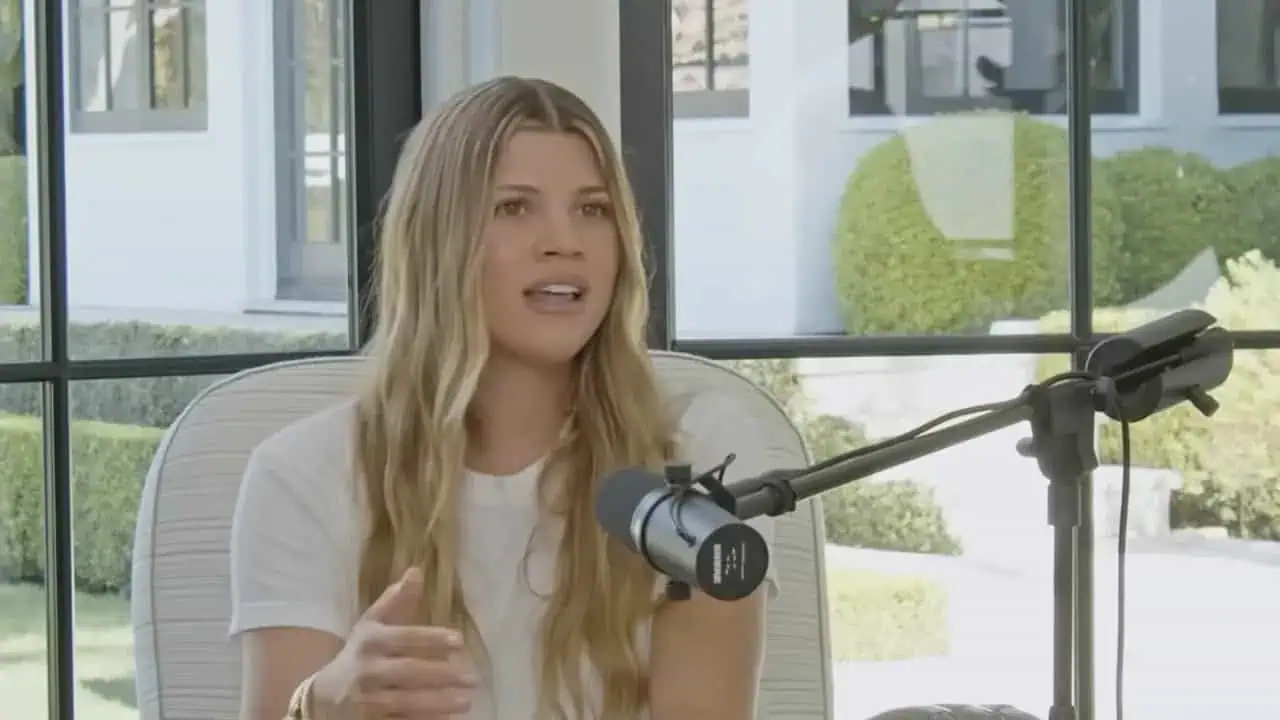
That moment matters because it highlights what good care looks like. It is not just checking a box. It is noticing a constellation of symptoms and understanding how they connect.
What are the common signs of PCOS?
Dr. Aliabadi explained that PCOS patients often present with a combination of symptoms rather than one single, obvious sign. Common features include:
Irregular periods
Acne
Hair loss
Facial or body hair growth
Weight gain or difficulty losing weight
Mood changes, anxiety, or depression
Insulin resistance
Family history of diabetes, overweight, or metabolic issues
Not every woman has every symptom. One may struggle mostly with acne. Another with facial hair. Another with infertility. Another with anxiety and unexplained weight gain. That variation is one reason diagnosis is often delayed.
Why is PCOS so often underdiagnosed?
Dr. Aliabadi said published estimates suggest about 75% of women with PCOS go undiagnosed, but in her own practice, she believes the real number may be closer to 90%.
Why? Because symptoms are frequently dismissed as separate issues instead of being recognized as one hormonal picture.
A teenager has acne. A woman is told to eat less and exercise more. Someone is anxious and struggling with her weight, so the assumption becomes lifestyle, self-control, or stress. Meanwhile, the underlying insulin resistance and hormonal disruption go untreated.
Dr. Aliabadi also raised an especially important concern: many young girls with undiagnosed PCOS can end up developing disordered eating because they are doing everything they are told to do and still not seeing the scale move. When the body is resistant to insulin, standard advice may not work the way it does for others. That can be psychologically devastating.
How PCOS is treated and why early diagnosis matters
What treatment did Sofia receive as a teenager?
For Sofia, treatment focused on controlling symptoms. Dr. Aliabadi started her on a low-dose birth control pill and spironolactone, an anti-androgen medication often used to help with acne and other testosterone-related symptoms.
Dr. Aliabadi explained that birth control pills can help in several ways:
They regulate menstrual cycles.
They can make periods lighter.
They increase sex hormone-binding globulin, a protein that binds free testosterone in the blood.
By lowering active testosterone, they can improve acne, hair loss, excess hair growth, and cycle irregularity.
That said, treatment should always be individualized. Some patients with significant anxiety or depression may not tolerate hormonal contraception well, so symptom profile and mental health matter.
What role does insulin resistance play in PCOS?
According to Dr. Aliabadi, insulin resistance is the main driver in many PCOS cases. When the body does not process sugar efficiently, it contributes to the hormonal imbalance that can then raise testosterone and disrupt ovulation and metabolism.
This is why management usually starts with lifestyle foundations:
Reducing carbohydrate and sugar intake
Exercising regularly
Even walking for 10 minutes after meals can help reduce blood sugar spikes
But she was equally clear that lifestyle changes alone are often not enough. Telling women with PCOS to simply eat better and move more can be incomplete and unfair when their bodies are dealing with a real metabolic disorder.
What medical options are available for PCOS?
Dr. Aliabadi discussed several treatment options she uses depending on the patient’s symptoms and goals:
Birth control pills for cycle regulation and testosterone-related symptoms
Spironolactone for androgen symptoms like acne and excess hair growth
Metformin to improve insulin resistance
GLP-1 medications in patients with obesity or elevated BMI to help with weight loss and metabolic health
She also discussed her mission to create more accessible options for women who may not have easy access to specialized care, particularly around symptom management and education.
Whether a woman ends up using prescription medication, supplements, lifestyle changes, or a combination, the first step is recognizing the condition in the first place.
Does PCOS affect fertility forever?
PCOS is a lifelong condition, but that does not mean pregnancy is out of reach. Many women with PCOS conceive naturally. Others need support with ovulation and insulin resistance. Dr. Aliabadi noted that if Sofia had struggled to conceive after more time trying, metformin likely would have been her first step.
She also shared an important and less commonly discussed point: women with PCOS often have a high egg count, but as they age, egg quality may decline faster than expected. So being told you have “lots of eggs” is not the whole fertility story.
That is one more reason not to minimize PCOS just because ovarian reserve appears high on ultrasound.
Motherhood, confidence, and savoring the moment
What surprised Sofia most about becoming a mother?
She was surprised by how quickly confidence can grow. In the beginning, every cry can feel urgent and mysterious. Every movement feels like something that could go wrong. Then slowly, almost without noticing, patterns become familiar. You know your baby better. You know yourself better.
By three months, Sofia said she felt calm and capable in a way she could not have imagined at the start.
That message is incredibly reassuring for first-time moms. You do not need to know everything on day one. You grow into it.
What advice did she share for pregnancy and early motherhood?
Her most tender reflection was about pregnancy itself. Looking back, she said she missed it. During pregnancy, especially once complications began, she was focused on getting through each week. She was not fully enjoying the present because her mind was always on the next milestone.
Later, she realized how special that time was. She described pregnancy as an intimate moment of sharing one space with your child that you never quite get back. Once the baby is born, that child is joyfully shared with everyone else. But pregnancy belongs to just the two of you.
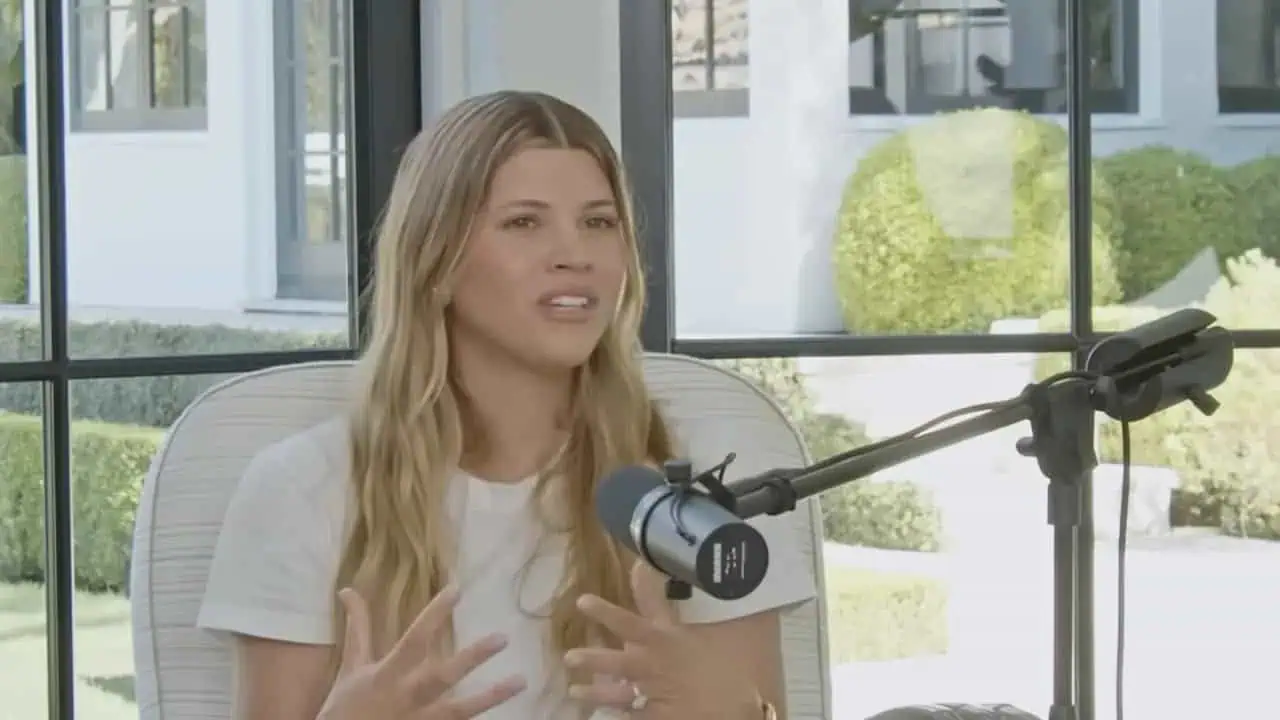
It was a beautiful reminder of something women are rarely encouraged to do: pause and inhabit the moment they are in, instead of racing toward the next one.
Why this conversation matters
What are the biggest health lessons from Sofia’s experience?
There were several, and each one deserves to be repeated:
Postpartum complications are real. Birth does not automatically end medical risk.
Preeclampsia can happen after delivery. Women remain at risk for up to six weeks postpartum.
“I do not feel good” is a meaningful symptom. It should never be brushed aside.
PCOS is common and often missed. Especially in teens and young women whose symptoms are chalked up to normal adolescence.
Early diagnosis can change everything. Better symptom control, better mental health, better fertility planning, and fewer years of confusion.
Women need to be heard. By doctors, families, and by themselves.
This was not only a celebrity motherhood story. It was also a reminder that women’s health issues are often minimized until someone insists on being taken seriously. That should not be the standard, but for now, self-advocacy remains essential.
FAQs
Can preeclampsia happen after the baby is born?
Yes. Preeclampsia can occur up to six weeks postpartum. This is called postpartum preeclampsia and can be dangerous if not treated quickly.
What are the warning signs of postpartum preeclampsia?
Warning signs may include high blood pressure, severe swelling, headaches, visual changes, dizziness, right upper abdominal pain, or a strong feeling that something is wrong. Some women may simply feel very unwell without classic symptoms.
How is PCOS usually diagnosed?
PCOS is diagnosed based on a combination of symptoms and findings, such as irregular periods, signs of elevated testosterone like acne or excess hair growth, metabolic issues like insulin resistance, and ovarian findings on ultrasound.
Does everyone with PCOS have trouble getting pregnant?
No. Some women with PCOS conceive naturally, while others need treatment to support ovulation or improve insulin resistance. PCOS affects people differently.
Why do so many women with PCOS go undiagnosed?
Because symptoms like acne, mood changes, weight gain, and irregular cycles are often treated as separate problems or dismissed as normal. Without someone connecting the dots, the diagnosis can be missed for years.
What are common treatments for PCOS?
Common treatments include lifestyle changes, birth control pills, spironolactone, metformin, and, in some cases, GLP-1 medications for weight management. Treatment depends on symptoms and goals, such as cycle control, acne treatment, or fertility support.
What should someone do if they feel unwell during pregnancy or after delivery?
Contact a medical professional right away. If something feels off, do not dismiss it. Trusting that instinct can be lifesaving.
A final reminder worth carrying forward
Sofia came into this conversation wanting to make other women feel less alone, and she absolutely did. There is comfort in hearing that even someone with excellent medical care, family support, and a strong sense of self still had moments of fear, confusion, and guilt. There is also power in hearing how much can change when a woman is listened to early and taken seriously.
Whether the issue is postpartum preeclampsia, PCOS, fertility concerns, or simply a sense that your body is telling you something important, the message is the same: trust yourself, speak up, and keep pushing until you get answers.
That instinct is not overreacting. It is information.
Concerned About Your Health? Talk to Dr. Aliabadi
Dr. Aliabadi is an expert OB/GYN who is knowledgeable in all aspects of women’s health and well-being. Dr. Aliabadi and her caring, supportive staff are available to support you through PCOS, endometriosis, menopause, childbirth, infertility, or routine gynecological care. We invite you to establish care with Dr. Aliabadi. Call us at (844) 863-6700 or
This article was created from the video How Sofia Grainge Navigated Pregnancy, Preeclampsia, and PCOS | SHE MD for Dr. Thais Aliabadi’s website.